Artwork
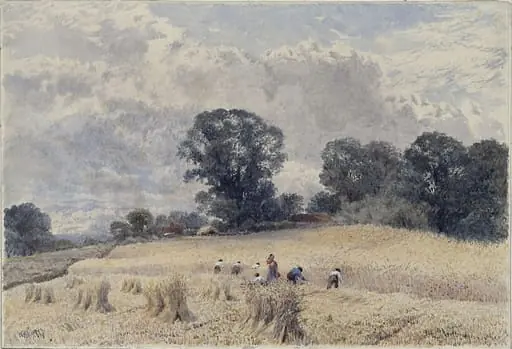
Cornfield at Roehampton
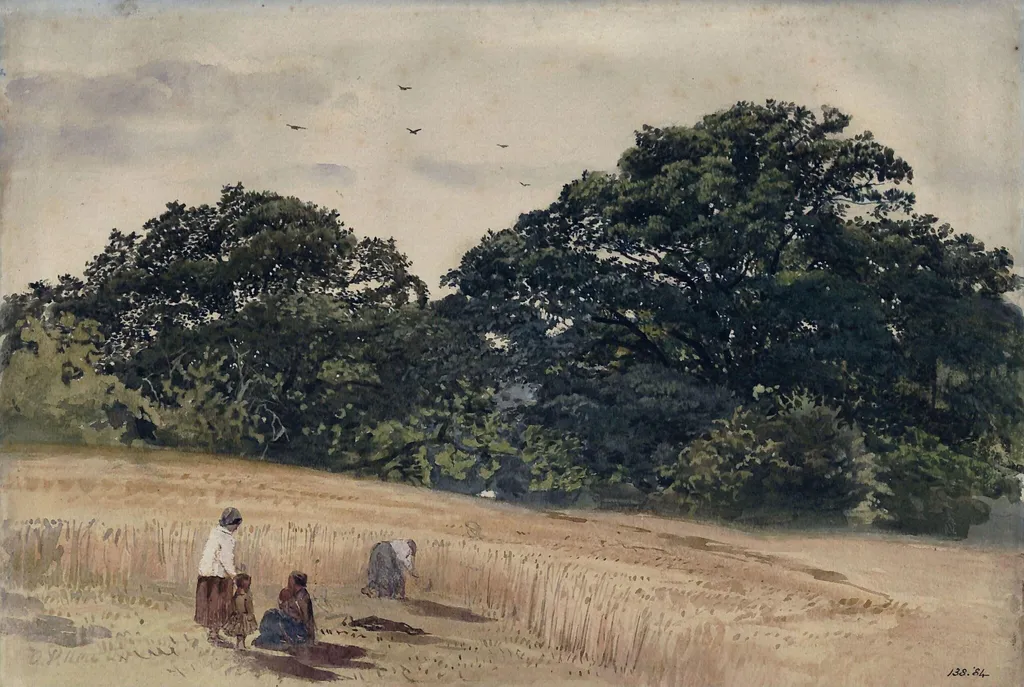
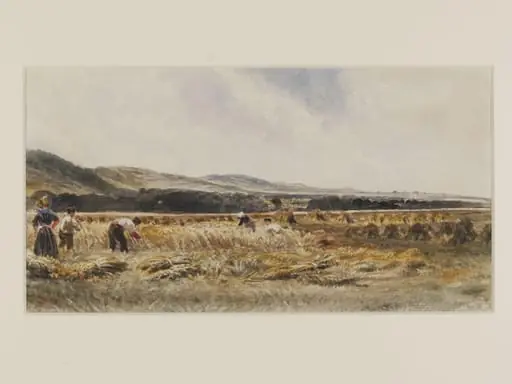
Cornfield at Roehampton is a watercolor work on paper by the Impressionist artist Alfred Pizzi Newton. It dates from 1850 and is held in the collection of the Victoria and Albert Museum. This watercolour captures a quiet agricultural landscape in Roehampton, Surrey, rendered in delicate, translucent washes.
About this work
Overview
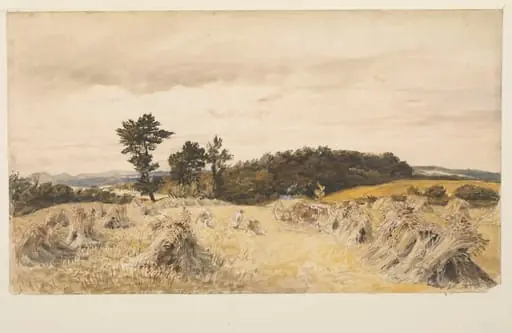
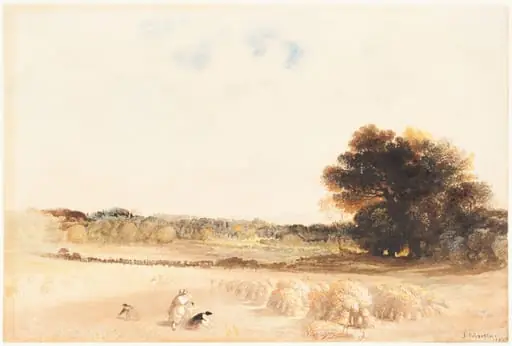
This watercolour captures a quiet agricultural landscape in Roehampton, Surrey, rendered in delicate, translucent washes. The scene centers on a golden wheat field under an open sky, with subtle shifts in tone suggesting the play of light across the crops. The composition avoids dramatic emphasis, instead favoring a calm, observational tone that reflects the rhythms of rural life.
Subject & Meaning
Three figures are scattered through the field—one standing near a narrow path, two seated or crouching—suggesting quiet labor or rest. Their small scale relative to the landscape underscores the harmony between people and the land. The absence of buildings or machinery reinforces a sense of timeless, unaltered countryside, where human presence is gentle and integrated.
Technique & Style
The artist employs loose, fluid brushwork and layered watercolour washes to suggest texture and atmosphere. Warm golds and ochres dominate the wheat, contrasted with muted greens and soft blues in the sky and foliage. The tree in the background is rendered with broad, damp strokes, its form suggested rather than defined, contributing to the painting’s airy, spontaneous quality.
History & Provenance
The work originates from the Surrey countryside, likely painted on-site during the late 19th or early 20th century, a period when watercolour was widely used for topographical and pastoral studies. Its provenance is not publicly documented, but its subject and technique align with amateur and professional artists documenting rural England during that era.
Context
This piece reflects a broader tradition of British watercolour landscape painting, where artists turned to the countryside as a subject of quiet contemplation. During the industrial age, such scenes offered a counterpoint to urbanization, valuing serenity and natural order. The emphasis on light and atmosphere places it within the influence of the English watercolour school.
Legacy
Though not widely exhibited or attributed to a major artist, the work contributes to a body of modest, observational watercolours that preserved the visual character of rural England. Its quiet sincerity resonates with similar studies held in institutions like the Victoria and Albert Museum, where such works are valued for their documentary and aesthetic modesty.
Artist & collection