Artwork
Village with Pond
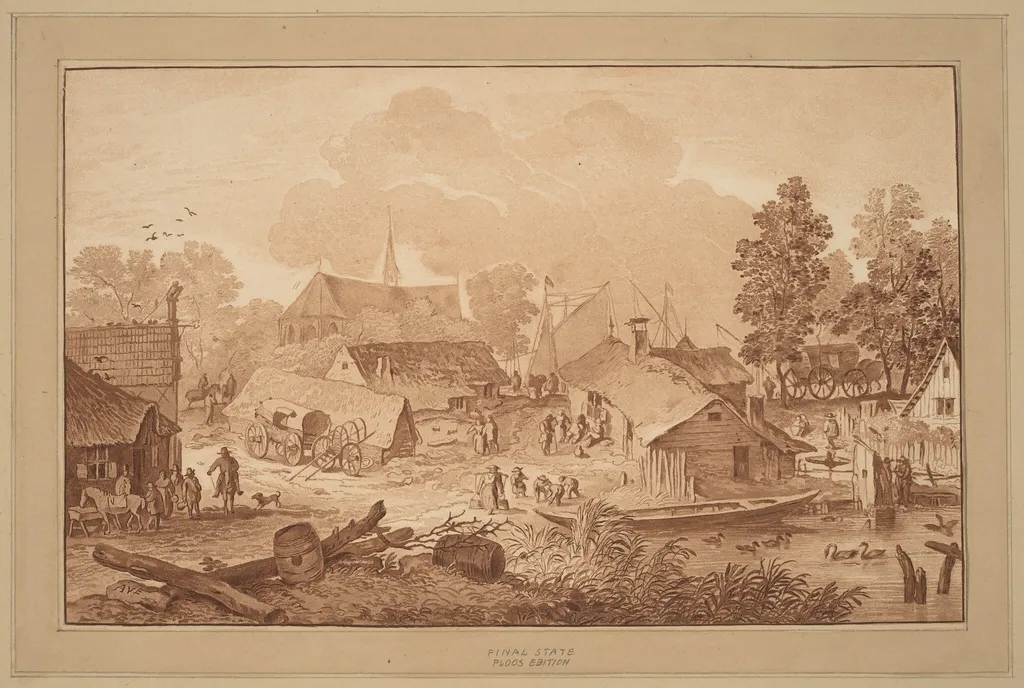
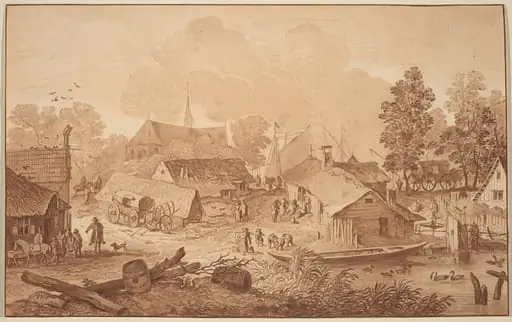
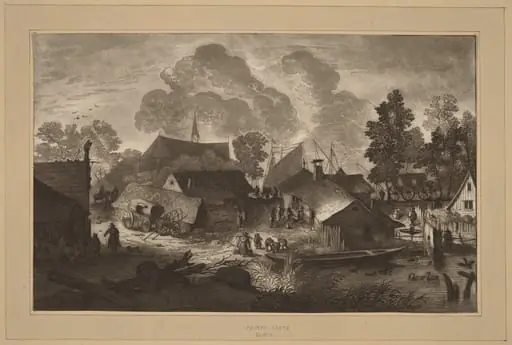
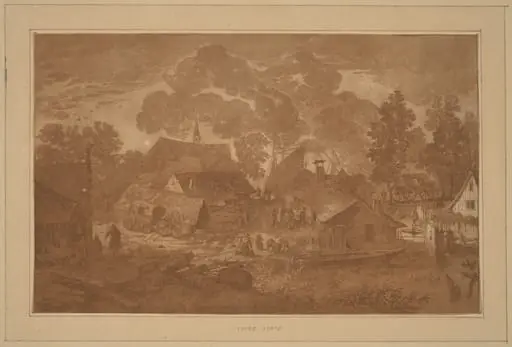
Village with Pond is an ink print by the Romanticist artist Jacobus Buys. It dates from 1782 and is held in the collection of the National Gallery of Art.
About this work
Overview
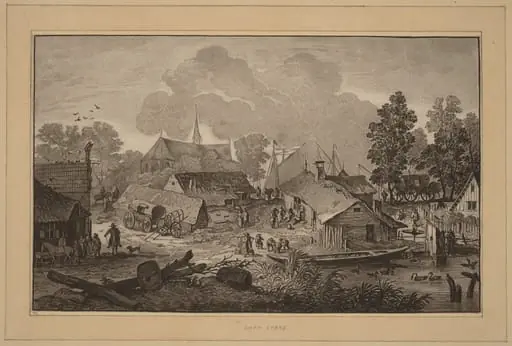
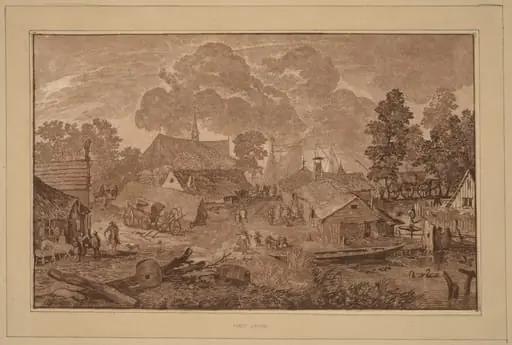
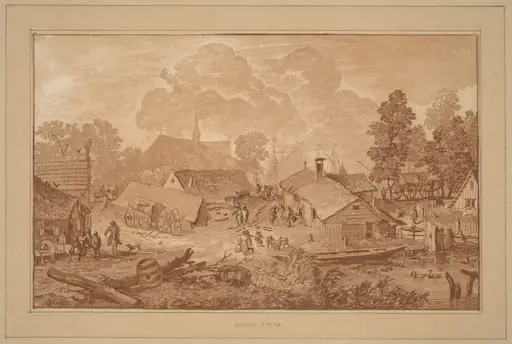
Cornelis Ploos van Amstel’s print Village with Pond, executed around 1782, depicts a modest settlement set beside a tranquil water body. The composition balances human activity—figures strolling, carts moving—with architectural elements such as thatched cottages and a distant church, all framed by a line of trees and a few small boats on the pond.
Subject & Meaning
The scene presents everyday rural life, emphasizing the interaction between community and landscape. The presence of the church suggests a spiritual focal point, while the bustling figures and carts convey commerce and daily routine, highlighting the harmonious coexistence of work, worship, and nature in an 18th‑century village.
Technique & Style
Created as an aquatint with roulette work and burnishing, the image is printed in a warm red‑brown ink on laid paper. The aquatint process allows for subtle tonal gradations, giving the sky its dramatic clouds and luminous patches, while the roulette and burnishing add texture and depth to the foliage and architecture.
History & Provenance
The print originates from the late 18th century, a period when Ploos van Amstel was active in Dutch printmaking. Though specific ownership records are scarce, the work has been documented in catalogues of his oeuvre and remains an example of his contribution to the development of tonal print techniques in the Netherlands.
Context
During the 1780s, Dutch artists increasingly explored atmospheric effects and everyday subjects, moving beyond the grand historical themes of earlier periods. Ploos van Amstel’s use of aquatint aligns with contemporary experiments in reproducing the softness of watercolor, reflecting broader European interests in capturing natural light and weather.
Artist & collection
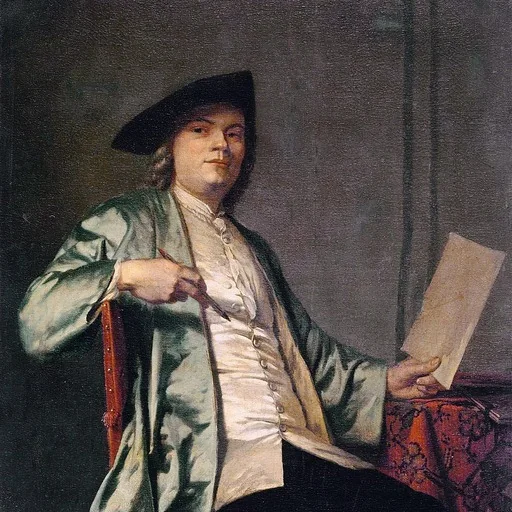

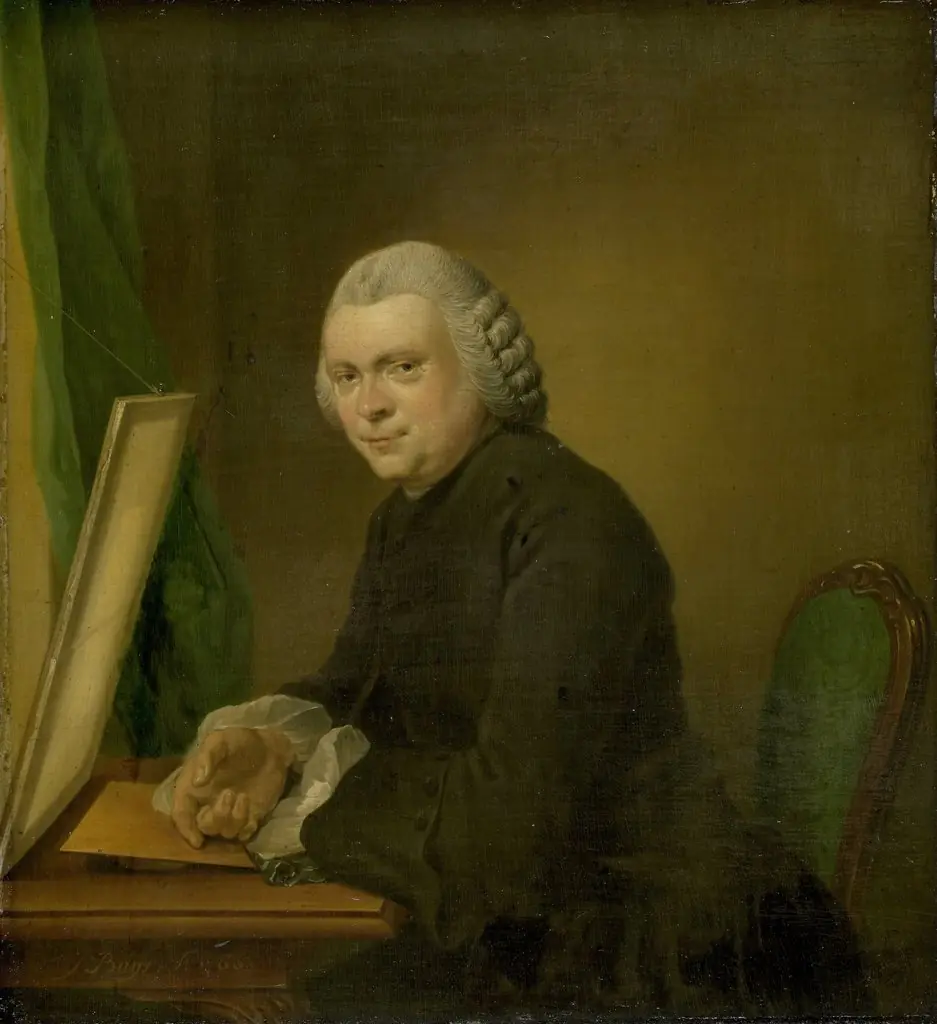 Portrait of Cornelis Ploos van Amstel
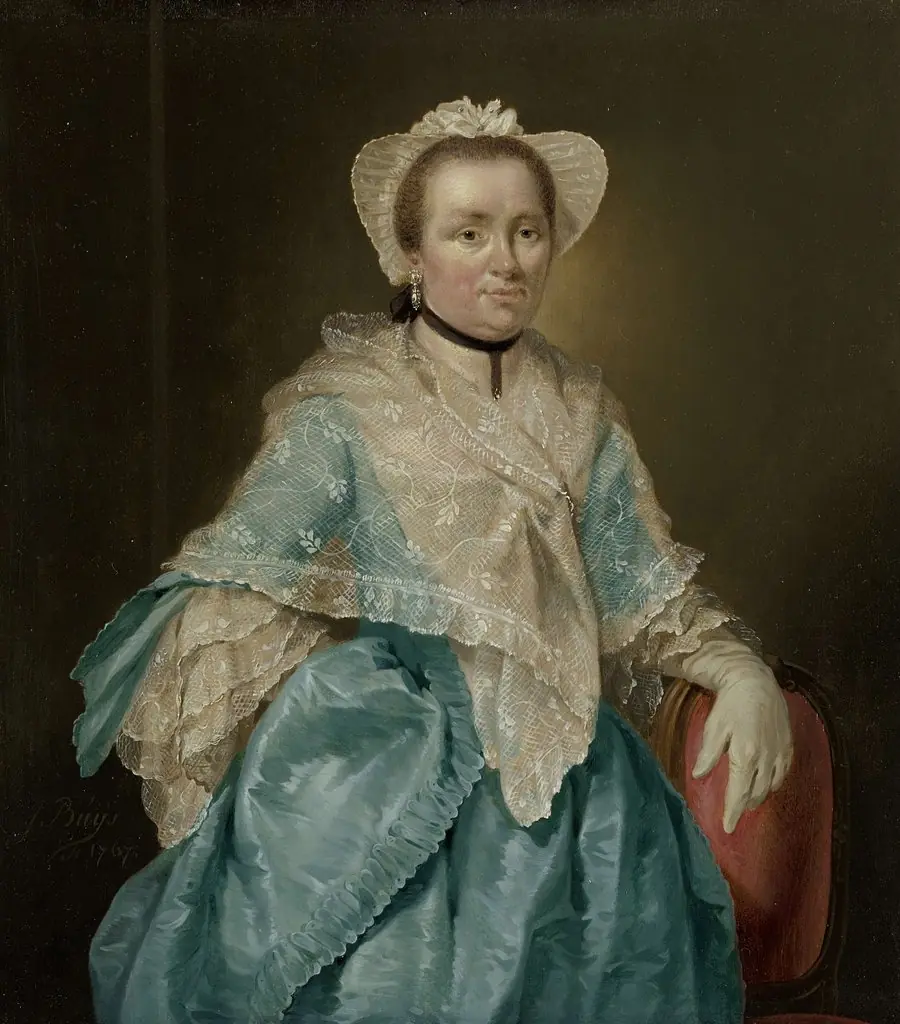 Portrait of Elisabeth Troost (1730-1790)
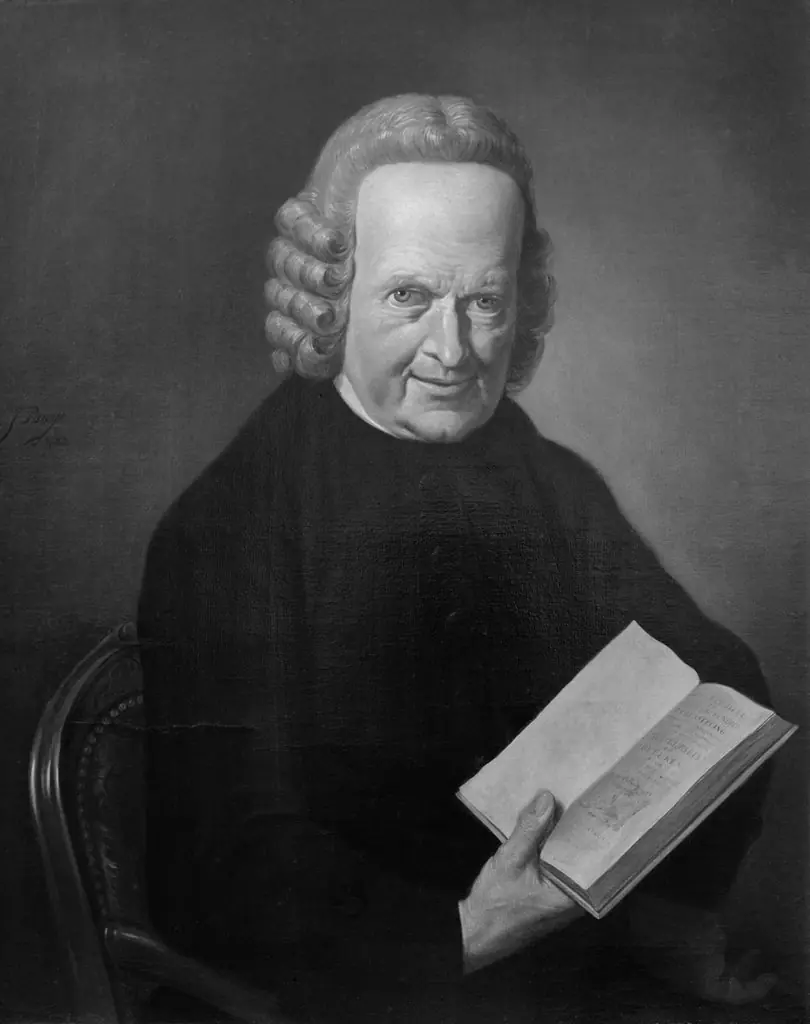 Johannes Monnikhoff (1707-1787)
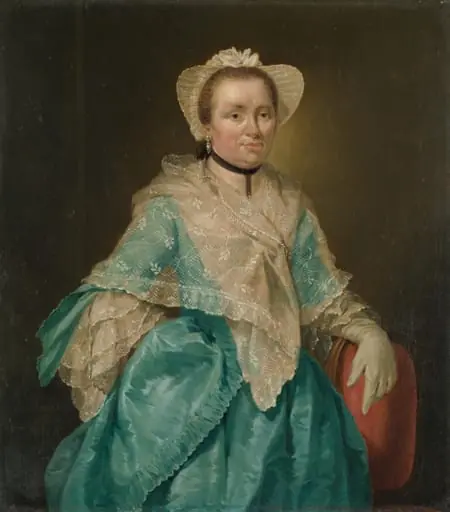 Portrait of Elisabeth Troost (1730-1790)
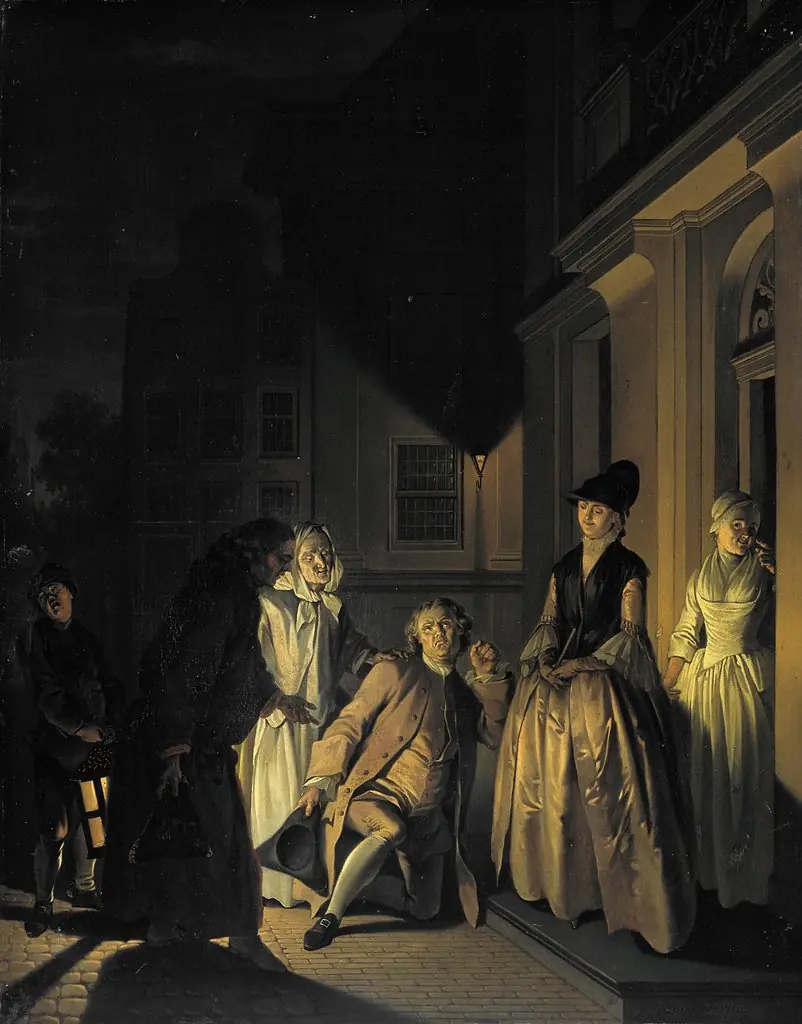 Scene from the Play 'Lubbert Lubbertse of de geadelde boer' by M. van Breda
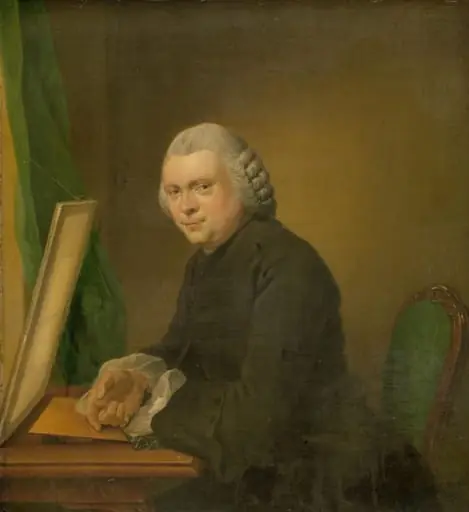 Portrait of Cornelis Ploos van Amstel
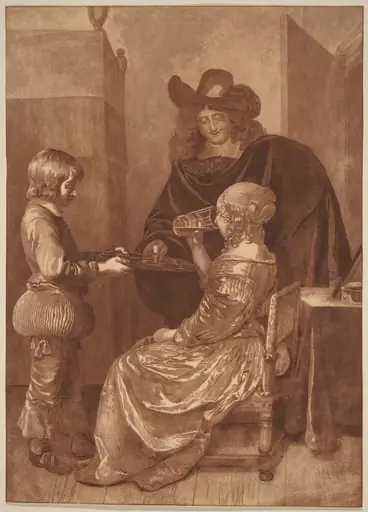 Cavalier and Lady with a Page
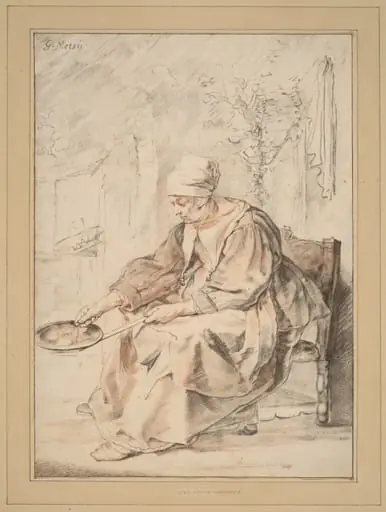 Pancake Woman