Artwork
Lipovence
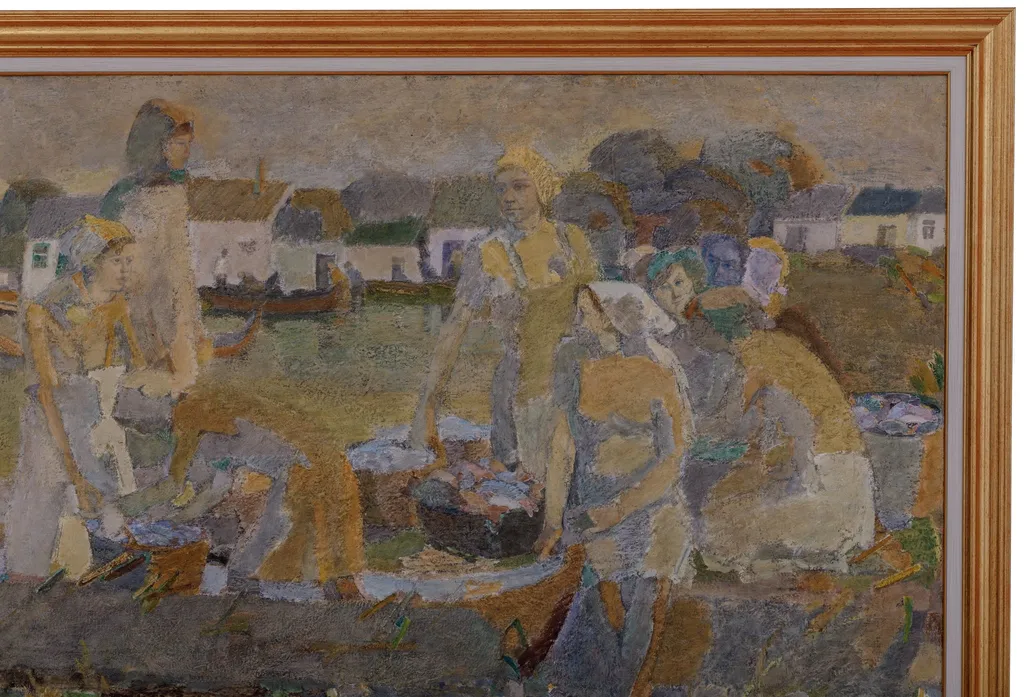
Lipovence is an unspecified painting by Podoleanu Adrian. It dates from 1969 and is held in the collection of the Moldova National Museum Complex.
About this work
Overview
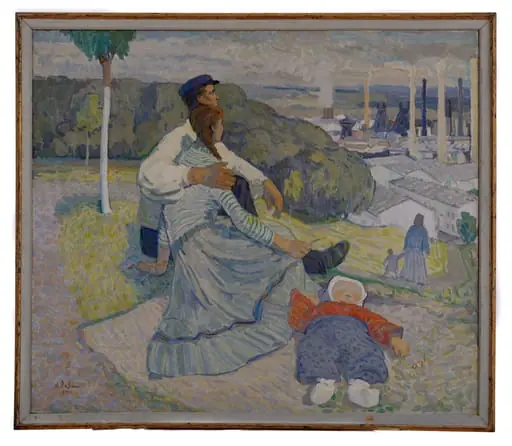
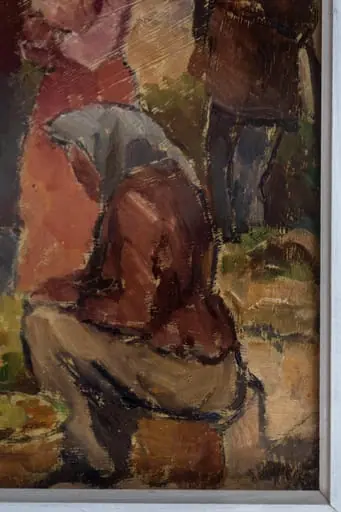
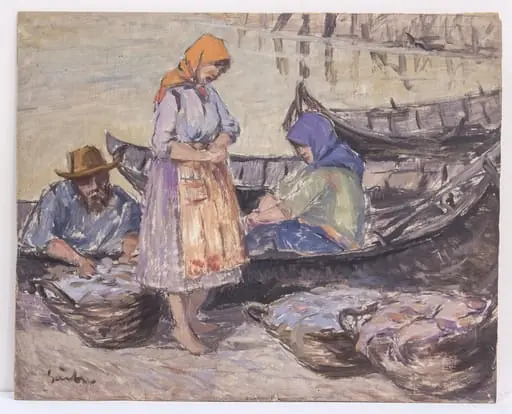
The composition centers on a group of individuals dressed in modest attire, some carrying baskets or tools, suggesting daily labor or seasonal activity.
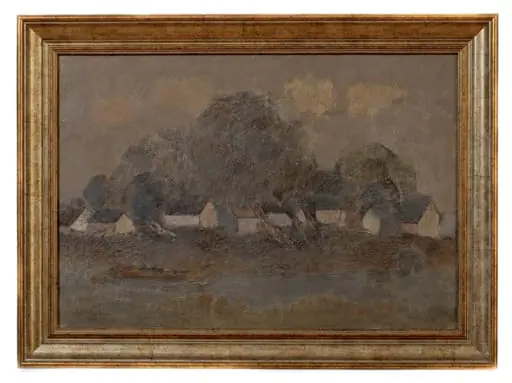
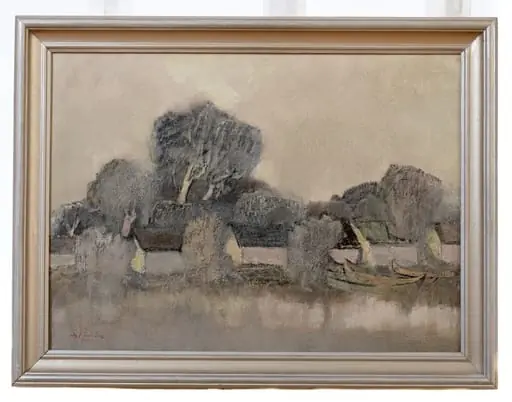
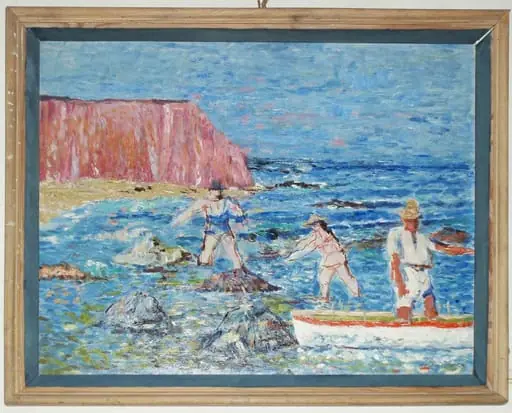
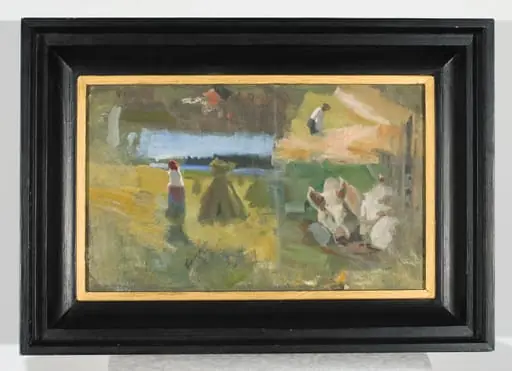
Lipovence, painted around 1969 by Adrian Podoleanu, depicts a quiet rural gathering in a field. The composition centers on a group of individuals dressed in modest attire, some carrying baskets or tools, suggesting daily labor or seasonal activity. The background reveals distant dwellings, anchoring the scene in a specific agricultural setting. The work conveys a sense of communal life without overt narrative, relying instead on atmosphere and tone.
Subject & Meaning
The figures in Lipovence appear engaged in ordinary tasks, their postures and groupings hinting at shared routines rather than ceremonial events. The absence of clear focal points or dramatic gestures emphasizes the quiet dignity of rural existence. The painting avoids idealization, presenting its subjects with unembellished realism, suggesting an interest in the rhythms of everyday life rather than grand historical or symbolic themes.
Technique & Style
Podoleanu employed loose, fluid brushwork to suggest movement and texture, avoiding rigid outlines in favor of blended transitions between forms. The palette is restrained, dominated by muted earth tones—ochres, olives, and grays—that evoke the natural landscape. Light is diffused, creating a hazy, atmospheric effect that unifies the figures with their surroundings, reinforcing the painting’s contemplative mood.
History & Provenance
Lipovence was produced during a period of state-regulated artistic production in Romania, when rural themes were often encouraged as expressions of socialist realism. Yet Podoleanu’s approach diverges from official norms, favoring subtle observation over propagandistic clarity. The painting’s early provenance remains undocumented, and it has not been widely exhibited, contributing to its relative obscurity in broader art historical discourse.
Context
Created in the late 1960s, Lipovence reflects a moment when Romanian artists navigated between state expectations and personal expression. While official culture promoted heroic depictions of labor, Podoleanu turned to quieter, intimate scenes of village life. His work aligns with a quieter current in Eastern European art that valued authenticity over ideological conformity, even under restrictive conditions.
Legacy
Lipovence remains a lesser-known work within Podoleanu’s oeuvre and Romanian art of the period. Its understated quality has limited its public recognition, but it stands as a quiet testament to the artist’s commitment to observing ordinary life with sensitivity. It contributes to a broader, though underexamined, tradition of Romanian painting that prioritizes mood and place over spectacle.