Artwork
Hannah Lemmon Corcoran (Mrs. Thomas Corcoran)
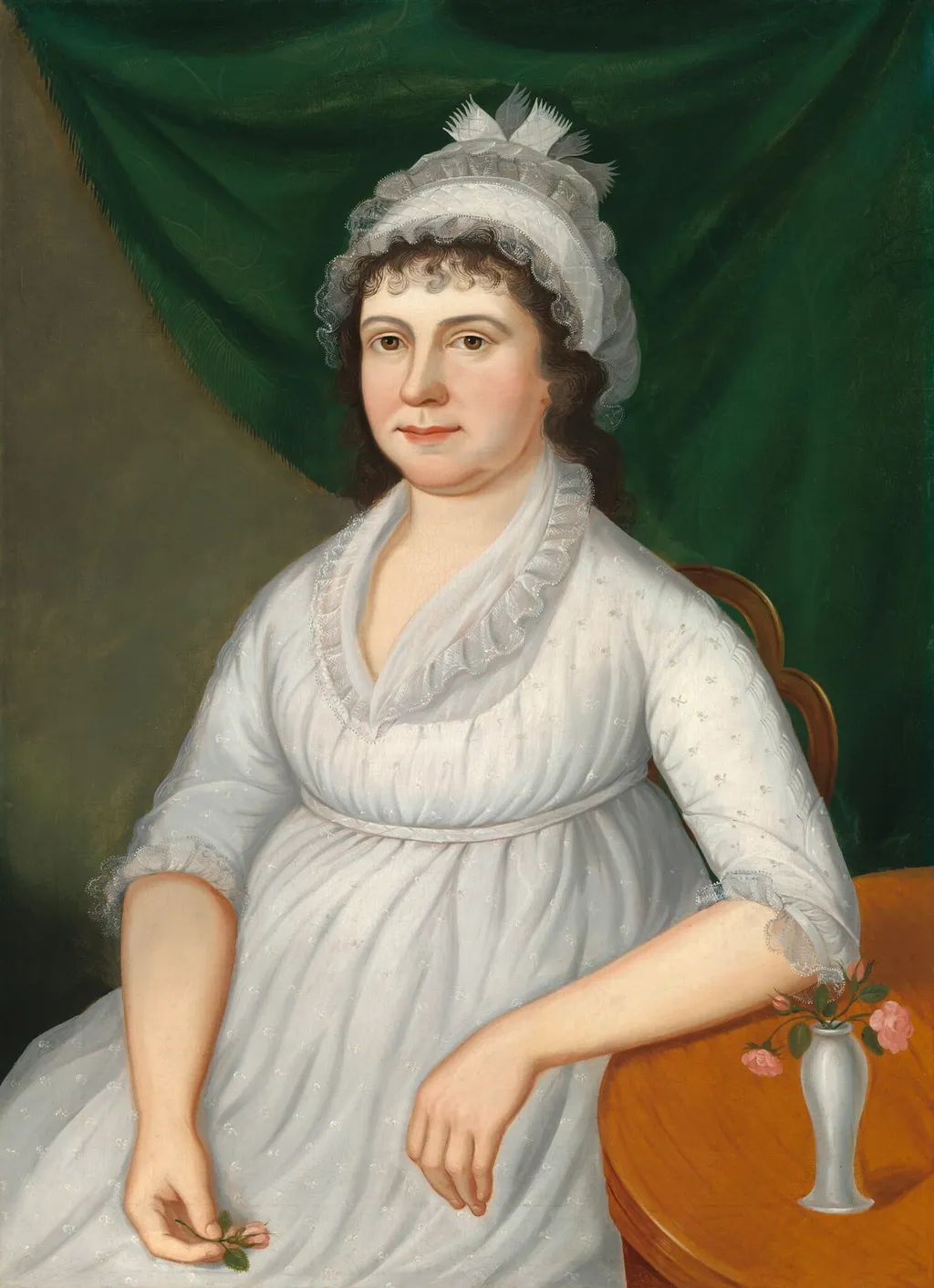
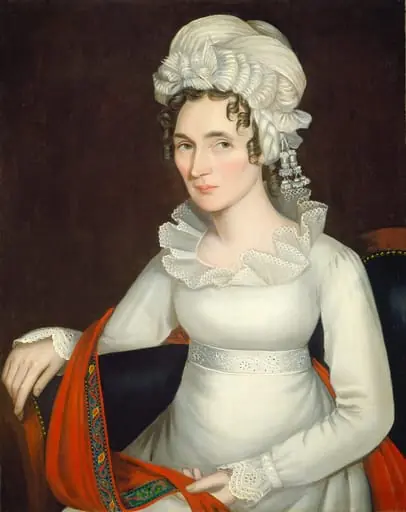
Hannah Lemmon Corcoran (Mrs. Thomas Corcoran) is an oil painting by the American Folk Art artist Charles Peale Polk. It dates from 1806 and is held in the collection of the National Gallery of Art.
About this work
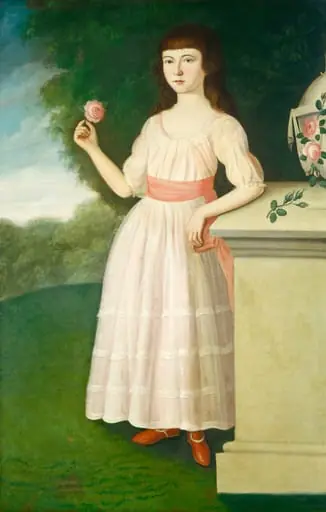
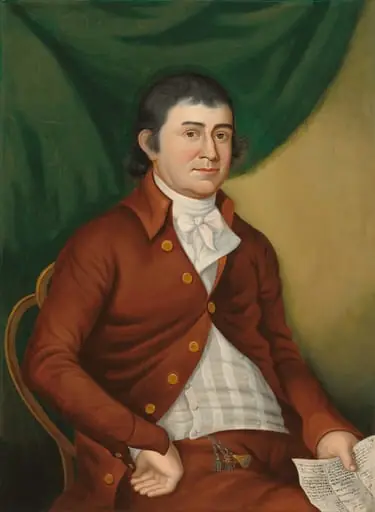
This portrait painting depicts a woman in a white dress and head covering, sitting in a chair with her left arm resting on a round wooden table.
This portrait painting depicts a woman in a white dress and head covering, sitting in a chair with her left arm resting on a round wooden table. She holds a small pink flower in her right hand, while a vase with more flowers sits on the table beside her. The background is a dark green fabric draped behind her.
The woman's attire and hairstyle suggest a style from the early 19th century. Her expression is calm and serene, with a subtle smile.
This painting is a great example of Romanticism, and you can learn more about this movement by exploring the Romanticism page.
Overview
Charles Peale Polk’s oil portrait of Hannah Lemmon Corcoran, wife of Thomas Corcoran, dates to around 1806. Executed in a modest size, the work presents the sitter seated, her left arm resting on a small wooden table, while she holds a single pink blossom in her right hand. The composition is set against a dark green drapery that frames the figure.
Subject & Meaning
The portrait captures Corcoran in a white dress and modest head covering typical of early‑nineteenth‑century American women’s fashion. Her calm expression and faint smile convey a sense of domestic tranquility, reflecting the period’s ideal of feminine virtue and genteel poise.
Technique & Style
Polk employs a restrained palette, using soft lighting to model the figure against the deep green background. The delicate rendering of the fabric and the subtle texture of the floral elements illustrate the Romantic emphasis on sentiment and natural detail within a portrait format.
History & Provenance
Created circa 1806, the painting likely remained in the Corcoran family for several generations before entering public collections. Documentation ties the work to Charles Peale Polk, a member of the prominent Peale artistic dynasty, known for his portraiture of Washington‑area patrons.
Context
At the turn of the nineteenth century, American portraiture was transitioning from the more formal, neoclassical approach of earlier decades toward a softer, more personal style. Polk’s work reflects this shift, integrating Romantic sensibilities while adhering to the conventions of genteel portraiture prevalent among the emerging middle class.
Own this work as a print
Artist & collection

Artist
Charles Peale Polk (March 17, 1767 – May 6, 1822) was an American portrait painter and the nephew of artist Charles Willson Peale.