Artwork
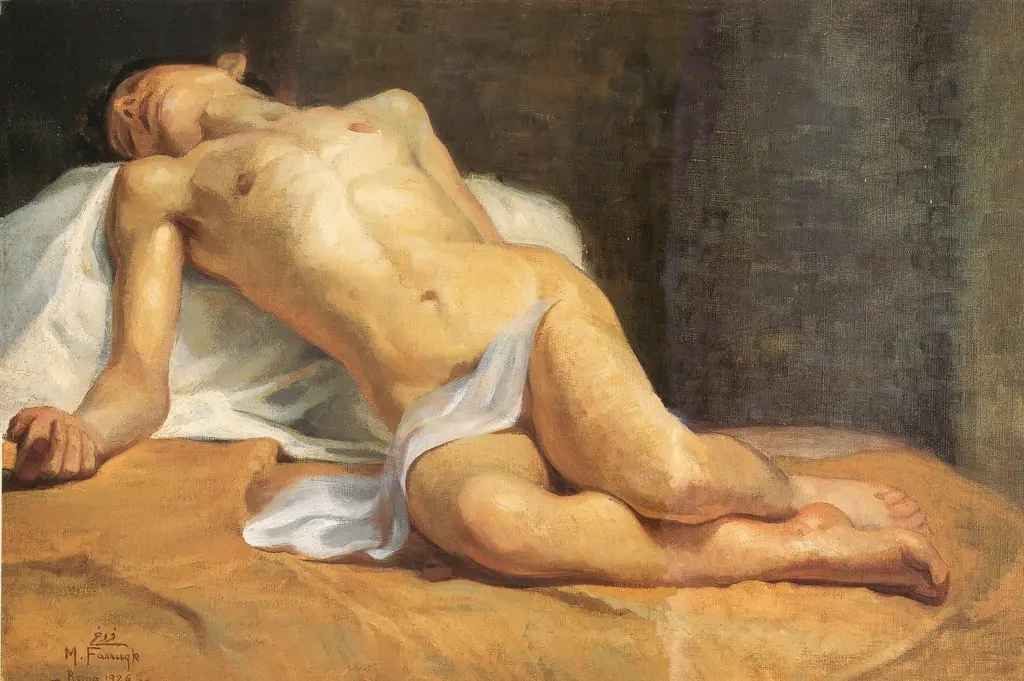
Naked Man Lying on a Rug
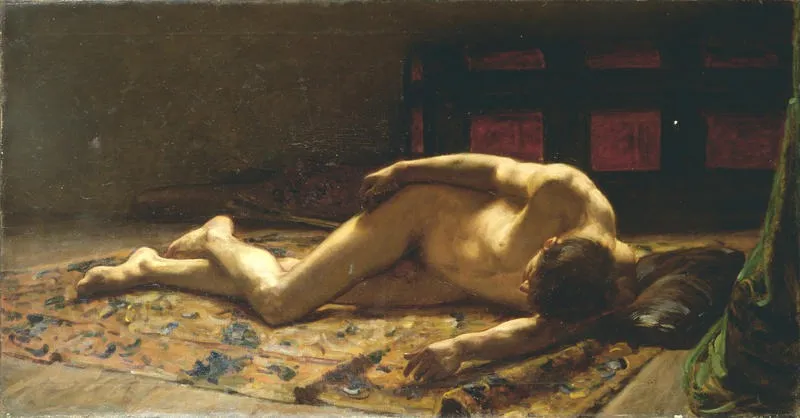
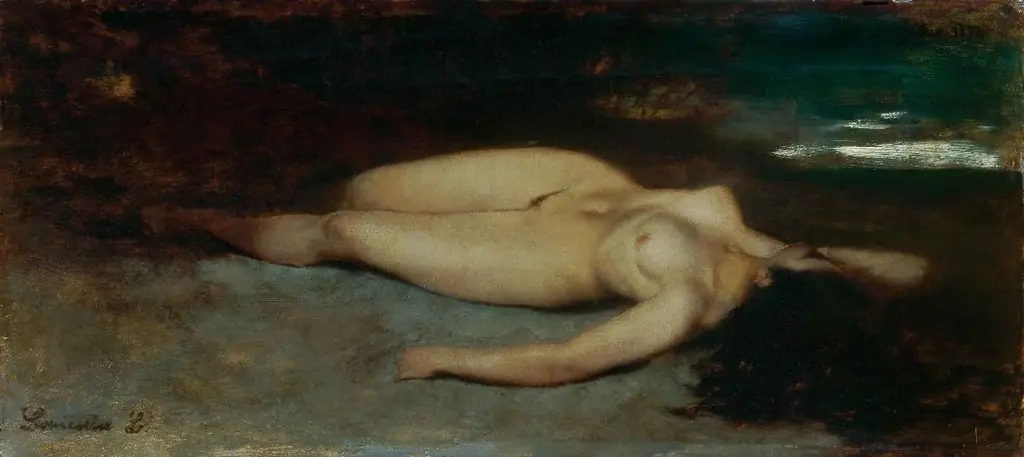
Naked Man Lying on a Rug is an oil painting by the Post-Impressionist artist Ponziano Loverini. It dates from 1892 and is held in the collection of the Accademia Carrara.
About this work
Overview
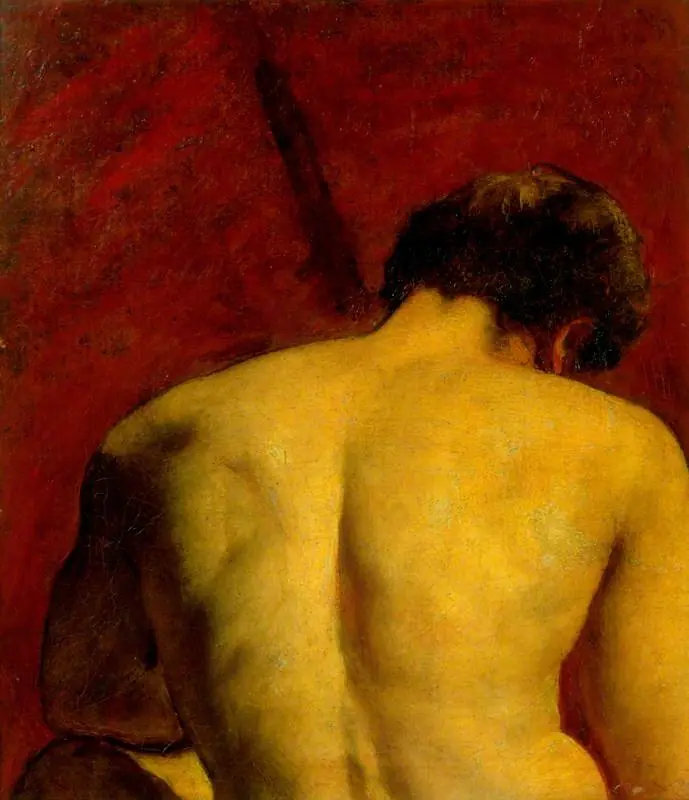
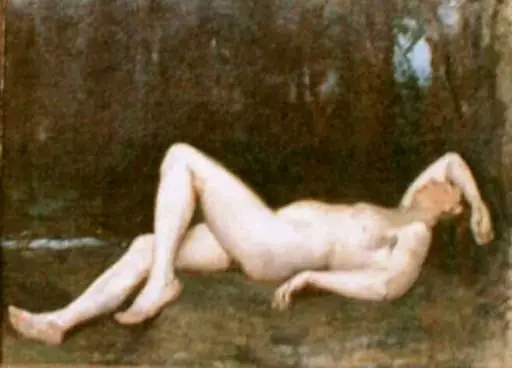
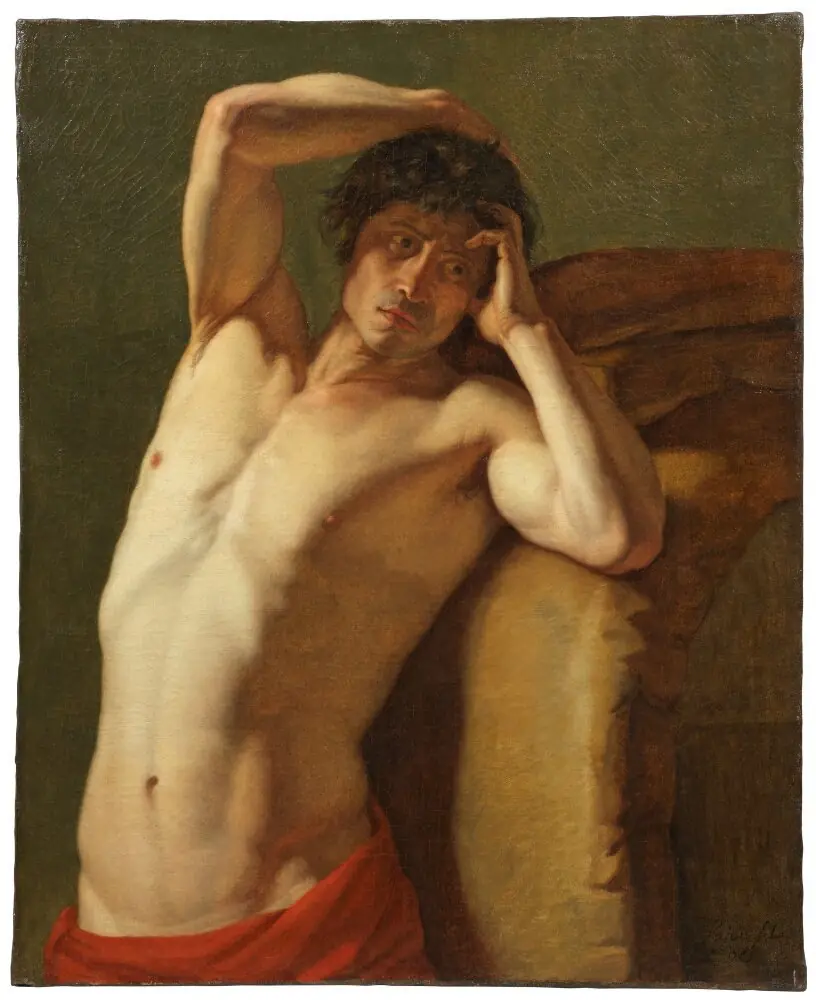
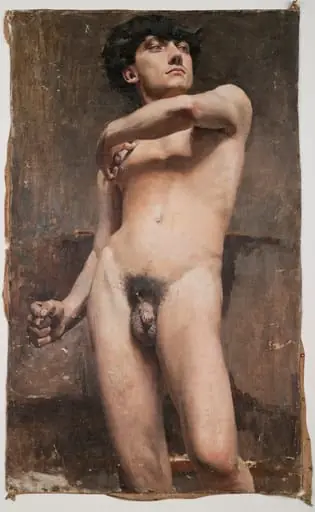
Naked Man Lying on a Rug is a 1892 canvas painting by Italian artist Ponziano Loverini, primarily known for his religious works. The piece deviates from his typical thematic focus, instead presenting a serene interior scene of a nude male figure reclining on a colorful rug.
Subject & Meaning
The subject, a relaxed nude male with his head turned away, conveys a sense of quiet contemplation or introspection. The composition's emphasis on the figure's solitude and the rug's vibrant patterns suggests a focus on capturing a moment of personal reverie.
Technique & Style
Executed in a post-impressionist style, the painting features soft, gentle brushstrokes, particularly evident in the warm, golden-brown skin tones of the figure. The rug, in contrast, is rendered with intricate, detailed patterns and vibrant colors, adding depth and texture.
History & Provenance
Created in 1892, the painting is part of the collection at Accademia Carrara, though its history prior to acquisition is not detailed here.
Context
While Loverini is recognized for religious themes in both canvas and fresco, this work stands out for its secular, intimate subject matter, reflecting a broader artistic exploration of everyday life and solitude during the post-impressionist period.
Legacy
The painting's legacy is not explicitly outlined in available information, suggesting it may not be among the artist's most prominently recognized works, or its impact may be more nuanced within the context of Loverini's overall oeuvre and post-impressionist movements.
Artist & collection
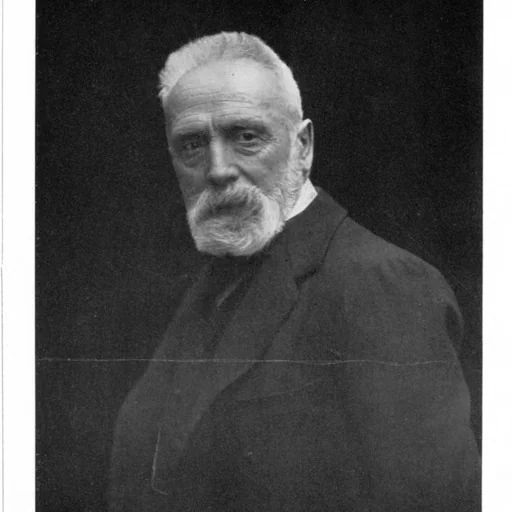
Artist
Ponziano Loverini (July 6, 1845 – August 21, 1929) was an Italian painter, known primarily for his canvases and frescoes of sacred subjects.