Artwork
The Assumption of the Virgin
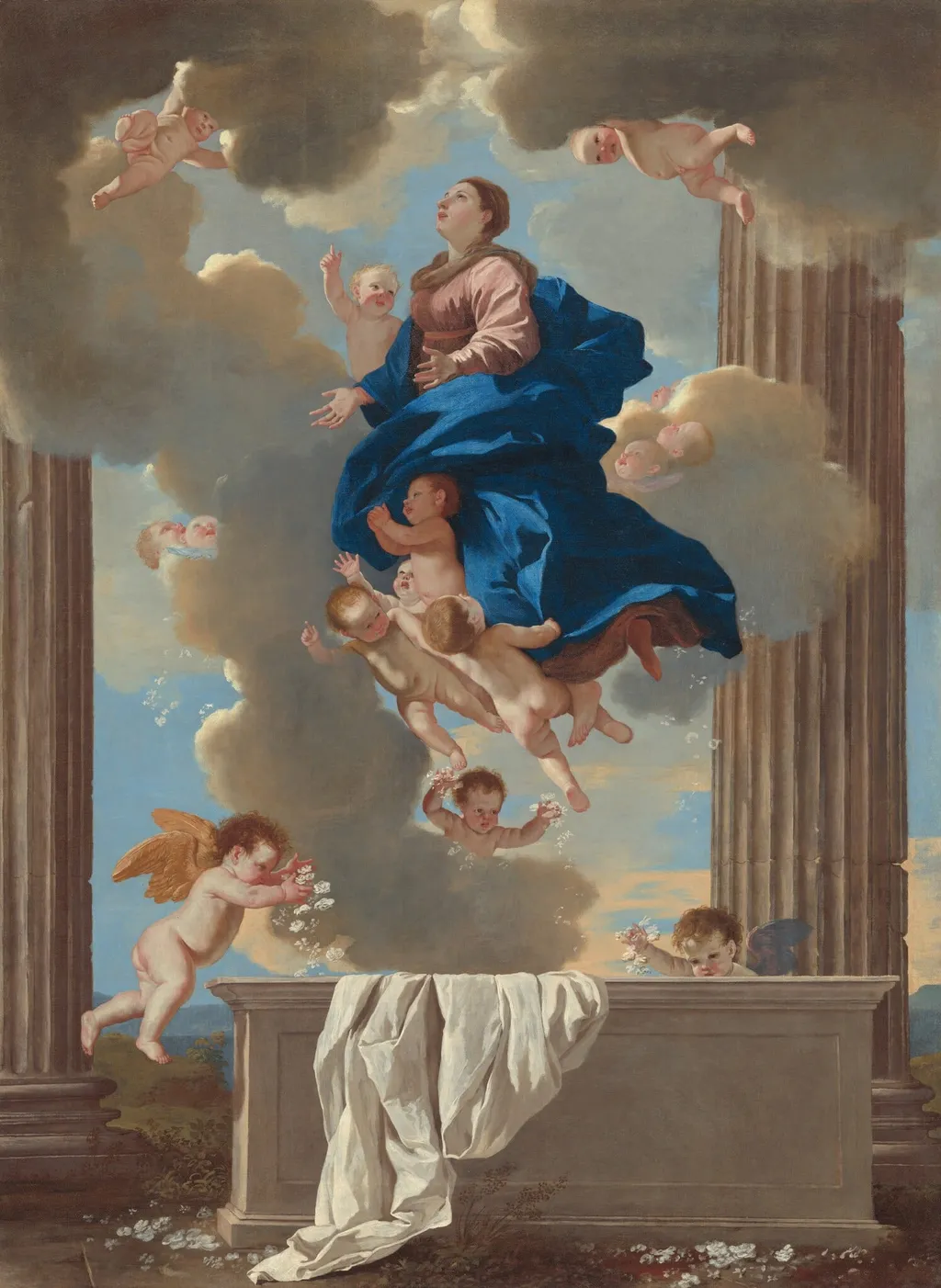
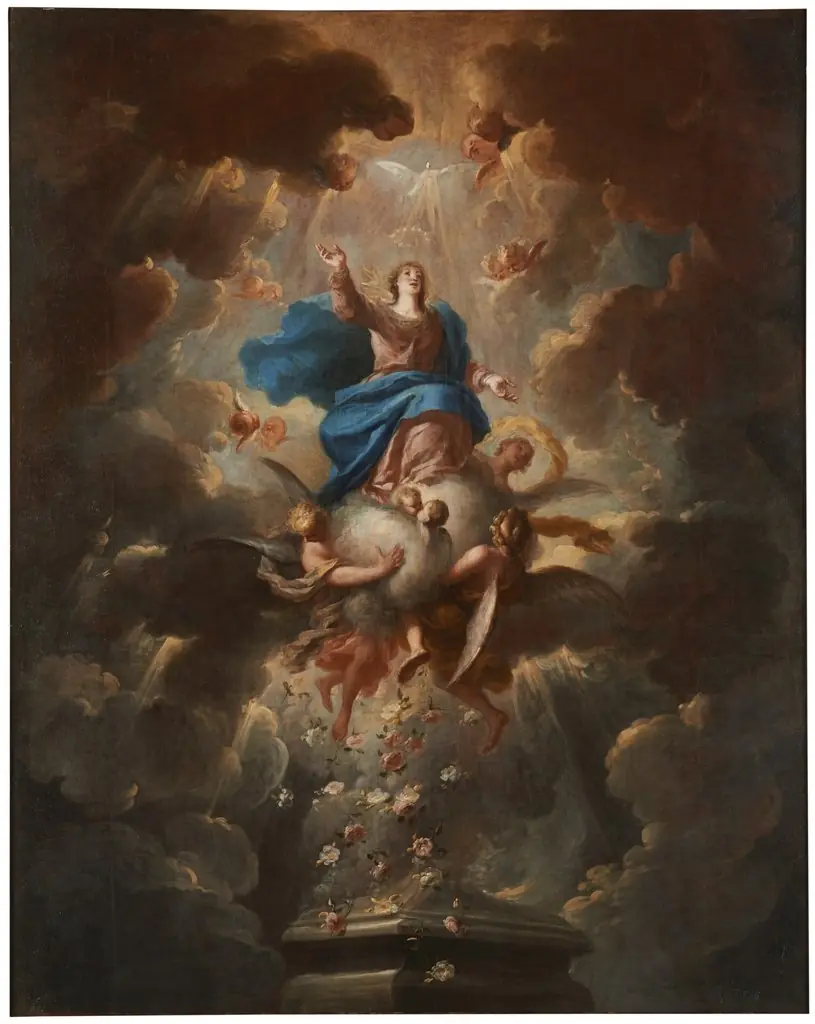
The Assumption of the Virgin is an oil painting by the Baroque artist Nicolas Poussin. It dates from 1631 and is held in the collection of the National Gallery of Art.
About this work
Overview
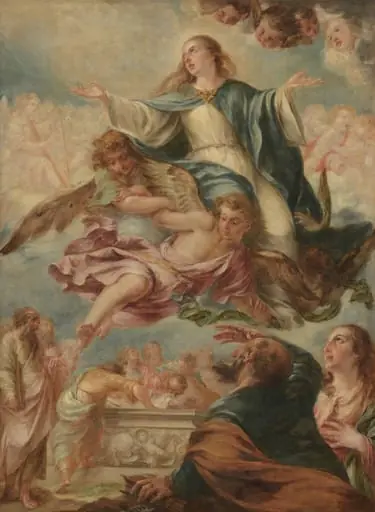
This religious work illustrates the moment Mary ascends to heaven, a central event in Christian tradition.
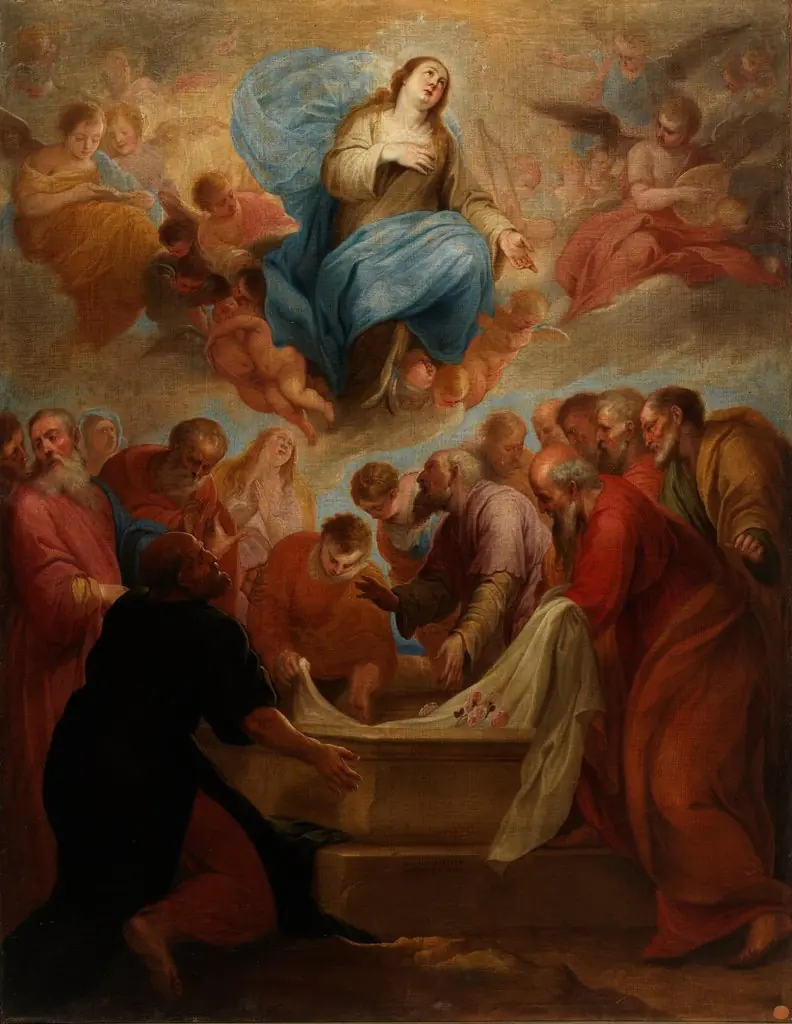
Nicolas Poussin's oil on canvas painting, The Assumption of the Virgin, dates to approximately 1631. This religious work illustrates the moment Mary ascends to heaven, a central event in Christian tradition. The composition captures the Virgin Mary's upward movement, observed by a gathering of saints and celestial beings below, rendered with Poussin's characteristic classical restraint and precision.
Subject & Meaning
The painting portrays the Virgin Mary's spiritual and physical ascent into heaven, a doctrine known as the Assumption. She is depicted rising amidst a soft glow against a deep, almost black sky, while a multitude of saints and angels witness her miraculous journey from below. Poussin emphasizes a sense of divine order and peaceful transition rather than dramatic spectacle, aligning with the theological significance of the event.
Technique & Style
Poussin's approach to this sacred subject is marked by a calm and structured composition. The figures, including the angels, are rendered with a tangible presence, appearing as substantial individuals rather than ethereal spirits, dressed in elaborate drapery. The artist's meticulous attention to detail is evident in elements like the folds of Mary's robe, and the serene expressions on the faces of the onlookers contribute to the painting's overall sense of tranquility and solemnity.
Own this work as a print
Artist & collection