Artwork
The Adoration of the Magi
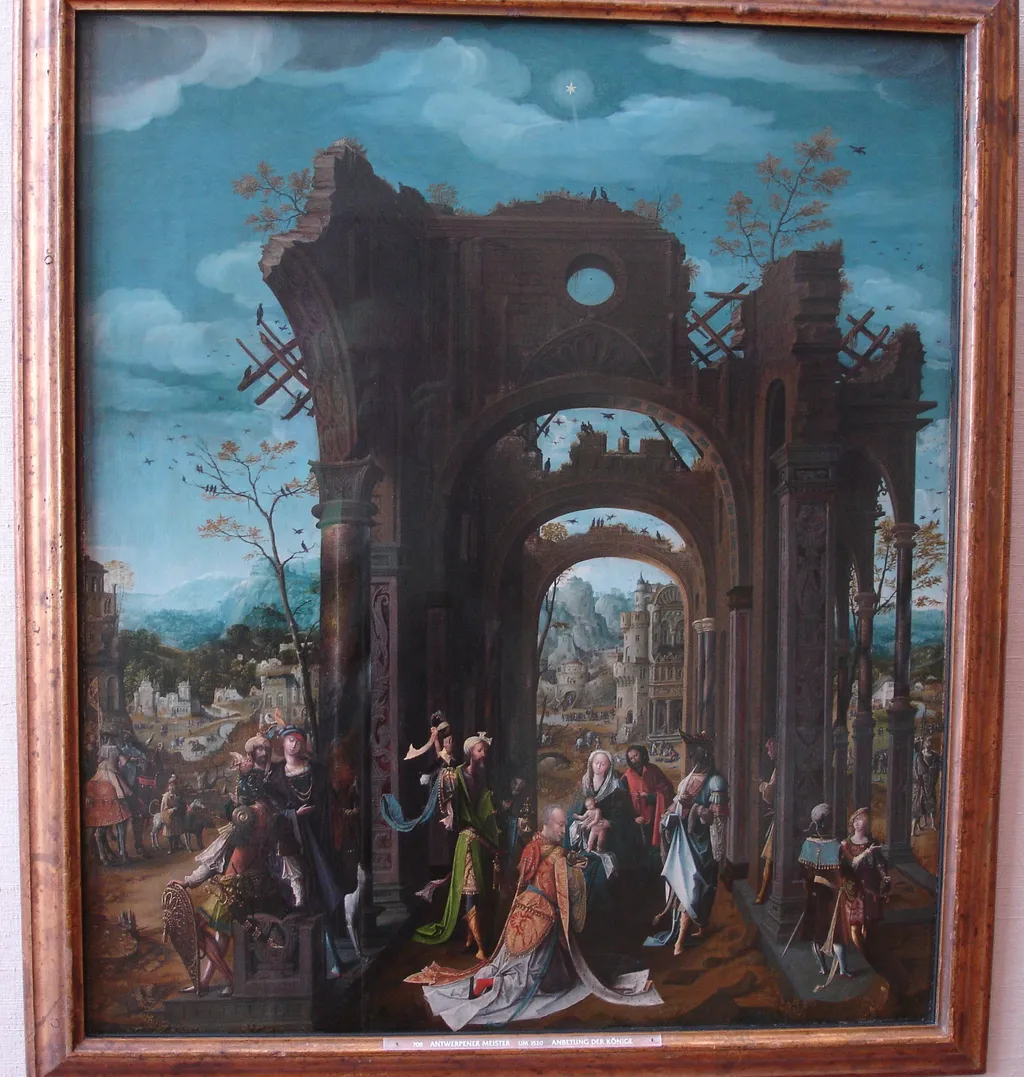
The Adoration of the Magi is an oil painting by the Northern Renaissance artist Pseudo-Bles. It dates from 1520 and is held in the collection of the Bavarian State Painting Collections. Created around 1520, this oil on canvas presents a traditional biblical episode in which the infant Jesus is honored by the three Magi.
About this work
Overview
Created around 1520, this oil on canvas presents a traditional biblical episode in which the infant Jesus is honored by the three Magi. The composition is anchored by the central child figure, surrounded by richly dressed visitors and set within a partially ruined architectural backdrop. The work is part of the collection of the Alte Pinakothek in Munich.
Subject & Meaning
The painting illustrates the moment of adoration described in the Gospel of Matthew, emphasizing the recognition of Christ’s divinity by foreign wise men. The inclusion of crumbling structures may symbolize the transition from the old pagan world to the new Christian order, reinforcing themes of reverence and spiritual revelation.
Technique & Style
The artist employs chiaroscuro to model the figures, creating a contrast between illuminated faces and shadowed drapery. Multiple layers of translucent glaze enhance the depth of color, particularly in the sumptuous fabrics and the atmospheric sky. These methods produce a luminous surface that guides the eye toward the central infant.
History & Provenance
Attributed to the workshop of the anonymous Pseudo‑Bles, the painting reflects the Northern Renaissance’s interest in detailed narrative scenes. It entered the Alte Pinakothek’s holdings in the 19th century, where it has remained on public display, providing scholars with insight into the period’s devotional iconography.
Artist & collection
