Artwork
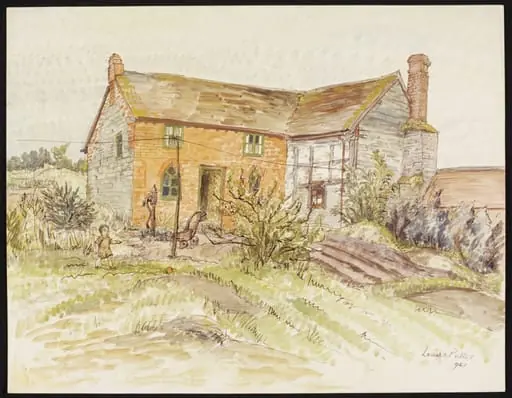
King Athelstan's Palace, and stables (now cottages), Malmesbury
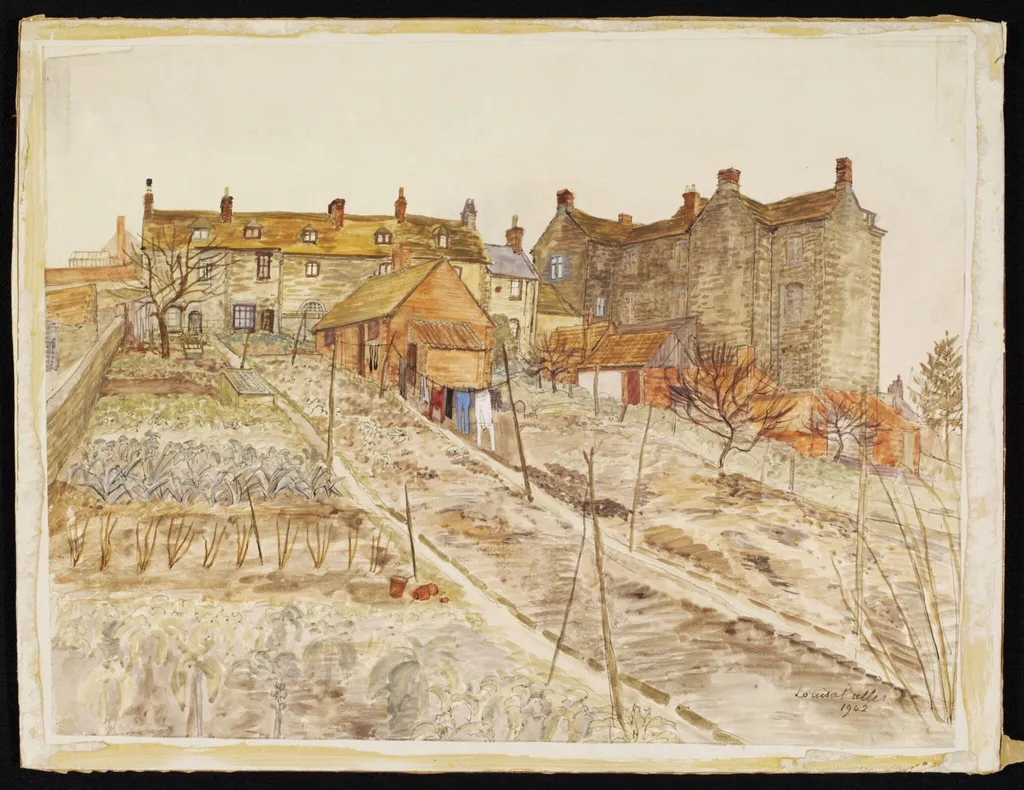
King Athelstan's Palace, and stables (now cottages), Malmesbury is a watercolor work on paper by Puller. It is held in the collection of the Victoria and Albert Museum.
About this work
Overview
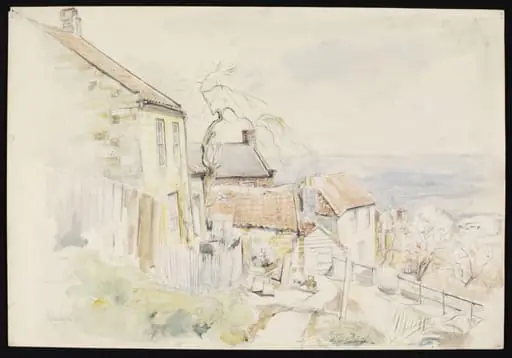
The composition emphasizes simplicity and quiet decay, with laundry drying between structures and a lone bare tree anchoring the foreground.
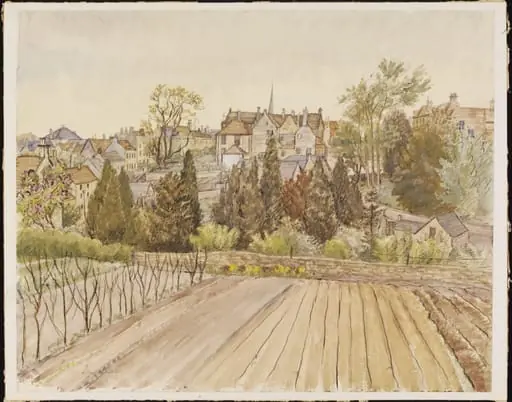
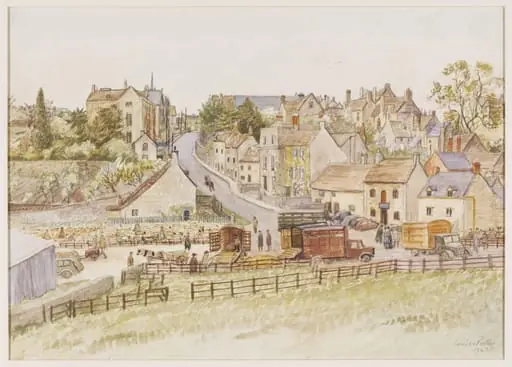
This 1942 watercolour by Puller portrays a quiet hillside in Malmesbury, featuring a historic building traditionally associated with King Athelstan and a row of modest cottages. The scene, part of the 'Recording Britain' project, captures everyday rural architecture during wartime. The composition emphasizes simplicity and quiet decay, with laundry drying between structures and a lone bare tree anchoring the foreground. The work was created to preserve visual records of England’s vernacular landscape amid the uncertainties of conflict.
Subject & Meaning
The subject combines a building linked to early medieval royalty with utilitarian cottages, suggesting a layered history of domestic life. The presence of hanging laundry introduces a human presence, grounding the scene in daily routine rather than monumentality. The juxtaposition of ancient stone and humble dwellings reflects continuity amid change, aligning with the project’s goal of documenting ordinary places at risk of being lost to modernization or war.
Technique & Style
Puller employed a light, fluid watercolour technique, using soft washes and minimal detail to suggest texture and form. The paint appears spontaneous, with visible brushstrokes and areas of dry brush that evoke dry earth and weathered stone. Colours are muted yet warm, avoiding dramatic contrast. The sketch-like quality conveys immediacy, as if the scene was observed and recorded in a single sitting, reinforcing the project’s emphasis on direct observation.
History & Provenance
Created in 1942 under the 'Recording Britain' initiative, the watercolour was commissioned by the Pilgrim Trust and directed by Sir Kenneth Clark. The project enlisted artists to document at-risk buildings and landscapes across England, preserving a visual archive during wartime. This work entered the Victoria and Albert Museum’s collection as part of that effort, where it remains as a testament to civilian cultural preservation during national crisis.
Context
The 'Recording Britain' project emerged amid fears of widespread destruction from aerial bombing and rapid urban change. Artists were sent to rural and historic sites to record structures that might vanish. Malmesbury, with its medieval heritage and quiet decline, exemplified the kind of place deemed worthy of preservation. The focus on vernacular architecture, rather than grand monuments, reflected a broader cultural shift toward valuing everyday heritage.
Legacy
The watercolour contributes to a significant archive of 20th-century British topographical art, offering insight into how artists interpreted ordinary landscapes during wartime. Its unembellished style and focus on domestic detail have influenced later efforts to document vernacular architecture. Today, it stands as a quiet record of place and time, valued for its historical honesty rather than aesthetic flourish.
Artist & collection