Artwork
Jambon et tomates
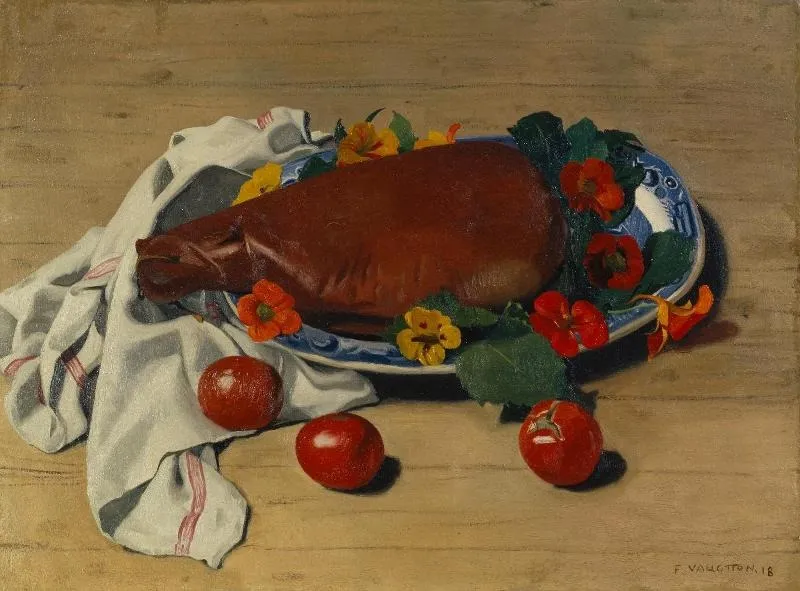
Jambon et tomates is an oil painting by Félix Vallotton. It dates from 1918 and is held in the collection of the Kunsthaus Zürich.
About this work
Overview
Félix Vallotton’s 1918 oil work titled Jambon et tomates presents a still‑life composition that is part of the collection of the Kunsthaus Zürich. The canvas captures a domestic scene centered on a plate bearing a substantial brown item, likely a slice of ham, surrounded by vivid floral elements.
Subject & Meaning
The arrangement juxtaposes food and flora: a blue‑white plate holds the ham, while red and yellow blossoms with green foliage frame the setting. Additional red objects lie on the wooden tabletop, and a white cloth with red stripes drapes the plate’s left edge, suggesting a modest, perhaps everyday, banquet.
Technique & Style
Executed in oil, the painting employs a clear, flattened treatment of form characteristic of Vallotton’s later work, with bold color contrasts between the warm reds and yellows of the flowers and the cool blues of the plate. The brushwork is smooth, emphasizing surface texture over illusionistic depth.
History & Provenance
Created in the final year of World War I, Jambon et tomates entered the holdings of the Kunsthaus Zürich, where it remains on display. The museum’s acquisition reflects its interest in early twentieth‑century French painting and Vallotton’s role within that period.
Context
Vallon’s still lifes from this era often explore the relationship between ordinary objects and formal composition, aligning with broader modernist tendencies toward simplification and decorative patterning. The work’s restrained setting and vivid palette echo contemporary shifts toward abstraction while retaining recognizable subject matter.
Artist & collection
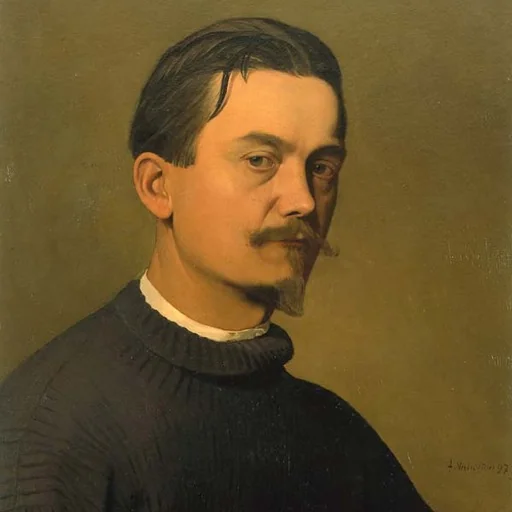
Artist
Félix Édouard Vallotton (French: ; December 28, 1865 – December 29, 1925) was a Swiss and French painter and printmaker associated with the group of artists known as Les Nabis.

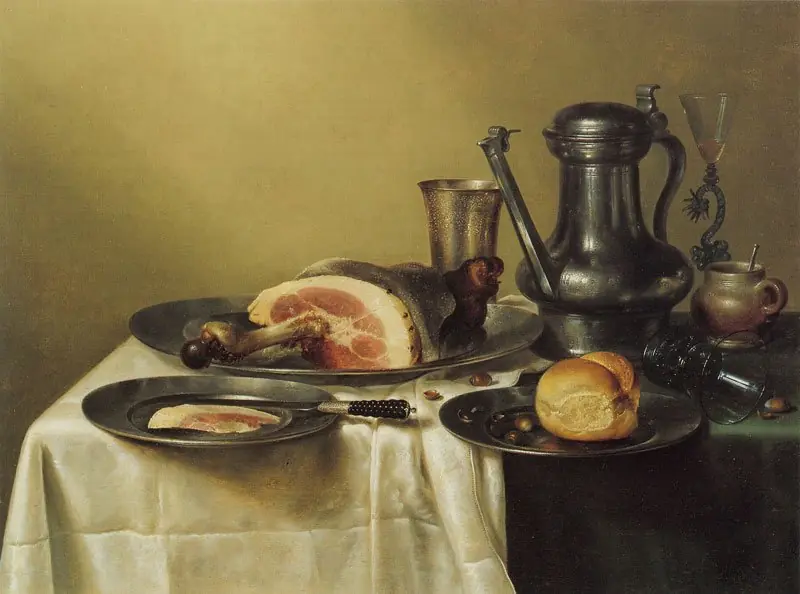 Laid Table with Ham and a Roll
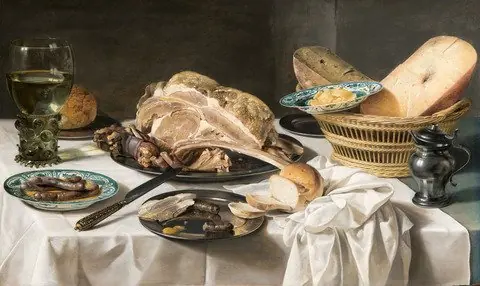 Breakfast Still Life with a Ham and a Basket of Cheese
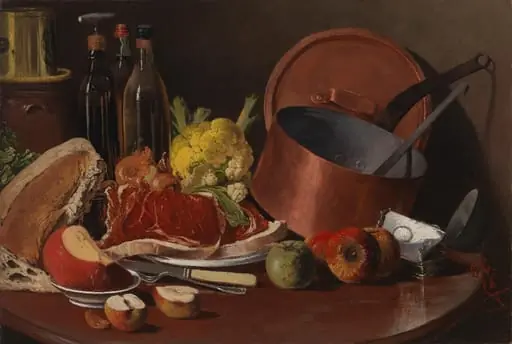 Asetelma
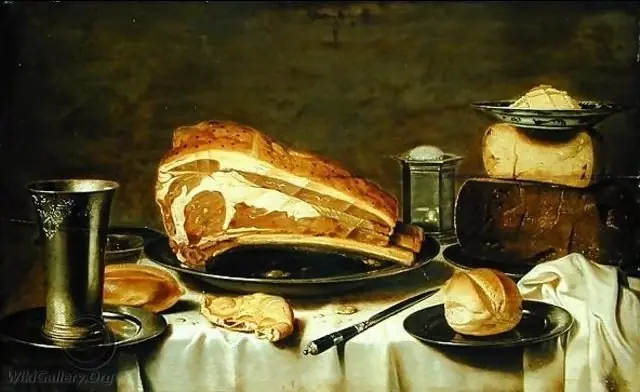 Still life of a laid table with cheese, meat and bread
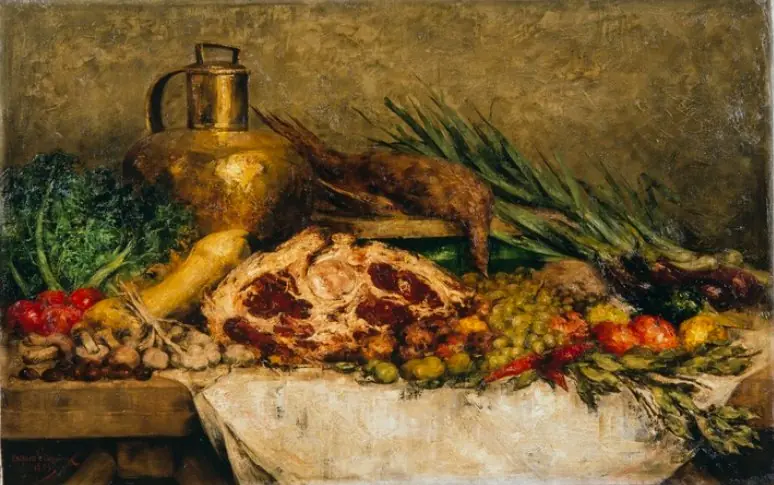 Still life
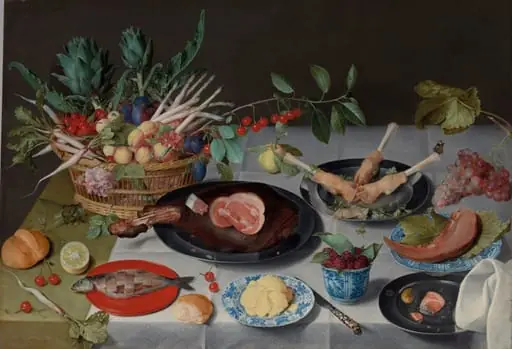 Still Life with Meat, Fish, Vegetables, and Fruit
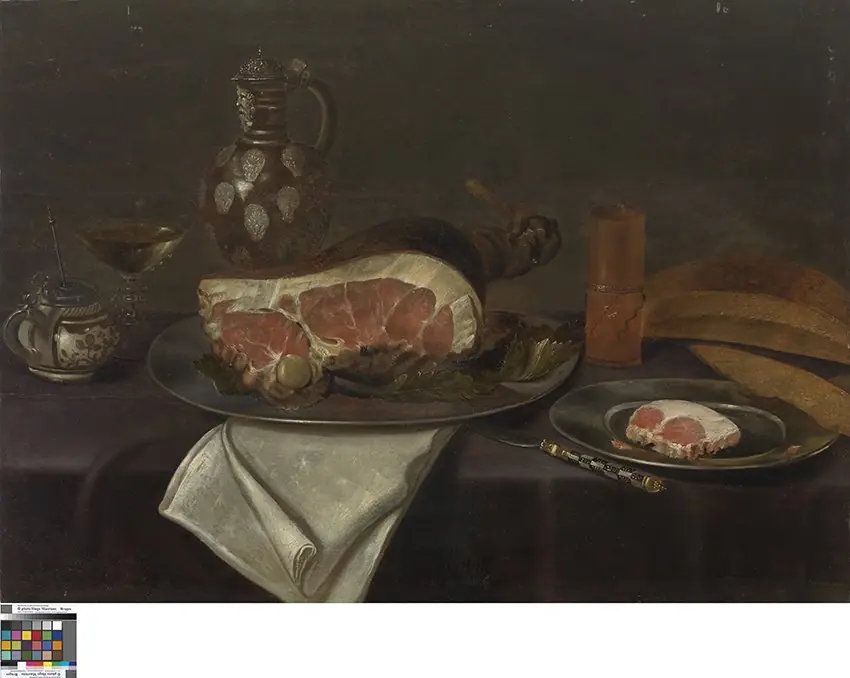 Still life with ham, mustard pot, and stoneware jug
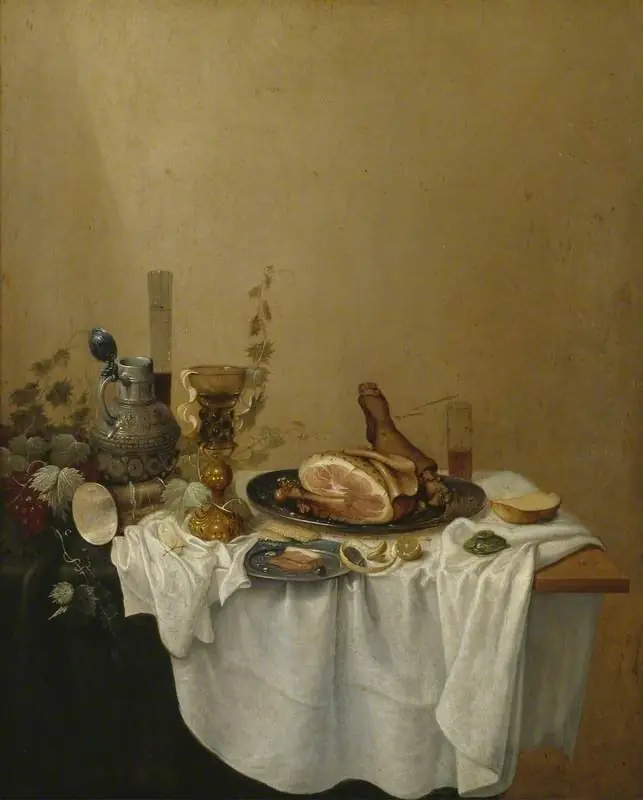 Still life with stoneware jug, bekerschroef, glassware and a leg of ham
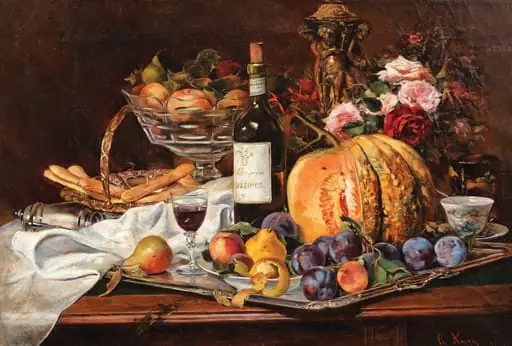 Natură statică cu fructe și sticlă de vin
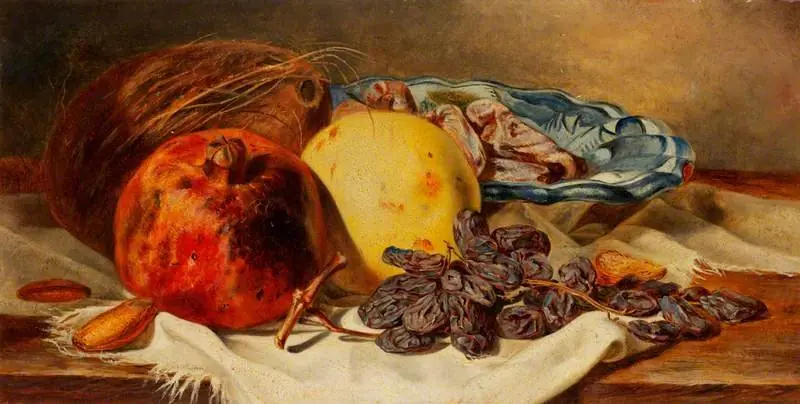 Fruit
Fruit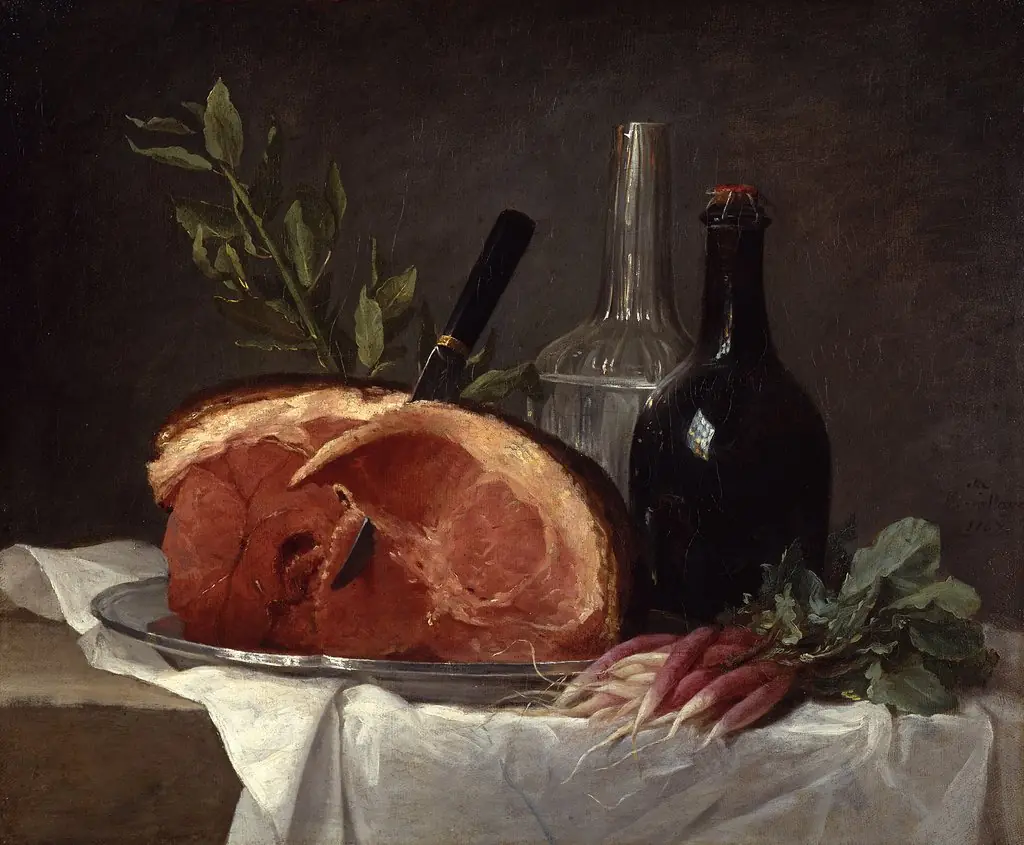 Still Life with a Ham
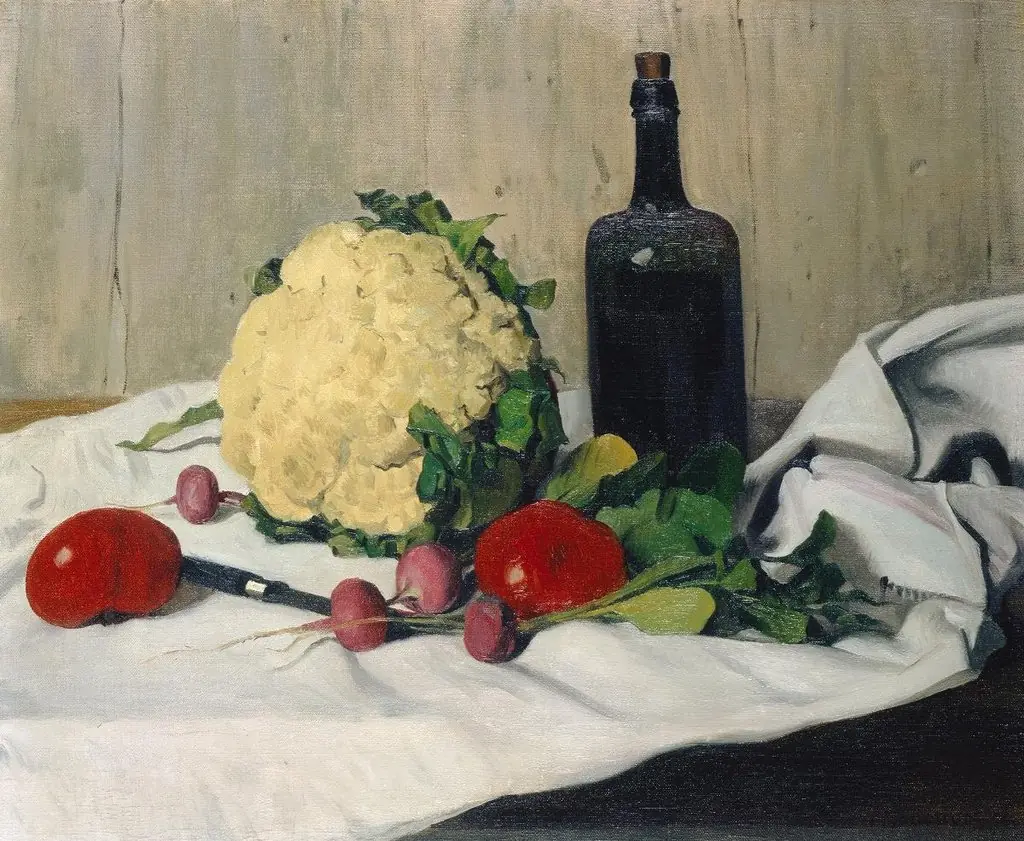 Le Chou-fleur