Artwork
Painter in His Studio
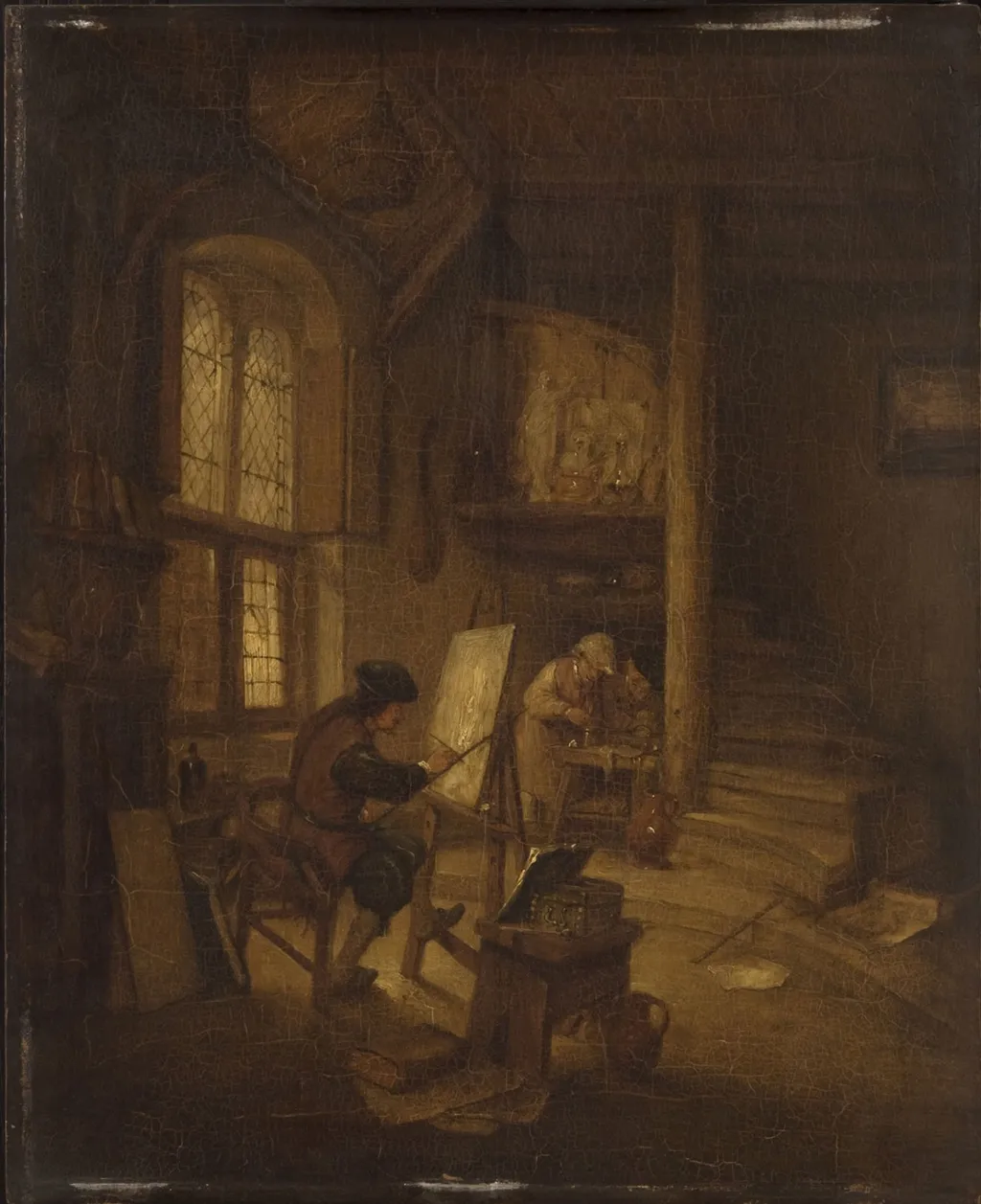
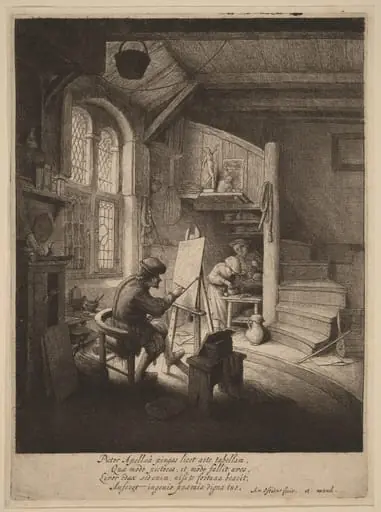
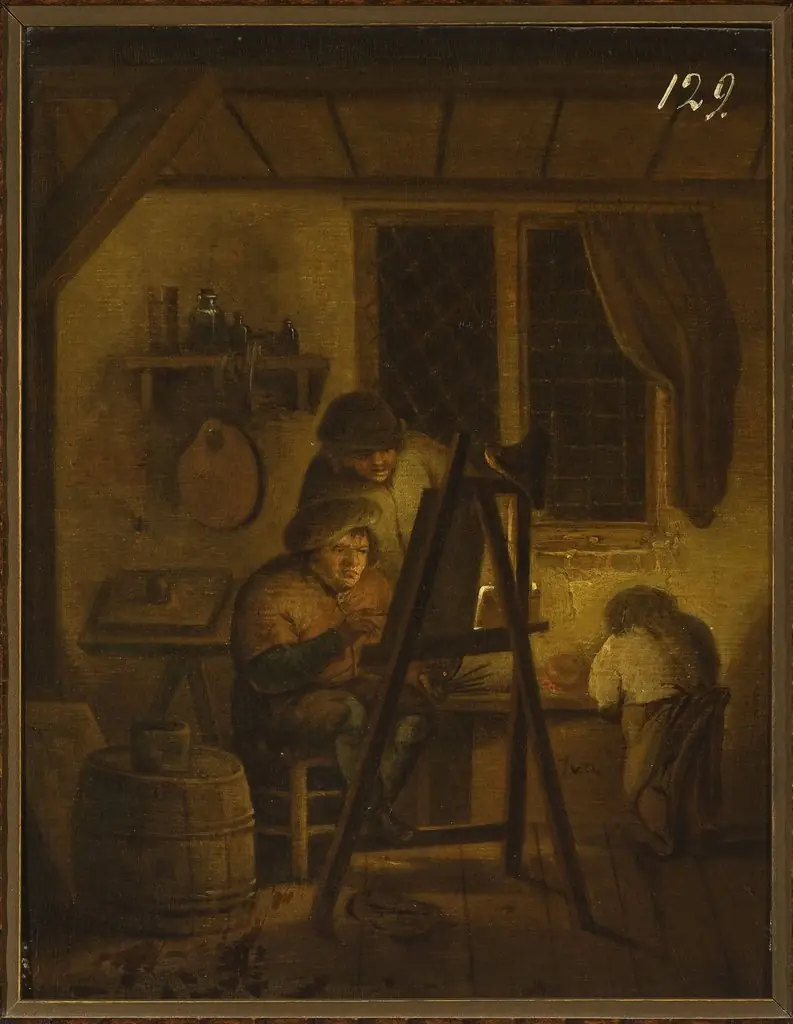
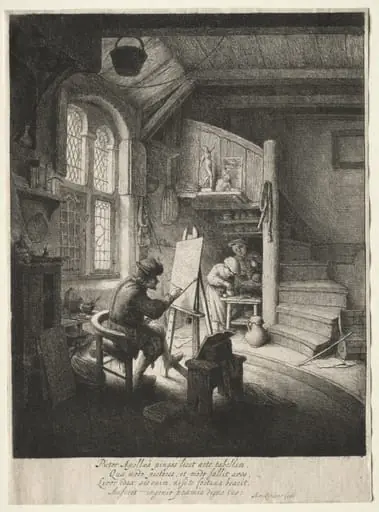
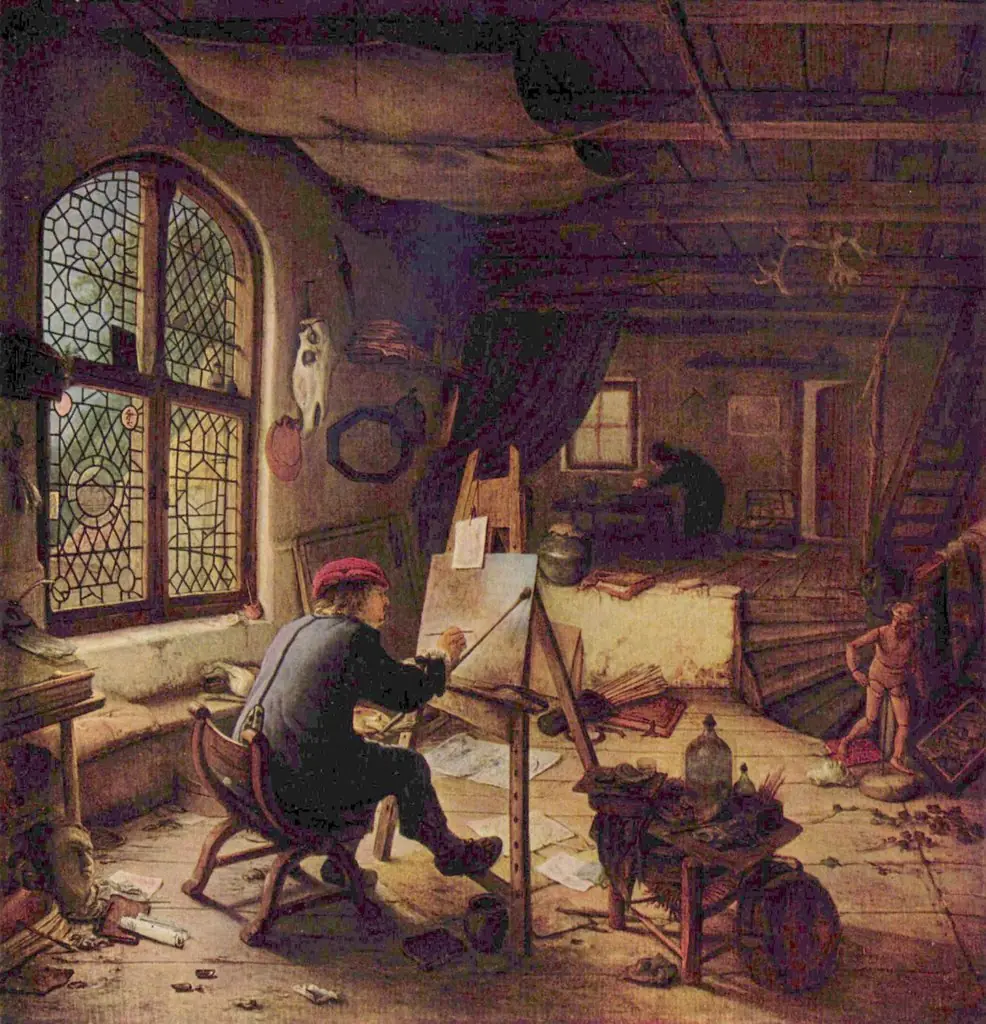
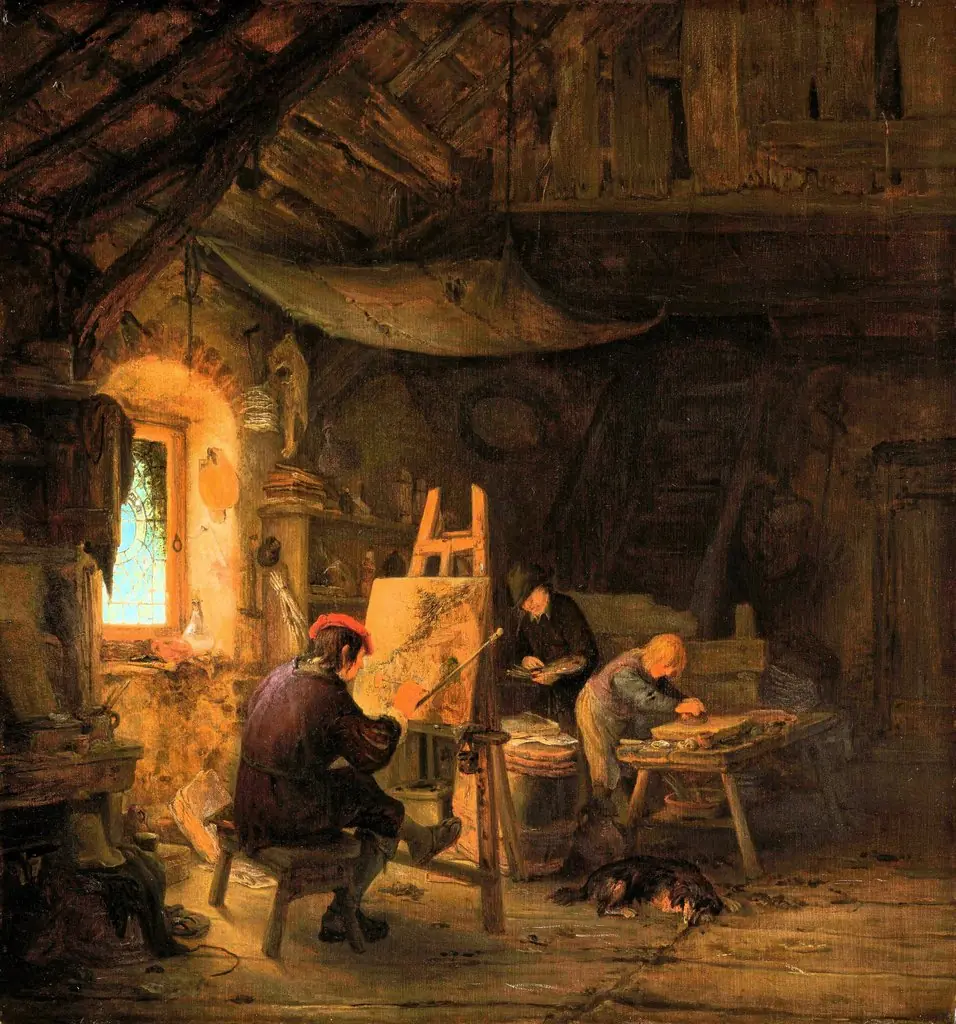
Painter in His Studio is an oil painting by the Dutch Golden Age artist Adriaen van Ostade. It dates from 1650 and is held in the collection of the Philadelphia Museum of Art.
About this work
Overview
Beside him, a second man bends over a table, engaged with various tools and an open book, suggesting the preparation of materials or the study of theory.
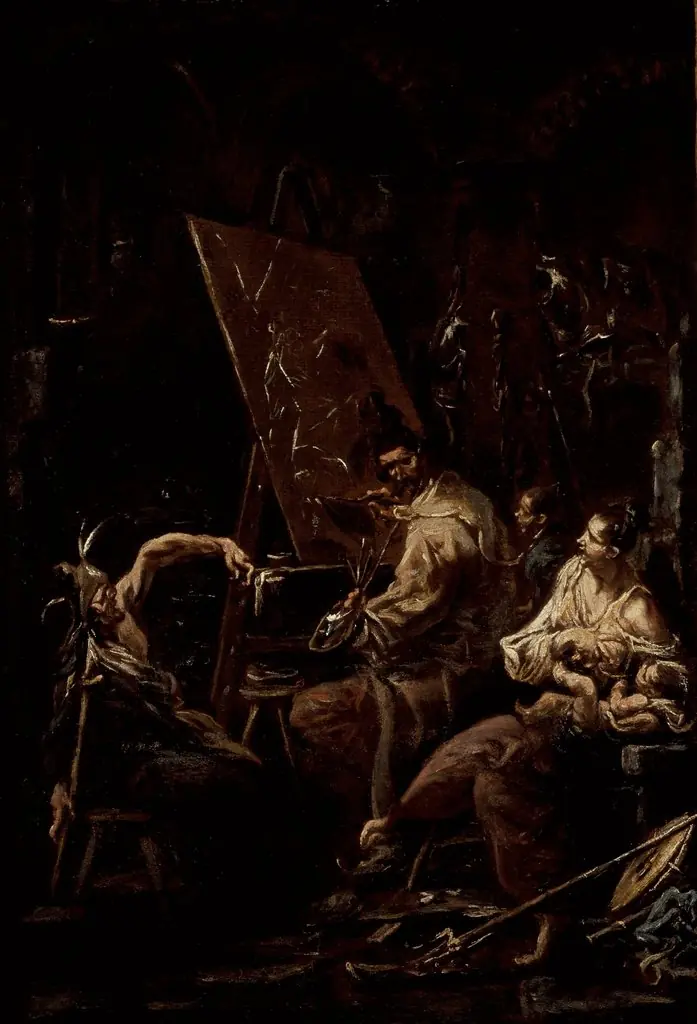
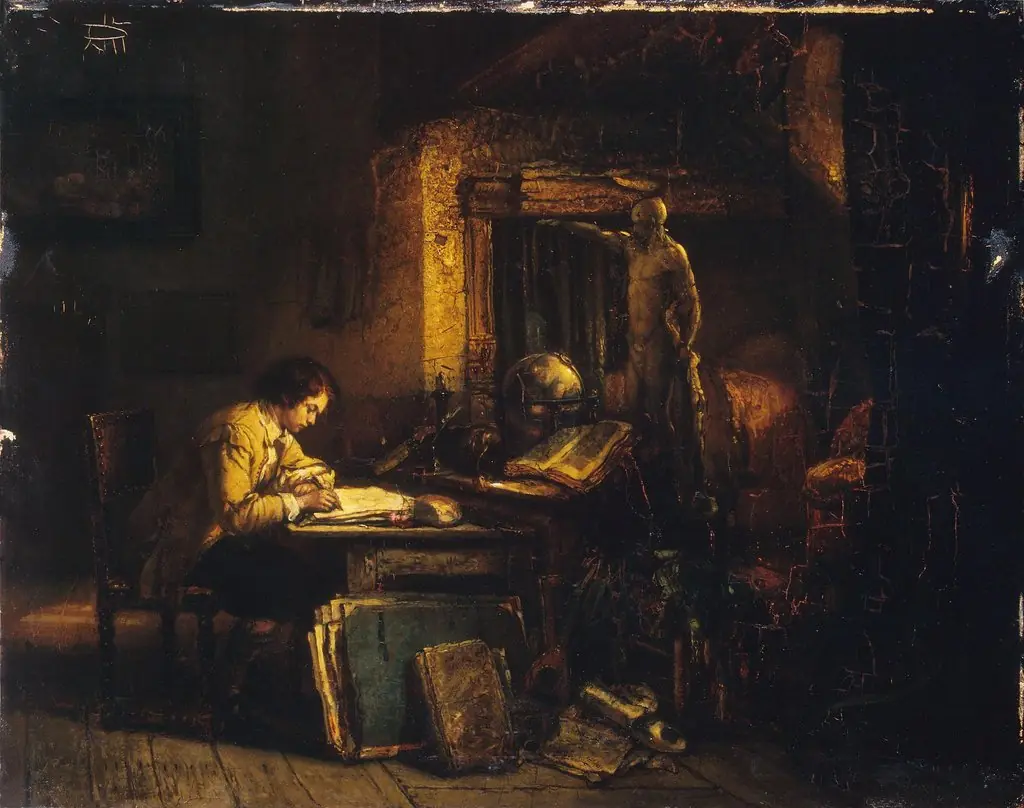
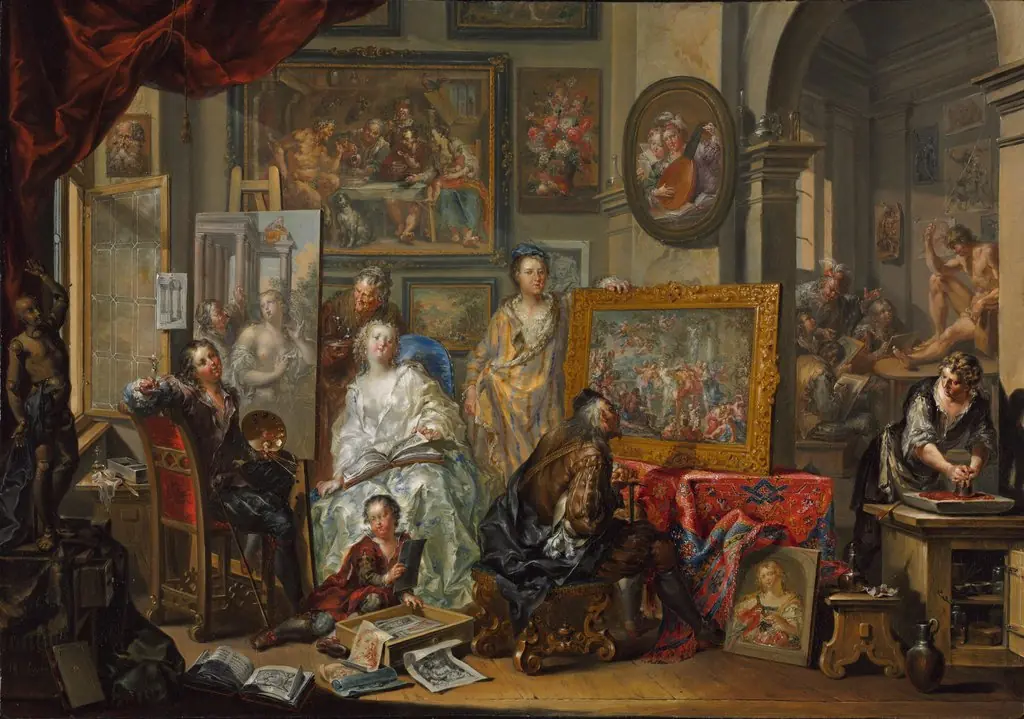
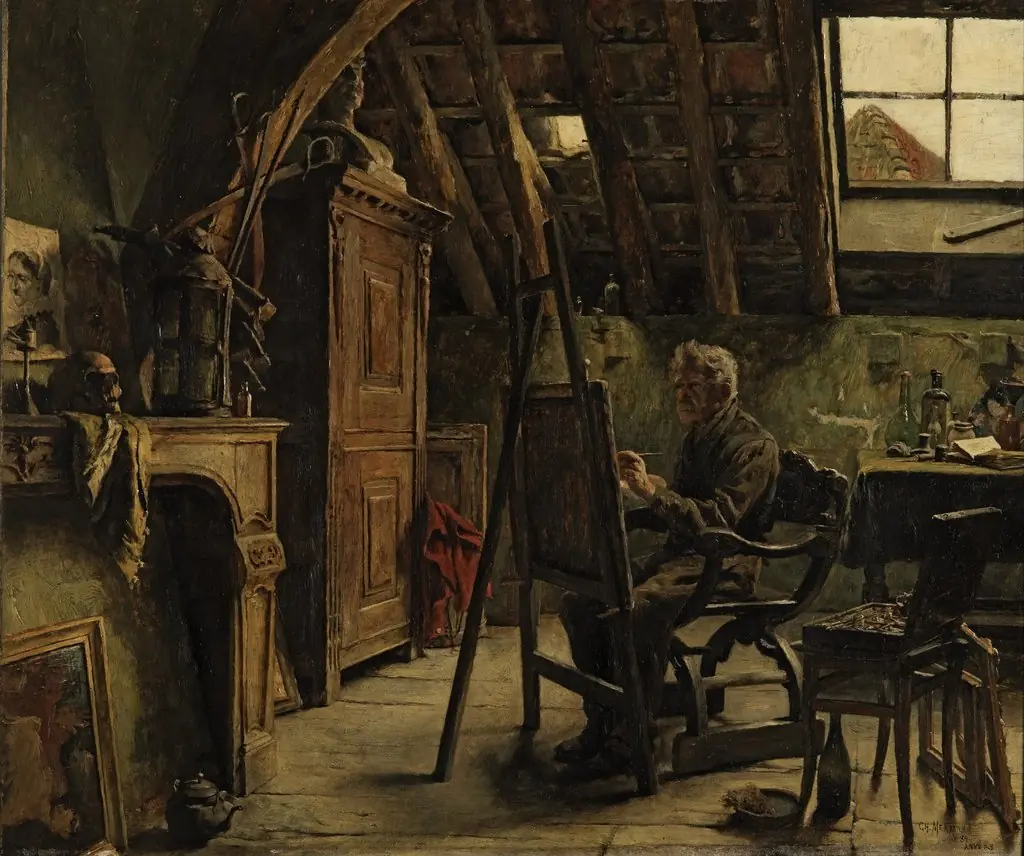
Painted in 1650, Adriaen van Ostade's 'Painter in His Studio' is a quintessential example of Dutch Golden Age genre painting, depicting the interior of an artist's workspace. The composition centers on two figures within a dimly lit, cluttered room characterized by rough wooden floors and walls. Natural light enters through two tall windows with diamond-shaped panes, illuminating the central activity while leaving the periphery in shadow. One figure, presumably the artist, sits at an easel, diligently working on a small canvas. Beside him, a second man bends over a table, engaged with various tools and an open book, suggesting the preparation of materials or the study of theory. Van Ostade, renowned for his depictions of peasant life, here turns his attention to the artistic profession itself, portraying the studio not as an idealized sanctuary but as a practical, working environment. The work reflects the artist's mature style, utilizing earthy tones and loose brushwork to capture the textures of wood, fabric, and light. This painting stands as a significant contribution to the 17th-century tradition of artist-in-studio imagery, offering a realistic glimpse into the daily labor of a painter during the Dutch Golden Age.
Subject & Meaning
The composition features two figures within a modest workshop: a painter seated before an easel, absorbed in rendering a small canvas, and a second man bent over a table, handling tools and consulting a book. The juxtaposition of creation and study suggests a contemplative atmosphere, emphasizing the disciplined routine of artistic practice.
Technique & Style
Van Ostade employs a restrained palette of warm earth tones, allowing the natural light entering through tall, diamond‑pane windows to illuminate the central figures. The interplay of light and shadow creates a subtle chiaroscuro effect, giving depth to the cluttered floor, walls, and assorted implements such as brushes, palette, and stool.
History & Provenance
Created in the mid‑seventeenth century, the painting entered the Philadelphia Museum of Art’s holdings through acquisition in the early twentieth century. Its provenance prior to that point remains sparsely documented, reflecting the common trajectory of Dutch genre works moving through private collections before entering public institutions.
Context
During the Dutch Golden Age, genre scenes like this one were popular for their moral and domestic resonances. Van Ostade, known for his depictions of peasant life, turns his attention to the artist’s own environment, offering a rare glimpse into the material conditions of a seventeenth‑century studio.
Artist & collection
Artist
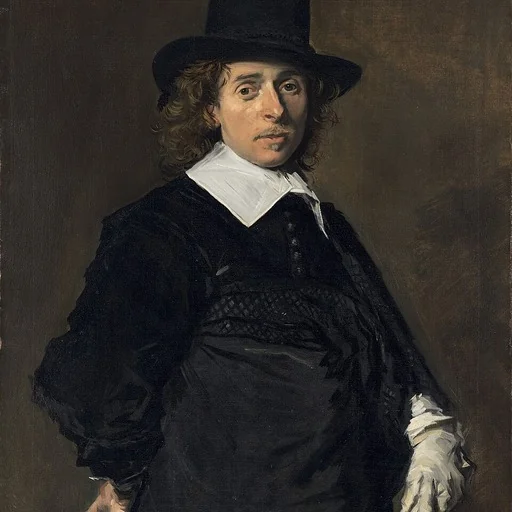
Adriaen van Ostade (baptized as Adriaen Jansz Hendricx 10 December 1610 – buried 2 May 1685) was a Dutch Golden Age painter of genre works, showing the everyday life of ordinary men and women.