Artwork
Midas and Bacchus
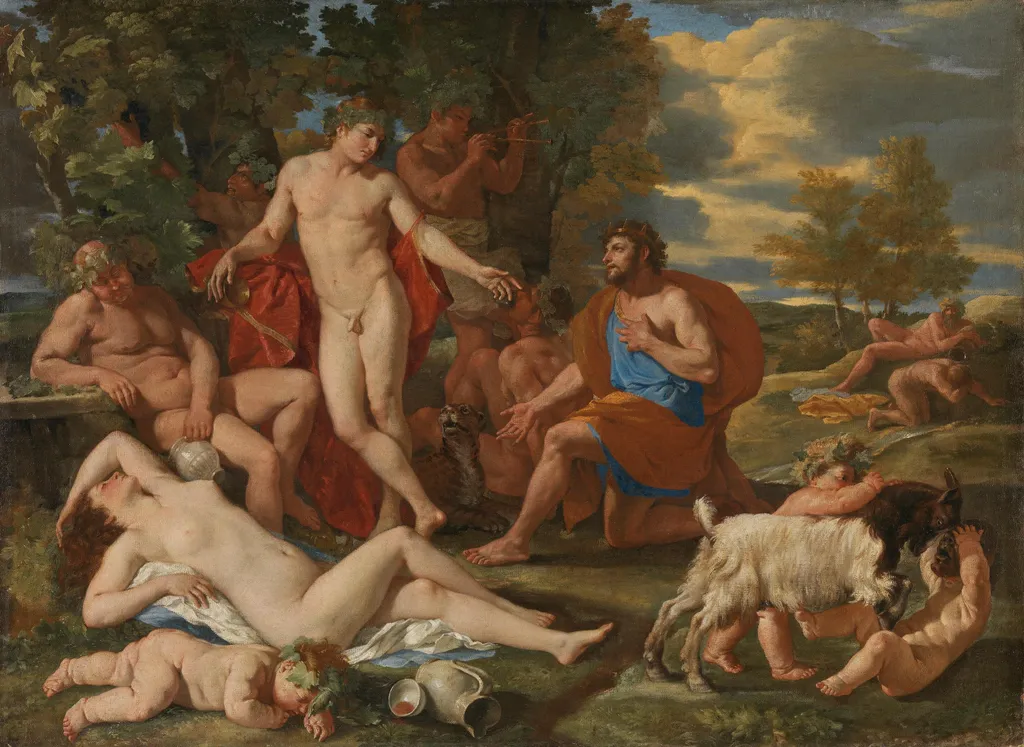
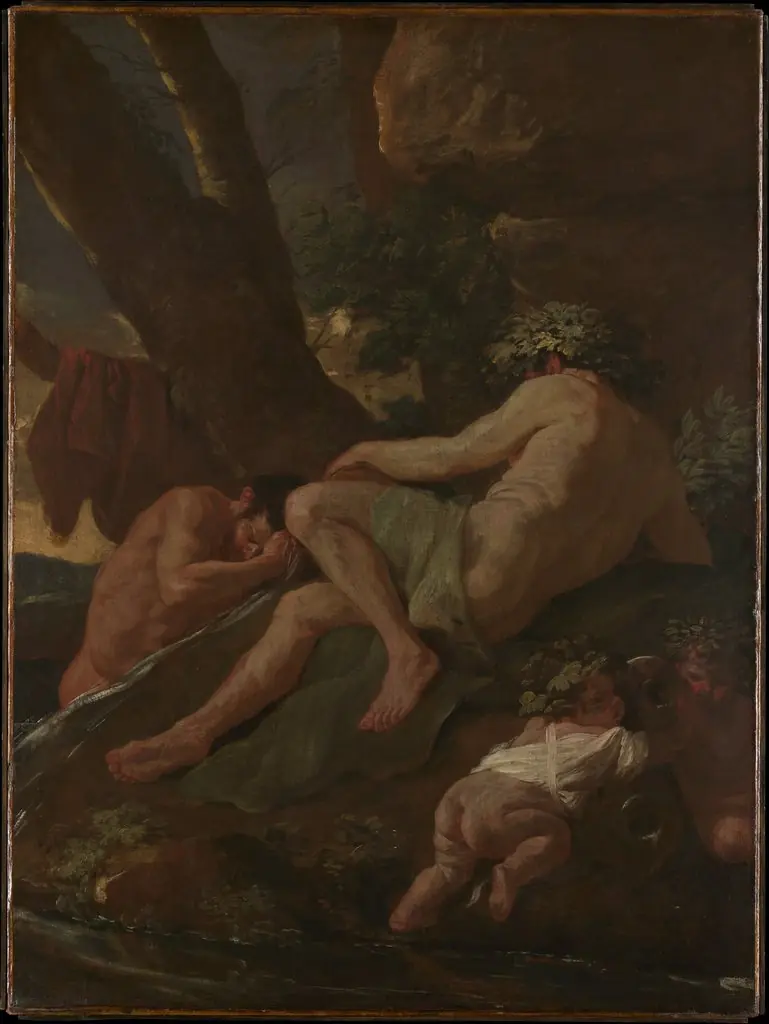
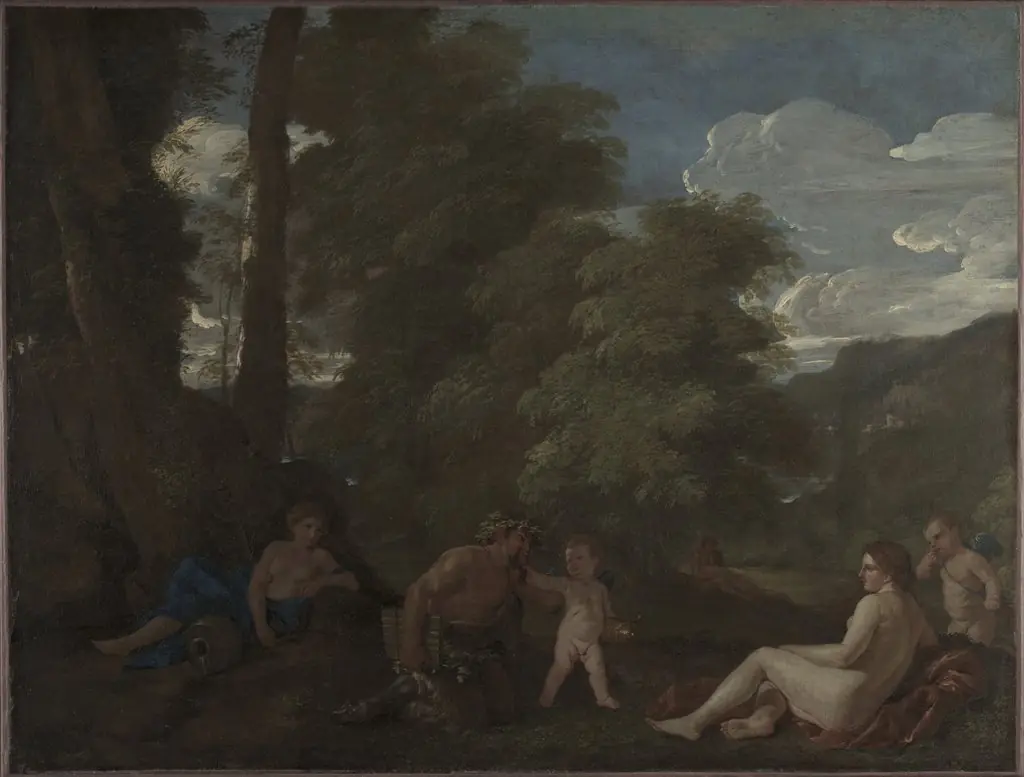
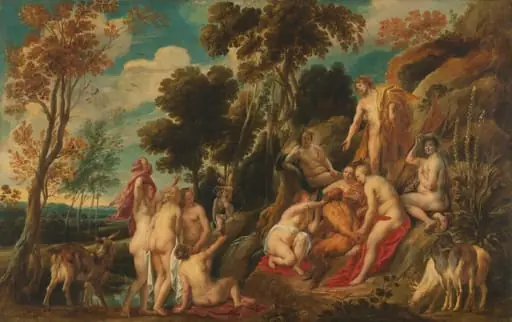
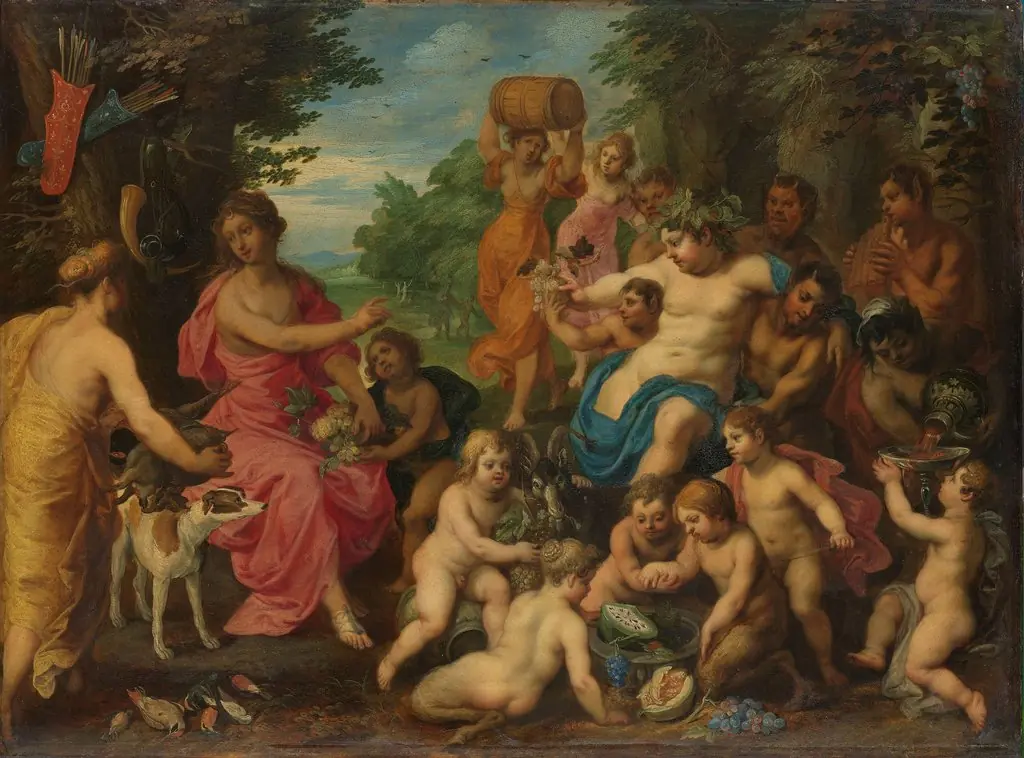
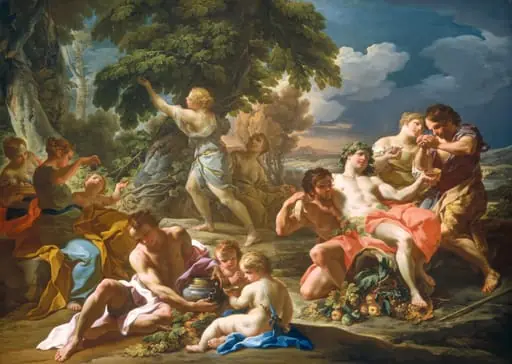
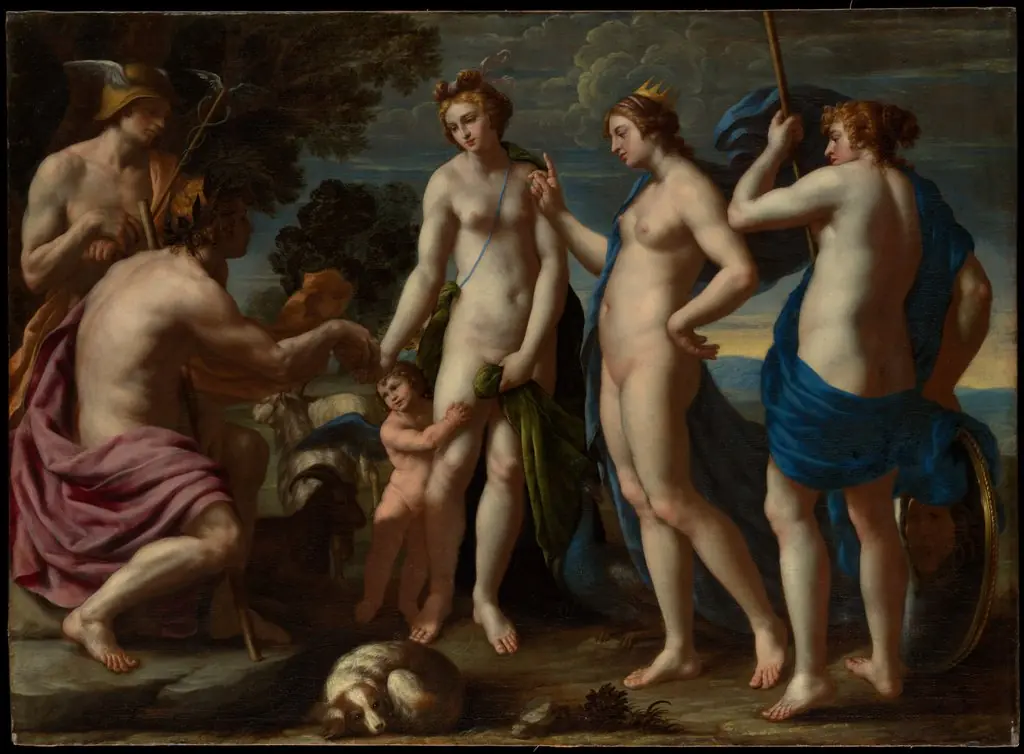
Midas and Bacchus is an oil painting by the Early Baroque Italian artist Nicolas Poussin. It dates from 1624 and is held in the collection of the Bavarian State Painting Collections.
About this work
This painting is called Midas and Bacchus.
It was made by Nicolas Poussin in 1624.
The painting is now in the Alte Pinakothek, and I don't know what it looks like, but I can tell you that Nicolas Poussin was the artist who created it, and if you want to learn more about his style, you can look up Nicolas Poussin.
Overview
Midas and Bacchus is an oil on canvas executed in the early 1620s, generally placed between 1624 and 1629. The work is commonly linked to the French classicist Nicolas Poussin, though its attribution remains subject to scholarly discussion. Today the painting forms part of the collection of the Alte Pinakothek in Munich, where it is displayed among other Baroque-era pieces.
Subject & Meaning
The narrative traditionally illustrates Midas’s request to taste gold, a story that serves as a moral commentary on greed and the limits of human desire.
The composition depicts the mythological encounter between the legendary king Midas and the god of wine, Bacchus. The narrative traditionally illustrates Midas’s request to taste gold, a story that serves as a moral commentary on greed and the limits of human desire. By presenting both figures together, the painting invites reflection on the consequences of excess and the transformative power of divine intervention.
Technique & Style
Rendered in oil, the canvas shows Poustoid clarity of form and balanced arrangement typical of early French classicism. The figures are modeled with smooth, controlled brushwork, emphasizing anatomical precision and restrained color harmonies. Light falls gently across the scene, creating subtle chiaroscuro that enhances the three-dimensionality of the characters while maintaining a calm, orderly atmosphere.
History & Provenance
The work entered the Bavarian royal collection in the 18th century before being transferred to the Alte Pinakothek after the museum’s foundation in 1836. Documentation from the period records its presence in the Munich inventory, confirming its continuous public display for nearly two centuries. The painting’s provenance reflects the broader European interest in Poussin’s oeuvre during the Enlightenment.
Context
Created during Poussin’s formative years in Rome, the painting aligns with the period’s revival of classical themes drawn from antiquity. The choice of the Midas myth mirrors contemporary intellectual currents that favored moralizing subjects drawn from ancient literature, a trend encouraged by patrons seeking artworks that combined aesthetic refinement with didactic purpose.
Own this work as a print
Artist & collection
Artist
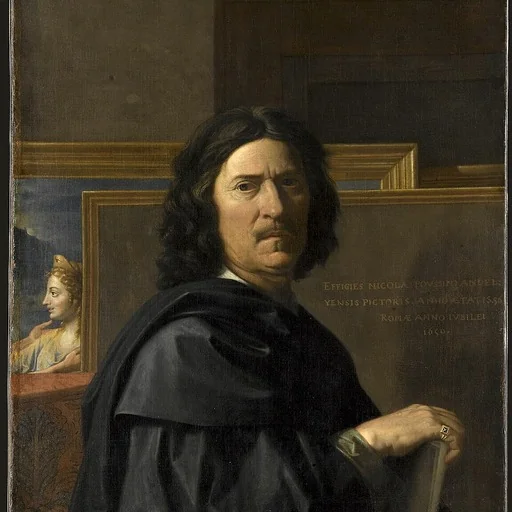
Nicolas Poussin (UK: , US: , French: ; June 1594 – 19 November 1665) was a leading painter of the classical French Baroque style, although he spent most of his working life in Rome.