Artwork
Cain and Abel
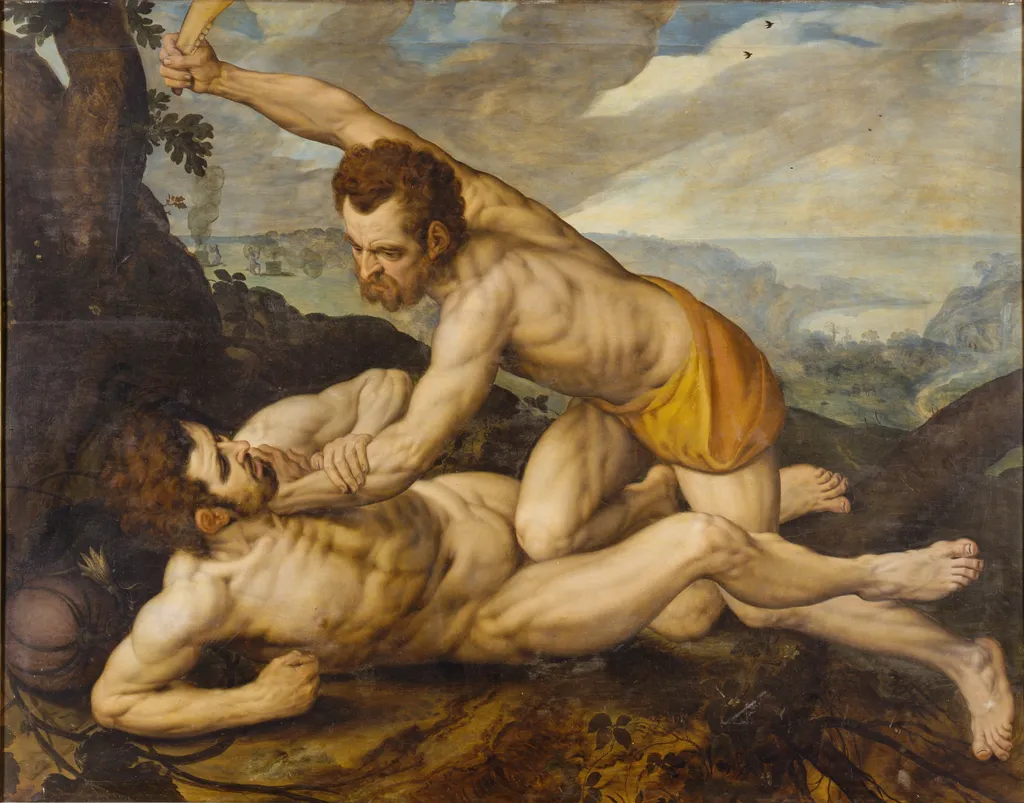
Cain and Abel is an unspecified painting by the Mannerist artist Frans Floris. It dates from 1550 and is held in the collection of the Statens Museum for Kunst.
About this work
Overview
Frans Floris’s oil painting Cain and Abel, executed around 1550, presents a stark biblical confrontation on a barren, rocky terrain. The canvas, now part of the Statens Museum for Kunst collection, captures the moment of violent struggle between the two brothers, rendered with a focus on anatomical detail and dramatic lighting.
Subject & Meaning
The work visualizes the Genesis narrative of the first fratricide, portraying the elder brother Cain overpowering his younger sibling Abel. By depicting the figures nude, Floris emphasizes the raw physicality of the conflict, stripping away any external symbols to foreground the primal nature of jealousy and violence inherent in the story.
Technique & Style
Floris employs a pronounced chiaroscuro, using stark contrasts between illuminated musculature and deep shadows to model the bodies and heighten the tension. The composition relies on strong directional light that sculpts the figures, while a muted landscape with distant trees and a cloud‑filled sky recedes into the background, reinforcing the central drama.
History & Provenance
Created in the mid‑sixteenth century, the painting entered the Danish national collection and is presently displayed at the Statens Museum for Kunst in Copenhagen. Its acquisition history reflects the broader European interest in Northern Renaissance interpretations of biblical subjects during the period.
Own this work as a print
Artist & collection
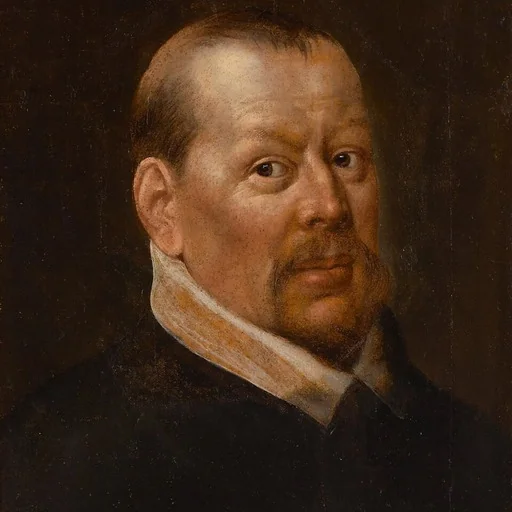
Artist
Frans Floris, Frans Floris the Elder or Frans Floris de Vriendt (17 April 1519 – 1 October 1570) was a Flemish painter, draughtsman, print artist and tapestry designer.