Artwork
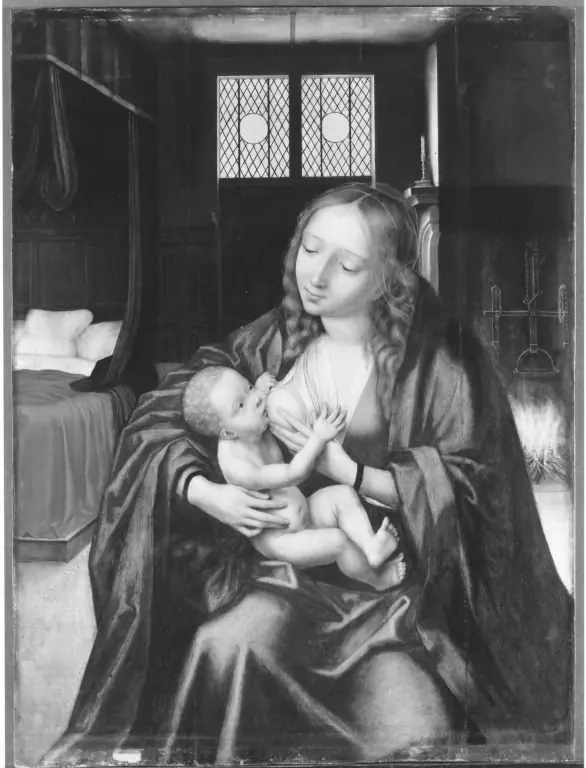
The Virgin and Child
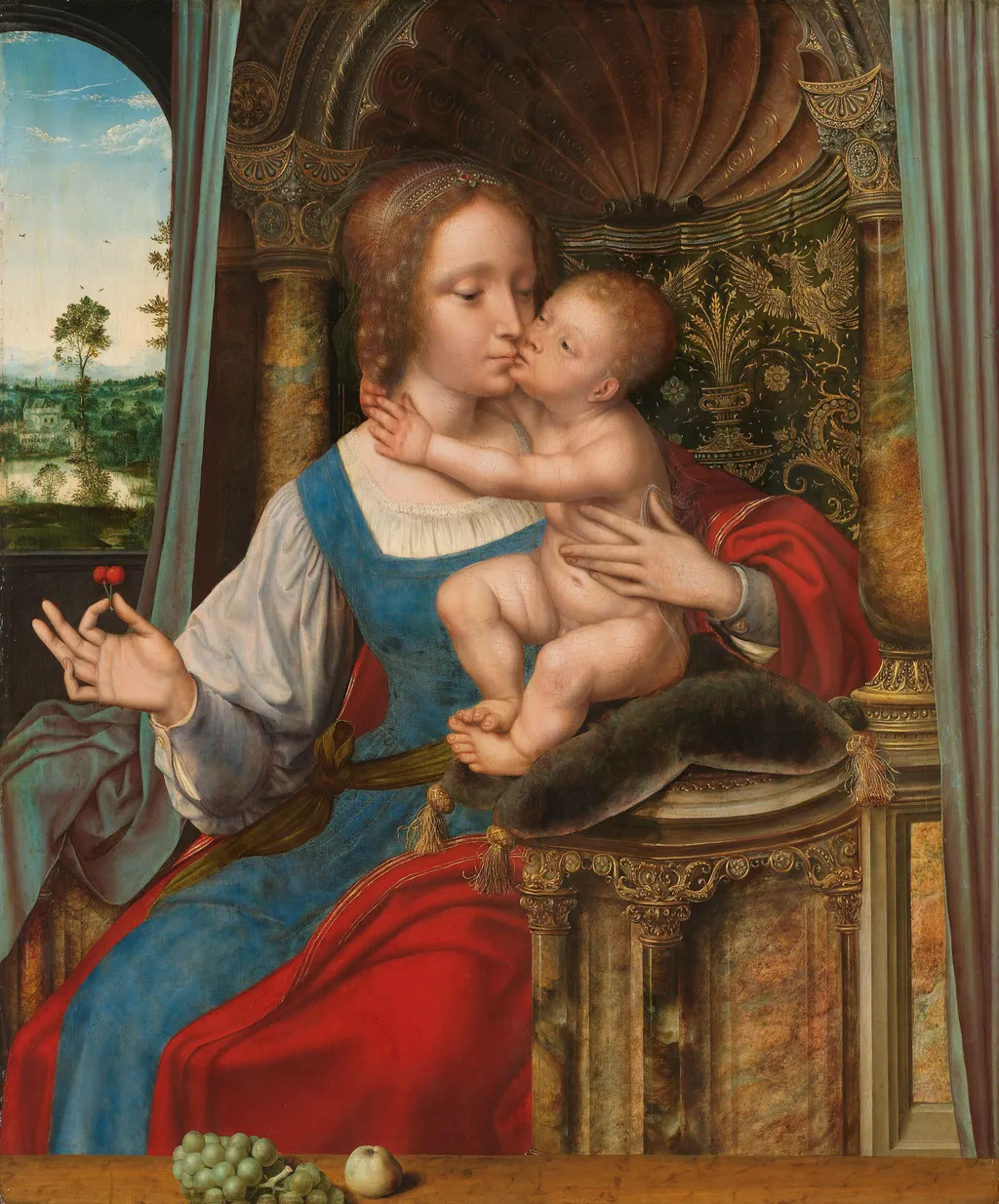
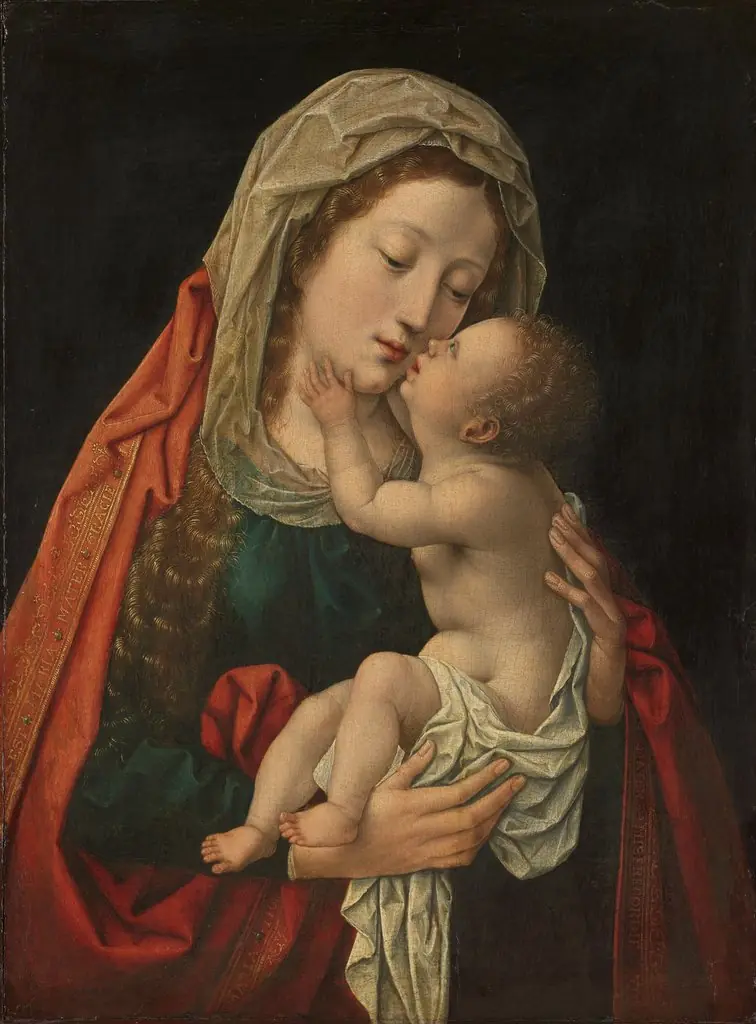
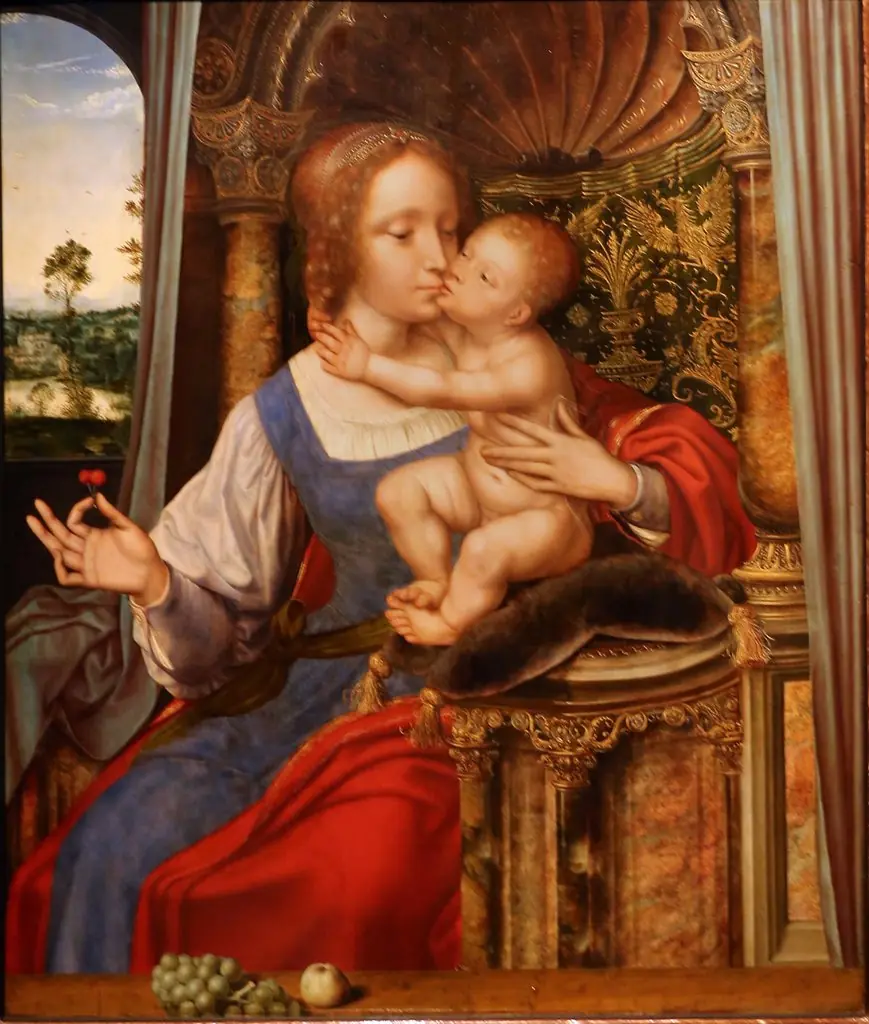
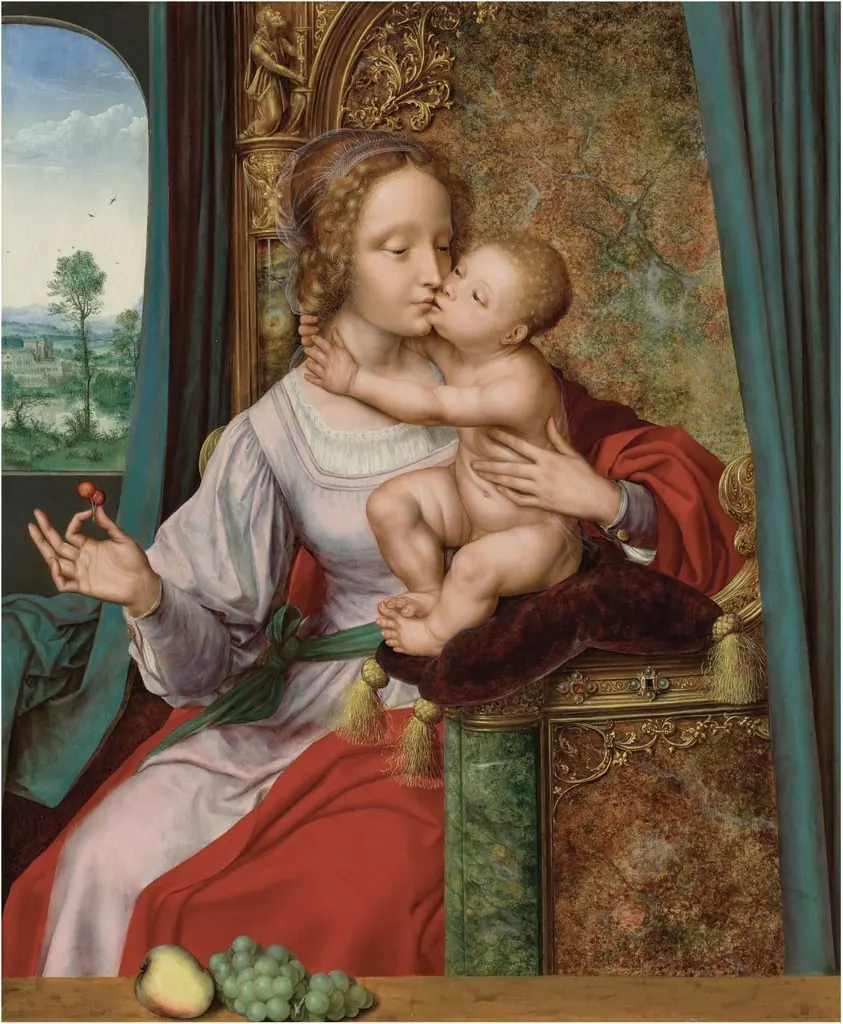
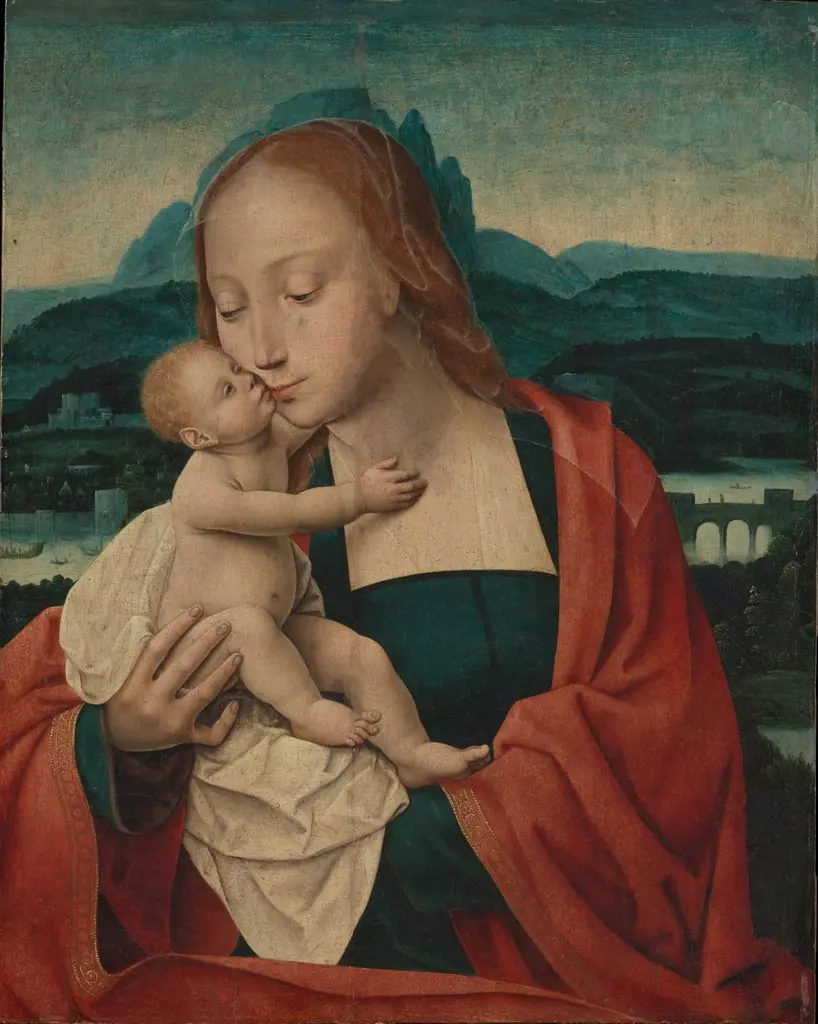
The Virgin and Child is an oil painting by the Northern Renaissance artist Quinten Metsys. It dates from 1520 and is held in the collection of the Rijksmuseum.
About this work
This painting is also known as Madonna and Child Kissing, which gives a hint about what's happening in the scene.
The painting is called The Virgin and Child.
It was made by Quinten Metsys in 1520.
The artist used oil paint for this work, which is a common medium for paintings from that time.
This painting is also known as Madonna and Child Kissing, which gives a hint about what's happening in the scene.
The painting is held at the Mauritshuis, but it's originally from the Rijksmuseum in Amsterdam.
You can learn more about similar paintings by looking up Quinten Metsys.
Overview
Quinten Metsys's The Virgin and Child, executed in 1520, is a quintessential example of Northern Renaissance devotional art. The composition centers on the Virgin Mary holding the Christ Child, capturing an intimate moment where the two figures lean in to kiss. This specific interaction, often referred to as the Madonna and Child Kissing, emphasizes human tenderness alongside divine significance, a characteristic focus of Metsys's mature style. Painted in oil on panel, the work demonstrates the artist's mastery of texture and light, particularly in the rendering of the Virgin's voluminous robes and the Child's delicate skin. Metsys, a leading figure of the Antwerp school, frequently explored this subject, yet this 1520 version stands out for its psychological depth and the emotional connection between mother and son. The painting reflects the shift in Netherlandish art during the early 16th century toward more naturalistic and emotionally resonant religious imagery, moving away from rigid hieratic forms. Its compact scale and detailed finish suggest it was intended for private contemplation rather than public liturgical display, aligning with the growing demand for personal devotional objects among the merchant class of the Low Countries.
Subject & Meaning
The scene shows the Virgin embracing the Christ child, their lips meeting in a tender kiss, a visual expression of the theological concept of the Incarnation and the human love between mother and son. The title Madonna and Child Kissing highlights this affectionate interaction, underscoring both divine and earthly affection.
Technique & Style
Metsys employed the oil medium on a wooden panel, allowing for fine modelling of flesh tones and subtle chiaroscuro. The brushwork combines the detailed realism typical of Northern Renaissance painting with a gentle softness that enhances the emotional intimacy of the figures.
History & Provenance
Originally part of the collection of the Rijksmuseum in Amsterdam, the painting is presently on long‑term loan to the Mauritshuis in The Hague. Its movement between institutions reflects the collaborative sharing of Dutch cultural heritage.
Context
The Virgin and Child was a popular motif in Flemish art of the early 1500s, serving both private devotion and public display. Metsys, known for his synthesis of Italian Renaissance influences with local traditions, contributed to this genre with a work that balances devotional solemnity and domestic warmth.
Artist & collection
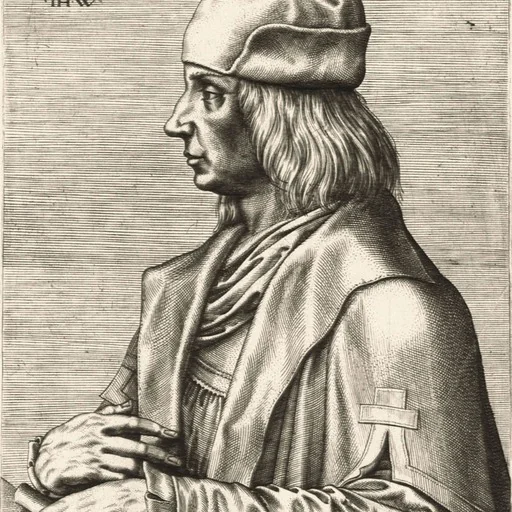
Artist
Quentin Matsys (UK: MAT-sysse, US: MAHT-sysse; also Massys or Metsys; Flemish: Quinten Matsijs ; 1466–1530) was a Flemish painter in the Early Netherlandish tradition.