Artwork
Still-Life with Flower Bouquet and Plums
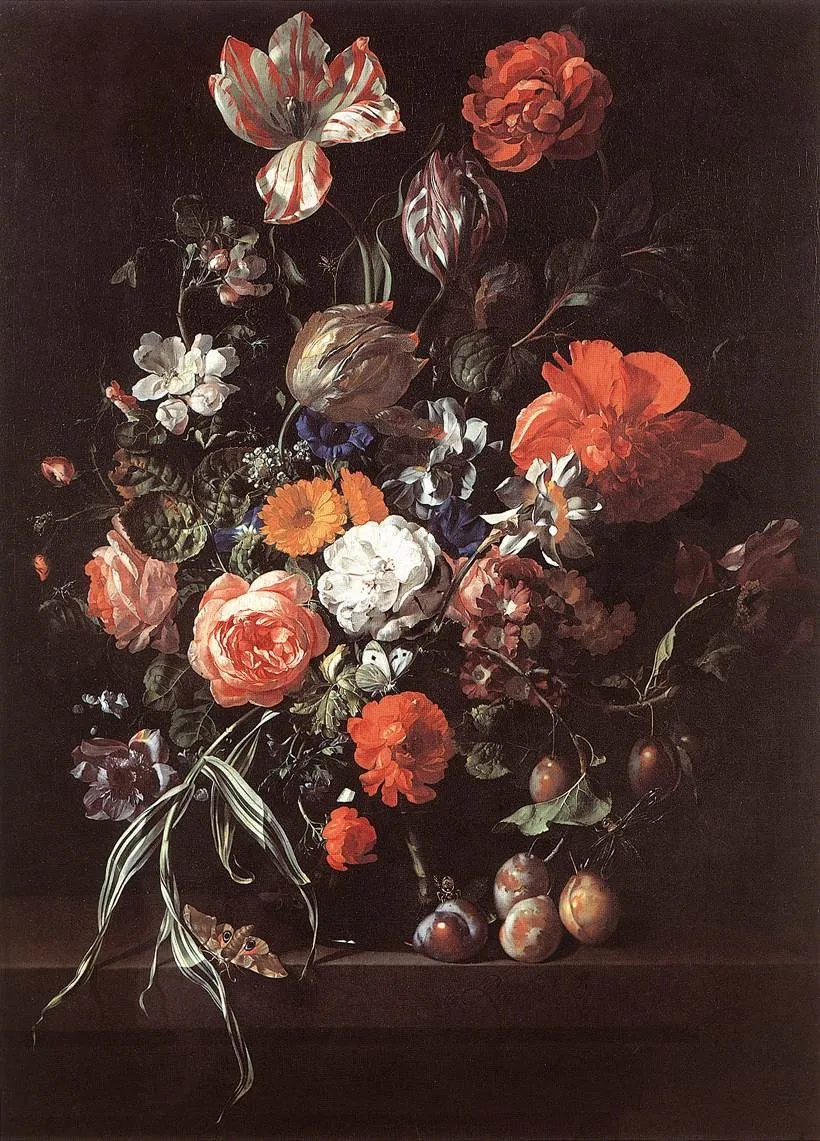
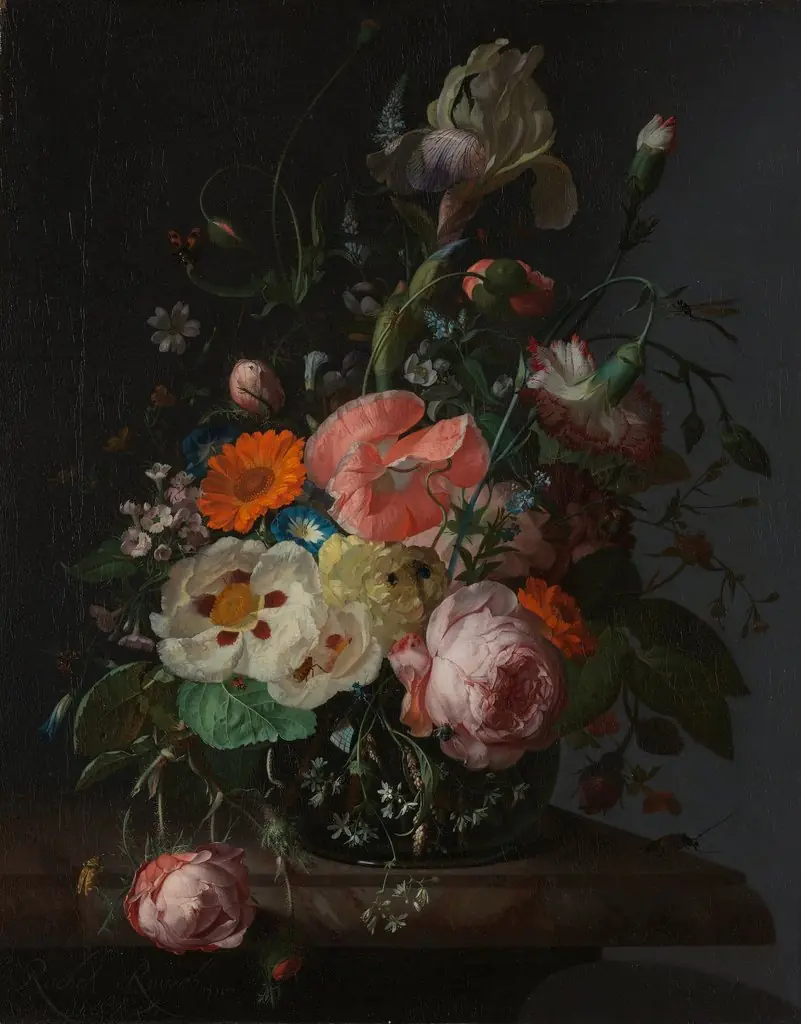
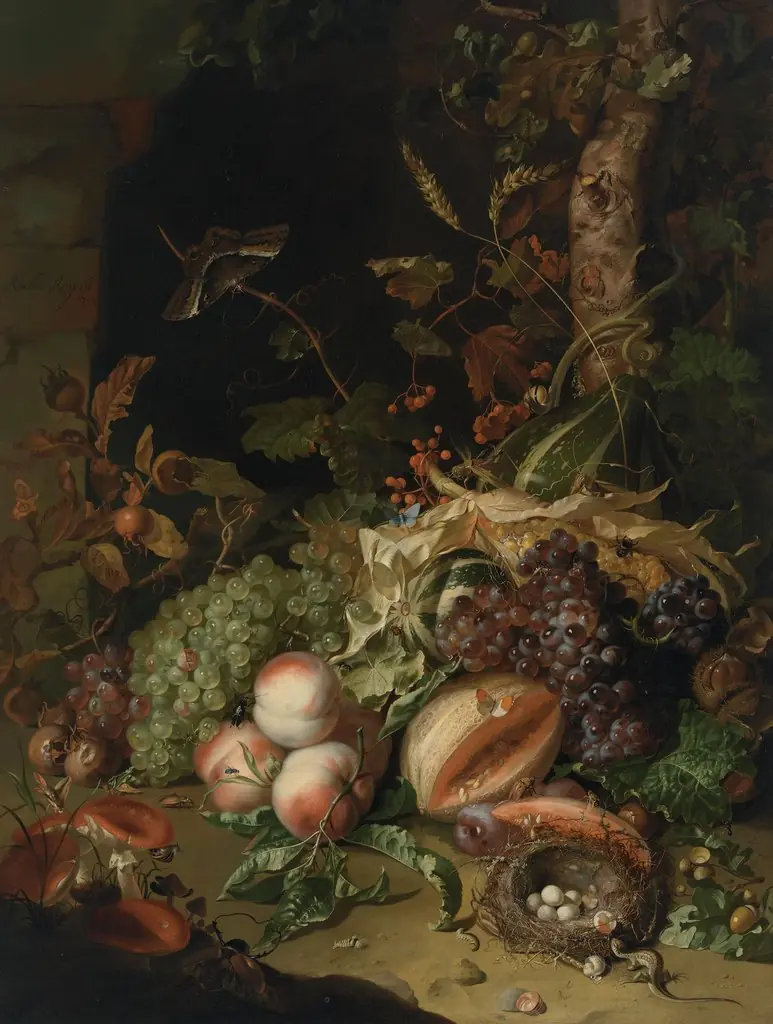
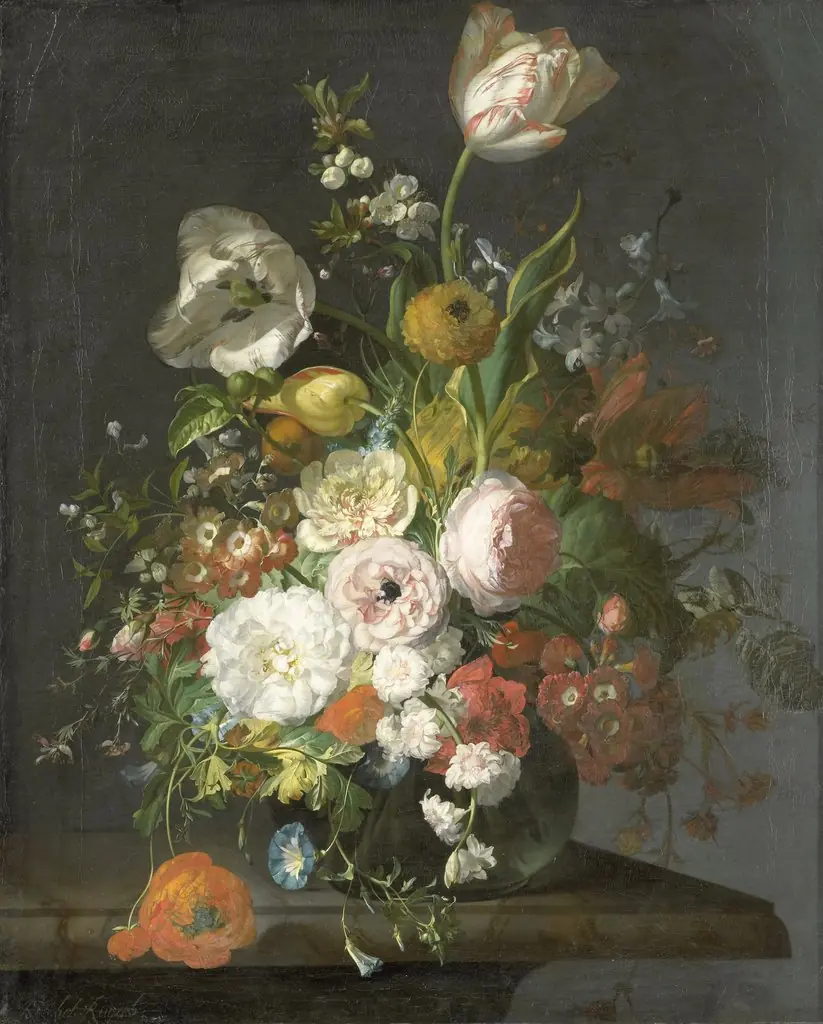
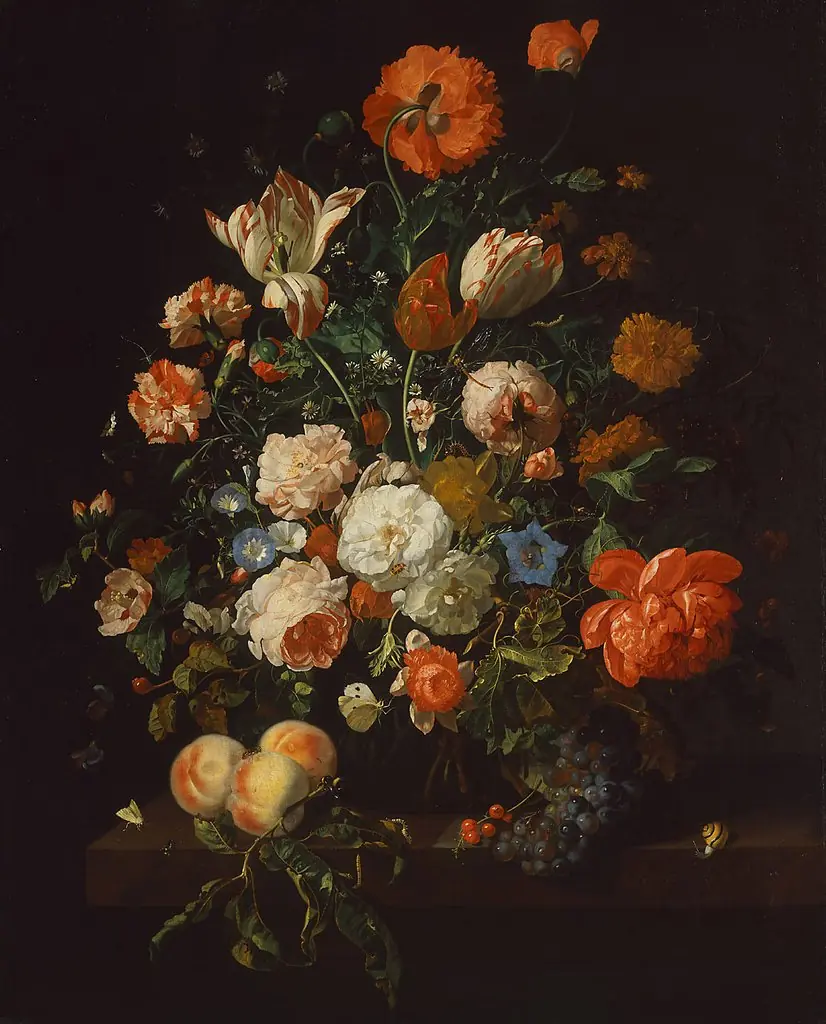
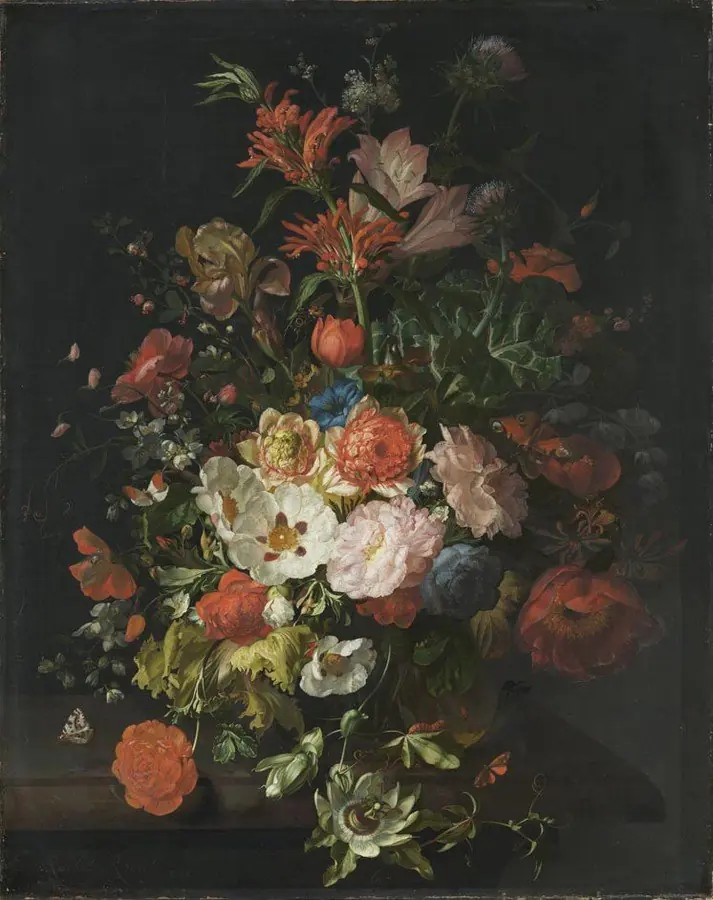
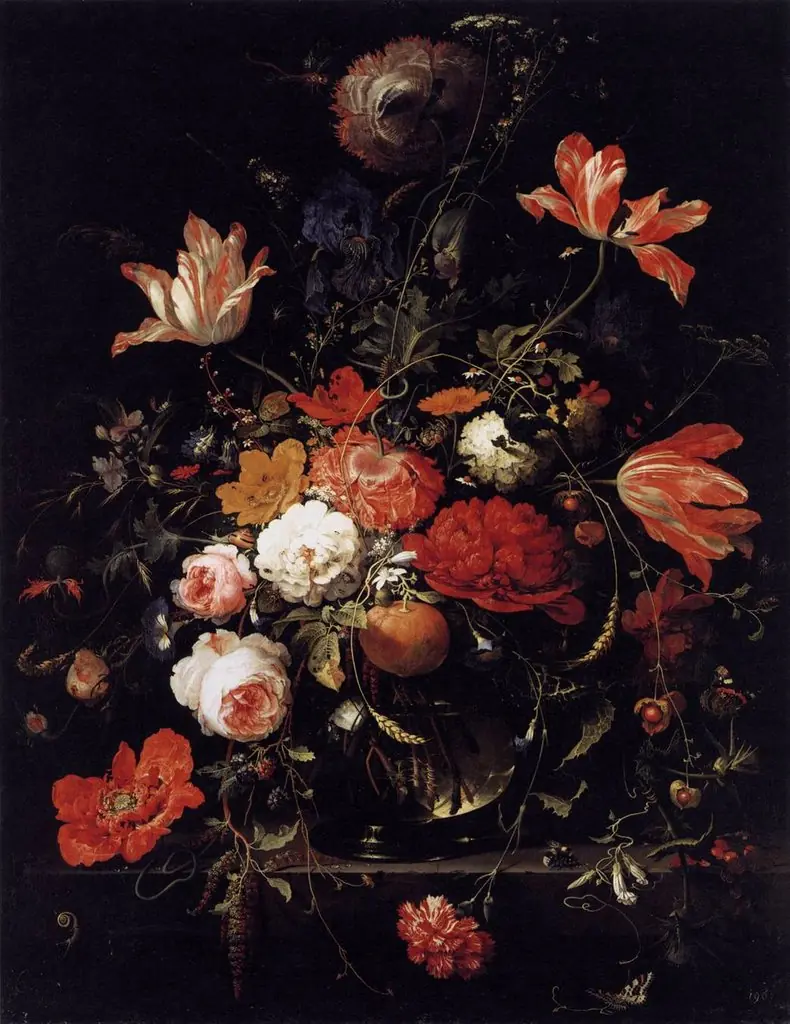
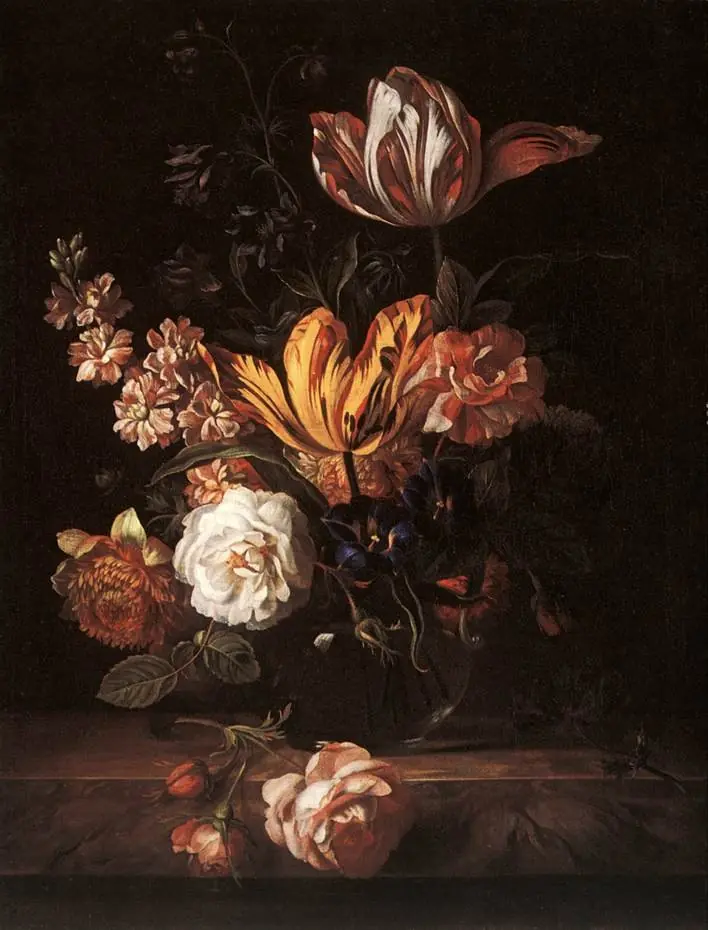
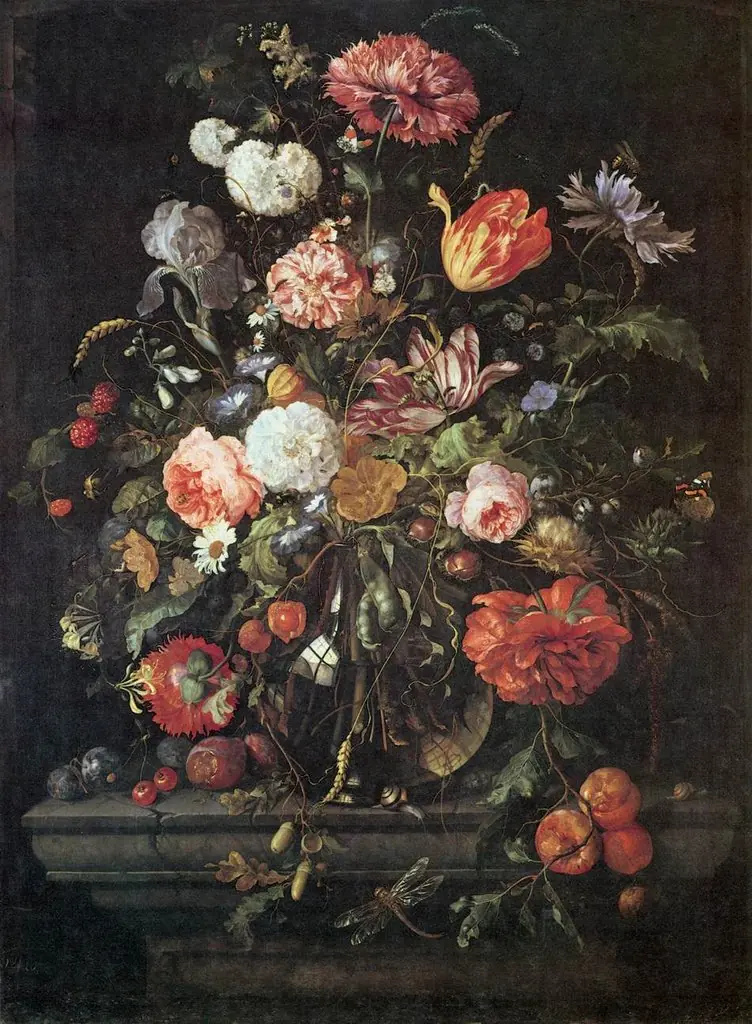
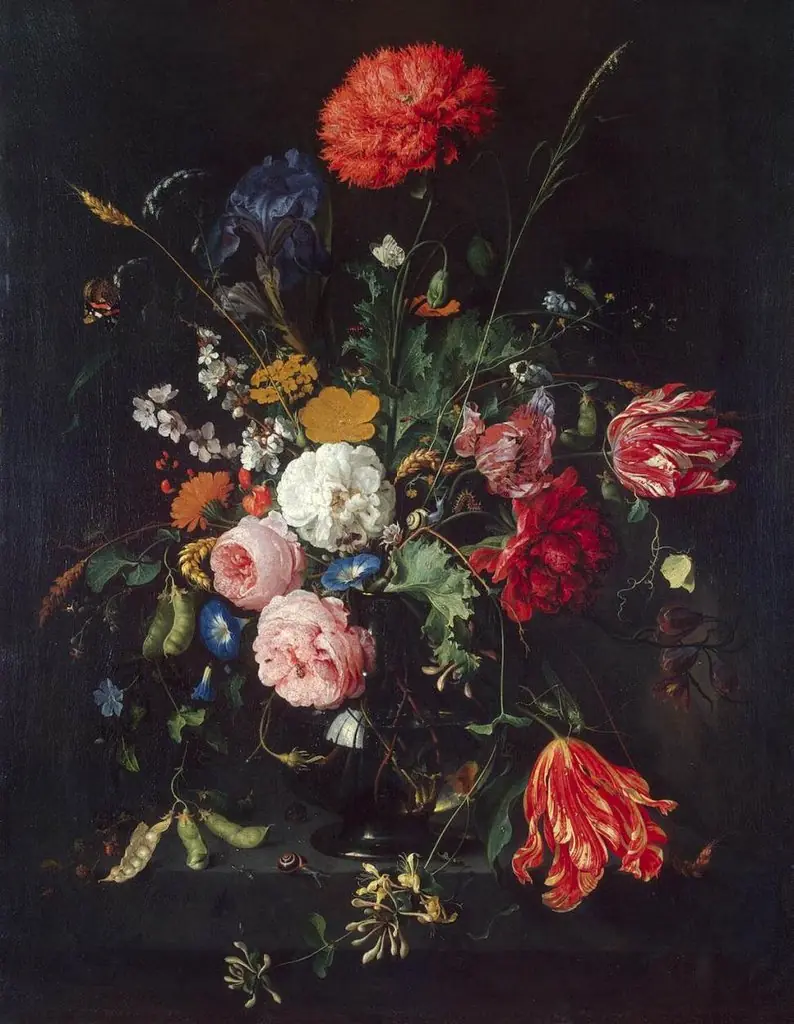
Still-Life with Flower Bouquet and Plums is an oil painting by the Dutch Golden Age artist Rachel Ruysch. It dates from 1704 and is held in the collection of the Royal Museums of Fine Arts of Belgium.
About this work
Overview
Painted in 1704 by Rachel Ruysch, this oil-on-canvas still life presents a carefully arranged ensemble of flowers and plums.
Painted in 1704 by Rachel Ruysch, this oil-on-canvas still life presents a carefully arranged ensemble of flowers and plums. Created during the height of the Dutch Golden Age, the work reflects Ruysch’s lifelong dedication to botanical subjects. Its composition balances natural abundance with quiet restraint, characteristic of her mature style. The painting resides today in the Royal Museums of Fine Arts of Belgium.
Subject & Meaning
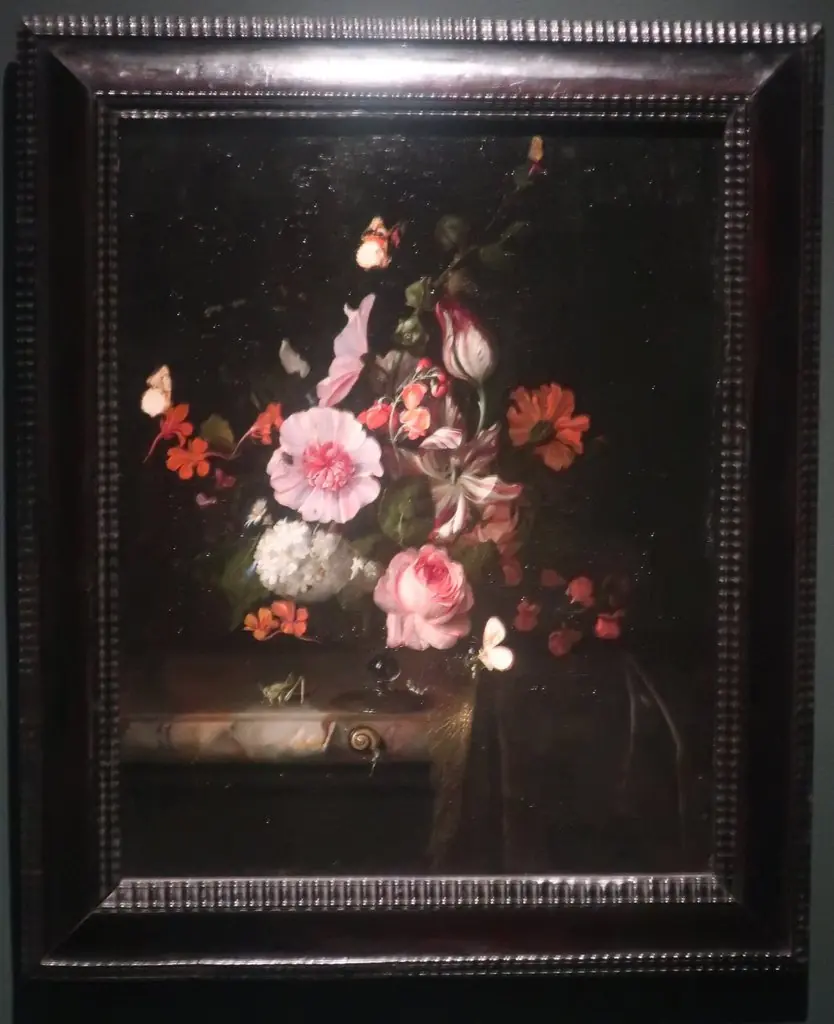
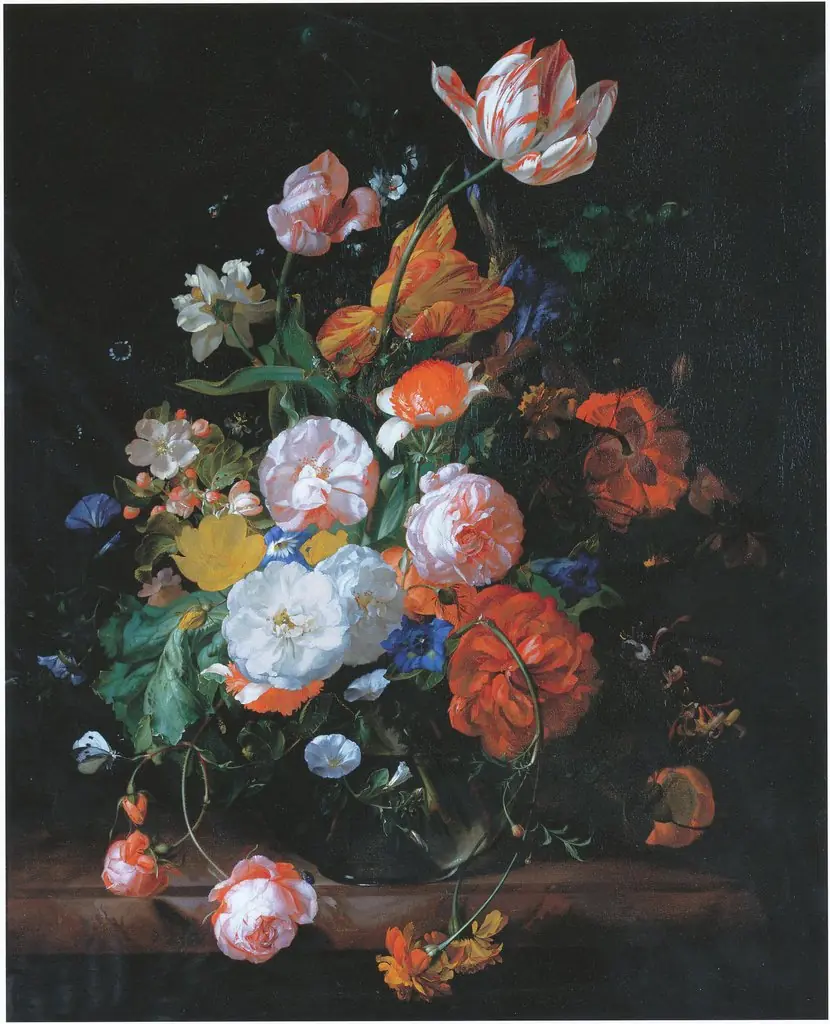
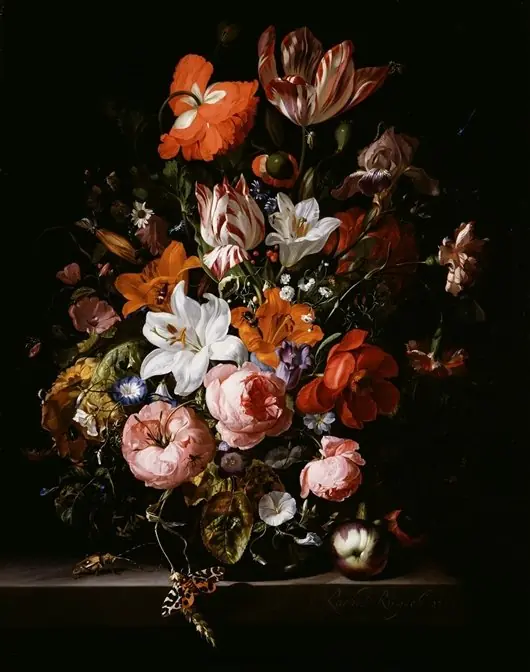
The arrangement includes a variety of blooming flowers—red, white, and orange—and several plums, their skins rendered in deep red and brown. These elements, though visually pleasing, also carry subtle references to transience: flowers in full bloom alongside fruit nearing ripeness suggest the passage of time. The absence of overt symbolism keeps the focus on the quiet dignity of everyday natural forms.
Technique & Style
Ruysch employed fine brushwork to capture the delicate textures of petals, leaves, and fruit surfaces. The dark background enhances the luminosity of the objects, drawing attention to their form and color without distraction. Her handling of light and detail reflects close observation of nature, avoiding theatricality in favor of precise, almost scientific rendering, typical of her approach to floral still life.
History & Provenance
Completed in 1704, the painting entered the collection of the Royal Museums of Fine Arts of Belgium at an unknown date, likely through acquisition or donation in the 19th century. Ruysch’s reputation during her lifetime ensured wide circulation of her works across Europe. This piece remains one of many documented examples of her output, preserved due to her enduring artistic standing.
Context
In early 18th-century Amsterdam, still-life painting was a respected genre, and Ruysch stood out as a woman achieving professional success in a male-dominated field. Her career spanned over sixty years, supported by aristocratic patrons and guild recognition. The genre’s popularity reflected Dutch civic pride in natural science and domestic order, values mirrored in her orderly, detailed compositions.
Legacy
Ruysch’s meticulous approach to botanical subjects influenced generations of still-life painters. As the most extensively recorded female artist of the Dutch Golden Age, her career challenged contemporary norms about gender and artistic authority. Her works, including this one, continue to be studied for their technical precision and quiet emotional resonance.
Artist & collection
Artist
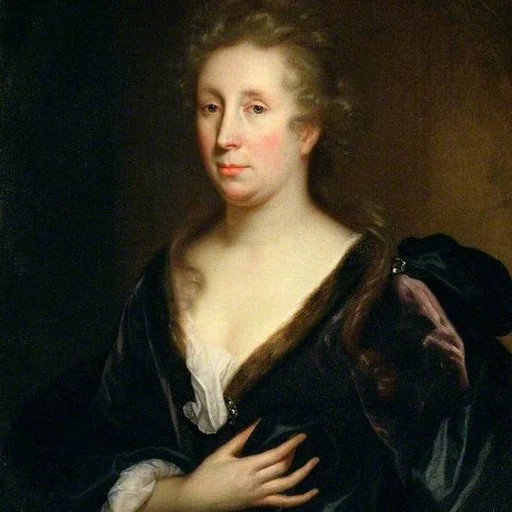
Rachel Ruysch (3 June 1664 – 12 October 1750) was a Dutch still-life painter from the Dutch Republic.

Museum
Royal Museums of Fine Arts of Belgium
Continue through works from the same source collection.