Artwork
Spring Woods
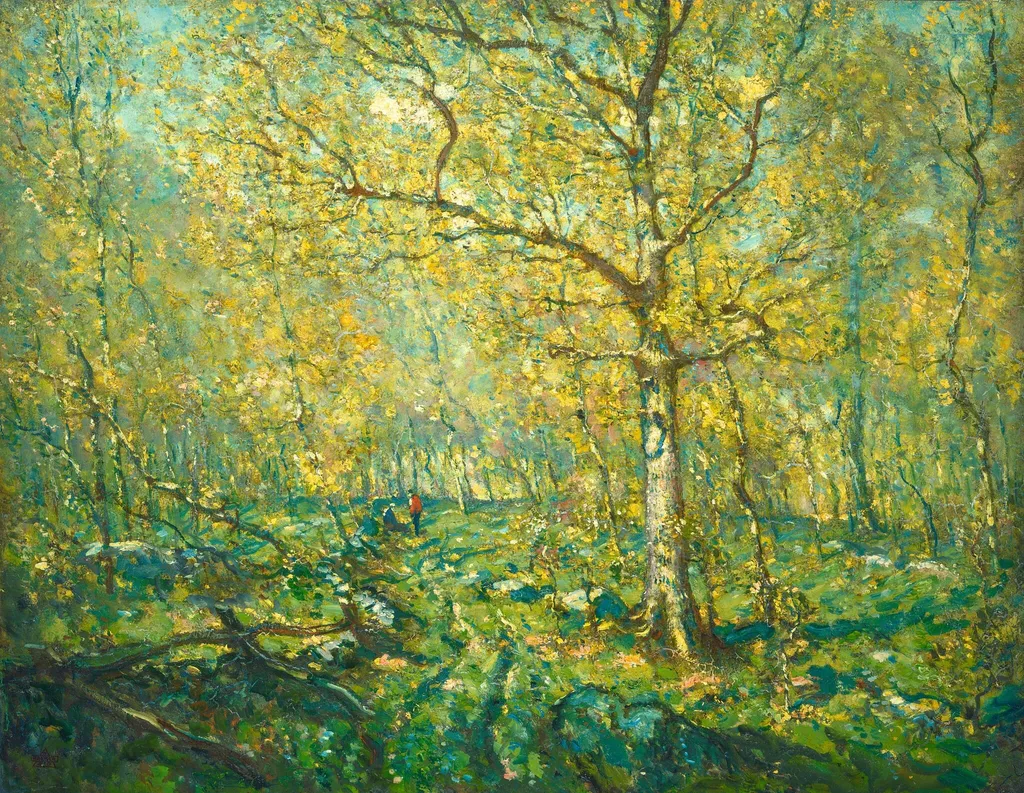
Spring Woods is an oil painting by the American Impressionist artist Henry Ward Ranger. It dates from 1910 and is held in the collection of the National Gallery of Art.
About this work
Overview
Ranger captures the specific quality of light filtering through the canopy, creating a luminous atmosphere where shadows play across a mossy forest floor.
Spring Woods, painted by Henry Ward Ranger in 1910, is an oil on canvas landscape that exemplifies the artist's mature Tonalist style. The composition centers on a cluster of slender birch trees, their white bark rendered with delicate precision against a backdrop of soft, emerging spring foliage. Ranger captures the specific quality of light filtering through the canopy, creating a luminous atmosphere where shadows play across a mossy forest floor. Executed during a period when the artist had fully transitioned from the darker, more atmospheric techniques of his earlier outdoor studies to a refined, decorative approach, the work reflects his dedication to the quiet beauty of the American woodland. The painting avoids dramatic narrative in favor of a meditative focus on color harmony and the subtle interplay of light and texture. As a representative piece from 1910, it demonstrates Ranger's role in bridging the gap between American Impressionism and Tonalism, prioritizing mood and the poetic essence of the landscape over strict realism.
Subject & Meaning
The painting presents a tranquil woodland interior, where thin birch trunks ascend vertically, their pale bark luminous against the emerging green foliage of spring. Sunlight filters through the canopy, casting dynamic shadows across the moss-covered forest floor. This composition emphasizes the delicate interplay of light and shadow, inviting contemplation of nature's quiet beauty and renewal.
Technique & Style
Ranger's artistic practice was deeply influenced by his appreciation for the way light penetrates natural forms. He frequently painted directly from nature during the 1890s, a method that honed his ability to render atmospheric effects. Spring Woods exemplifies his refined skill in manipulating delicate color variations and tonal shifts to achieve a luminous quality, bringing the forest scene to life with subtle realism.
Context
Henry Ward Ranger's exploration of light and atmosphere in landscapes aligns with broader artistic interests of his era. His pursuit of a luminous quality in his forest scenes shares an aesthetic kinship with the works of American landscape painters such as George Inness. Both artists sought to convey the spiritual and emotional resonance found within natural settings through their handling of light and color.
Own this work as a print
Artist & collection
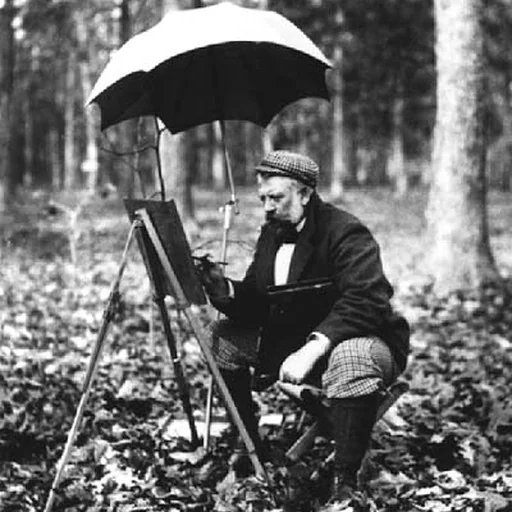
Artist
Henry Ward Ranger (January 29, 1858 – November 7, 1916) was an American artist. Born in western New York State, he was a prominent landscape and marine painter, an important Tonalist, and the leader of the Old Lyme Art…