Artwork
Madonna Diotallevi
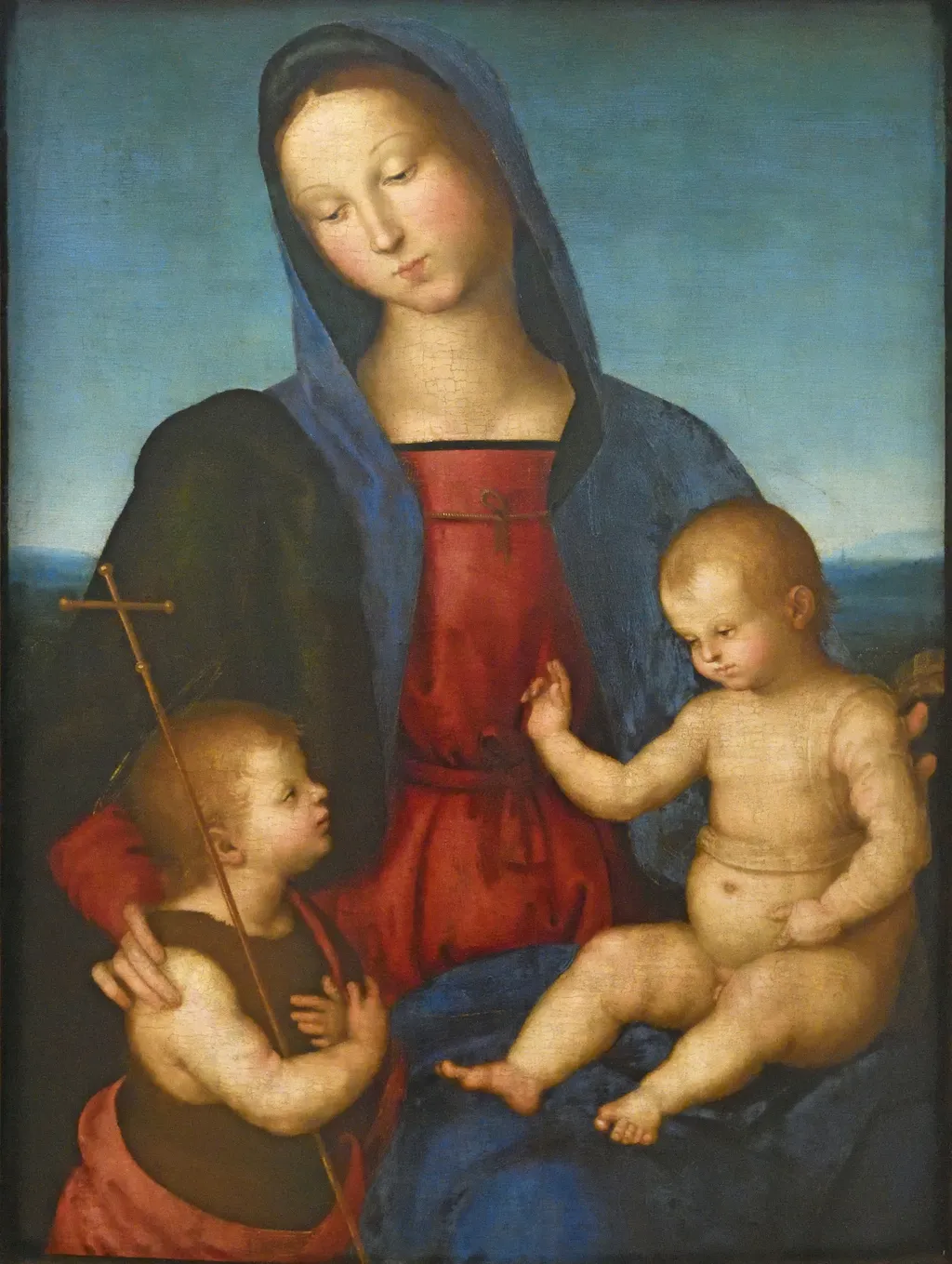
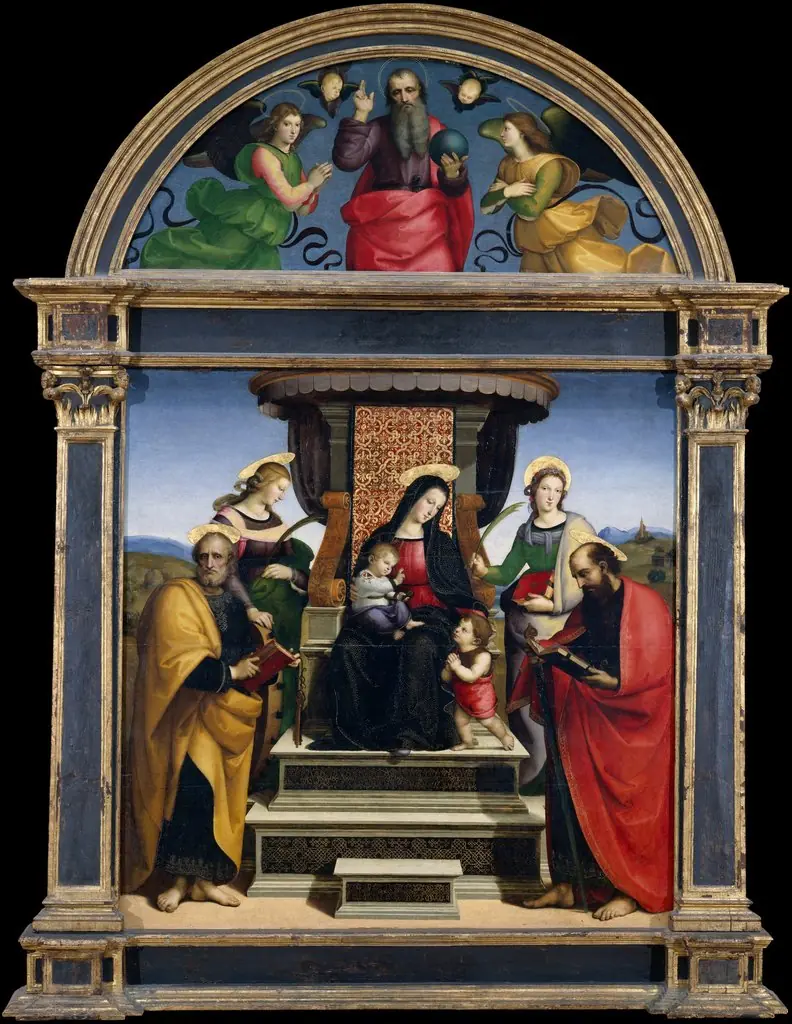
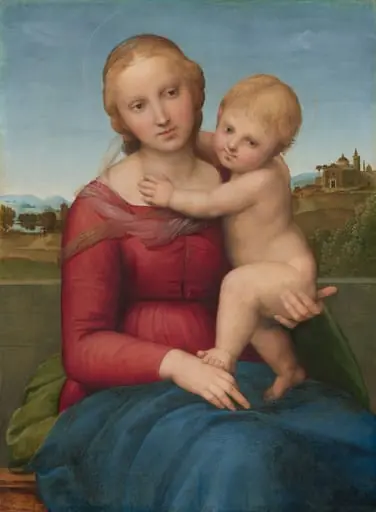
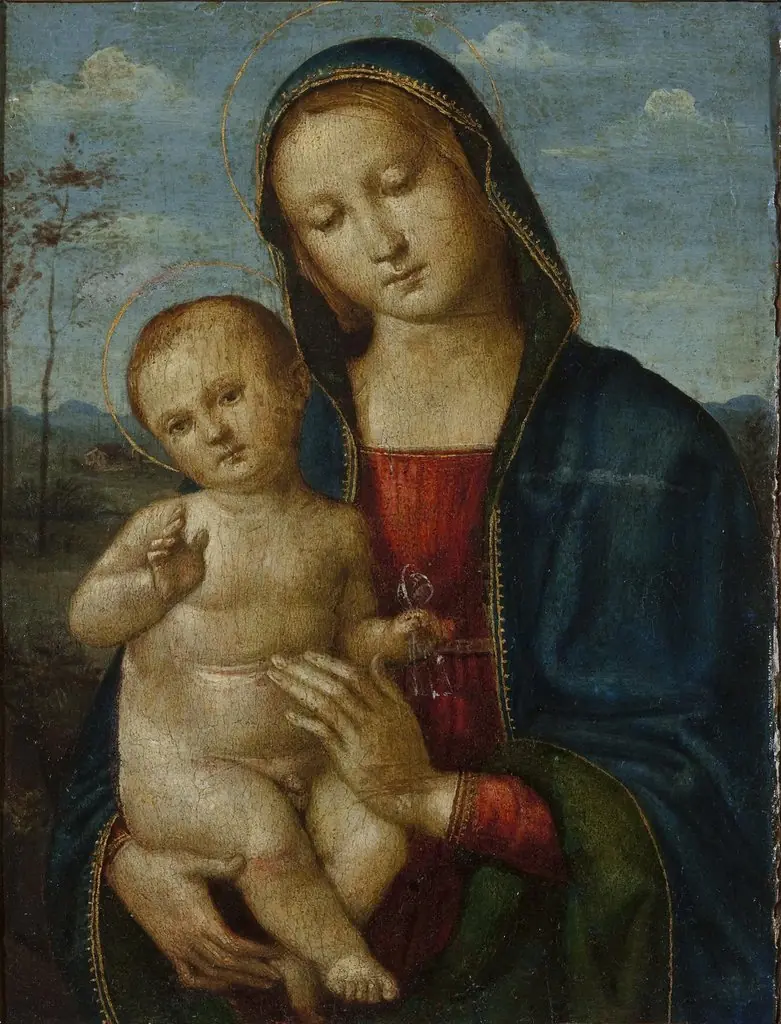
Madonna Diotallevi is an oil painting by the High Renaissance artist Raphael. It dates from 1502 and is held in the collection of the Gemäldegalerie Berlin. The work known as the Diotallevi Madonna is an oil painting on panel dating from around 1504.
About this work
Overview
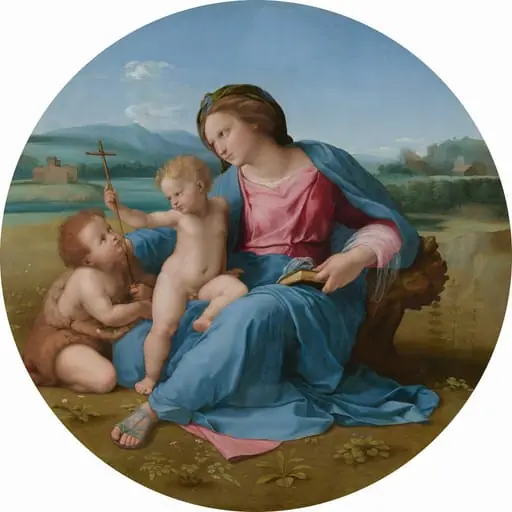
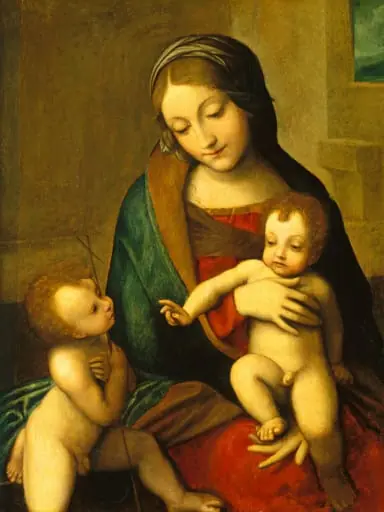
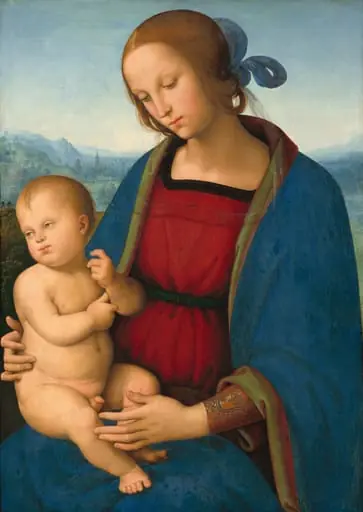
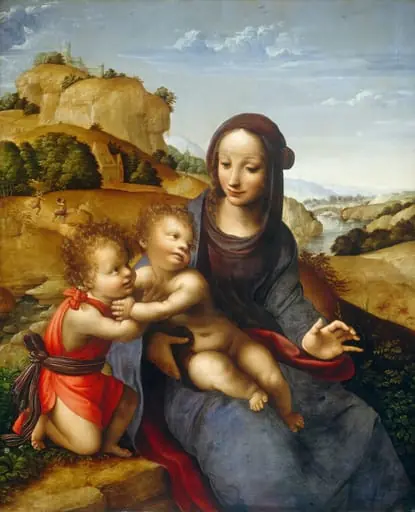
The work known as the Diotallevi Madonna is an oil painting on panel dating from around 1504. It depicts the Virgin Mary with the infant Christ and a young John the Baptist, set against a serene sky and distant hills. The composition is presently housed in Berlin’s Bode Museum, where it entered the collection in the early 1840s from the estate of the Diotallevi family of Rimini.
Subject & Meaning
The central figure is a seated Madonna in a blue mantle and red dress, cradling the infant Jesus on her lap. At her side kneels a youthful John the Baptist, clutching a small wooden cross and gazing downward. The arrangement emphasizes maternal tenderness and the prophetic link between the two children, a common devotional theme in early‑sixteenth‑century Italian art.
Technique & Style
Light falls gently across the scene, creating subtle chiaroscuro that models the forms without dramatic contrast.
Raphael’s handling of the figures shows a blend of influences. The Madonna’s facial features and overall composition retain the softer, more archaic qualities associated with his master Perugino, while the rendering of the Christ Child and John displays a fresher, more dynamic approach. Light falls gently across the scene, creating subtle chiaroscuro that models the forms without dramatic contrast.
History & Provenance
Originally attributed to Perugino, the painting’s authorship was reassessed in the twentieth century, and most scholars now credit Raphael, though a minority still propose an anonymous hand dubbed the “Master of the Diotallevi Madonna.” The work passed from the Diotallevi collection in Rimini to the Bode Museum in 1841‑42, where it remains on public display.
Context
Created during Raphael’s early Florentine period, the piece likely began around 1500‑1502, was set aside, and later completed in Florence between 1504 and 1505. This timeline aligns with the artist’s transition from Perugino’s workshop to his own mature style, reflecting both inherited conventions and emerging personal innovations.
Own this work as a print
Artist & collection
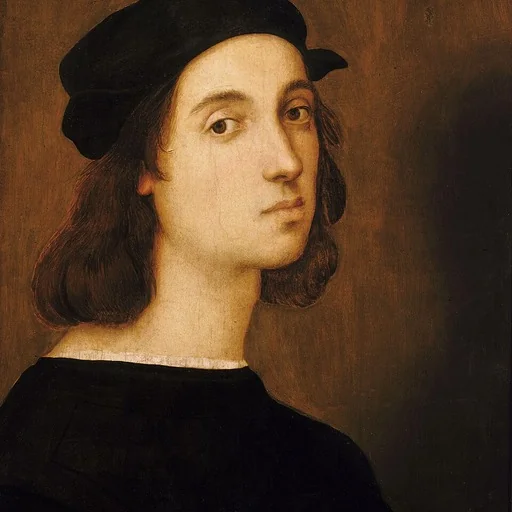
Artist
Raphael was born Raffaello Sanzio in Urbino on April 6, 1483, the son of Giovanni Santi, a painter and poet attached to the ducal court.