Artwork
Vicinity of Morestal
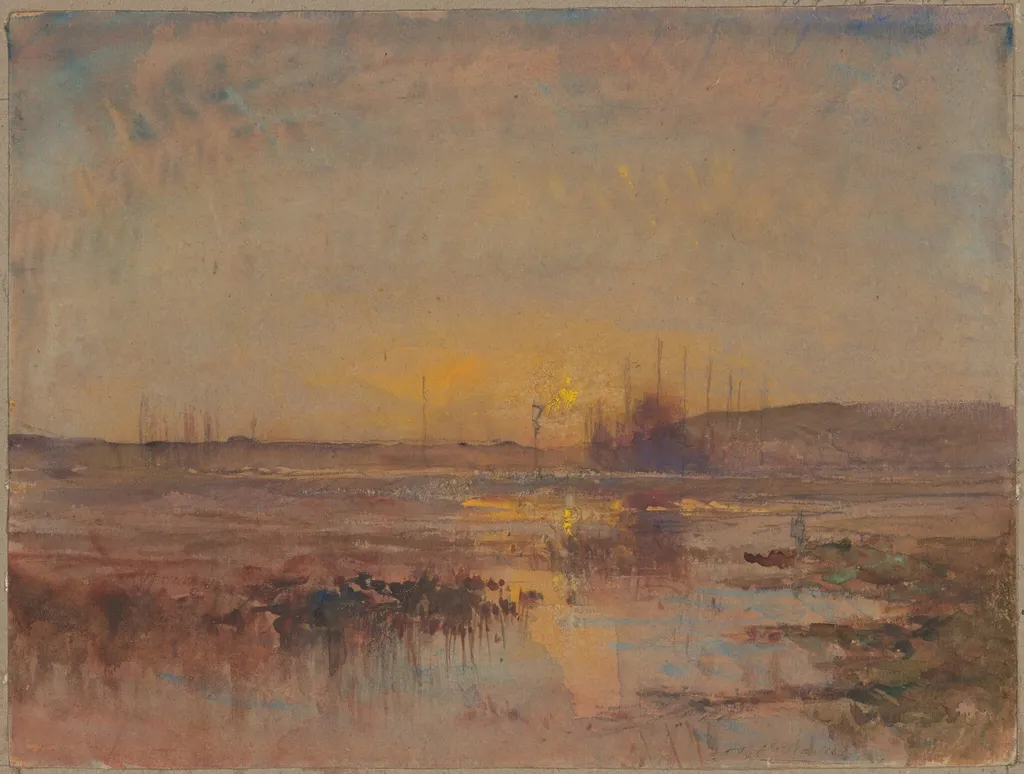
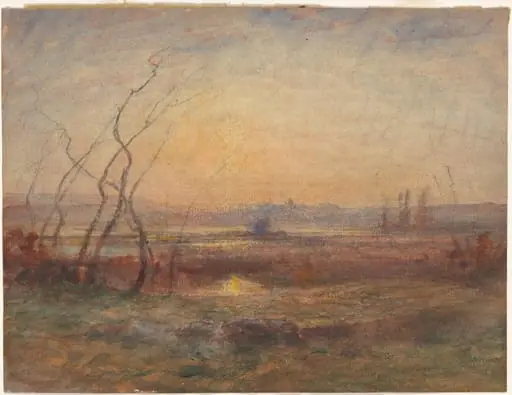
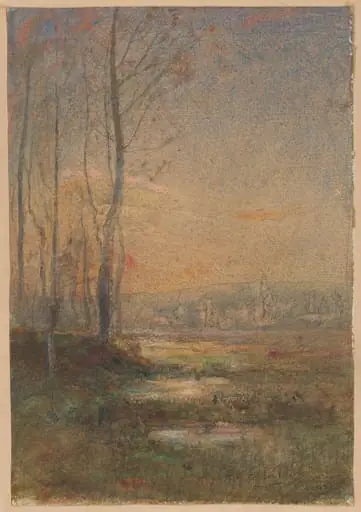
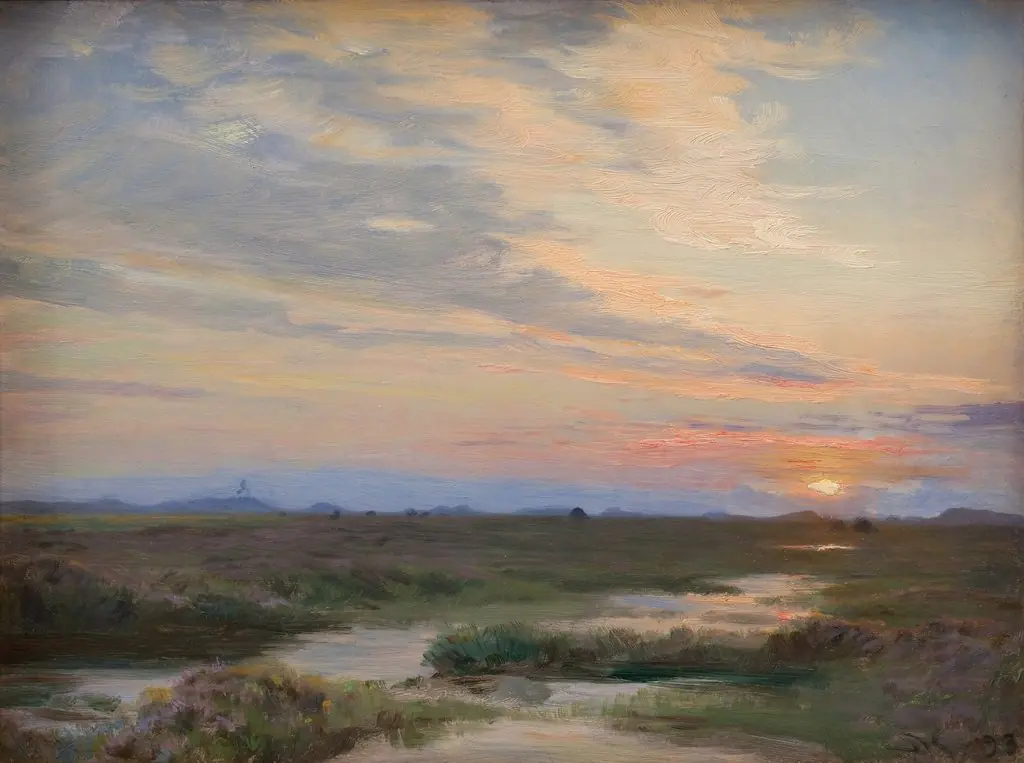
Vicinity of Morestal is a watercolor drawing by the Impressionist artist François-Auguste Ravier. It dates from 1890 and is held in the collection of the National Gallery of Art.
About this work
Overview
François‑Auguste Ravier’s work titled Vicinity of Morestal dates from around 1890 and is classified as a drawing executed in watercolor with fabricated charcoal. The piece is part of the collection of the National Gallery of Art in Washington, D.C., and exemplifies the artist’s late‑19th‑century approach to landscape.
Subject & Meaning
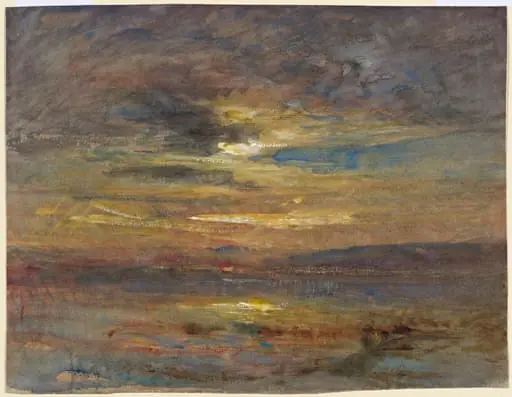
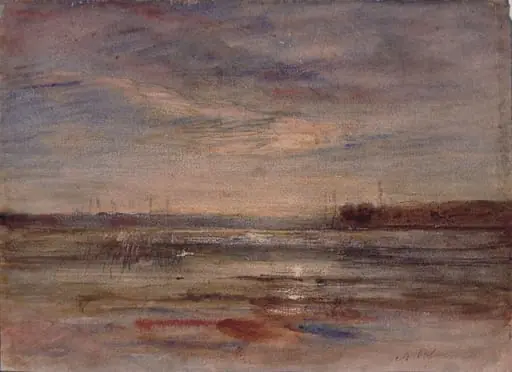
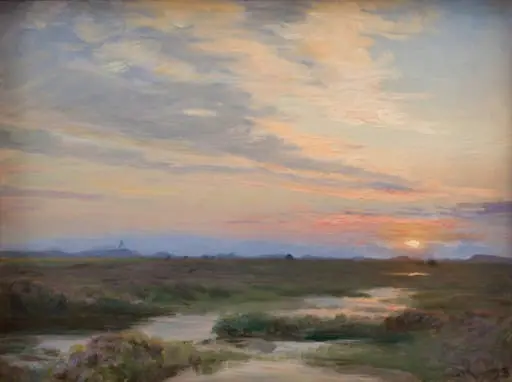
The composition presents a tranquil evening scene, where a muted horizon glows with warm orange tones that recede into cooler blues and greys. A low‑lying field extends toward the foreground, punctuated by dark silhouettes that suggest trees or grazing cattle, while a shallow, rippled water surface merges with the land, evoking a sense of quiet stillness at dusk.
Technique & Style
Ravier employs loose, rapid brushwork that gives the watercolor a sketch‑like quality, allowing color layers to interact unevenly and create a textured, natural appearance. The inclusion of fabricated charcoal adds depth to the darker forms, reinforcing the atmospheric focus on light and mood rather than precise detail.
History & Provenance
Created circa 1890, the drawing entered the National Gallery of Art’s holdings through acquisition (specific acquisition details are not recorded in the available sources). Its presence in a major public institution reflects the recognition of Ravier’s contribution to French landscape painting of the period.
Context
Ravier worked during a time when French artists were exploring the effects of fleeting light and atmospheric conditions, often employing watercolor for its transparency and immediacy. Vicinity of Morestal aligns with these trends, illustrating the shift toward capturing transient moments in nature rather than idealized vistas.
Own this work as a print
Artist & collection
Artist
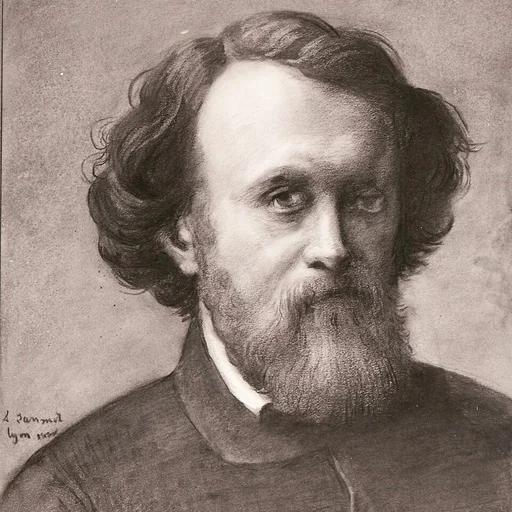
François-Auguste Ravier (1814–1895) was a French artist, born in Lyon.