Artwork
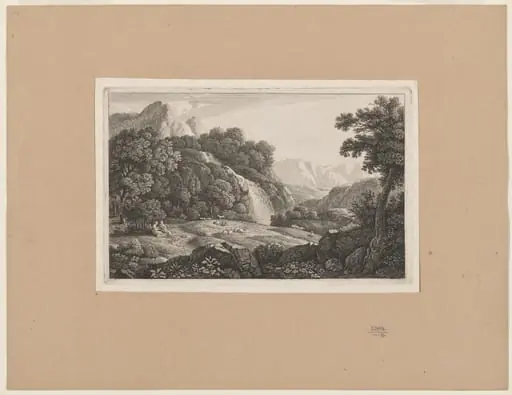
The Waterfall near Schladming in the Steiermark
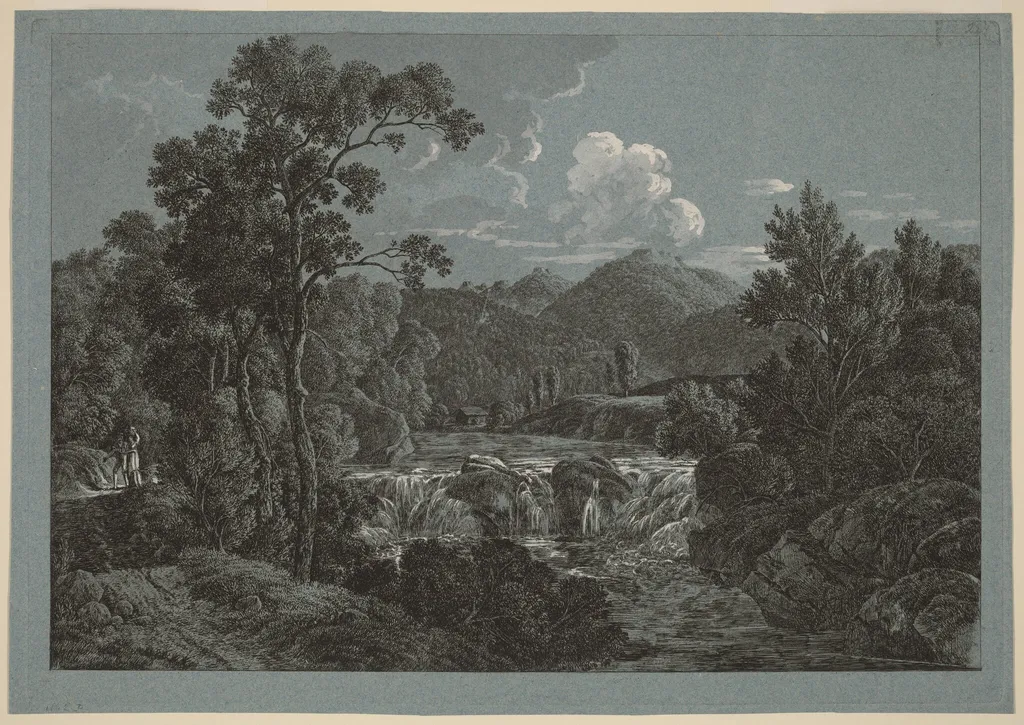
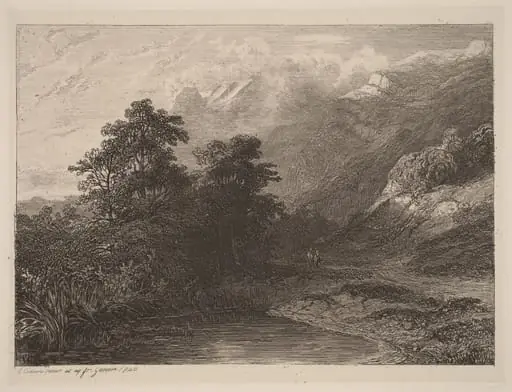
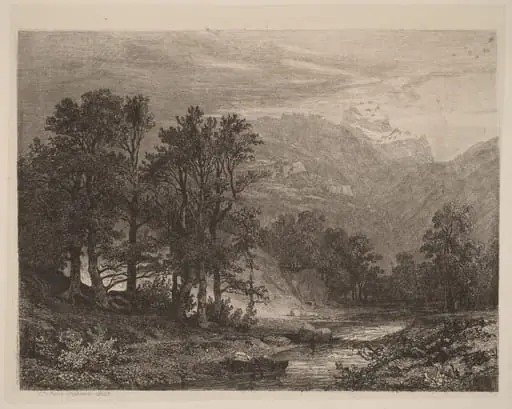
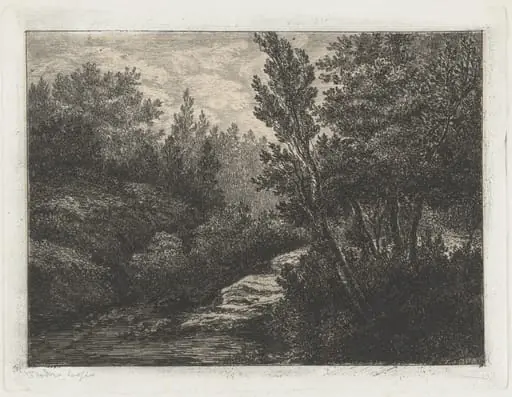
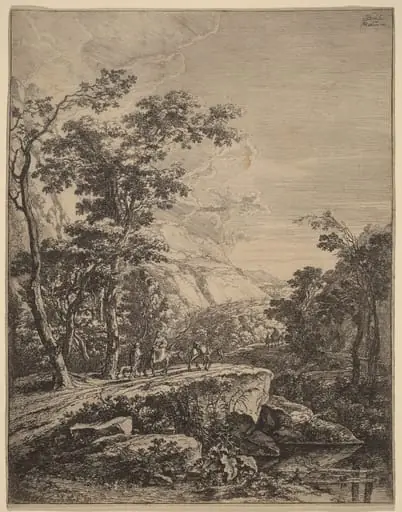
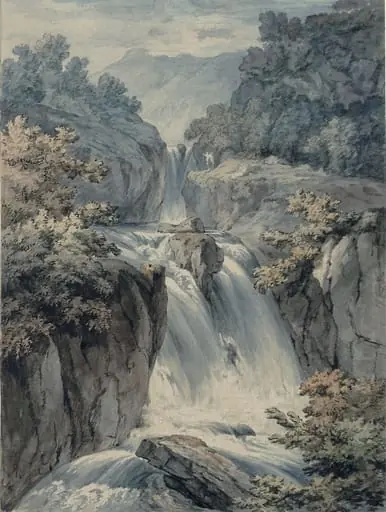
The Waterfall near Schladming in the Steiermark is a gouache print by the Romanticist artist Josef Rebell. It dates from 1808 and is held in the collection of the National Gallery of Art.
About this work
Overview
The composition centers on a cascading waterfall surrounded by dense woodland, rendered through layered ink and opaque highlights to suggest depth and light.
Created in 1808 by Josef Rebell, this print captures a natural scene in the Steiermark region of Austria. Executed in etching with added gray wash and white gouache on blue wove paper, it blends technical precision with atmospheric modulation. The composition centers on a cascading waterfall surrounded by dense woodland, rendered through layered ink and opaque highlights to suggest depth and light.
Subject & Meaning
The scene depicts a secluded waterfall near Schladming, framed by towering trees and a partially overcast sky. Two small figures on the left, barely discernible, observe the falls without interaction, emphasizing solitude and quiet reverence for nature. The contrast between the dark forest and the luminous water and cloud suggests a moment of stillness amid elemental force, evoking contemplation rather than narrative.
Technique & Style
Rebell employed etching to define fine linear details in the rocks and foliage, then enhanced the tonal range with soft gray washes for shadow and opaque white gouache to accentuate the waterfall’s spray and the glowing cloud. The blue paper ground subtly reinforces the cool atmosphere, while the highlights create a sense of sudden illumination, lending dynamism to an otherwise tranquil scene.
History & Provenance
The work dates from Rebell’s active period as a landscape artist in early 19th-century Austria. Though little is documented about its early ownership, it reflects the period’s growing interest in topographical accuracy and emotional landscape expression. Its survival in good condition suggests it was preserved within private or institutional collections focused on regional art.
Context
In the early 1800s, Austrian artists increasingly turned to native landscapes as subjects, moving beyond idealized classical views. Rebell’s approach aligns with this shift, combining topographical detail with expressive tonality. His use of wash and gouache on etching reflects broader European trends in printmaking that sought to bridge the gap between drawing and painting in printed form.
Legacy
Rebell’s print contributes to a body of work that helped define Austrian landscape printmaking in the post-Enlightenment era. While not widely reproduced, it exemplifies how technical restraint and subtle color manipulation could convey natural grandeur without romantic exaggeration, influencing later regional artists focused on authentic, unidealized scenery.
Artist & collection