Artwork
A La Vieillesse (To Old Age)
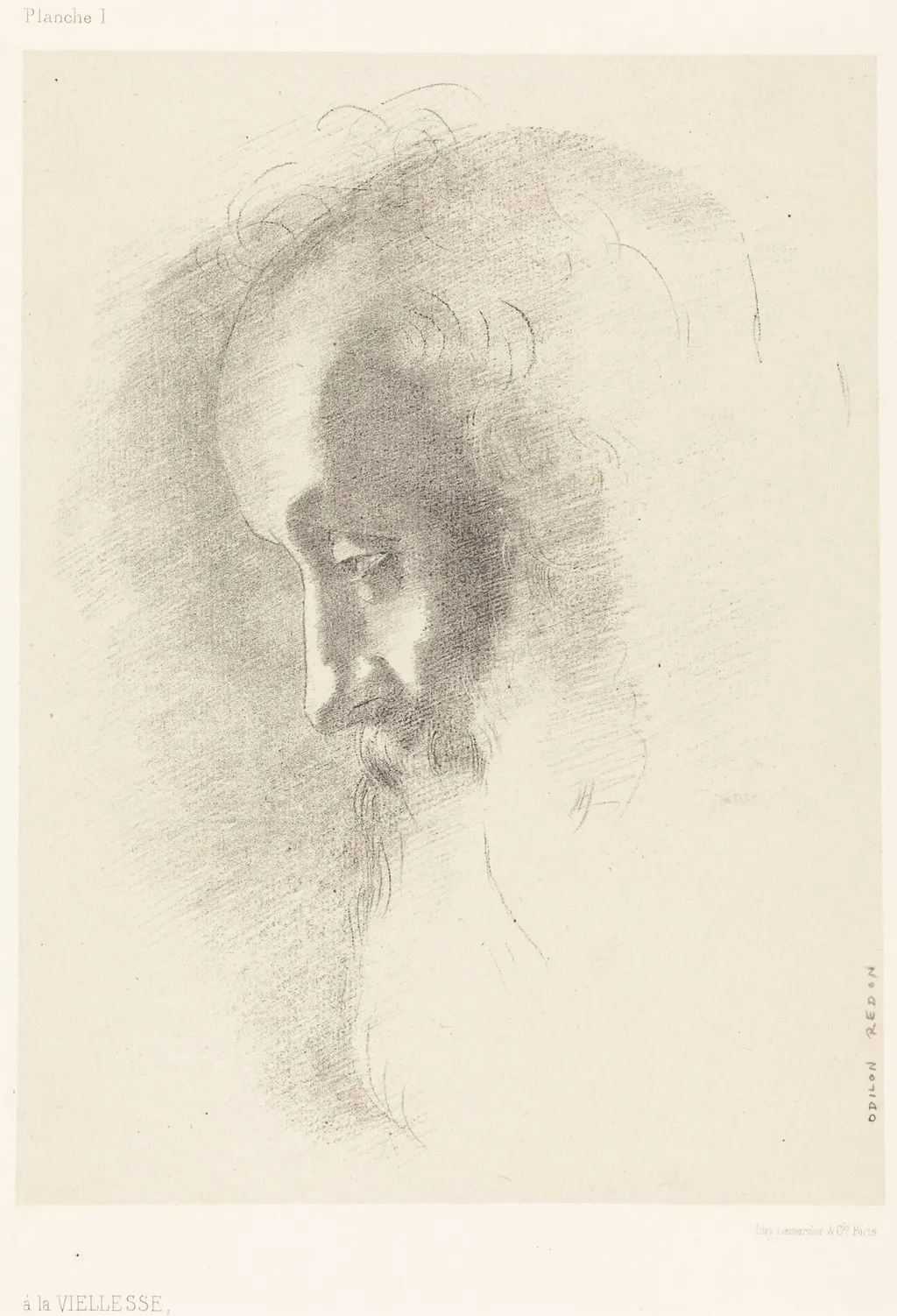
A La Vieillesse (To Old Age) is an ink print by the Impressionist artist Odilon Redon. It dates from 1886 and is held in the collection of the National Gallery of Art.
About this work
Overview
A La Vieillesse (To Old Age), created by Odilon Redon in 1886, is a lithograph that captures a spectral human visage through delicate, indistinct lines.
A La Vieillesse (To Old Age), created by Odilon Redon in 1886, is a lithograph that captures a spectral human visage through delicate, indistinct lines. The image avoids definition, favoring a hazy, atmospheric quality that suggests the fading presence of age rather than its physical form. Printed from a stone surface, the technique allowed Redon to translate the softness of his drawing directly into the final print.
Subject & Meaning
The figure depicted is anonymous, its features dissolved into shadow and smudged contours. Eyes are absent, replaced by darkness, while wavy hair and beard merge into the background like mist. This abstraction evokes the intangible nature of aging—not as decline, but as a gradual dissolution into memory, silence, or the unseen. Redon invites contemplation of the inner life that remains when outward form fades.
Technique & Style
Redon employed lithography to achieve a fluid, almost ethereal texture. Using crayon on stone, he built the image with loose, gestural strokes that blur at the edges, avoiding sharp outlines. The print’s tonal gradations mimic the effect of charcoal or pencil on paper, enhanced by the lithographic process’s capacity for subtle ink transfer. The result is a work that feels drawn in air rather than ink.
History & Provenance
Created in 1886, this print emerged during Redon’s mature period, when he increasingly turned to symbolic and introspective imagery. It was part of a broader body of lithographs produced in the 1880s, often circulated in limited editions among collectors and fellow artists. While its early ownership is undocumented, it entered institutional collections in the 20th century as interest in Symbolist printmaking grew.
Context
In the 1880s, Redon moved away from his earlier dark fantasies toward more meditative, poetic subjects. A La Vieillesse reflects the Symbolist interest in inner states over external reality. Contemporary scientific and philosophical discussions on consciousness and mortality may have influenced its tone, aligning with broader cultural shifts toward exploring the unseen dimensions of human experience.
Legacy
The print exemplifies Redon’s influence on later modernist approaches to form and emotion. Its rejection of realism in favor of psychological suggestion paved the way for Expressionist and Surrealist artists who valued ambiguity. Though not widely exhibited in his lifetime, it now stands as a quiet testament to his ability to convey profound states through minimal, evocative means.
Artist & collection
Artist
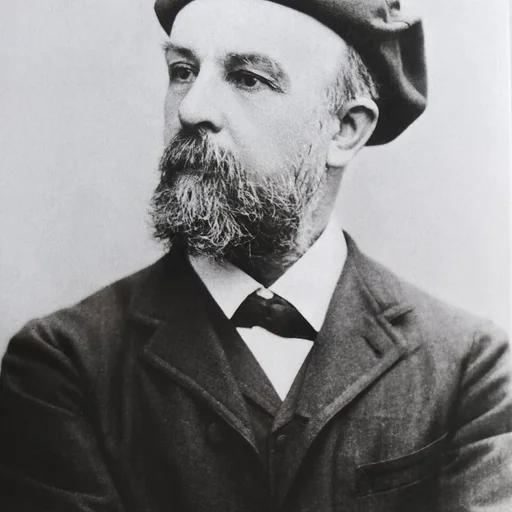
Born Bertrand-Jean Redon on 20 April 1840 in Bordeaux, the artist adopted the name Odilon from his mother, Marie-Odile.

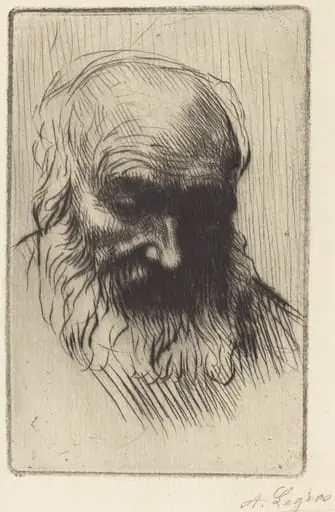 Head of an Old Man (Etude de tete)
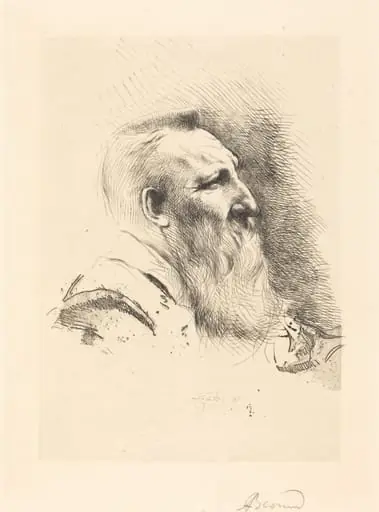 Auguste Rodin
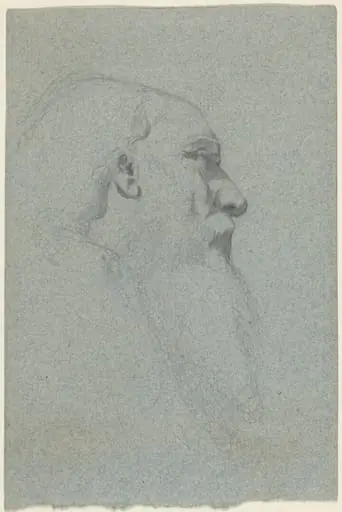 Head of a Bearded Man, Looking Right
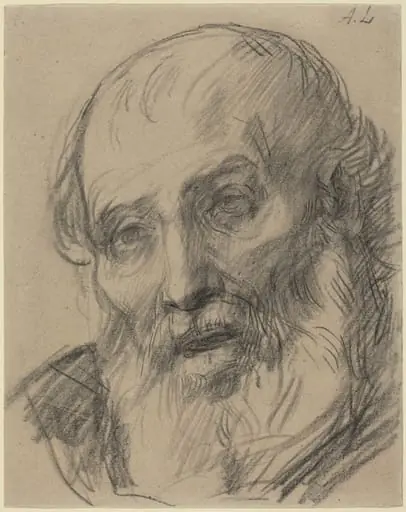 Head of an Old Man
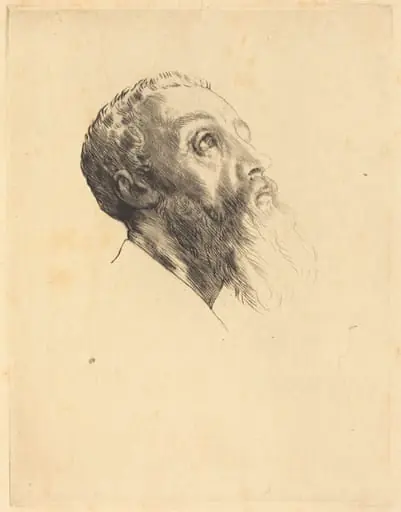 Head of a Model (Tete de modele)
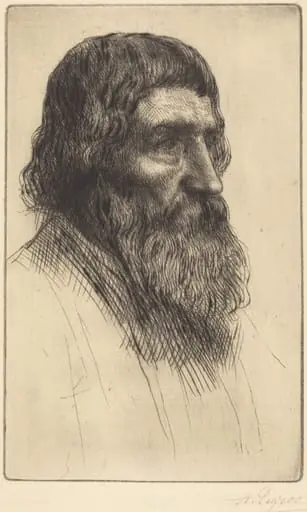 English Peasant (Paysan anglais)
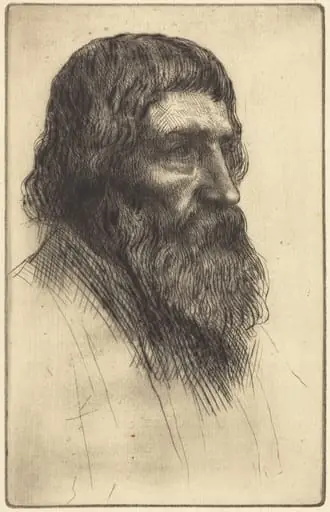 English Peasant (Paysan anglais)
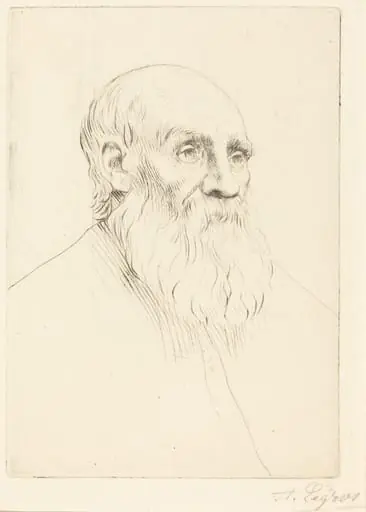 Head of an Old Man (Etude de tete)
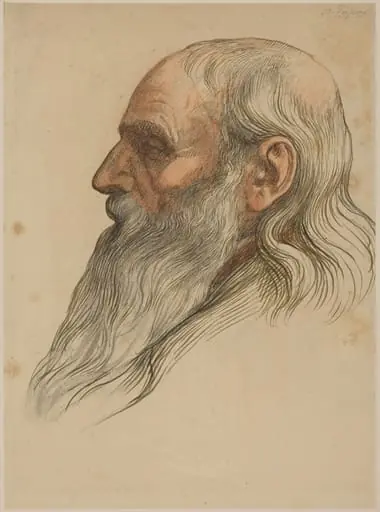 Study of a Man's Head with a Full Beard
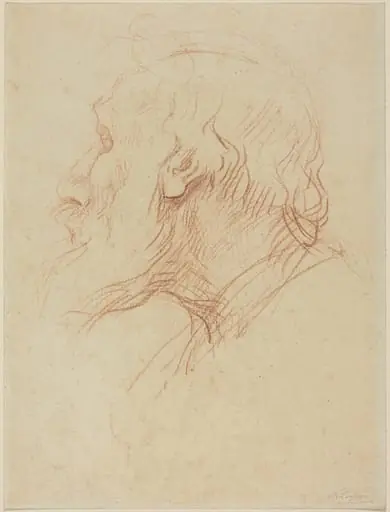 Study of a Beggar
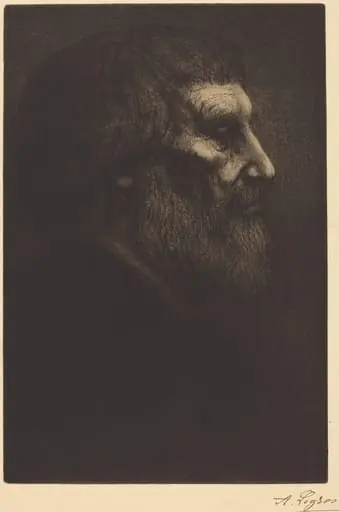 Head of a Beggar (Tete de mendiant)
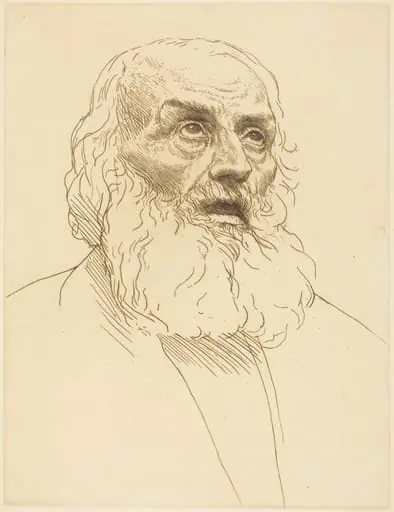 Study of an Old Man (Etude de vieillard)