Artwork
Et il avait dans sa main droit sept etoiles, et de sa bouch sortait une epee aigue a deux tranchants (And he had in his right hand seven stars; and out of his mouth went a sharp two-edged sword)
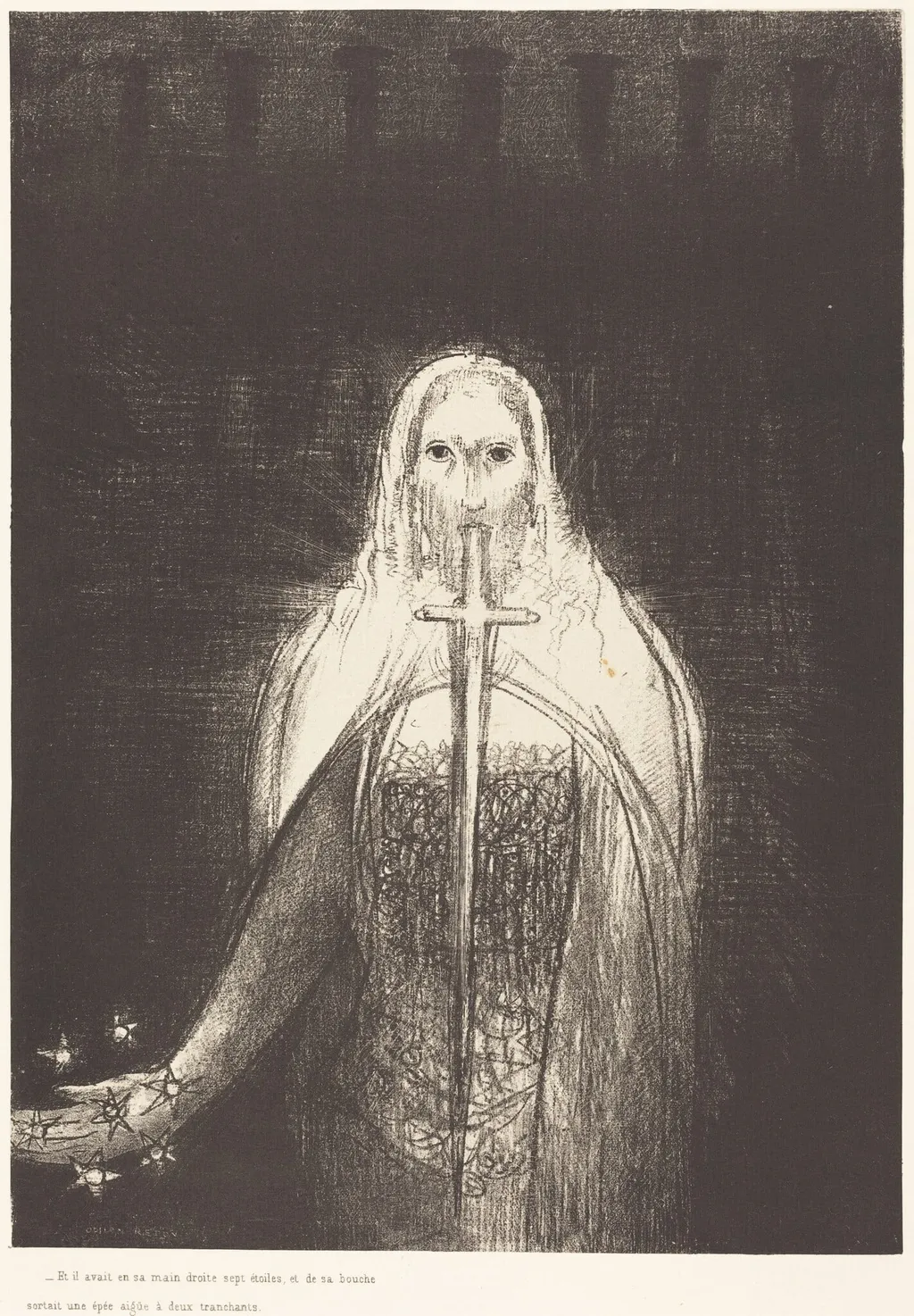
Et il avait dans sa main droit sept etoiles, et de sa bouch sortait une epee aigue a deux tranchants (And he had in his right hand seven stars; and out of his mouth went a sharp two-edged sword) is an ink print by the Impressionist artist Odilon Redon. It dates from 1899 and is held in the collection of the National Gallery of Art.
About this work
Overview
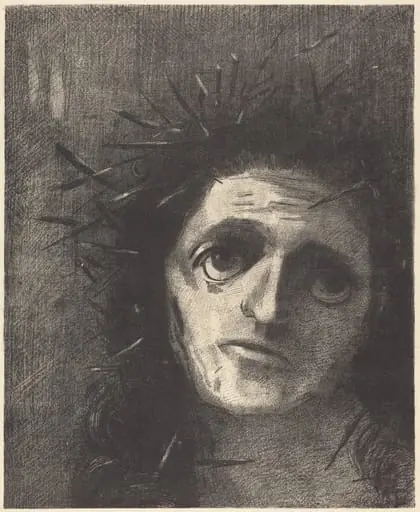
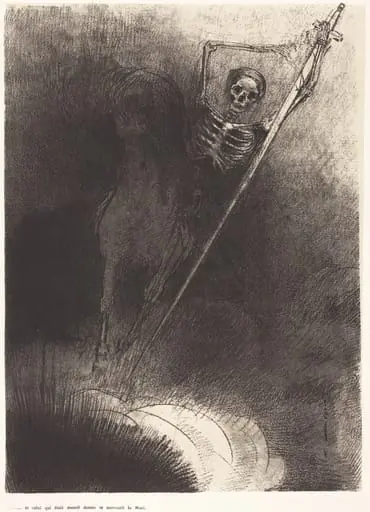
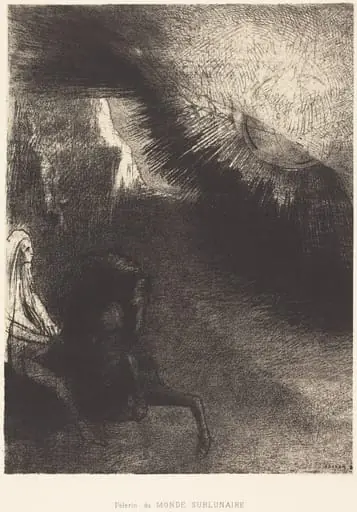
Odilon Redon’s 1899 lithograph, titled Et il avait dans sa main droit sept etoiles, et de sa bouch sortait une epee aigue a deux tranchants, presents a solitary, robed figure clutching a luminous cross. The composition is rendered in stark black and white, with the figure’s face indistinct and the surrounding darkness emphasizing the bright illumination emanating from the cross.
Subject & Meaning
The enigmatic figure appears to embody a biblical or apocalyptic motif, suggested by the French inscription referencing seven stars in the right hand and a double‑edged sword issuing from the mouth. These symbols echo passages from the Book of Revelation, where celestial bodies and a sword signify divine authority and judgment.
Technique & Style
Redon employed the lithographic process, drawing directly onto a stone or metal plate with greasy media before transferring the image onto paper. The work’s line work is loose and ethereal, creating a ghost‑like presence that seems to dissolve into the surrounding shadows, a hallmark of Redon’s late Symbolist aesthetic.
History & Provenance
Created at the close of the 19th century, the print reflects Redon’s turn toward more overtly religious and mystical themes after a career dominated by dreamlike, fantastical imagery. It entered private collections shortly after its production and has since been exhibited in several retrospectives of Redon’s print oeuvre, illustrating his late‑period concerns.
Context
The lithograph emerges from a period when Symbolist artists sought to convey spiritual and metaphysical ideas through ambiguous, often nocturnal imagery. Redon’s use of stark contrast and sparse detail aligns with contemporary explorations of the unseen, while the biblical allusion situates the work within a broader cultural fascination with apocalyptic prophecy at the fin de siècle.
Artist & collection
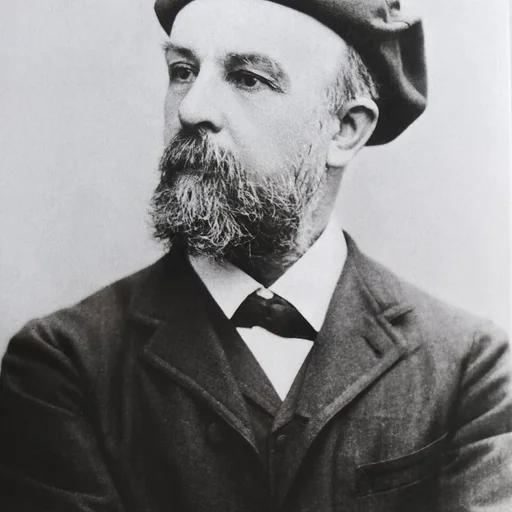
Artist
Born Bertrand-Jean Redon on 20 April 1840 in Bordeaux, the artist adopted the name Odilon from his mother, Marie-Odile.