Artwork
Tete d'Enfant avec Fleurs (Head of a Child with Flowers)
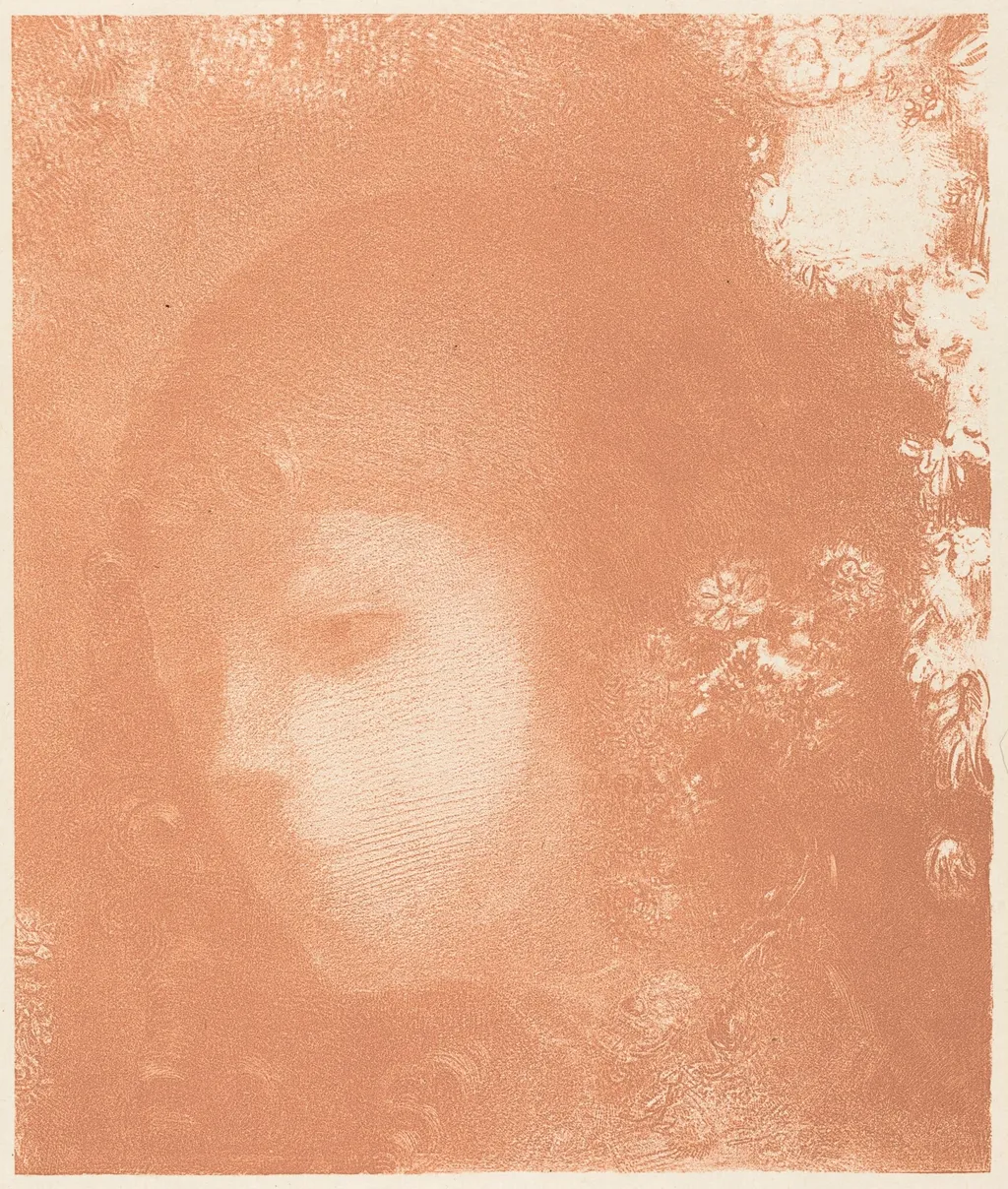
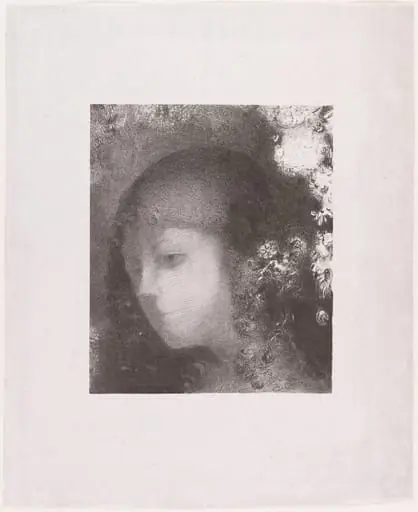
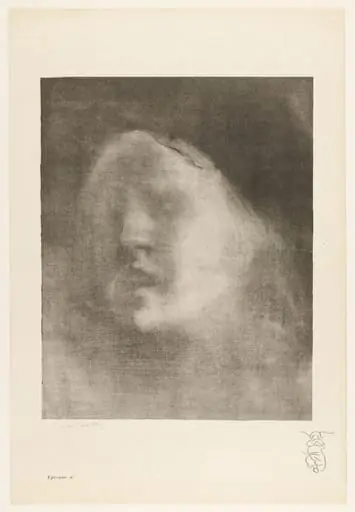
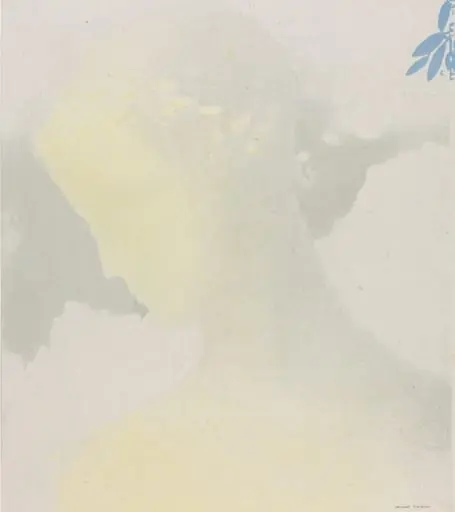
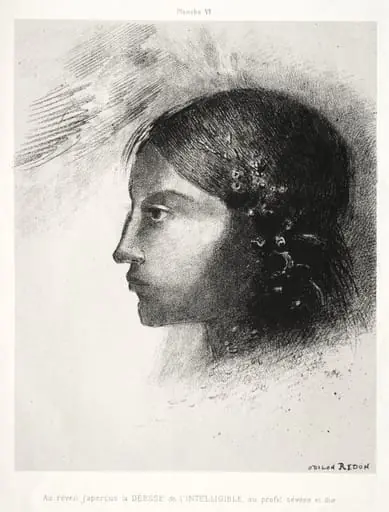
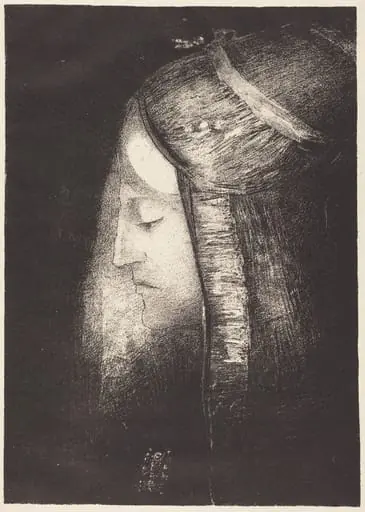
Tete d'Enfant avec Fleurs (Head of a Child with Flowers) is an ink print by the Impressionist artist Odilon Redon. It dates from 1897 and is held in the collection of the National Gallery of Art.
About this work
Overview
Created in 1897, Tete d'Enfant avec Fleurs is a lithograph by Odilon Redon that captures a tender, elusive portrait of a child’s head nestled on a pillow. The image avoids sharp definition, instead dissolving form into soft tones and hazy contours. Flowers drift around the figure as if suspended in still air, contributing to an atmosphere of quiet reverie rather than literal representation.
Subject & Meaning
The subject is not a portrait in the conventional sense but a meditation on innocence and transience. The child’s face emerges only faintly, obscured by light and texture, suggesting vulnerability or the fragility of memory. The floating flowers, unanchored and delicate, may symbolize fleeting moments or the ethereal nature of childhood, evoking emotion without narrative clarity.
Technique & Style
Redon employed lithography to achieve subtle gradations of tone, using a dry, smudged technique that blurs edges and softens forms. The palette is restrained—pale pinks, warm browns, and muted grays—enhancing the sense of intimacy and otherworldliness. Lines are not drawn but suggested through tonal shifts, creating a dreamlike texture that dissolves boundaries between figure and space.
History & Provenance
This print was made during Redon’s mature period, when he increasingly turned to intimate, poetic subjects after his earlier Symbolist works. It was likely produced in a small edition for private collectors or art societies, consistent with his practice of distributing lithographs through select publishers. Its provenance traces to French collections of late 19th-century graphic art.
Context
In the 1890s, Redon moved away from the dark fantasies of his earlier career toward more serene, lyrical imagery. This work reflects broader artistic interests in inner states and sensory impressions, aligning with Symbolist ideals and contemporary explorations of mood in printmaking. It resonates with contemporaneous efforts by artists to convey emotion through atmosphere rather than detail.
Legacy
Tete d'Enfant avec Fleurs exemplifies Redon’s influence on later generations seeking to express psychological depth through non-naturalistic means. Its quiet abstraction and emotional restraint prefigure modernist approaches to form and subject. The work remains a quiet touchstone in the history of printmaking for its ability to evoke presence through absence.
Artist & collection
Artist
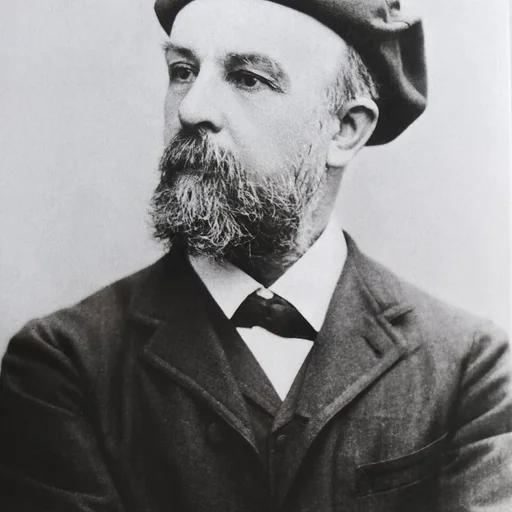
Born Bertrand-Jean Redon on 20 April 1840 in Bordeaux, the artist adopted the name Odilon from his mother, Marie-Odile.