Artwork
Samson betrayed by Delilah
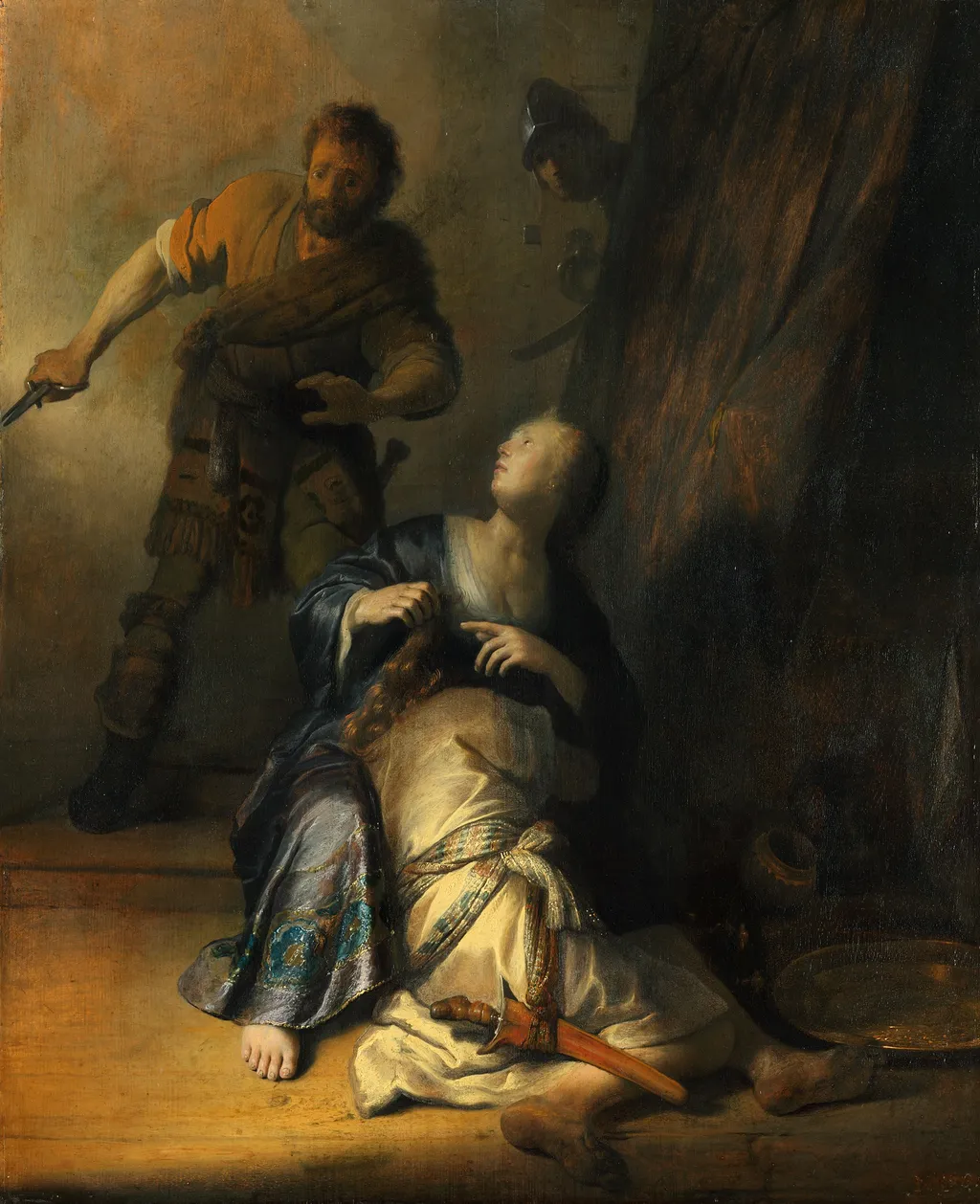
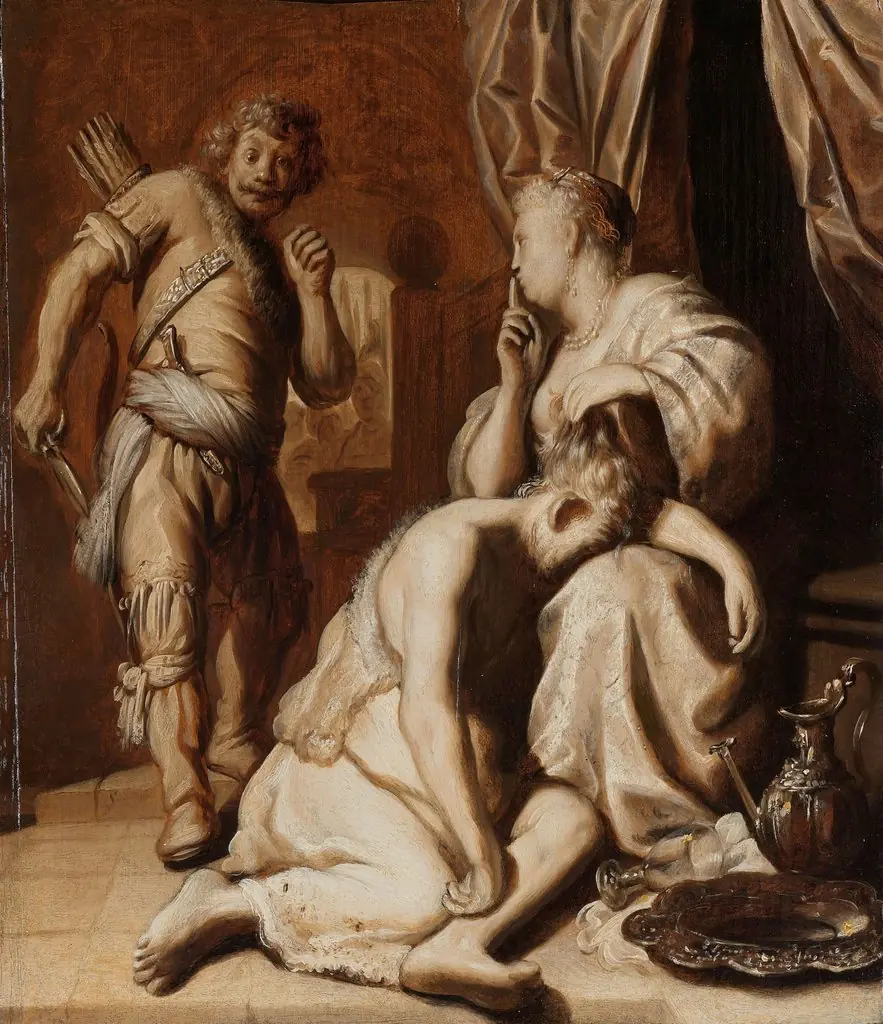
Samson betrayed by Delilah is an oil painting by the Dutch Golden Age artist Rembrandt. It dates from 1628 and is held in the collection of the Gemäldegalerie Berlin.
About this work
Overview
Rembrandt's "Samson betrayed by Delilah," an oil painting from 1629–1630, captures a pivotal moment from the biblical narrative.
Rembrandt's "Samson betrayed by Delilah," an oil painting from 1629–1630, captures a pivotal moment from the biblical narrative. It dramatically depicts Delilah cutting Samson's hair, the source of his strength, while a soldier waits in the background. The artwork is characterized by its warm palette and the artist's masterful use of light and shadow, which heighten the scene's emotional intensity and draw the viewer into the unfolding betrayal. The painting is currently housed in the Gemäldegalerie, Berlin.
Subject & Meaning
The painting illustrates the Old Testament account from the Book of Judges, where Delilah, bribed by the Philistines, discovers the secret to Samson's immense strength lies in his uncut hair. Rembrandt focuses on the intimate, treacherous act itself: Delilah's determined expression as she performs the deed, while Samson remains vulnerable in her embrace. The visible soldier in the background serves as a stark reminder of the imminent capture and suffering that awaits Samson.
Technique & Style
Rembrandt employs a warm color scheme to render this dramatic episode, emphasizing the figures through stark contrasts of light and dark. The prominent use of chiaroscuro creates a profound sense of depth and theatricality, illuminating Delilah's face and the act of betrayal while casting much of the scene into shadow. This technique effectively heightens the emotional tension and focuses attention on the central, fateful interaction, drawing the viewer into the scene's psychological drama.
History & Provenance
This painting was first documented in 1632 within the collection of Frederick Henry of Orange in The Hague. It remained with the family, eventually passing to Frederick I of Prussia through a bequest from William III of Orange. Frederick the Great likely relocated the artwork to Berlin around 1742. By 1793, it was recorded in the inventory of the Berlin Stadtschloss, though mistakenly attributed to Govert Flinck, before moving to its current location in 1906.
Own this work as a print
Artist & collection
Artist
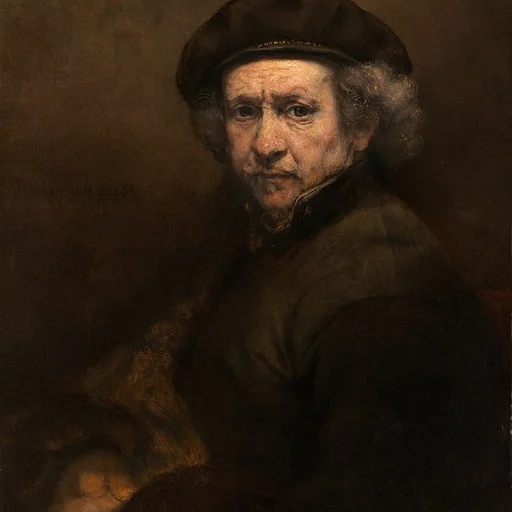
Rembrandt Harmenszoon van Rijn (15 July 1606 – 4 October 1669), known mononymously as Rembrandt, was a Dutch Golden Age painter, printmaker, and draughtsman.