Artwork
Bearded Man in a Velvet Cap with a Jewel Clasp
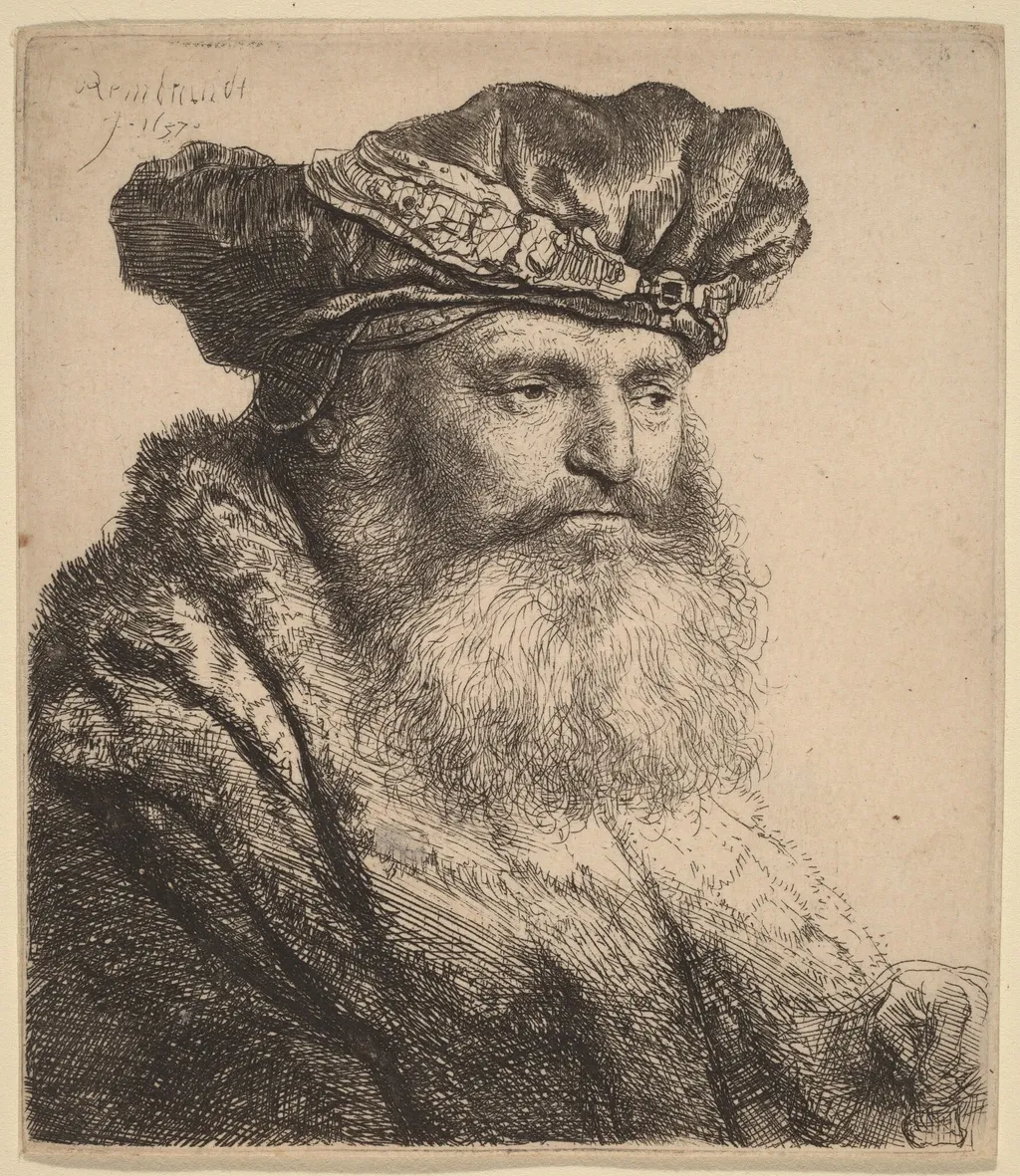
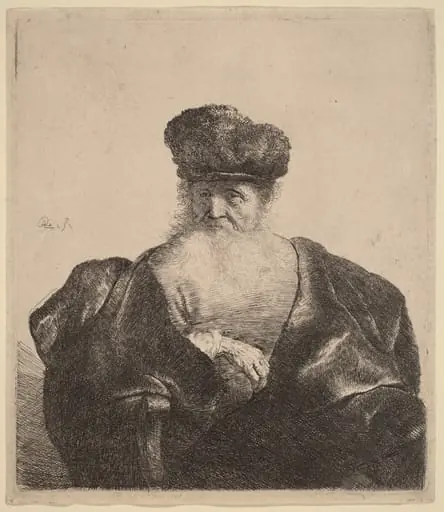
Bearded Man in a Velvet Cap with a Jewel Clasp is an ink print by the Baroque artist Rembrandt. It dates from 1637 and is held in the collection of the National Gallery of Art.
About this work
This is a black-and-white portrait of a man with a thick beard and a fur collar.
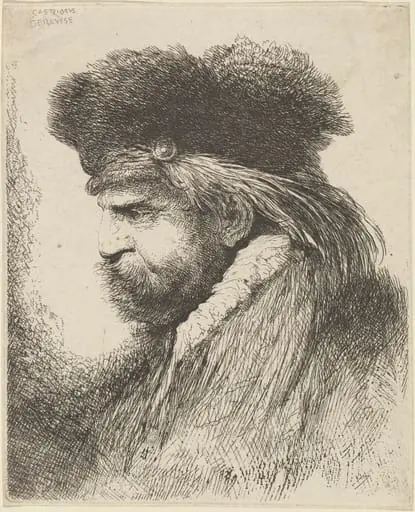
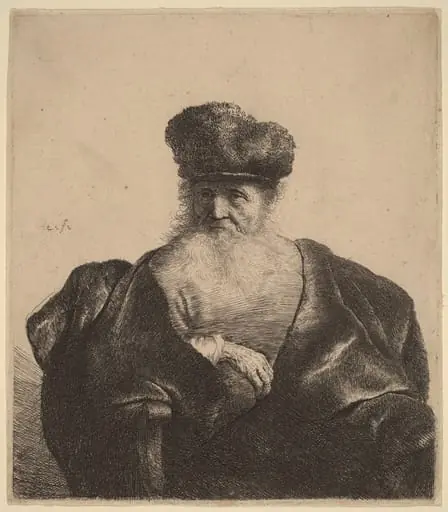
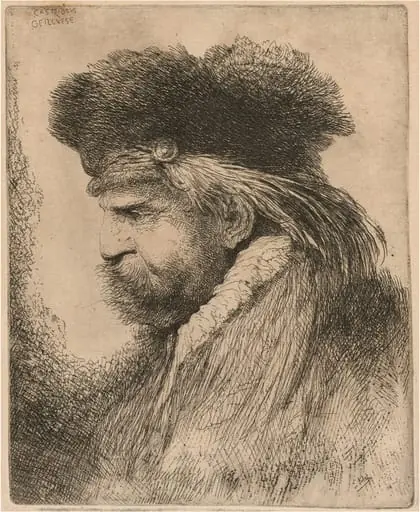
This is a black-and-white portrait of a man with a thick beard and a fur collar. He’s wearing a tall, pointed hat with a jewel clasp at the front. The lines are scratchy and detailed, especially around his beard and hat.
The artist used a technique that lets them layer lines for texture. This piece was made in 1637, and it’s called an etching.
Next, look up etching to see how artists create these detailed prints.
Overview
Created in 1637, this etching by Rembrandt van Rijn depicts a middle-aged man wearing a dark, fur-lined cap adorned with a metallic clasp. Rendered in monochrome, the work showcases the artist’s mastery of line and tone, using incised marks to suggest volume and texture without color. The portrait is intimate in scale and focused entirely on the subject’s face and head, emphasizing character over narrative.
Subject & Meaning
The identity of the man remains unknown, but his attire suggests a person of modest means or civic standing. The richly rendered velvet cap and jewel clasp imply a deliberate display of dignity, while the thick beard and direct gaze convey a sense of quiet authority. Rembrandt avoids idealization, instead capturing the wear and individuality of aging, inviting contemplation rather than admiration.
Technique & Style
Rembrandt employed etching to build depth through layered, cross-hatched lines. The beard and fur collar are rendered with dense, irregular strokes that mimic natural texture, while the cap’s surface is defined by cleaner, directional marks. The contrast between fine, controlled lines and looser, expressive ones demonstrates his command of the medium, using the plate’s etched grooves to control ink retention and shadow.
History & Provenance
The print was made during Rembrandt’s most prolific period in Amsterdam, when he was actively experimenting with etching as a means of personal expression. It circulated among collectors and artists in the 17th century, and later entered major European collections. Its survival in multiple impressions reflects its early popularity and the artist’s reputation for technical innovation in printmaking.
Context
In the 1630s, Rembrandt was refining his approach to portraiture, shifting from grand compositions to intimate studies of individuals. Etching allowed him to explore facial expression and texture with immediacy, often using sitters from his circle. This work aligns with a broader trend in Dutch art of valuing psychological realism over aristocratic pomp, reflecting the cultural values of the emerging middle class.
Legacy
This etching exemplifies Rembrandt’s influence on the evolution of printmaking as a serious artistic medium. Later artists studied his use of line to convey emotion and materiality, and his approach to portraiture became a model for expressive realism. The work remains a reference point in academic and museum collections for its technical precision and human insight.
Artist & collection
Artist
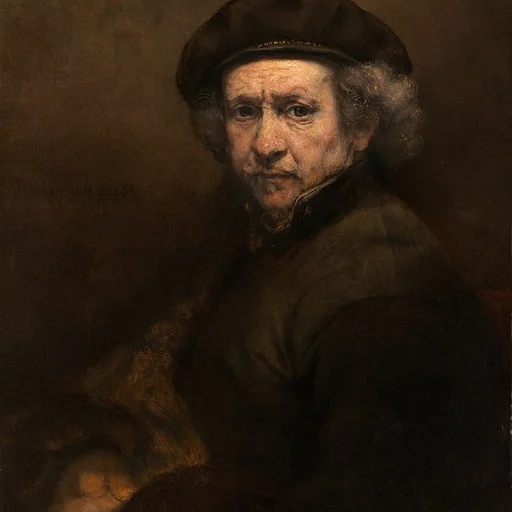
Rembrandt Harmenszoon van Rijn (15 July 1606 – 4 October 1669), known mononymously as Rembrandt, was a Dutch Golden Age painter, printmaker, and draughtsman.