Artwork
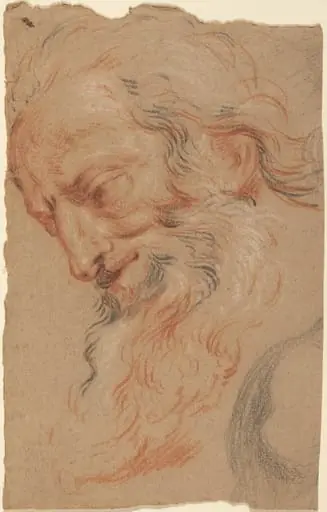
Head of an Old Man (recto)
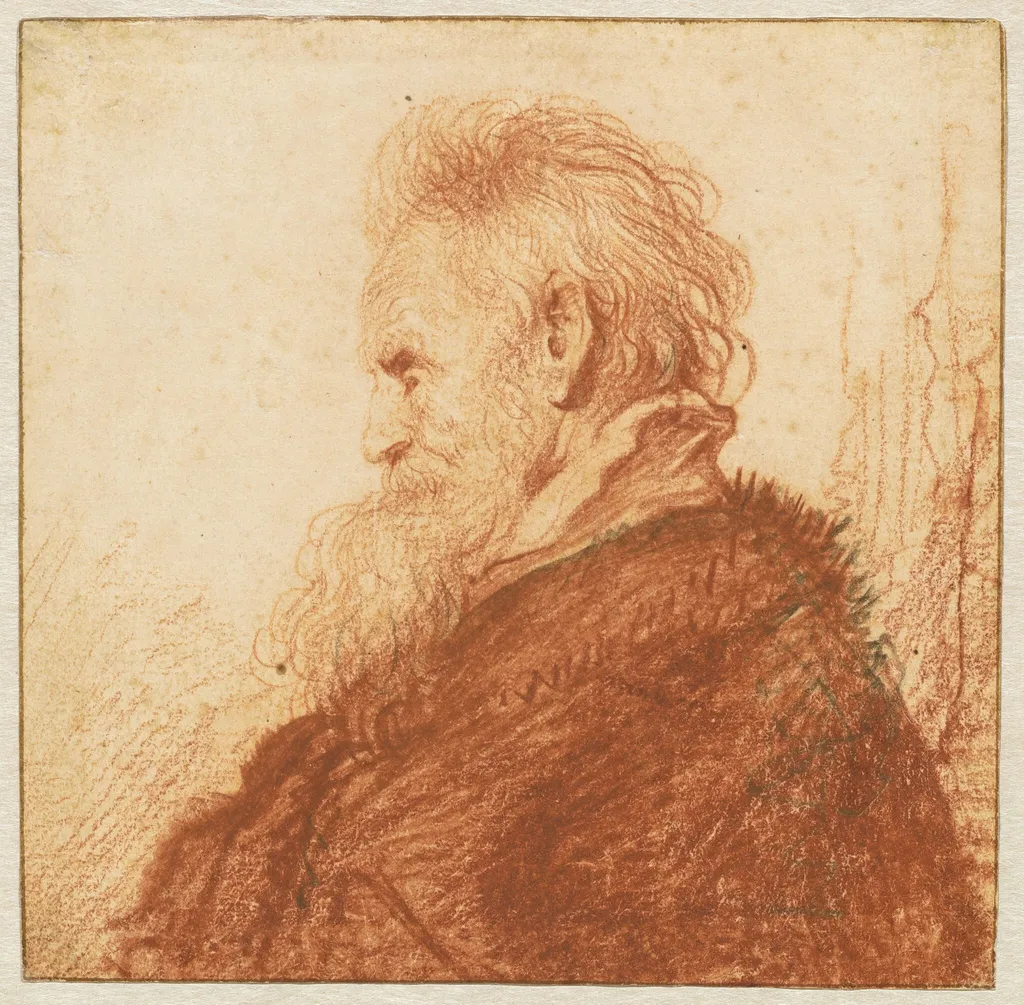
Head of an Old Man (recto) is a chalk drawing by the Baroque artist Rembrandt. It dates from 1631 and is held in the collection of the National Gallery of Art.
About this work
Overview
Created around 1631, this drawing by Rembrandt van Rijn depicts the profile of an elderly male figure. Executed in red chalk with selective accents of black chalk on laid paper, the work exemplifies the artist’s early exploration of portraiture through drawing rather than oil.
Technique & Style
Rembrandt employed a red chalk base to model the facial features, adding depth and contrast with touches of black chalk for shadows and detail. The laid paper surface contributes a subtle texture that interacts with the chalk, highlighting the artist’s skill in rendering volume and expression through a limited palette.
Subject & Meaning
The composition focuses on the head of an aged man, emphasizing the lines and folds that convey experience and humanity. While no specific identity is recorded, the study reflects Rembrandt’s interest in capturing the character of ordinary individuals, a theme recurrent in his early works.
Context
The drawing belongs to a period when Rembrandt was establishing his reputation in Amsterdam, experimenting with various media to refine his observational abilities. Such chalk studies were common practice for artists seeking to master anatomy and light before committing to larger painted portraits.
Artist & collection
Artist
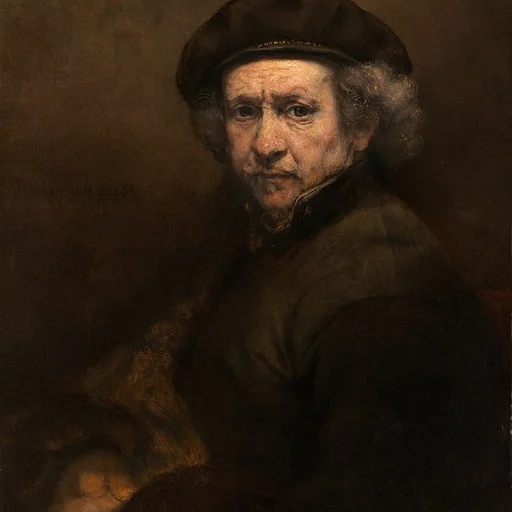
Rembrandt Harmenszoon van Rijn (15 July 1606 – 4 October 1669), known mononymously as Rembrandt, was a Dutch Golden Age painter, printmaker, and draughtsman.