Artwork
Jacob's Ladder
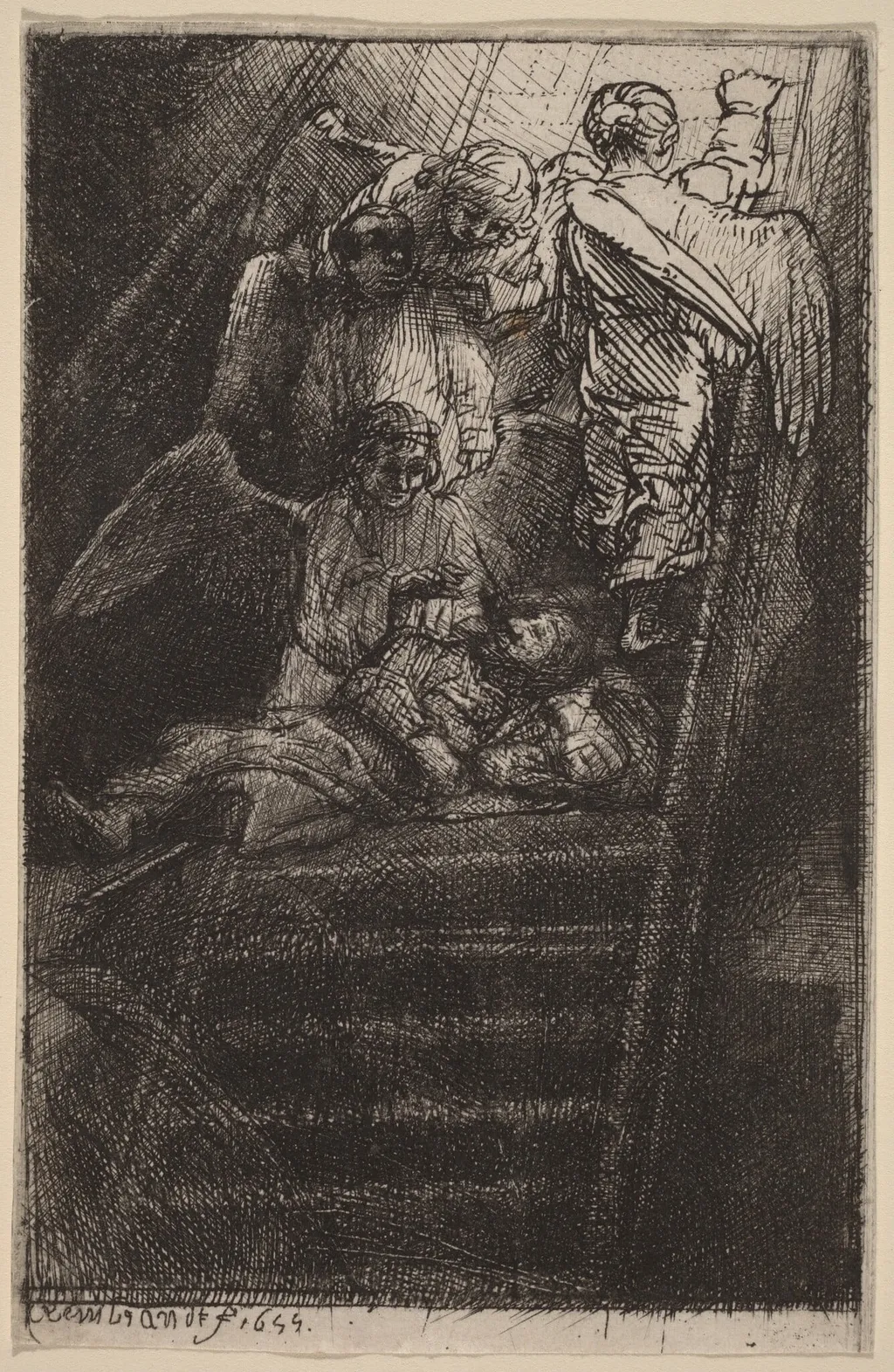
Jacob's Ladder is an ink print by the Baroque artist Rembrandt. It dates from 1655 and is held in the collection of the National Gallery of Art.
About this work
Overview
The composition centers on a vertical ladder reaching into a shadowed sky, surrounded by a group of figures in varied postures.
Jacob's Ladder is a print made by Rembrandt van Rijn in 1655, executed in etching and drypoint. It portrays a biblical moment from Genesis, rendered with intense emotional gravity. The composition centers on a vertical ladder reaching into a shadowed sky, surrounded by a group of figures in varied postures. The scene is dominated by deep blacks and delicate tonal gradations, characteristic of Rembrandt’s late graphic style.
Subject & Meaning
The image illustrates Jacob’s dream of a ladder connecting earth to heaven, with angels ascending and descending. Figures below react with awe, fear, and contemplation, their gestures suggesting spiritual awakening or dread. The reclining figure may represent Jacob in sleep, while others at the ladder’s base seem to witness the divine revelation. The work conveys a moment of sacred encounter, grounded in human vulnerability.
Technique & Style
Rembrandt employed etching and drypoint to achieve rich, velvety blacks and fine, expressive lines. Drypoint burr creates soft, fuzzy edges, enhancing the atmospheric depth. Light emerges subtly from the upper right, illuminating the ladder and figures without harsh contrast. The texture of skin, fabric, and stone is suggested through layered incisions, revealing his mastery of tonal nuance over detail.
History & Provenance
Created during Rembrandt’s later years in Amsterdam, the print was likely made for a private audience rather than public sale. It appears in several early collections, including those of Dutch and German connoisseurs. Multiple impressions survive, some with varying states of plate wear, indicating Rembrandt’s continued reworking of the image. Its circulation reflects its resonance among collectors of his graphic work.
Context
In mid-17th century Holland, biblical themes remained central to artistic expression, even amid growing secularism. Rembrandt’s interest in inner spiritual states aligned with Calvinist introspection. Unlike grand historical paintings, this print’s intimacy and emotional depth reflect a shift toward personal devotion, mirroring broader cultural trends in private religious contemplation.
Legacy
Jacob’s Ladder became a touchstone for later printmakers drawn to Rembrandt’s psychological depth and technical innovation. Its influence is evident in 18th- and 19th-century etchers who sought to convey spiritual narrative through tonal subtlety rather than dramatic spectacle. The work endures as a quiet but powerful example of how printmaking could convey profound human experience.
Artist & collection
Artist
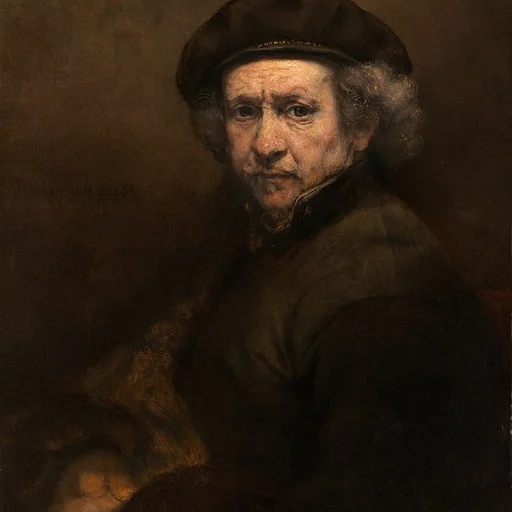
Rembrandt Harmenszoon van Rijn (15 July 1606 – 4 October 1669), known mononymously as Rembrandt, was a Dutch Golden Age painter, printmaker, and draughtsman.

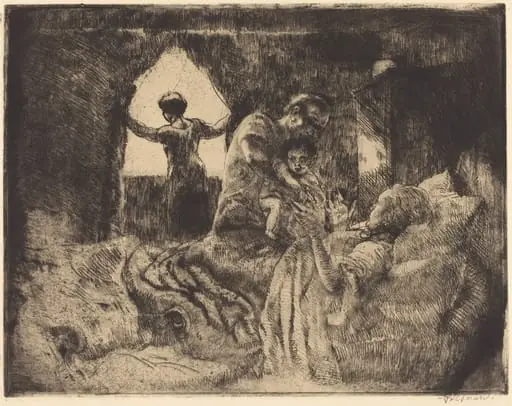 Greeting Grandmother (Le Bonjour à la Grand-mère)
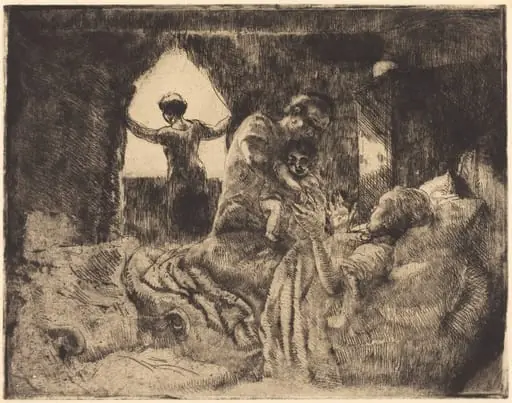 Greeting Grandmother (Le Bonjour à la Grand-mère)
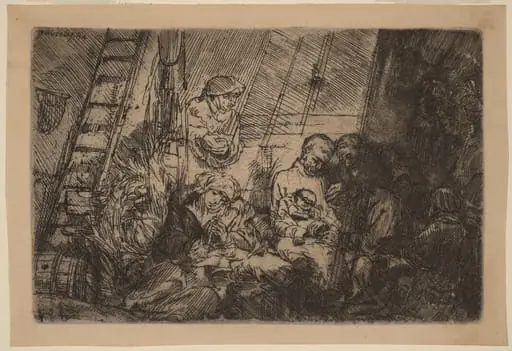 The Circumcision in the Stable
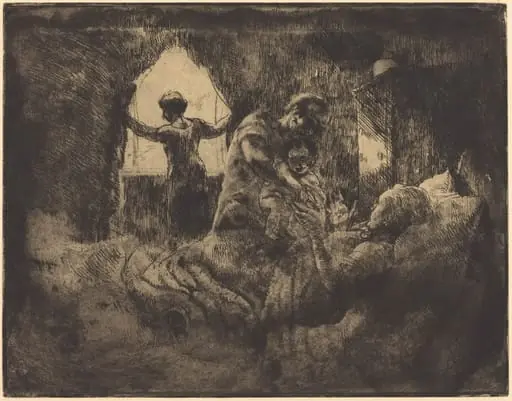 Greeting Grandmother (Le Bonjour à la Grand-mère)
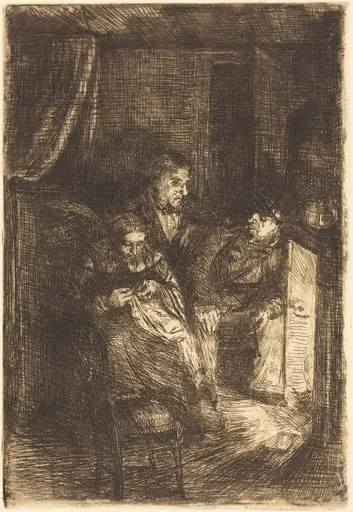 The Hearth (Le foyer)
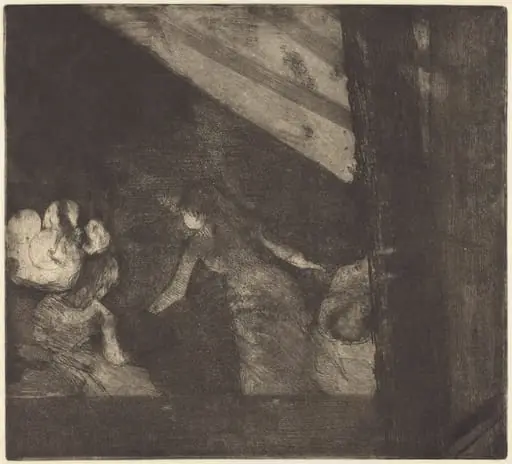 At the Cafe des Ambassadeurs (Aux Ambassadeurs)
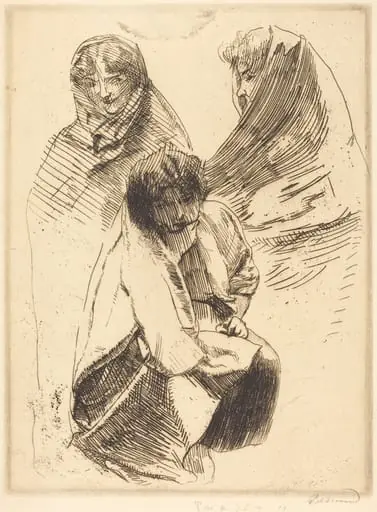 Three Veiled Women (Trois femmes voilées)
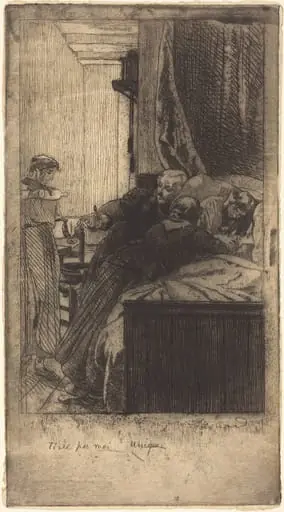 Sickness (La Maladie)
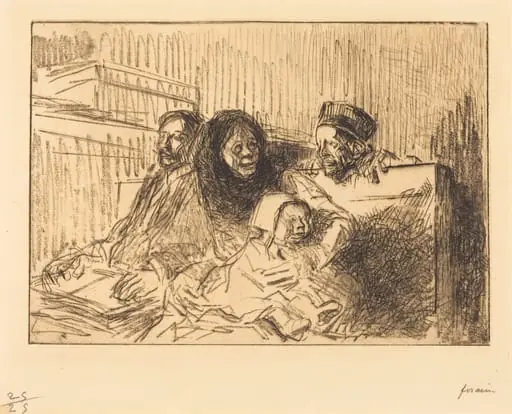 Témoins à l'audience (2e planche) (Evidence at the Hearing) (second plate)