Artwork
Sleeping Puppy
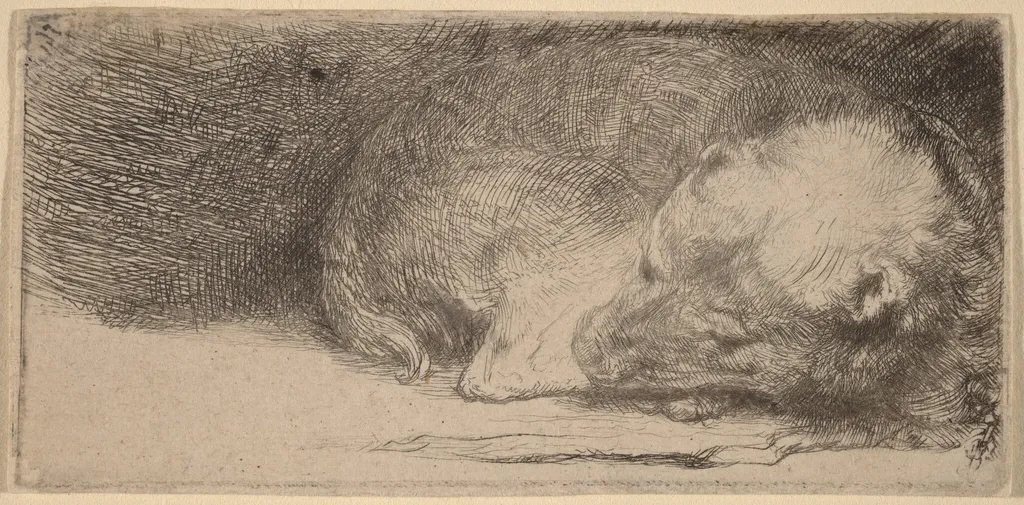
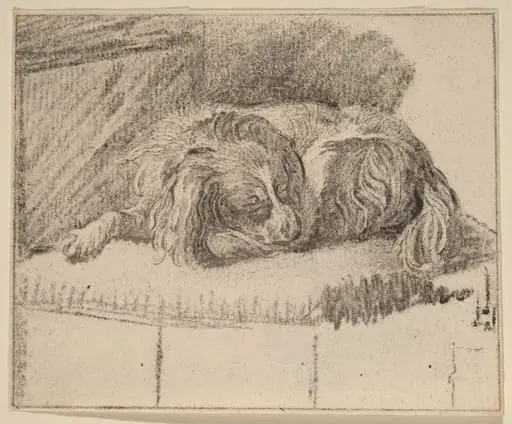
Sleeping Puppy is an ink print by the Baroque artist Rembrandt. It dates from 1640 and is held in the collection of the National Gallery of Art.
About this work
Overview
Created around 1640, Sleeping Puppy is a small etching and drypoint by Rembrandt van Rijn. It depicts a single puppy curled in a tight, resting posture on a flat plane. The work belongs to Rembrandt’s series of intimate animal studies, executed with minimal elements yet rich in tactile detail. Unlike his larger narrative prints, this piece focuses on quiet observation rather than storytelling.
Subject & Meaning
The subject is a domestic puppy, rendered in a moment of vulnerable stillness. Its body is folded inward, head tucked beneath its limbs, suggesting deep sleep and trust. There is no human presence, no symbolic context—only the animal’s physical presence. The image conveys tenderness through stillness, inviting contemplation of quiet, unguarded life rather than allegory or moral lesson.
Technique & Style
The fur is suggested by dense, overlapping strokes, some scratched directly into the plate with a needle, creating a rough, velvety surface.
Rembrandt employed etching and drypoint to build texture through fine, irregular lines. The fur is suggested by dense, overlapping strokes, some scratched directly into the plate with a needle, creating a rough, velvety surface. The contrast between soft, blurred areas and sharp, dark contours gives the puppy a three-dimensional presence. The technique prioritizes tactile sensation over precision, enhancing the sense of warmth and life.
History & Provenance
The print was made during Rembrandt’s mid-career, a period when he increasingly turned to private, observational subjects. Few records exist of its early ownership, but it appears in several 18th-century collections of Dutch prints. Its survival in multiple impressions suggests it was valued by collectors for its emotional resonance and technical ingenuity, though it was never widely reproduced.
Context
In 17th-century Dutch art, animals were often included as symbols or decorative elements. Rembrandt’s focus on a lone puppy reflects a broader shift toward intimate, everyday scenes. His animal studies, including this one, diverged from idealized portrayals, instead capturing natural behavior with empathy. These works reveal his interest in the quiet dignity of ordinary creatures.
Legacy
Sleeping Puppy influenced later artists interested in expressive line and emotional simplicity. Its unadorned focus on an animal’s vulnerability resonated with 19th-century printmakers and modern realists. Though not among Rembrandt’s most famous prints, it endures as a quiet testament to his ability to convey life through minimal means—offering a glimpse of tenderness in the margins of his oeuvre.
Artist & collection
Artist
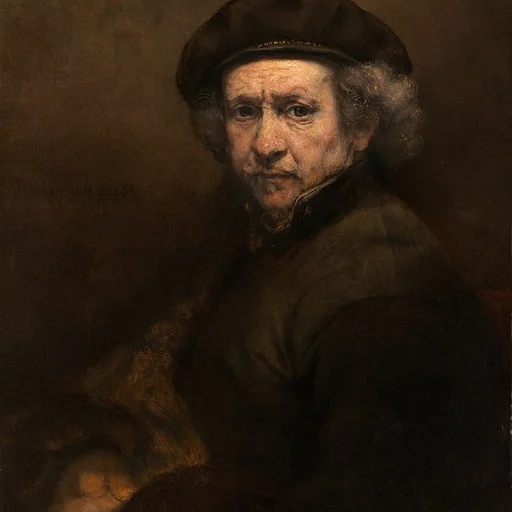
Rembrandt Harmenszoon van Rijn (15 July 1606 – 4 October 1669), known mononymously as Rembrandt, was a Dutch Golden Age painter, printmaker, and draughtsman.