Artwork
The Stone Quarry of Nanterre by Moonlight
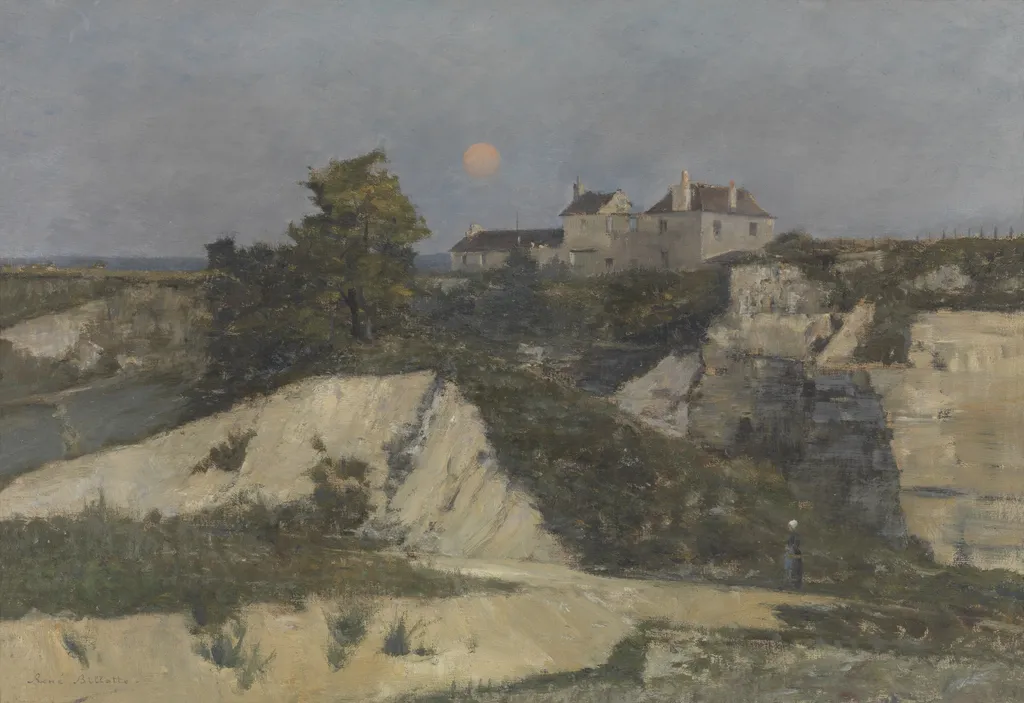
The Stone Quarry of Nanterre by Moonlight is an oil painting by René Billotte. It dates from 1890 and is held in the collection of the Royal Museum of Fine Arts Antwerp.
About this work
Overview
The work is part of the collection at the Royal Museum of Fine Arts Antwerp, where it is displayed as an example of late 19th-century French tonal painting.
Painted around 1890, The Stone Quarry of Nanterre by Moonlight is an oil landscape by French artist René Billotte. It captures a quiet, nocturnal scene in the outskirts of Nanterre, near Paris. The work is part of the collection at the Royal Museum of Fine Arts Antwerp, where it is displayed as an example of late 19th-century French tonal painting. Its subdued palette and emphasis on atmospheric light reflect a shift away from dramatic Romanticism toward more introspective naturalism.
Subject & Meaning
The painting presents a disused stone quarry under a full moon, its jagged rock faces and sparse scrubland rendered in cool, muted tones. A solitary house perches on a distant hill, its presence faint and unobtrusive. The absence of human figures and the stillness of the scene suggest contemplation rather than narrative. The quarry, once a site of labor, now exists as a silent relic, its transformation into a place of quiet solitude hinting at themes of abandonment and the passage of time.
Technique & Style
Billotte employs chiaroscuro to modulate the moon’s diffused glow across the quarry’s uneven surfaces. Thin layers of glaze create subtle transitions between shadow and light, enhancing the sense of depth without harsh contrasts. Brushwork is restrained, favoring smooth blending over texture, which reinforces the painting’s hushed mood. The composition directs attention downward into the quarry’s hollows, while the elevated house anchors the horizon, balancing the verticality of the scene.
History & Provenance
The painting was likely completed during Billotte’s time in the Île-de-France region, where he frequently sketched rural and industrial landscapes. It entered the collection of the Royal Museum of Fine Arts Antwerp in the early 20th century, possibly through a private donation or acquisition from a French dealer. Its presence in Belgium reflects the cross-border interest in French tonal landscapes during a period when Belgian collectors actively sought works by lesser-known French contemporaries.
Context
Created during a time when French artists were increasingly drawn to nocturnal and marginal landscapes, the painting aligns with a broader interest in quiet, unidealized nature. While contemporaries like Corot and Daubigny explored similar themes, Billotte’s focus on a quarry—rather than a forest or river—offers a more industrialized variant of the pastoral. The work reflects a growing fascination with sites shaped by human activity, now reclaimed by stillness and moonlight.
Legacy
Though not widely exhibited or studied, The Stone Quarry of Nanterre by Moonlight remains a quiet example of late 19th-century French landscape painting that prioritizes mood over spectacle. It contributes to a nuanced understanding of artists who worked outside the academic mainstream, capturing the poetic potential of overlooked places. Its preservation in Antwerp ensures its continued visibility within a broader European context of tonal landscape traditions.
Own this work as a print
Artist & collection


 The Village Chaslepont
 Polish Village
 October Day
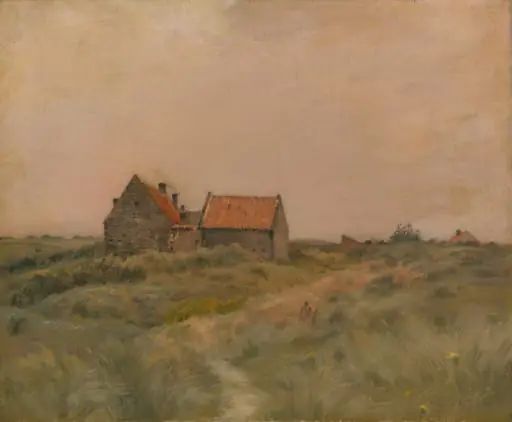 October Day
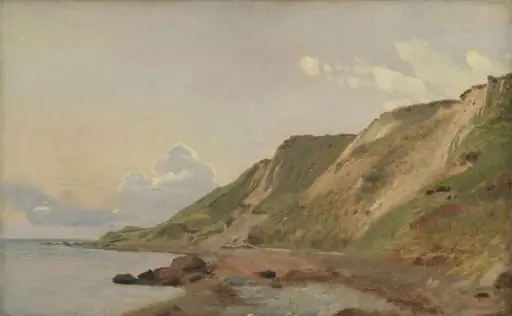 Study of Cliffs at the South Coast of Refsnæs
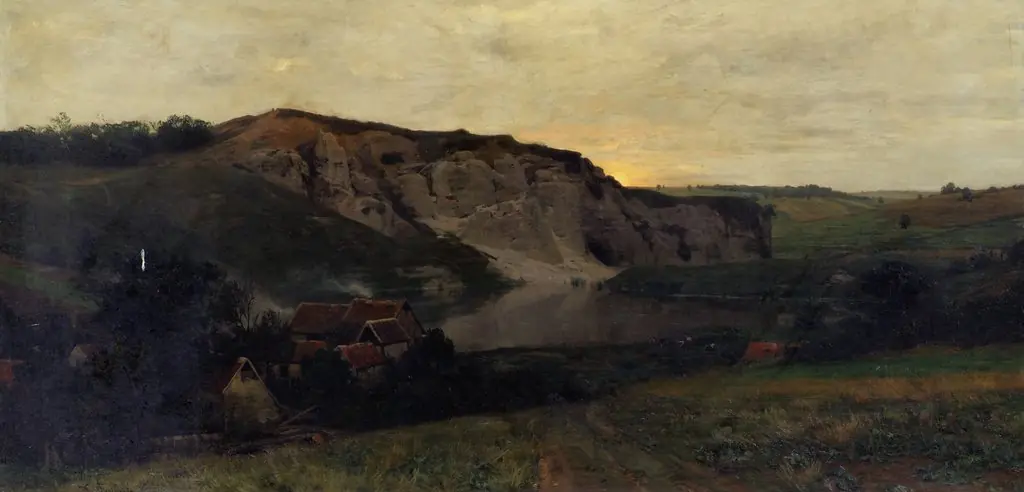 Felslandschaft mit Weiher
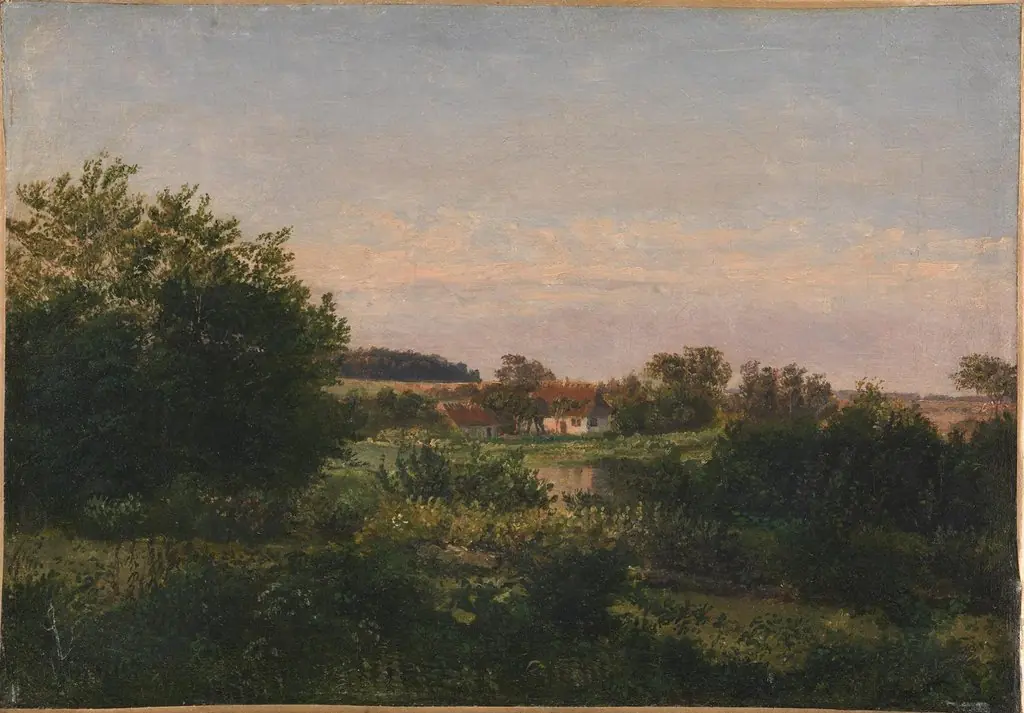 Landscape with a Cottage beside a Pond
 Landscape with a Cottage beside a Pond
 Environs of Gruyéres, Switzerland
 A view near Saint-Jean-de-Luz
 The Banks of the Marne in Winter
 Landscape with a Church