Artwork
The Blue River
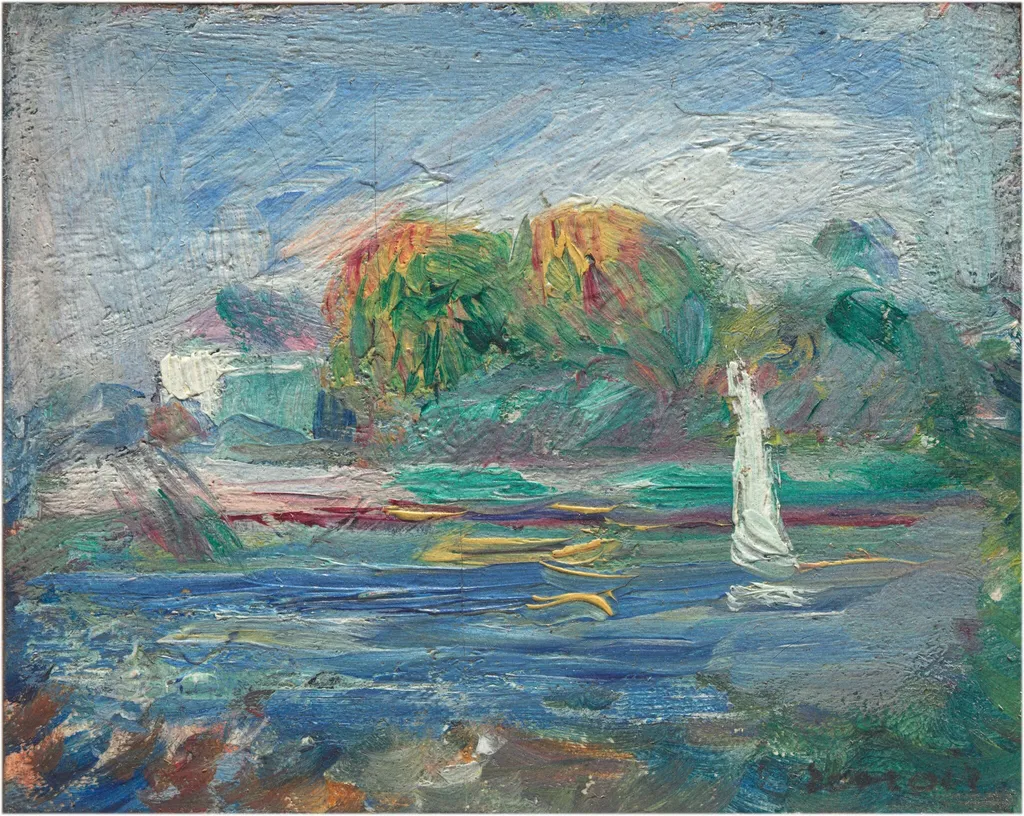
The Blue River is an oil painting by the Impressionist artist Auguste Renoir. It dates from 1895 and is held in the collection of the National Gallery of Art.
About this work
Overview
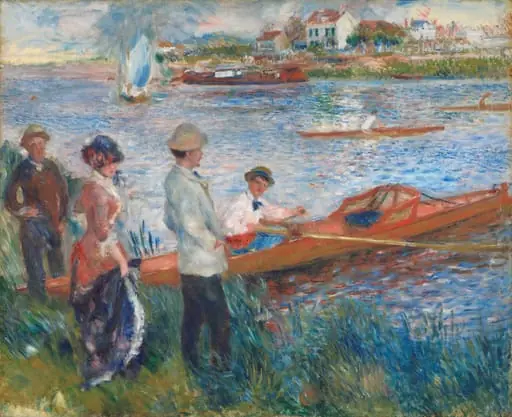
"The Blue River" is an oil on canvas landscape painted by Auguste Renoir around 1895. The work portrays a peaceful river scene, where a few small boats drift on water rendered in multiple shades of blue. Lush green foliage frames the water, while distant trees and hills emerge through loose, atmospheric brushwork, creating a sense of calm.
Subject & Meaning
The composition focuses on the tranquil interaction between water and land, emphasizing the quiet rhythm of a riverine environment. The modest presence of boats suggests everyday activity, while the expansive sky and gentle horizon convey a contemplative mood, inviting viewers to pause and absorb the serenity of the natural setting.
Technique & Style
Renoir employs the hallmark Impressionist approach of rapid, fluid brushstrokes to suggest form rather than delineate it precisely. Variations of blue capture the river’s depth and movement, while the surrounding greens are applied in layered, semi-transparent washes. The painting’s soft edges and emphasis on light over detail reflect the artist’s late-period exploration of atmospheric effects.
Context
Created in the mid-1890s, the work belongs to Renoir’s later period when he turned increasingly toward landscape subjects after years of figure painting. Though rooted in Impressionism, the piece hints at a more relaxed, almost lyrical treatment of nature that anticipates the softer tonalities seen in his subsequent works.
Own this work as a print
Artist & collection

Artist
Pierre-Auguste Renoir was born on 25 February 1841 in Limoges, the son of a tailor and a seamstress.