Artwork
Portrait of Mary Frances (Fanny) Swinburne
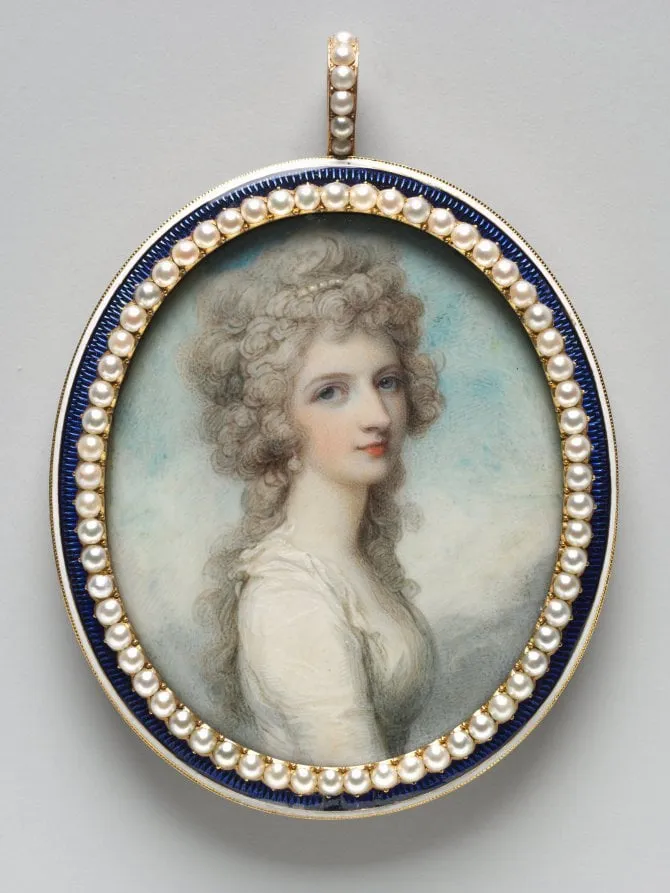
Portrait of Mary Frances (Fanny) Swinburne is an unspecified portrait miniature by the Rococo painting artist Richard Cosway. It dates from 1786 and is held in the collection of the Cleveland Museum of Art.
About this work
He was London’s go-to artist for high-society miniatures, and Fanny Swinburne was the daughter of a well-known travel writer.
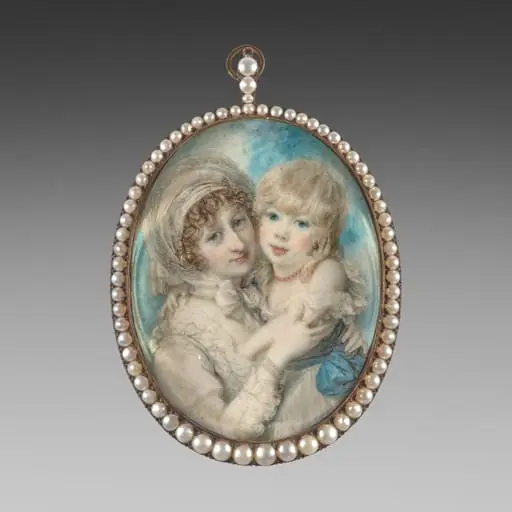
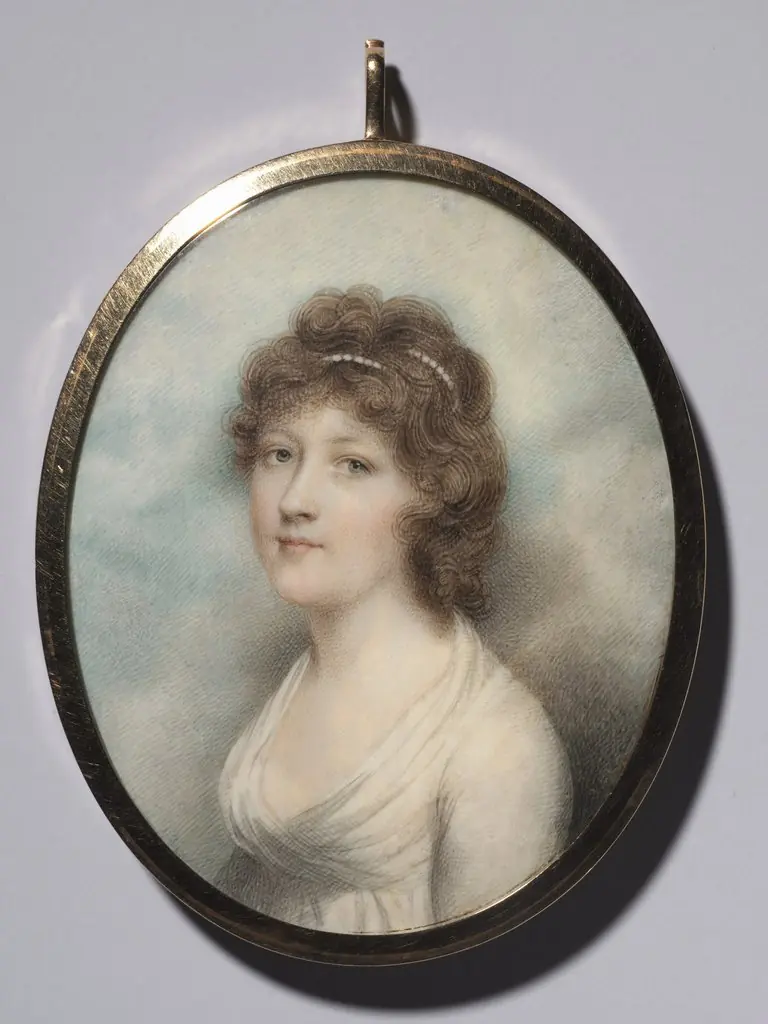
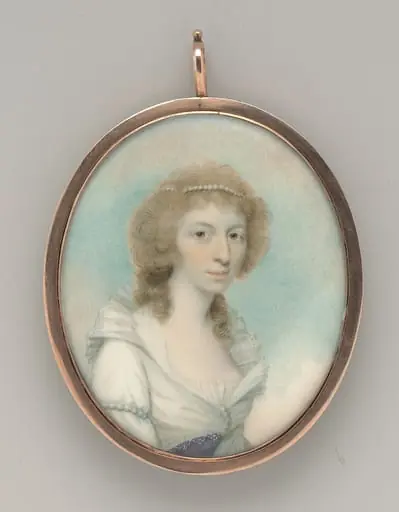
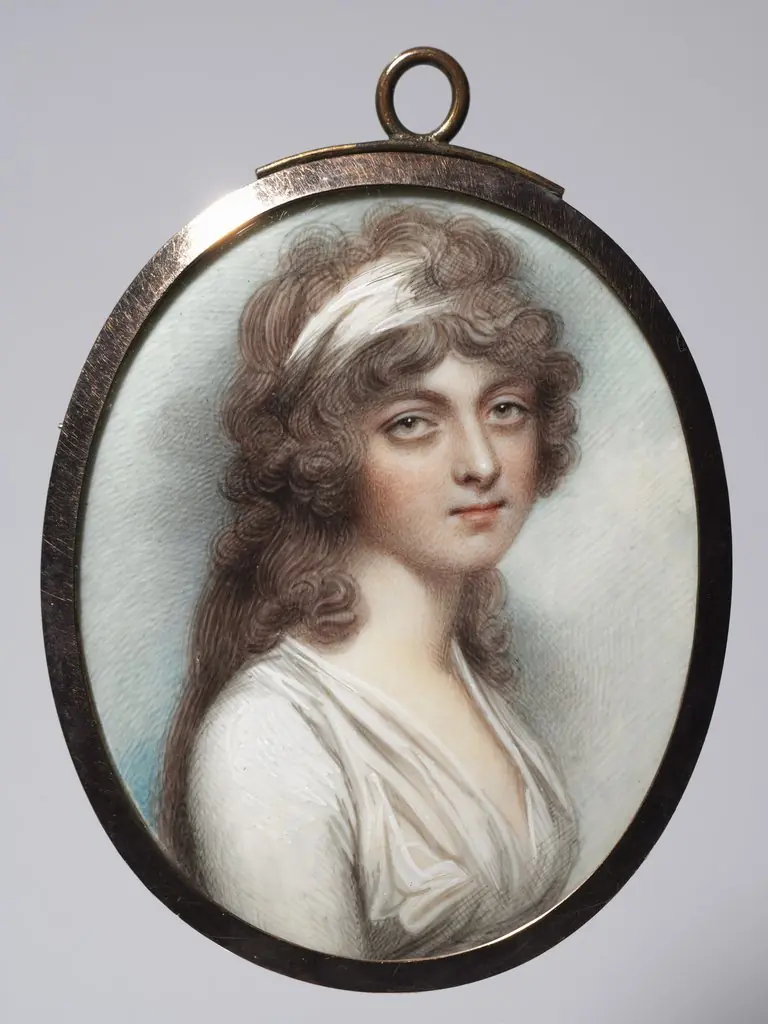
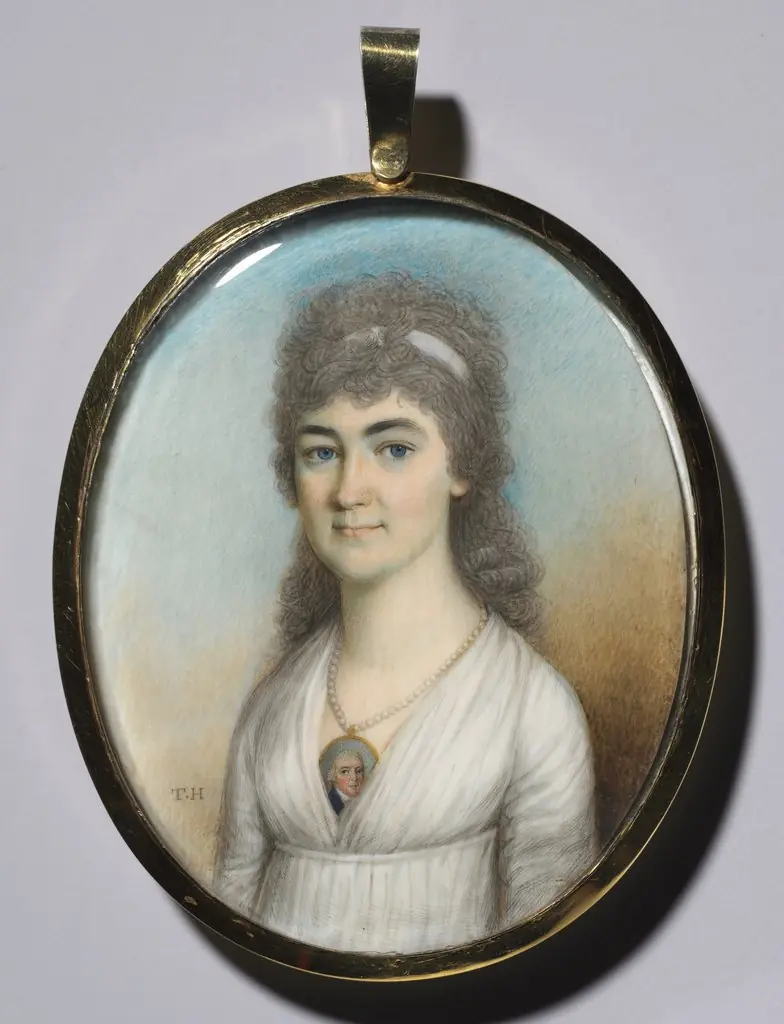
A young woman looks straight at you, her pale face framed by dark curls. Pearls twirl through her hair, and a single earring glints in her right ear. Her lips are pink, her cheeks rosy, her blue eyes bright.
Cosway painted tiny portraits—this one fits in your hand. He was London’s go-to artist for high-society miniatures, and Fanny Swinburne was the daughter of a well-known travel writer. The pearls in her hair weren’t just pretty; they showed her family’s wealth and taste.
Look up other portraits from england, 18th century to see how artists dressed up their sitters.
Overview
This miniature portrait depicts Mary Frances Swinburne, painted circa 1786 by Richard Cosway, then London’s leading miniaturist. Executed in watercolor on ivory, the piece measures just a few inches across, designed for intimate handling. Its delicate scale and refined detail reflect the era’s demand for personal, portable likenesses among the elite. The sitter’s poised expression and ornate adornments signal her social standing, while the frame—a twentieth-century revival design—was added later to suit contemporary tastes for period elegance.
Subject & Meaning
Fanny Swinburne, daughter of the travel writer Henry Swinburne, is portrayed with quiet composure, her gaze direct and unflinching. Pearls woven through her powdered curls and a single earring signify wealth and refined taste, common symbols in aristocratic portraiture. Her pale skin, flushed cheeks, and vivid eyes emphasize youth and vitality, aligning with contemporary ideals of feminine beauty. The portrait functions not merely as likeness but as a statement of familial status and cultural sophistication within late eighteenth-century British society.
Technique & Style
Cosway rendered the portrait with fine brushwork on ivory, using a restrained palette dominated by soft whites, blues, and muted pinks. His technique favored fluid, almost impressionistic strokes, particularly in the hair and fabric, contrasting with the precise rendering of facial features. The background is lightly washed, suggesting open air without detail, allowing the sitter to dominate the composition. This approach, while celebrated in his time, later drew criticism for its perceived superficiality among Victorian artists who favored greater realism.
History & Provenance
The portrait was likely commissioned shortly before Fanny Swinburne’s marriage, as was customary among upper-class families. It remained in the Swinburne family until the early twentieth century, when it entered a private collection. The current gold and blue enamel frame, featuring graduated pearls, was added during this period, reflecting a revivalist trend among collectors who sought to enhance the perceived grandeur of Georgian miniatures. The original frame, if any, has not survived.
Context
Cosway’s work flourished amid a London culture that prized miniature portraiture as both art and social currency. His clients included royalty and the landed gentry, for whom such portraits served as tokens of affection, marriage proposals, or diplomatic gifts. Fanny’s depiction aligns with a broader trend: young women were often shown with pearls, light fabrics, and idealized features to convey virtue and refinement. The style contrasted sharply with the more rigid, formal portraits of earlier decades, signaling a shift toward intimacy and emotional nuance.
Legacy
Though later critics dismissed Cosway’s style as overly ornamental, his influence endured in the miniature tradition. His technique set a standard for elegance and delicacy that shaped the work of subsequent artists, even as aesthetic values changed. The portrait of Fanny Swinburne remains a representative example of how personal identity was visually constructed in late Georgian England—through subtle details, controlled color, and the careful negotiation of status and sentiment.
Artist & collection
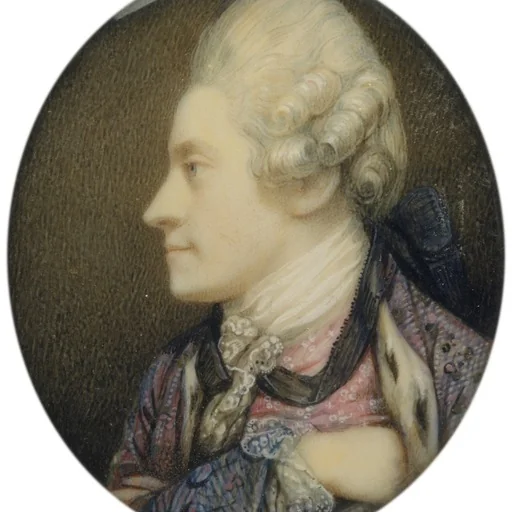
Artist
Richard Cosway (5 November 1742 – 4 July 1821) was a leading English portrait painter of the Georgian and Regency era, noted for his miniatures.