Artwork
Landscape
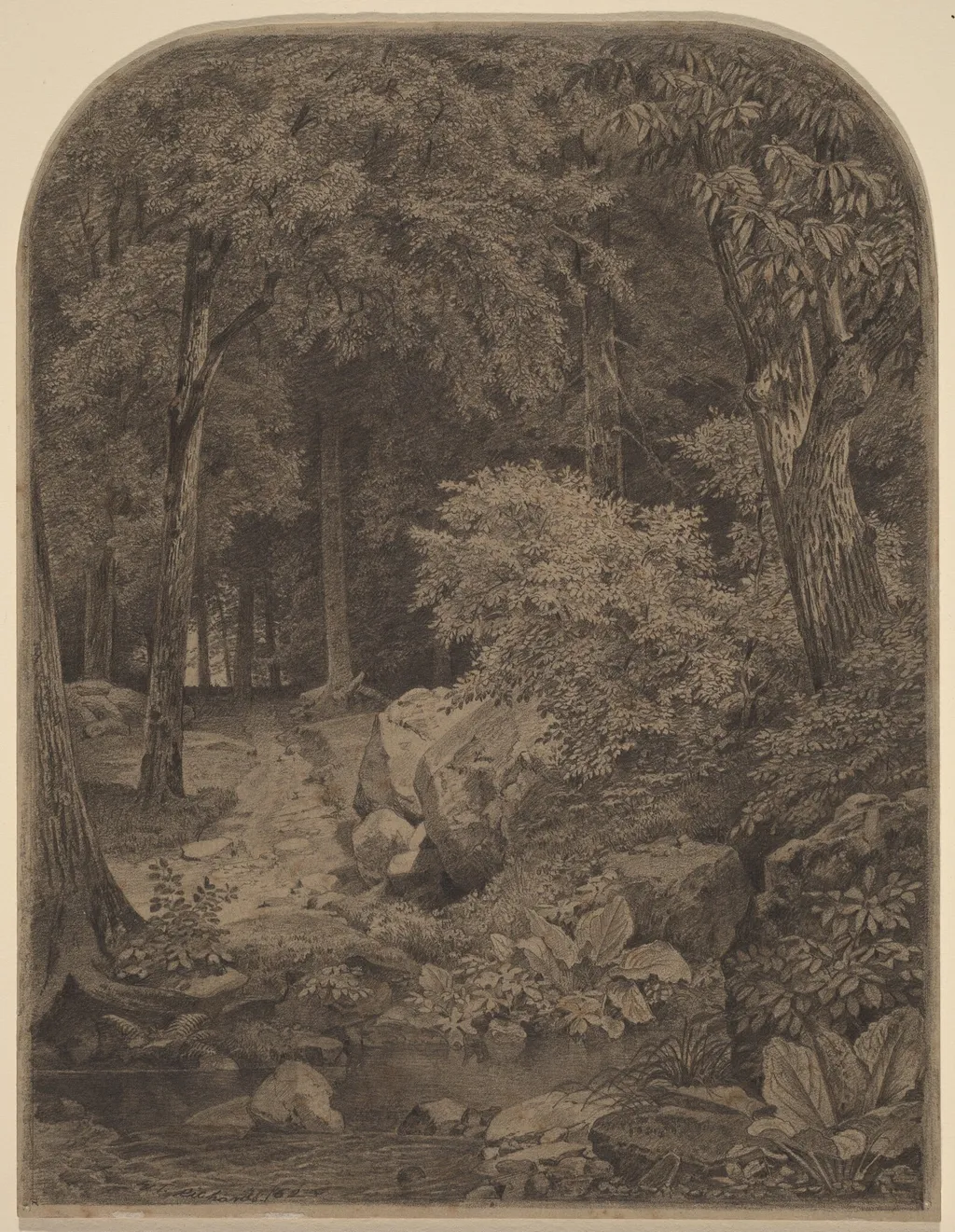
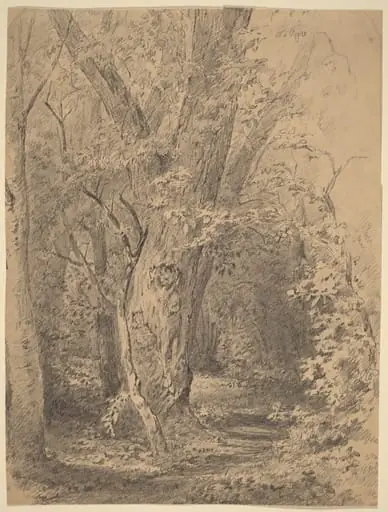
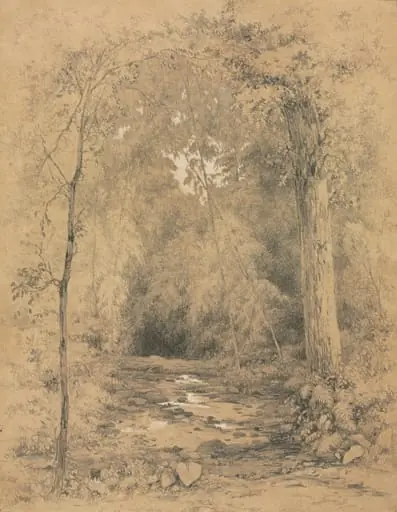
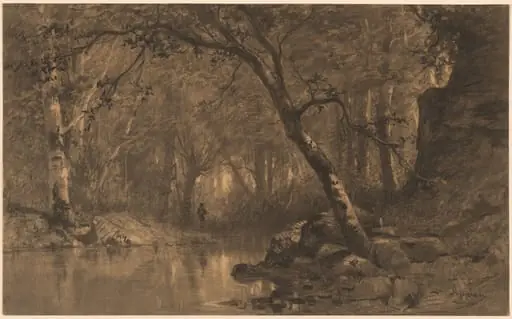
Landscape is a graphite drawing by the Impressionist artist William Trost Richards. It dates from 1862 and is held in the collection of the National Gallery of Art.
About this work
Overview
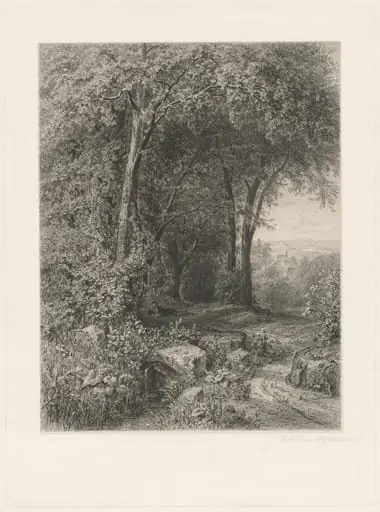
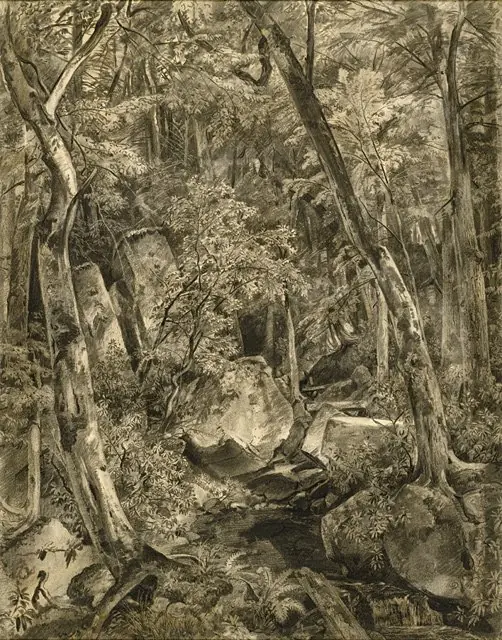
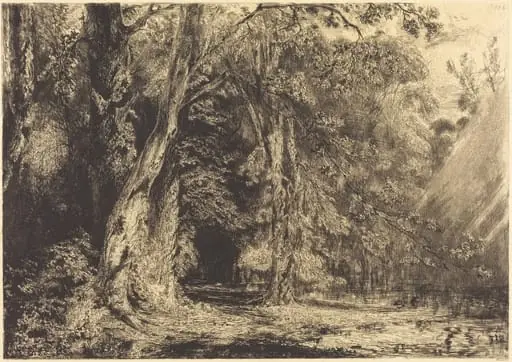
Created in 1862, this graphite drawing on wove paper by William Trost Richards captures a quiet woodland scene. The composition centers on a narrow trail meandering through thick vegetation, with careful attention to natural forms and spatial depth. The medium’s versatility allows for subtle gradations of tone, enhancing the atmospheric quality of the setting without color.
Subject & Meaning
The drawing presents an unpopulated forest interior, emphasizing solitude and the quiet rhythm of nature. A winding path invites the viewer’s gaze inward, suggesting contemplation rather than narrative. Rocks and dense foliage frame the space, reinforcing a sense of enclosure and stillness, typical of mid-century American landscape sensibilities focused on introspection.
Technique & Style
Richards employed fine, controlled graphite strokes to model tree trunks, rocks, and undergrowth with precision. Layered hatching and varied pressure create a full tonal range—from deep shadows beneath foliage to the faintest highlights on the path. The wove paper’s smooth surface enhances the delicacy of the lines, supporting a detailed, almost topographical approach to natural forms.
History & Provenance
Made during Richards’s early career, this work reflects his commitment to direct observation of nature, a practice he developed through sketching trips in New England. It predates his later oil paintings of coastal scenes but aligns with his foundational studies of woodland environments, many of which were later used as references for finished works.
Context
In the 1860s, American artists increasingly turned to intimate, unidealized landscapes as alternatives to grand Romantic vistas. Richards’s focus on localized, densely observed forest interiors aligned with emerging interests in naturalism and scientific accuracy, influenced by European precedents and the growing American tradition of plein air study.
Legacy
This drawing exemplifies Richards’s role in bridging detailed 19th-century American landscape drawing with later movements that valued close observation. While not part of Impressionism, its emphasis on light, texture, and natural form contributed to a broader shift toward realism in American art, influencing subsequent generations of landscape draftsmen.
Own this work as a print
Artist & collection