Artwork
Paradise, Newport
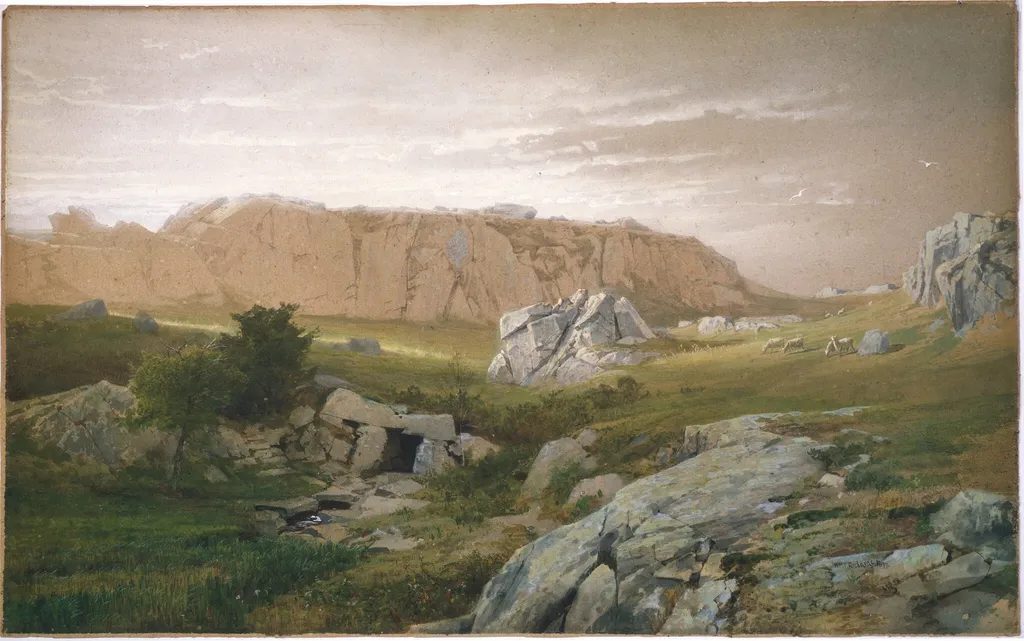
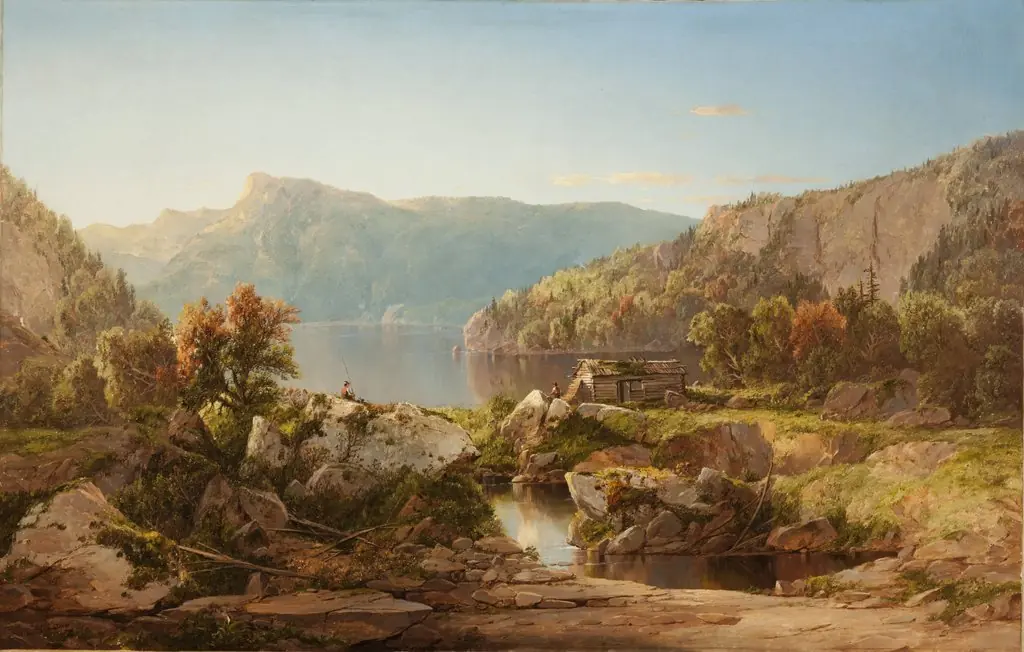
Paradise, Newport is a gouache drawing by the Impressionist artist William Trost Richards. It dates from 1877 and is held in the collection of the National Gallery of Art.
About this work
Overview
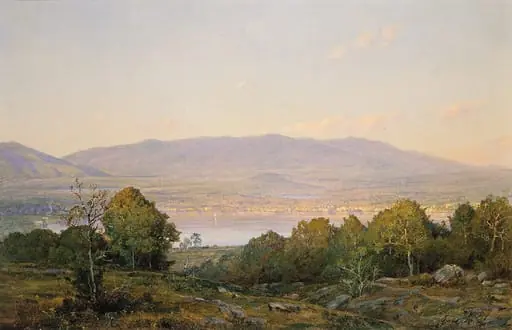
Created in 1877, Paradise, Newport is a gouache drawing on gray fibrous paper by American artist William Trost Richards. It captures a tranquil coastal landscape near Newport, Rhode Island, with muted tones and delicate texture. The medium’s opacity allowed for subtle layering, distinguishing it from transparent watercolor while retaining a light, atmospheric quality suited to plein air study.
Subject & Meaning
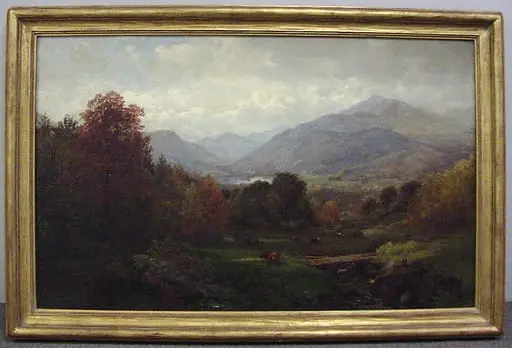
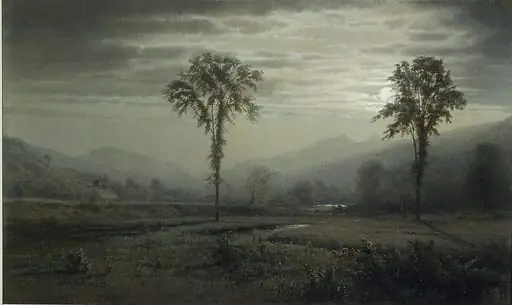
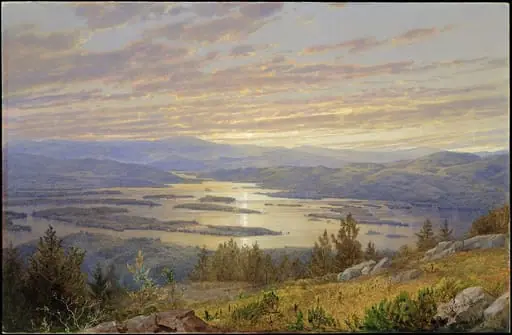
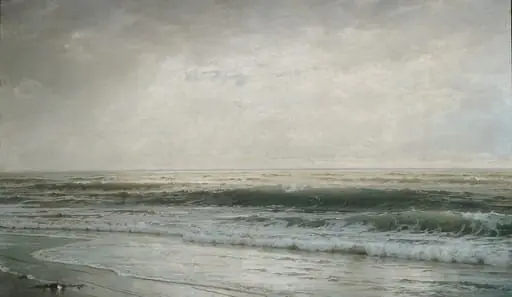
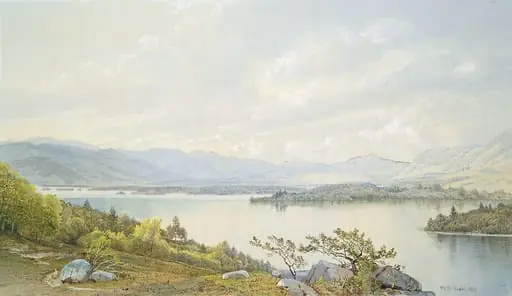
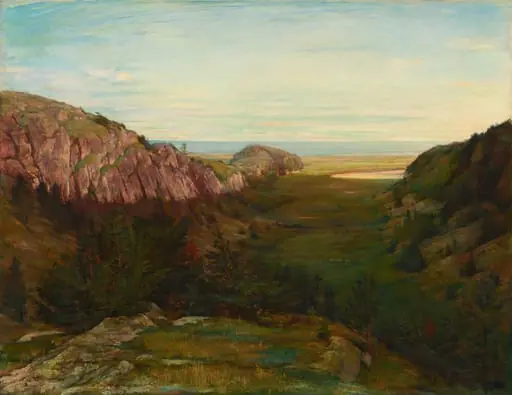
The scene depicts a quiet pastoral setting: a narrow stream winds through rocky foregrounds, grazing sheep dot the terrain, and distant hills fade into a pale, cloud-tinged sky. There is no human presence, suggesting an idealized stillness. The composition invites contemplation rather than narrative, reflecting a 19th-century preference for nature as a serene, unspoiled refuge.
Technique & Style
Richards employed gouache—water-based pigment with chalk—to build soft, semi-opaque layers on textured paper. His brushwork is light and suggestive, with loose strokes defining forms rather than detailing them. The gray paper serves as a mid-tone base, enhancing the luminosity of the sky and water, while the sketch-like quality conveys immediacy and observational intimacy.
History & Provenance
Painted during Richards’s later period, Paradise, Newport aligns with his sustained interest in New England’s coastal scenery. It was likely made during a summer stay in Newport, a hub for artists seeking natural light and undisturbed landscapes. The work remained in private hands until entering a public collection, where it is now preserved as an example of American tonal drawing.
Context
In the 1870s, American artists increasingly turned to intimate landscapes as alternatives to grand historical or romanticized vistas.
In the 1870s, American artists increasingly turned to intimate landscapes as alternatives to grand historical or romanticized vistas. Gouache offered a portable, quick-drying medium ideal for outdoor sketching. Richards, influenced by the Hudson River School yet moving toward quieter modes, used this work to explore light and atmosphere with restraint, anticipating later American Impressionist tendencies.
Legacy
Paradise, Newport exemplifies a shift in American art toward understated naturalism. While not widely exhibited in its time, it contributes to the understanding of how 19th-century artists used modest materials to convey emotional resonance. Its preservation highlights the value placed on preparatory and personal works, offering insight into the artist’s process beyond finished oil paintings.
Own this work as a print
Artist & collection