Artwork
2305990 (one of a series)
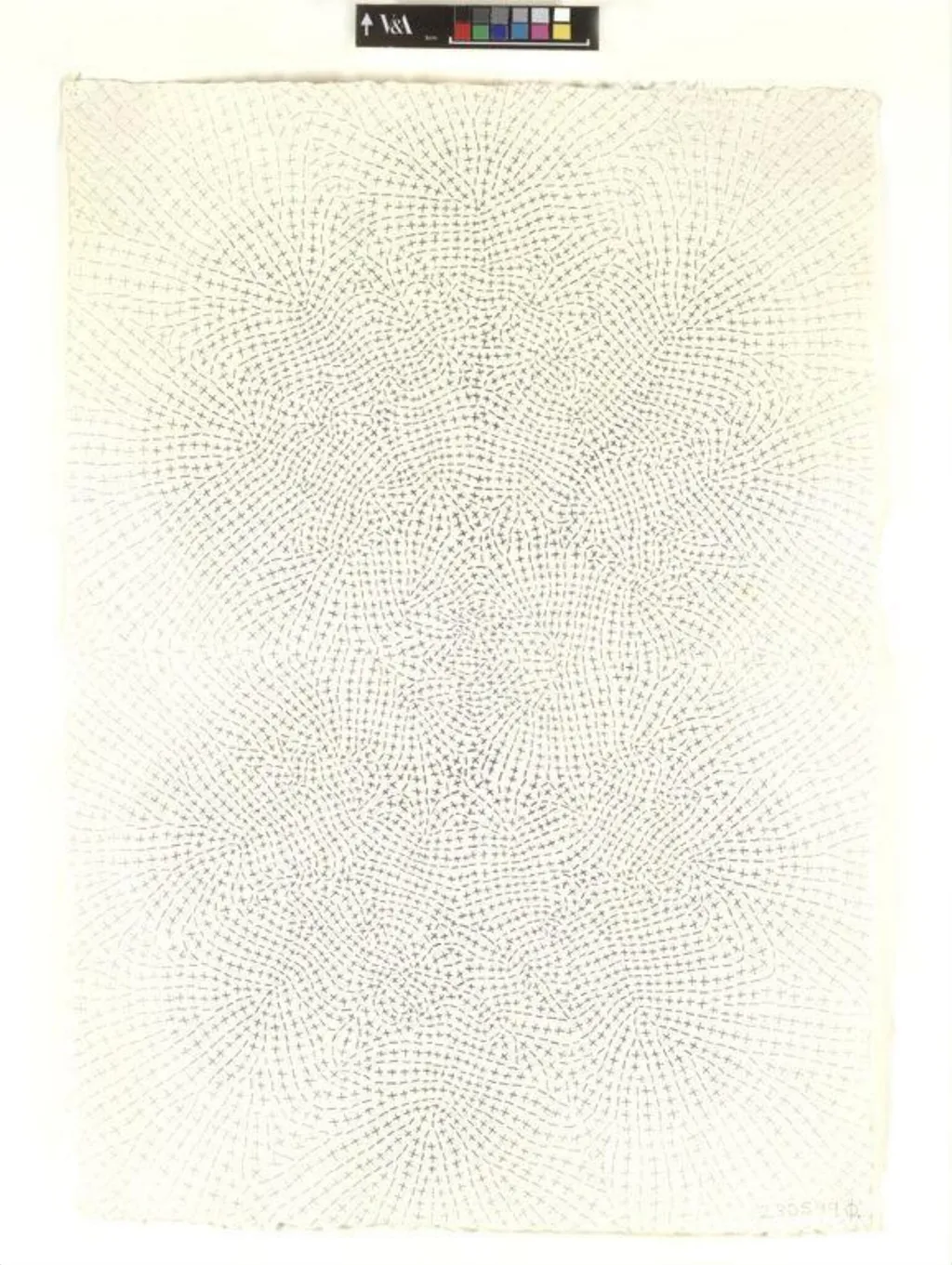
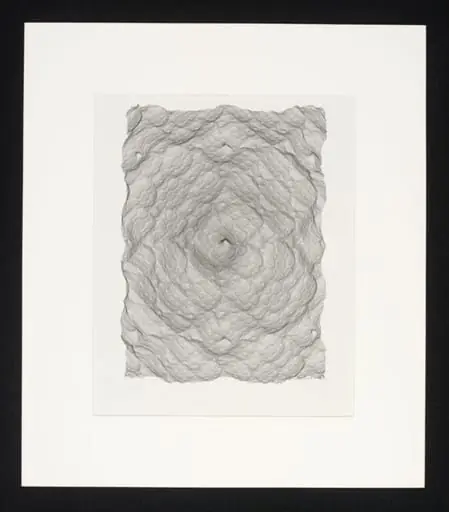
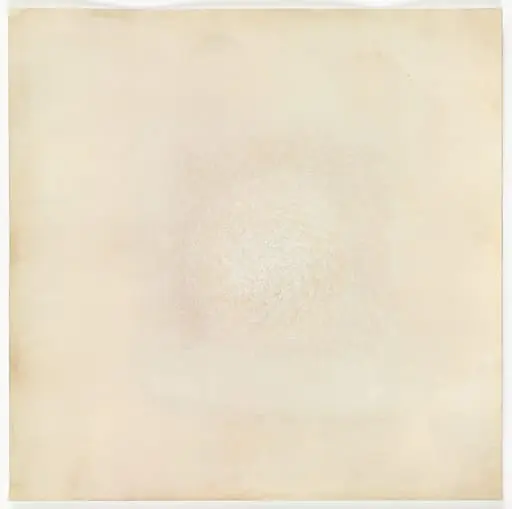
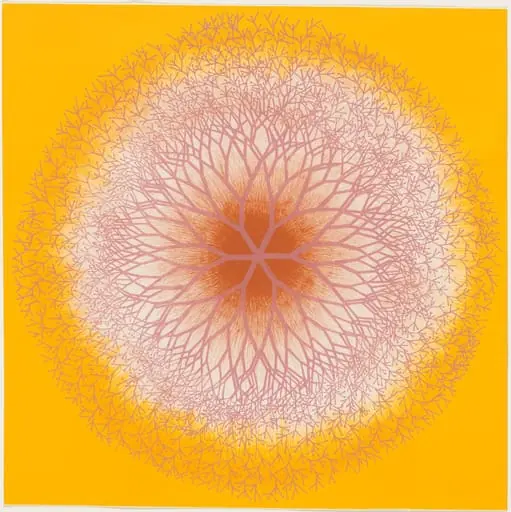
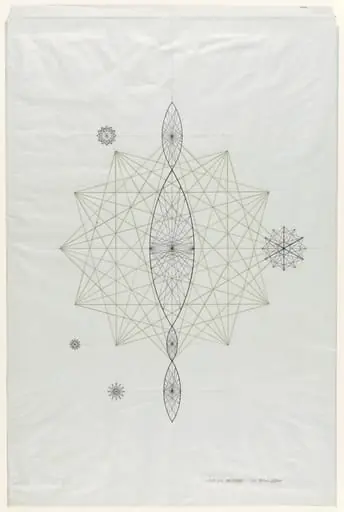
2305990 (one of a series) is a drawing by Frances Richardson. It dates from 1999 and is held in the collection of the Victoria and Albert Museum.
About this work
She studied woodcarving in Nigeria and learned how trees carry history in their growth.
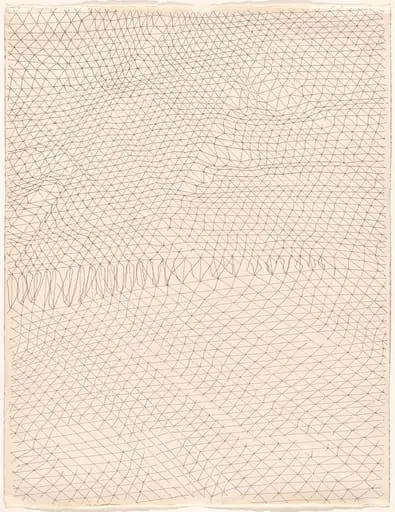
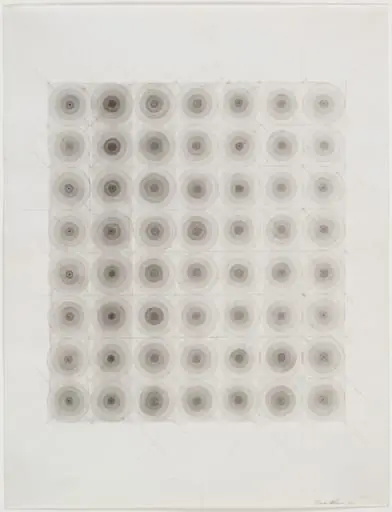
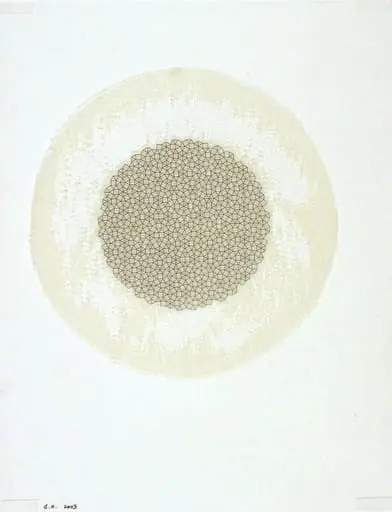
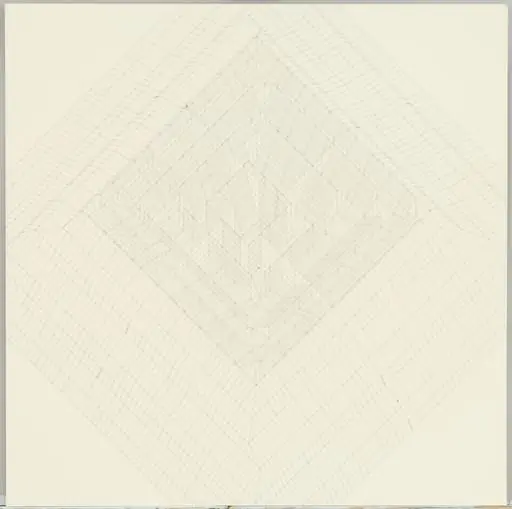
Frances Richardson made a series of drawings called "2305990" in 1999. It’s a drawing, not a sculpture, but it explores the rings in a tree. She studied woodcarving in Nigeria and learned how trees carry history in their growth.
The series uses a simple math trick—endless repetition—to map those rings. She even compares it to how computers build patterns bit by bit.
This kind of mark-making looks like tiny crosses or dots. See how Richardson, Frances uses the same method in other works.
Overview
2305990 is a drawing from Frances Richardson's '1+1' series, created in 1999. It visually explores the geometric pattern of a tree's annual rings through repetitive mathematical markings.
Subject & Meaning
The work delves into the intersection of organic growth (tree rings as records of age) and mathematical structure, with potential allusions to digital technology's pattern-building processes.
Technique & Style
Richardson employs a series of tiny, repetitive strokes (resembling crosses or dots) to build the image, a method influenced by her training in Nigeria, where she learned to appreciate the spiritual and historical significance of wood.
History & Provenance
Part of a series, 2305990 is accompanied by another example in the collection, E. 452-1999. Richardson's approach was shaped by her studies in woodcarving in Nigeria, where she gained insight into the spiritual values attached to wood and the recording of a tree's history through its growth rings.
Context
The piece reflects Richardson's fascination with how natural, organic forms (like tree rings) can be represented and understood through geometric, mathematical means, drawing a parallel with computational logic.
Legacy
2305990 contributes to an exploration of the mathematical and the organic, offering a unique visual language that blends traditional mark-making with conceptual themes relevant to late 20th-century artistic dialogues.
Artist & collection
Artist