Artwork
Junius Brutus Booth
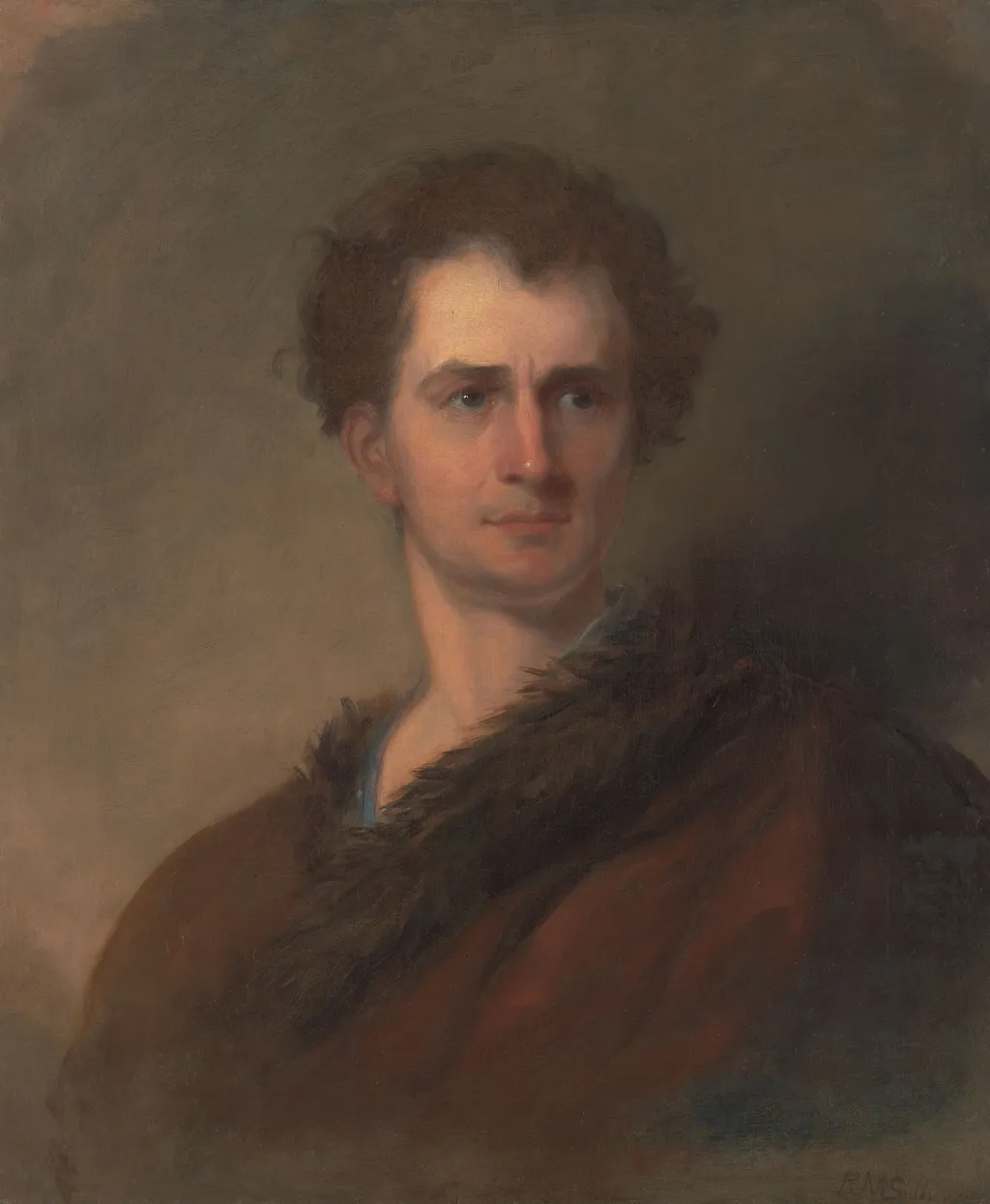
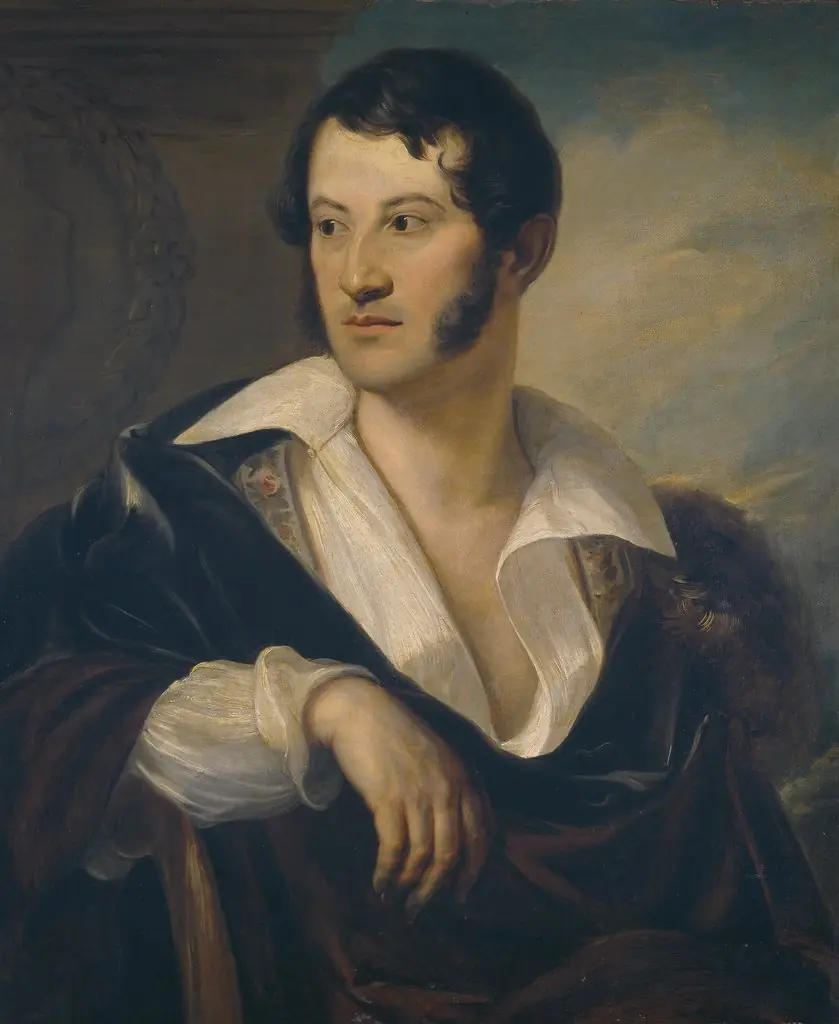
Junius Brutus Booth is an oil painting by the Realist artist Robert Matthew Sully. It dates from 1829 and is held in the collection of the Art Institute of Chicago.
About this work
Overview
Robert Matthew Sully completed this oil portrait in 1829, capturing the English-born American actor Junius Brutus Booth.
Robert Matthew Sully completed this oil portrait in 1829, capturing the English-born American actor Junius Brutus Booth. Sully, a Virginia-based painter and nephew of Thomas Sully, specialized in portraiture during the early 19th century. The work reflects a quiet realism, emphasizing the subject’s presence without theatrical embellishment. Its restrained palette and direct gaze align with contemporary American portrait conventions of the period.
Subject & Meaning
Junius Brutus Booth was a prominent stage actor known for his Shakespearean roles and turbulent personal life. Sully’s portrayal presents him not as a performer in costume, but as a man of gravity—dressed in a dark, fur-trimmed coat that suggests status and refinement. The direct eye contact conveys intensity and introspection, inviting the viewer to consider the actor’s inner character beyond his public persona.
Technique & Style
Sully employed oil paint with a controlled brushwork, rendering textures like fur and fabric with subtle variation. The background is a soft, neutral brown, drawing focus to the figure’s form and facial expression. Lighting is even and naturalistic, avoiding dramatic contrasts. The composition is tightly framed, emphasizing psychological presence over environmental context—a hallmark of early American portraiture.
History & Provenance
Painted in 1829, the portrait was created during Booth’s early years in the United States, when he was establishing his reputation as a leading tragedian. Sully, then active in Richmond, likely painted Booth during a visit to Virginia. The work remained within private collections for much of its history, with no public exhibition record until the 20th century, when it entered institutional holdings.
Context
In the 1820s, American portraiture increasingly favored realism over idealization, reflecting a broader cultural shift toward individualism. Artists like Sully documented prominent figures—actors, politicians, merchants—with psychological nuance. Booth, as a celebrated immigrant performer, embodied the transatlantic cultural exchange shaping early American identity, making his portrait a quiet testament to that era’s artistic and social currents.
Legacy
Though less known than his nephew Thomas Sully, Robert Matthew Sully’s portraits offer valuable insight into regional American art of the antebellum period. This portrait of Junius Brutus Booth endures as a record of a significant theatrical figure and an example of the quiet, observational style that defined many American portraits before the rise of photographic representation.
Own this work as a print
Artist & collection
Artist
Robert Matthew Sully (17 July 1803, Petersburg, Virginia - 28 October 1855, Buffalo, New York) was an American portrait painter who worked mostly in Virginia.