Artwork
H Beard Print Collection
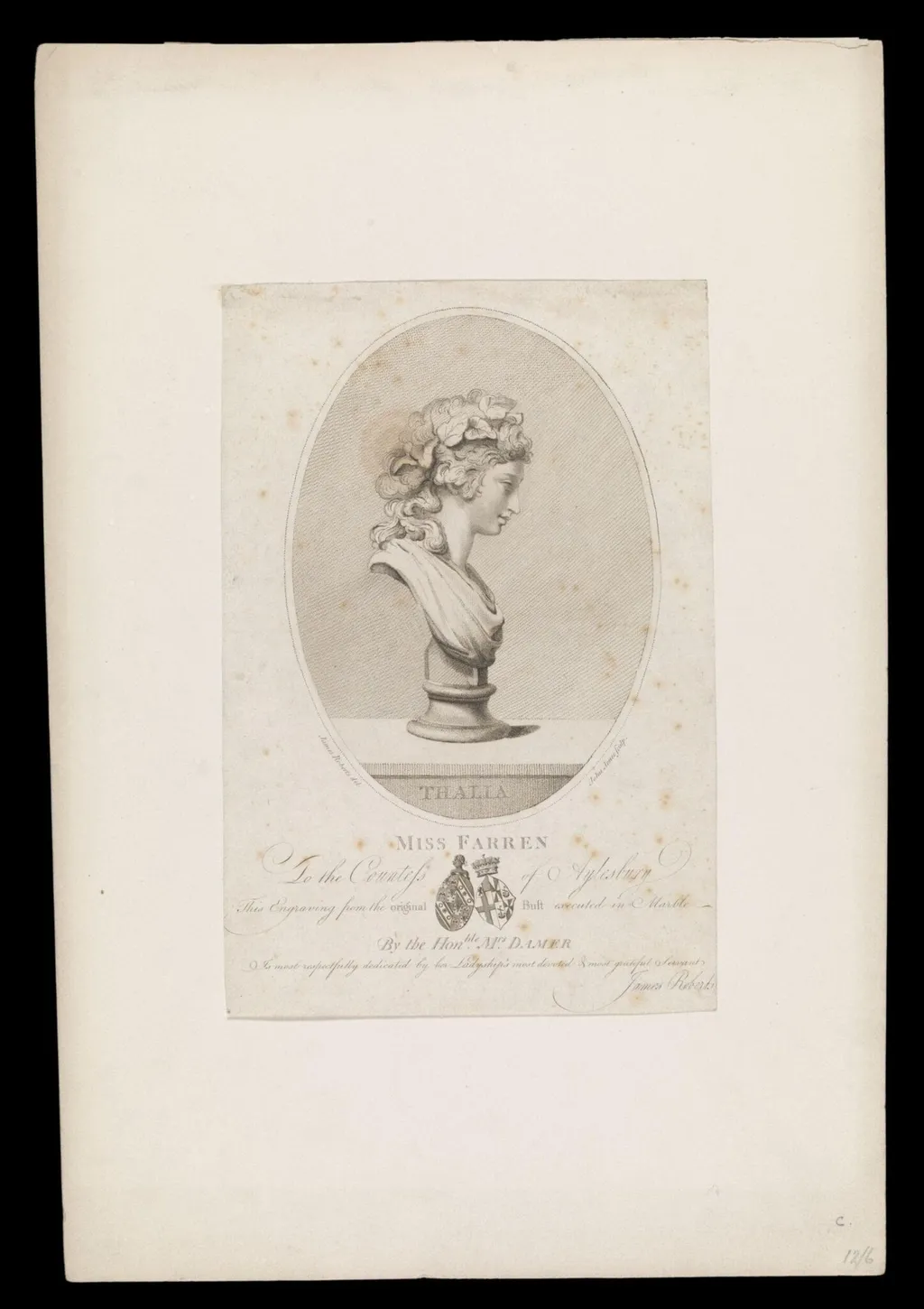
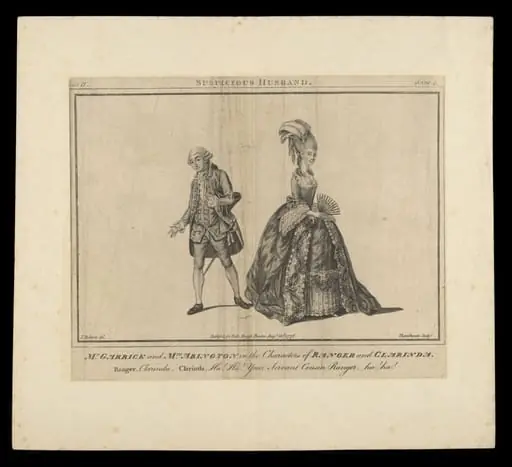
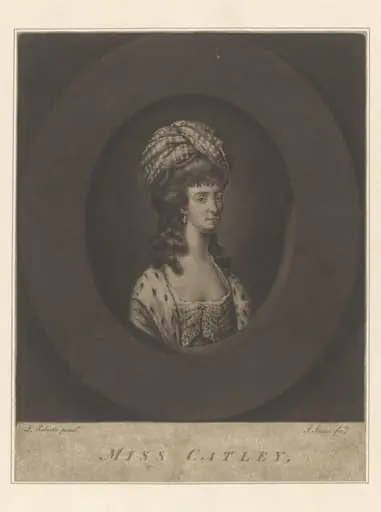
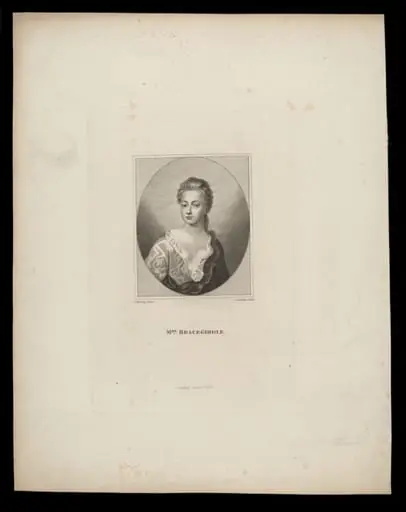
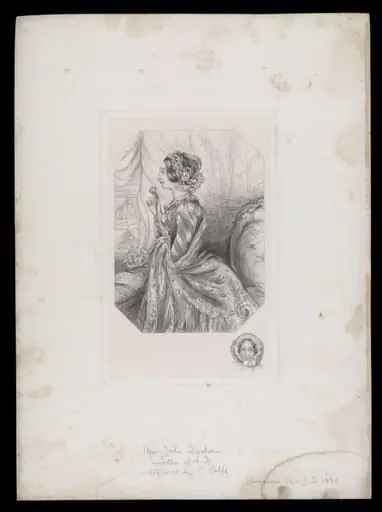
H Beard Print Collection is a print by James Roberts. It dates from 1750 and is held in the collection of the Victoria and Albert Museum. This print depicts the actress Elizabeth Farren portrayed as Thalia, the Greek muse of comedy.
About this work
Overview
This print depicts the actress Elizabeth Farren portrayed as Thalia, the Greek muse of comedy. Produced during the late 18th or early 19th century, it was part of a widespread tradition of distributing engraved images of celebrated performers. The composition centers on a marble bust, framed by classical attributes, intended for domestic display among those who admired theatrical culture.
Subject & Meaning
Farren is represented as Thalia, identified by the laurel wreath and comic mask she holds. These symbols link her performance to ancient traditions of theater, elevating her status beyond mere entertainer to a figure of cultural continuity. The marble bust suggests permanence and artistic reverence, reinforcing the idea that theatrical artistry deserved the same respect as sculpture or poetry.
Technique & Style
The print employs fine line engraving to render texture and form, capturing the smooth surface of marble and the delicate folds of fabric. The composition is symmetrical and restrained, typical of neoclassical aesthetics. Details like the wreath and mask are rendered with precision, reflecting the printmaker’s aim to convey both likeness and idealized character.
History & Provenance
Created by James Roberts, this print circulated widely in Britain during a period when theatrical portraiture was in high demand. Such images were sold as affordable souvenirs, allowing middle-class households to decorate their spaces with likenesses of popular stage stars. Roberts was known for producing similar engravings of actors and actresses of the era.
Context
The use of classical allegory reflected broader Enlightenment ideals that sought to elevate contemporary culture through ancient references.
In the 1700s and 1800s, public theater flourished, and actors became cultural celebrities. Engraved portraits like this one bridged the gap between live performance and private life, enabling audiences to maintain a visual connection with their favorite performers. The use of classical allegory reflected broader Enlightenment ideals that sought to elevate contemporary culture through ancient references.
Legacy
Prints such as this contributed to the democratization of visual culture, making images of notable figures accessible beyond elite circles. While the original performances have faded, these engravings preserve the visual identity of performers like Farren and document the public’s fascination with theater as a refined art form during the period.
Artist & collection
Artist
James Roberts made prints in the 18th century, most of them now filed under the H Beard Print Collection.