Artwork
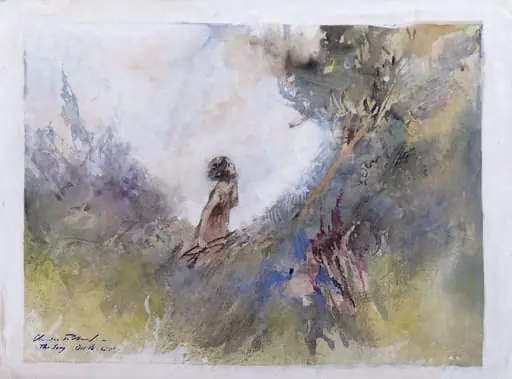
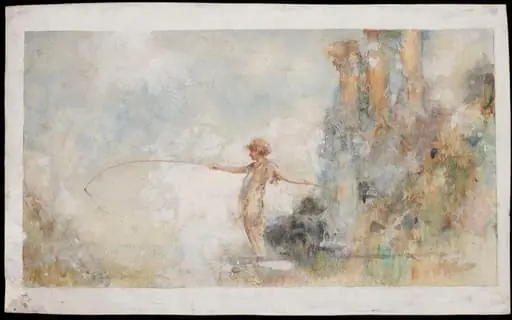
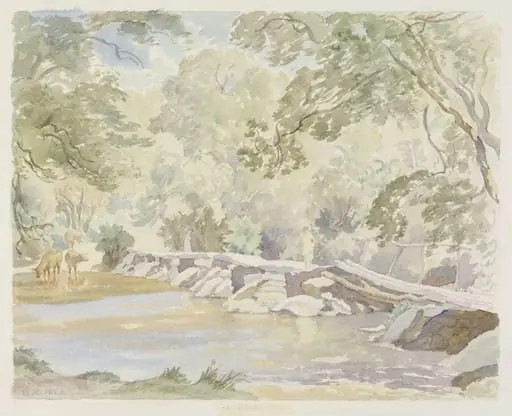
Figure in a Pool in a Wood
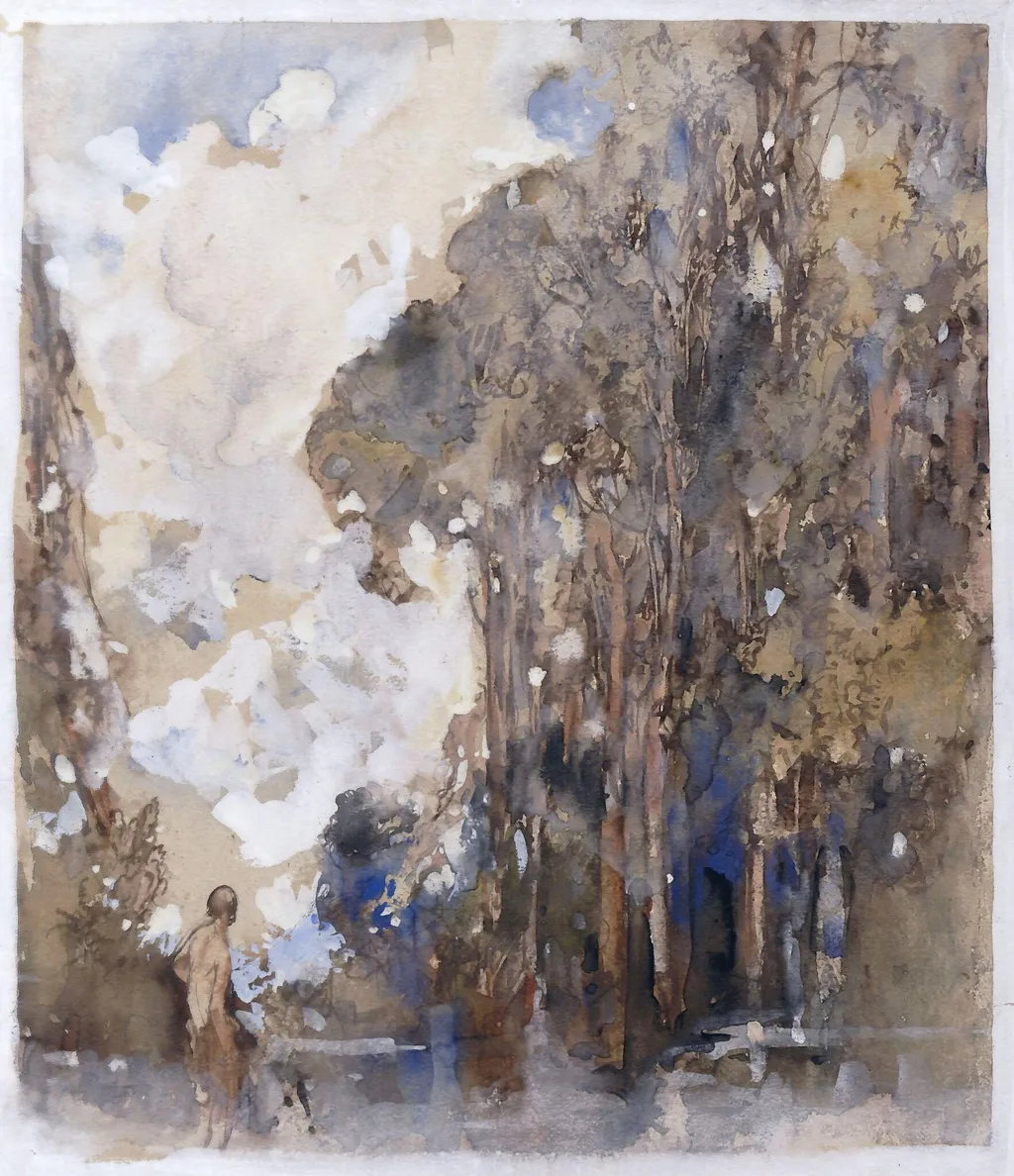
Figure in a Pool in a Wood is a watercolor work on paper by Charles Robinson. It dates from 1930 and is held in the collection of the Victoria and Albert Museum.
About this work
Overview
Charles Robinson’s 1930 watercolour captures a lone figure standing in a woodland pool, rendered with fluid, spontaneous brushwork.
Charles Robinson’s 1930 watercolour captures a lone figure standing in a woodland pool, rendered with fluid, spontaneous brushwork. The composition emphasizes stillness and immersion in nature, avoiding narrative clarity. Executed in transparent pigments, the piece reflects Robinson’s mastery of watercolour’s ephemeral qualities, balancing delicate washes with loose, suggestive strokes to evoke atmosphere over detail.
Subject & Meaning
The solitary figure, neither clearly male nor female, stands motionless in shallow water amid bare trees, suggesting contemplation or quiet communion with the environment. No symbolic cues or contextual elements are present, leaving interpretation open. The absence of narrative invites viewers to respond to mood rather than story, aligning with Robinson’s interest in atmospheric, introspective scenes over illustrative storytelling.
Technique & Style
Robinson employed loose, rapid watercolour techniques, allowing pigment to bleed and blend naturally on the paper. Browns, muted blues, and pale whites dominate, creating a subdued tonal harmony. The brushwork is sketch-like, with minimal detail in the figure and trees, relying on suggestion. Influences from Japanese prints and Pre-Raphaelite attention to nature are evident in the composition’s balance and organic forms.
History & Provenance
The work entered the Victoria and Albert Museum’s collection in 1982 as part of a bequest of 27 watercolours from the artist’s daughter, Edith Mary Robinson. It was created during a period when Robinson was increasingly recognized for his watercolour practice, shortly before his election to the Royal Institute of Painters in Watercolours in 1932. The piece remained in the family until its donation, preserving its original condition.
Context
Created in the early 1930s, the work reflects a broader British interest in intimate, nature-focused watercolours amid rising modernist abstraction. Robinson’s position within the London Sketch Club and his engagement with international styles—such as Japanese woodblock prints and Dürer’s linear precision—placed him at a crossroads between traditional illustration and fine art watercolour traditions, valuing quiet observation over dramatic expression.
Legacy
Robinson’s watercolours, including this piece, contributed to the mid-20th-century reevaluation of watercolour as a serious medium for personal expression. While not widely exhibited during his lifetime, his works in public collections like the V&A helped sustain interest in British watercolourists who prioritized subtlety and naturalism over spectacle, influencing later generations of landscape watercolourists.
Artist & collection
Artist
Charles Robinson painted dreamy watercolors in the 1930s—soft hills, medieval villages, and gentle nudes all in delicate washes.