Artwork
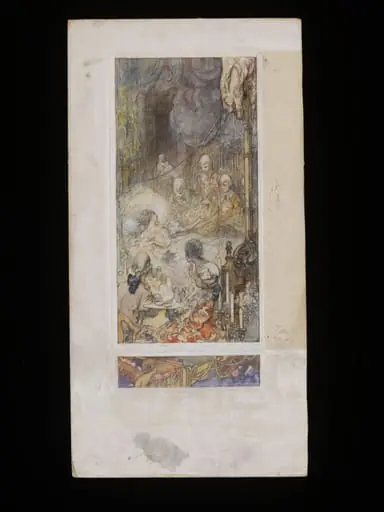
Revellers arriving at a palace
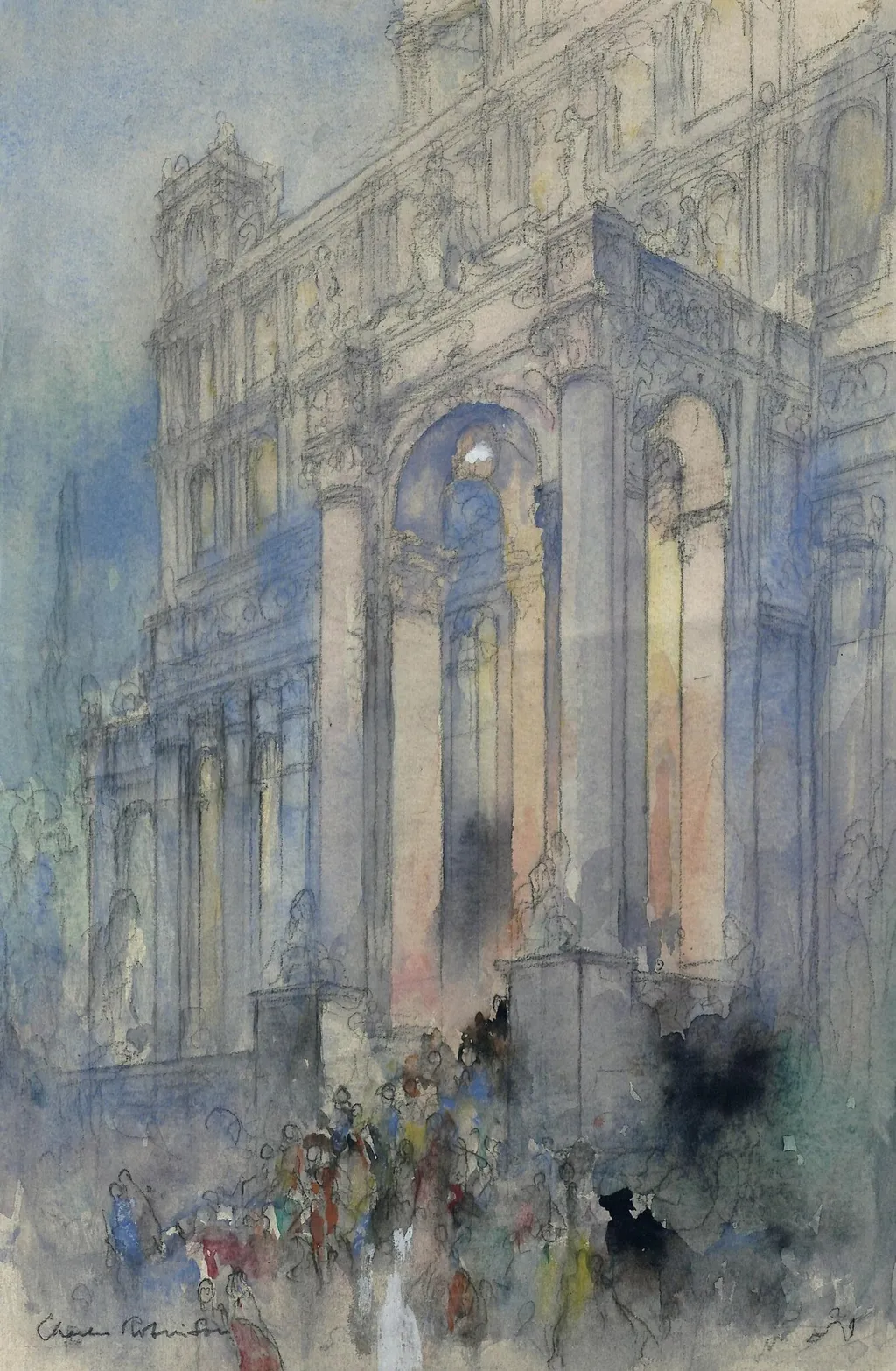
Revellers arriving at a palace is a watercolor work on paper by the Art Nouveau artist Charles Robinson. It dates from 1930 and is held in the collection of the Victoria and Albert Museum.
About this work
Overview
Executed in transparent washes, the piece reflects Robinson’s mastery of the medium and his interest in ornate, fantastical settings.
Created in 1930, this watercolour by Charles Robinson captures a group of figures approaching an elaborate architectural structure. Executed in transparent washes, the piece reflects Robinson’s mastery of the medium and his interest in ornate, fantastical settings. It was among twenty-seven works bequeathed to the Victoria and Albert Museum in 1982 by his daughter, Edith Mary Robinson, completing a legacy of artistic donation.
Subject & Meaning
The scene portrays a procession of figures in period attire arriving at a grand, columned edifice, possibly evoking a mythic or literary palace. The figures are rendered with subtle detail, their forms softened by the watercolour medium, suggesting movement and ceremony without narrative clarity. The architecture dominates the composition, implying a setting of ritual or celebration, though no specific story is identified.
Technique & Style
Robinson employed delicate watercolour washes to suggest texture and light across the palace’s carved surfaces and arched windows. Fine linework outlines architectural details, while the figures are rendered with loose, atmospheric strokes. His style synthesizes influences from Albrecht Dürer’s precision, Pre-Raphaelite richness, and Japanese print aesthetics, resulting in a decorative yet restrained visual language.
History & Provenance
The work remained in the artist’s possession until his death, after which it passed to his daughter, Edith Mary Robinson. In 1982, she donated twenty-seven of his watercolours to the Victoria and Albert Museum, ensuring the preservation of his lesser-known but significant body of work. This piece is documented within the museum’s collection as part of that bequest.
Context
Charles Robinson worked during a period when watercolour was gaining renewed attention for its capacity to blend illustration and fine art. His output included book illustrations and decorative designs, often drawing on historical and literary themes. This piece aligns with his broader interest in evoking imagined pasts through intricate, stylized environments rather than literal representation.
Legacy
Though not widely exhibited, Robinson’s watercolours contribute to an understanding of early 20th-century British illustration’s evolving aesthetic. His work, including this piece, reflects a quiet departure from commercial illustration toward personal, atmospheric compositions. The V&A’s acquisition preserves his contribution to the medium’s artistic credibility beyond mere reproduction.
Artist & collection
Artist
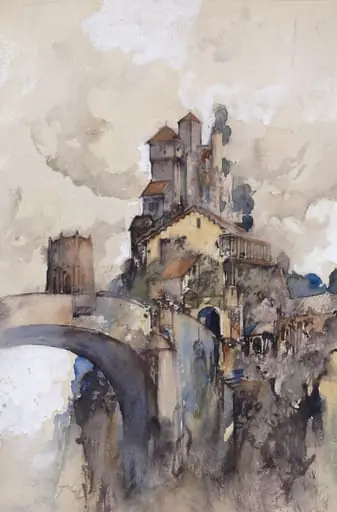
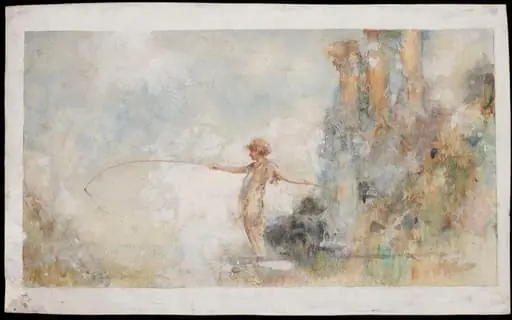
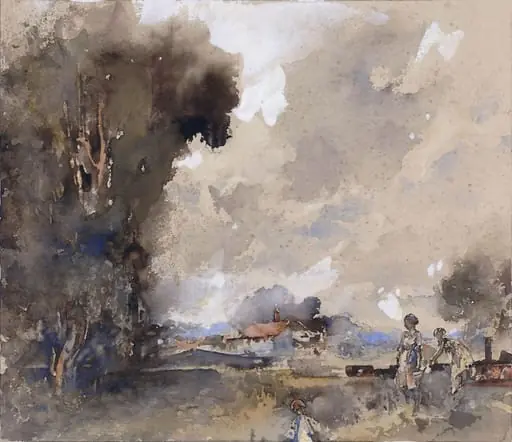
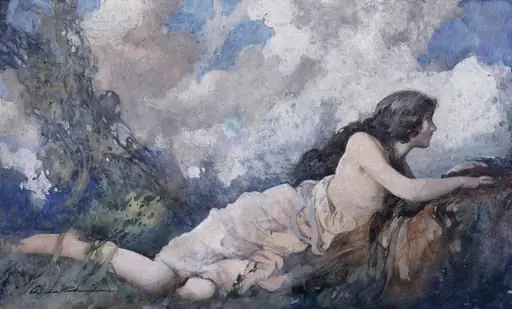
Charles Robinson painted dreamy watercolors in the 1930s—soft hills, medieval villages, and gentle nudes all in delicate washes.

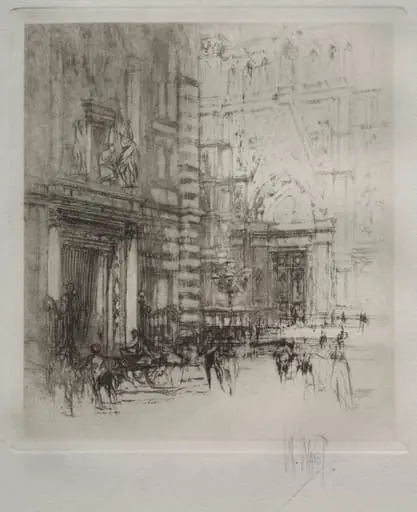 The Baptistry, Florence
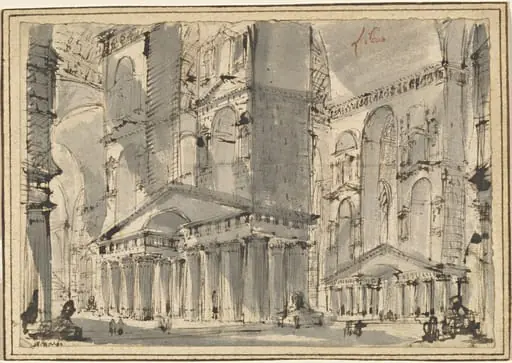 Fantasy of an Ancient Bath
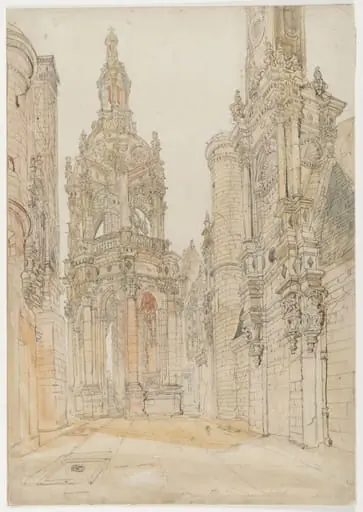 The Lantern, Chateau de Chambord
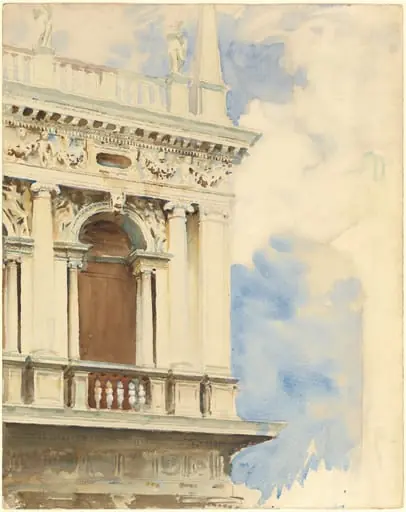 A Corner of the Library in Venice
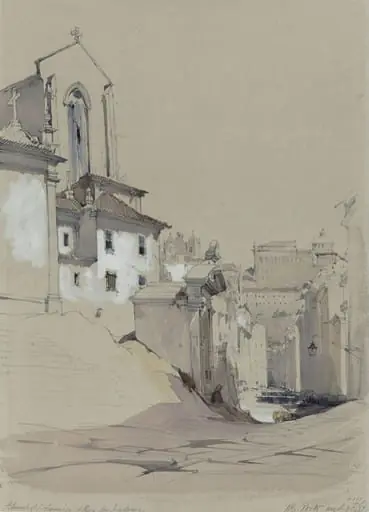 Church of San Francisco and Rua dos Ingleses, Oporto
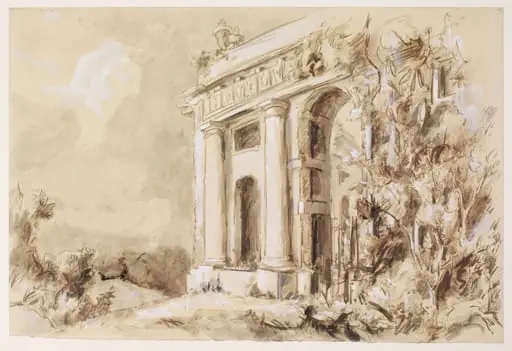 Dashwood Mausoleum, West Wycombe
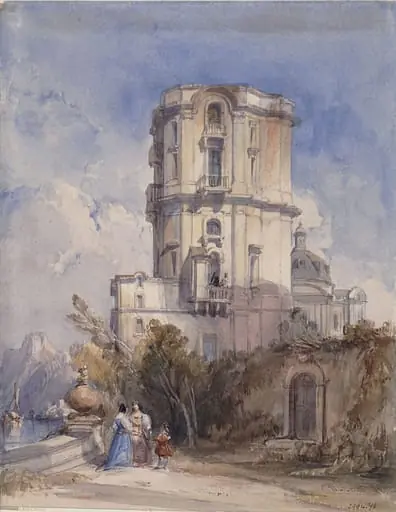 The Head of Lake Como
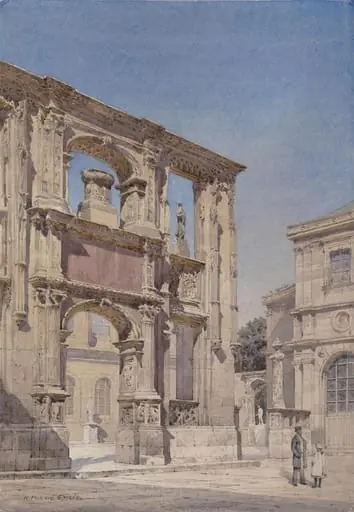 Part of the Chateau de Gaillon re-erected in the court of the Palais des Beaux Arts
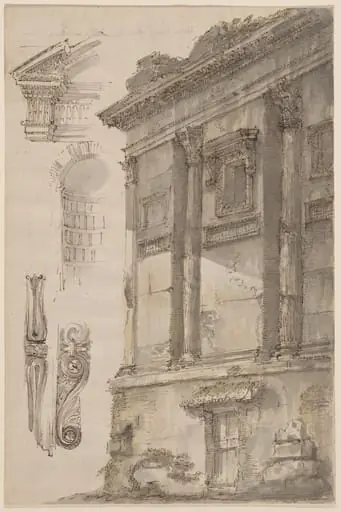 Studies of the Cenotaph of Annia Regilla
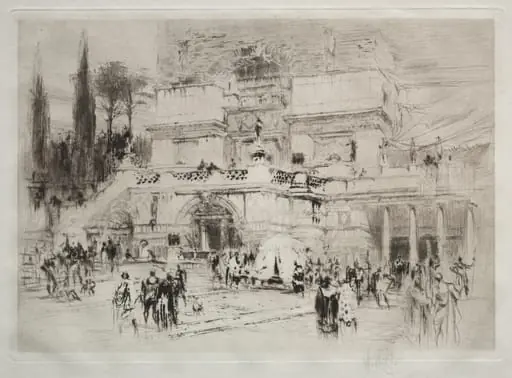 The Villa Quintillii
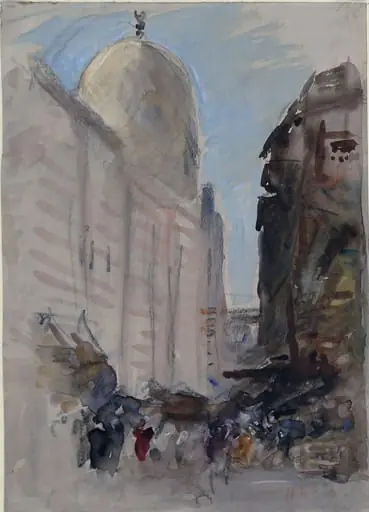 A Mosque at Cairo
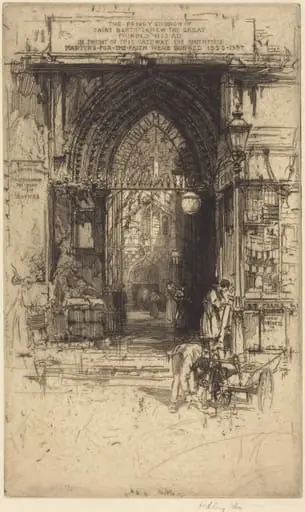 Saint Bartholomew the Great, Smithfield