Artwork
Forest landscape with lean-to
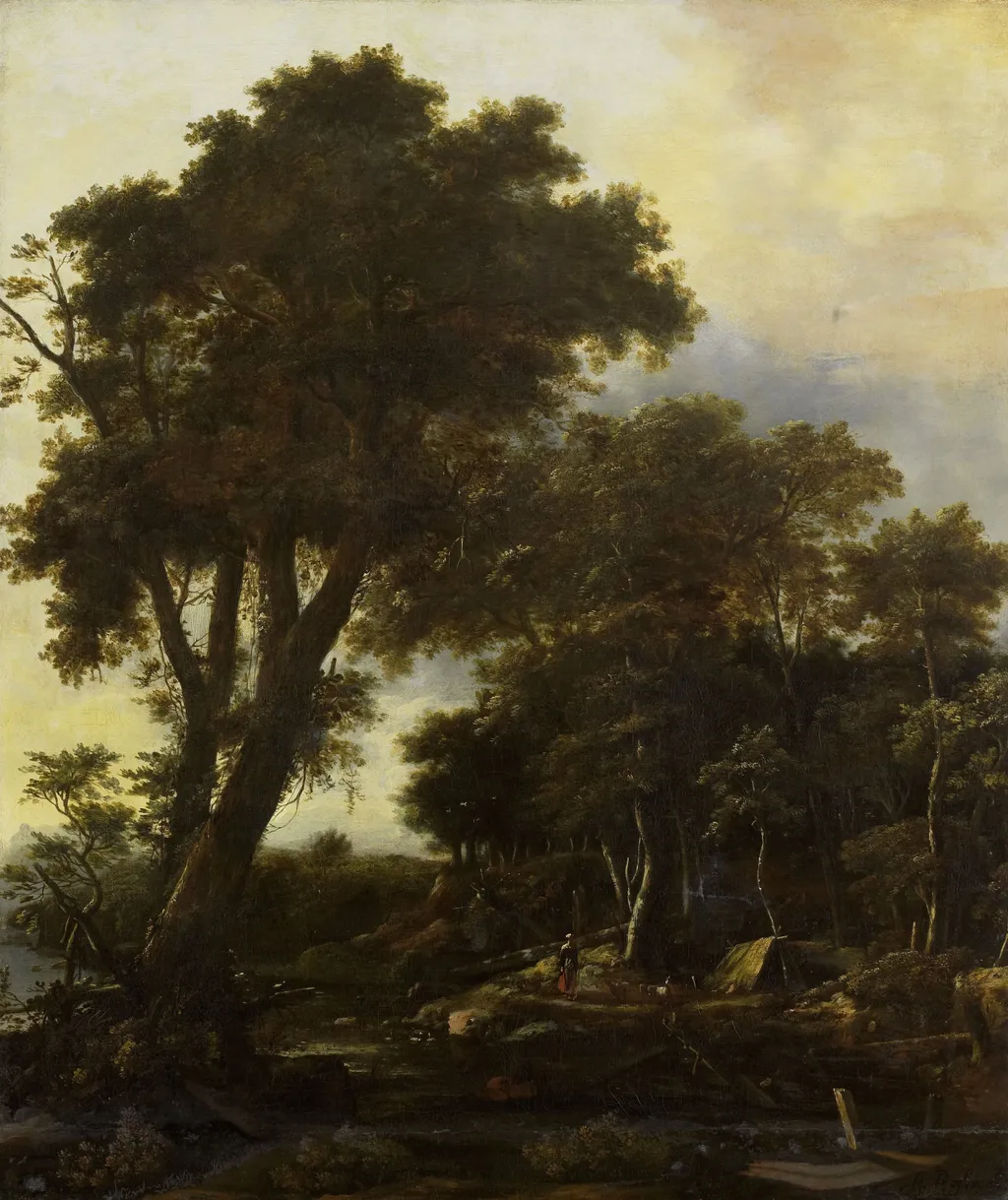
Forest landscape with lean-to is an oil painting by the Dutch Golden Age artist Roelant Roghman. It dates from 1650 and is held in the collection of the Rijksmuseum.
About this work
Overview
Created around 1650, this oil painting by Roelant Roghman presents a dense woodland scene. Thick trunks and a rocky floor dominate the composition, while a solitary figure in a red coat stands beside a modest lean‑to constructed of branches and cloth. A muted sky filters light through the canopy, lending the work a tranquil, secluded atmosphere.
Subject & Meaning
The central focus is the interplay between humanity and the forest. The lone traveler, rendered in a vivid red, contrasts with the surrounding darkness, suggesting themes of vulnerability and perseverance within nature. The modest shelter hints at temporary refuge, emphasizing the transient relationship between the individual and the enduring landscape.
Technique & Style
Roghman employs a careful modulation of light and shadow, highlighting the texture of bark and the sheen of wet rocks. The palette shifts from deep greens in the foliage to soft, pale yellows in the sky, creating a subtle chiaroscuro effect that enhances depth and quietude. Brushwork is detailed in the foreground and looser in the atmospheric background.
History & Provenance
The work is part of the Rijksmuseum collection in Amsterdam, where it has been displayed since its acquisition in the early 20th century. Documentation traces its attribution to Roghman, a Dutch painter known for his topographical landscapes, confirming its creation in the mid‑17th century.
Context
Roghman's forest scenes reflect the Dutch Golden Age interest in natural observation and the moralizing tradition of depicting solitary figures in wild settings. The painting aligns with contemporary studies of light effects and the emerging genre of landscape painting that emphasized realism over idealized scenery.
Own this work as a print
Artist & collection