Artwork
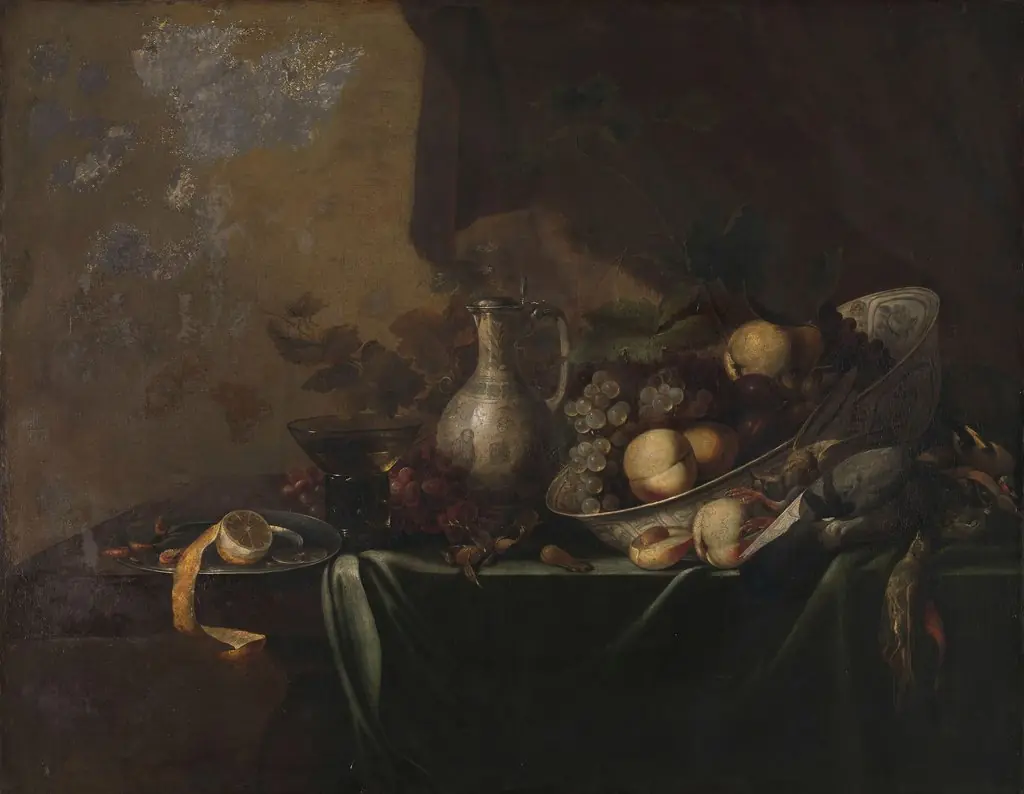
Stillleben mit Trauben, toten Vögeln und Weinglas auf Holztisch
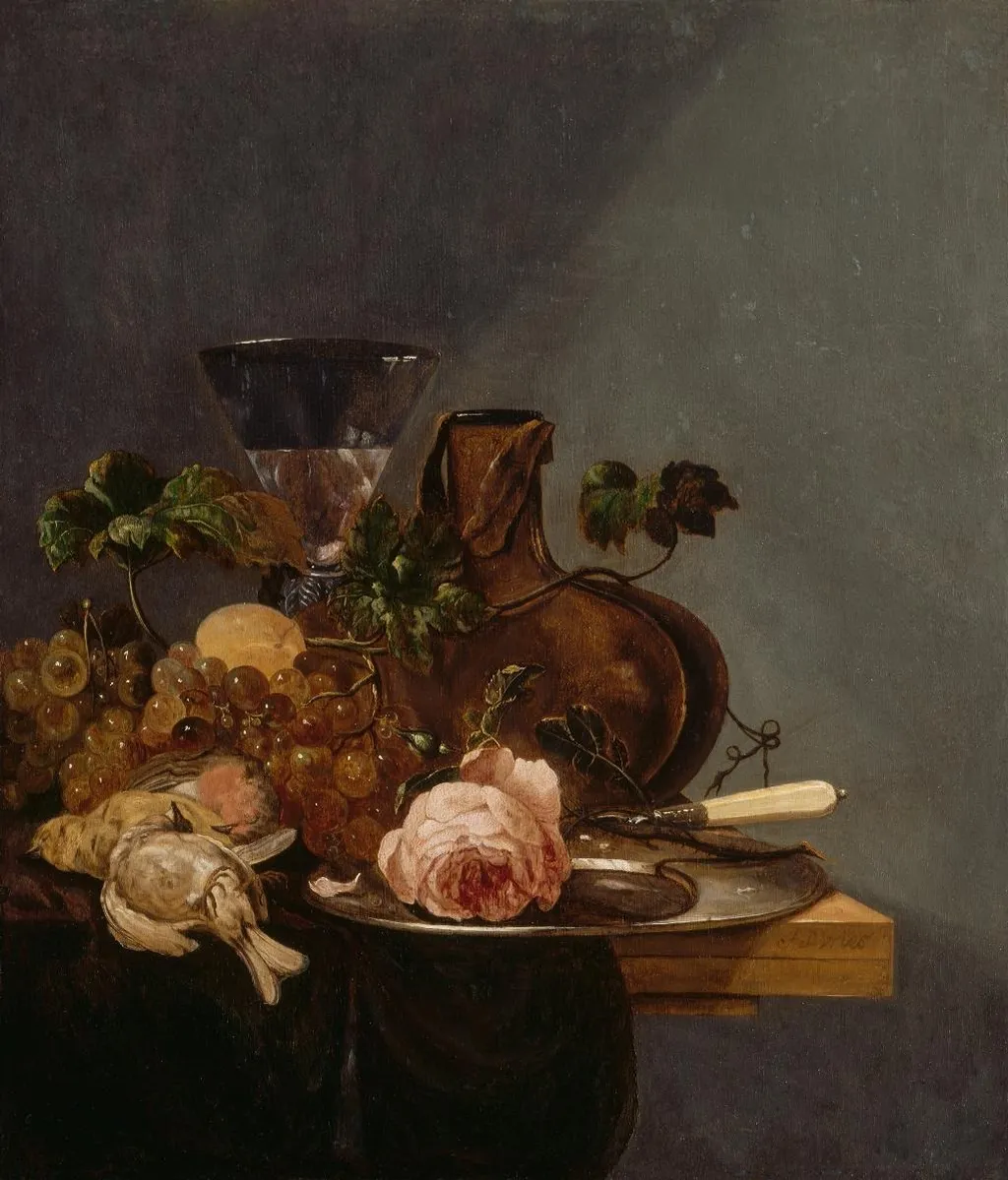
Stillleben mit Trauben, toten Vögeln und Weinglas auf Holztisch is an oil painting by the Dutch Golden Age artist Roelof Jansz van Vries. It dates from 1664 and is held in the collection of the Kunsthaus Zürich.
About this work
Overview
Van Vries, known for both landscapes and still lifes, here focuses on quiet domestic elements, rendered with careful observation.
Painted in 1664 by Roelof Jansz van Vries, this oil-on-canvas still life presents a modest arrangement of everyday objects: grapes, a glass, a pitcher, a knife, a rose, and a small bird. Van Vries, known for both landscapes and still lifes, here focuses on quiet domestic elements, rendered with careful observation. The work resides in the Kunsthaus Zürich collection, reflecting its enduring presence in European art holdings.
Subject & Meaning
The composition includes perishable items—grapes, a rose, and a dead bird—suggesting themes of transience and mortality. The presence of wine and glass hints at earthly pleasures, while the bird, likely hunted, introduces a note of loss. These elements align with the Dutch vanitas tradition, where still lifes subtly remind viewers of life’s impermanence without overt moralizing.
Technique & Style
Van Vries employs chiaroscuro to model forms through subtle shifts in light and shadow, enhancing the tactile quality of glass, ceramic, and fruit. The pitcher and glass catch ambient light with precision, creating a sense of volume and spatial depth. Brushwork is restrained, favoring smooth transitions over visible strokes, characteristic of Dutch still life practice in the mid-seventeenth century.
History & Provenance
The painting has remained in institutional care since at least the early twentieth century, now held by Kunsthaus Zürich. Its documented history is limited, but its inclusion in a major Swiss collection suggests it was acquired during a period of renewed interest in Dutch Golden Age works. No significant alterations or restorations are publicly recorded.
Context
Van Vries worked within a thriving Dutch still life tradition, where artists like Willem Claesz Heda and Pieter Claesz explored similar themes of abundance and decay. Unlike grander historical paintings, these works appealed to urban patrons who valued intimate, finely rendered scenes of domestic life. The inclusion of a single rose and a bird reflects regional tastes for restrained, symbolic compositions.
Legacy
Though not widely known today, van Vries’s work contributes to the broader understanding of Dutch still life as a vehicle for quiet contemplation. His handling of light and texture influenced later generations of still life painters, even as his name faded from mainstream art history. The painting remains a representative example of mid-century Netherlandish precision and restraint.
Artist & collection
Artist
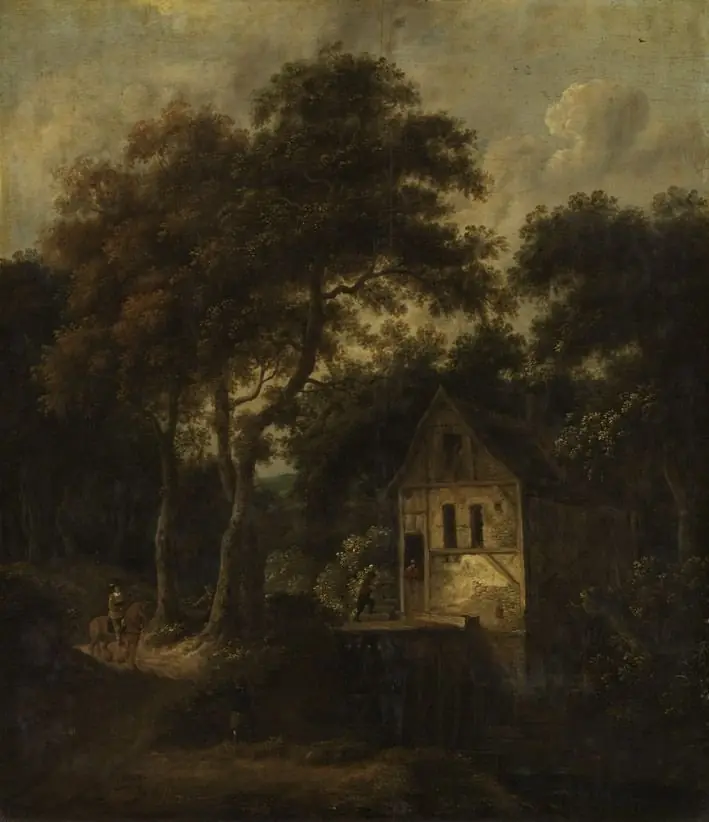
Roelof Jansz van Vries or Roelof van Vries (1631, Haarlem – 1681/1701, Amsterdam) was a Dutch painter of the Dutch Golden Age.

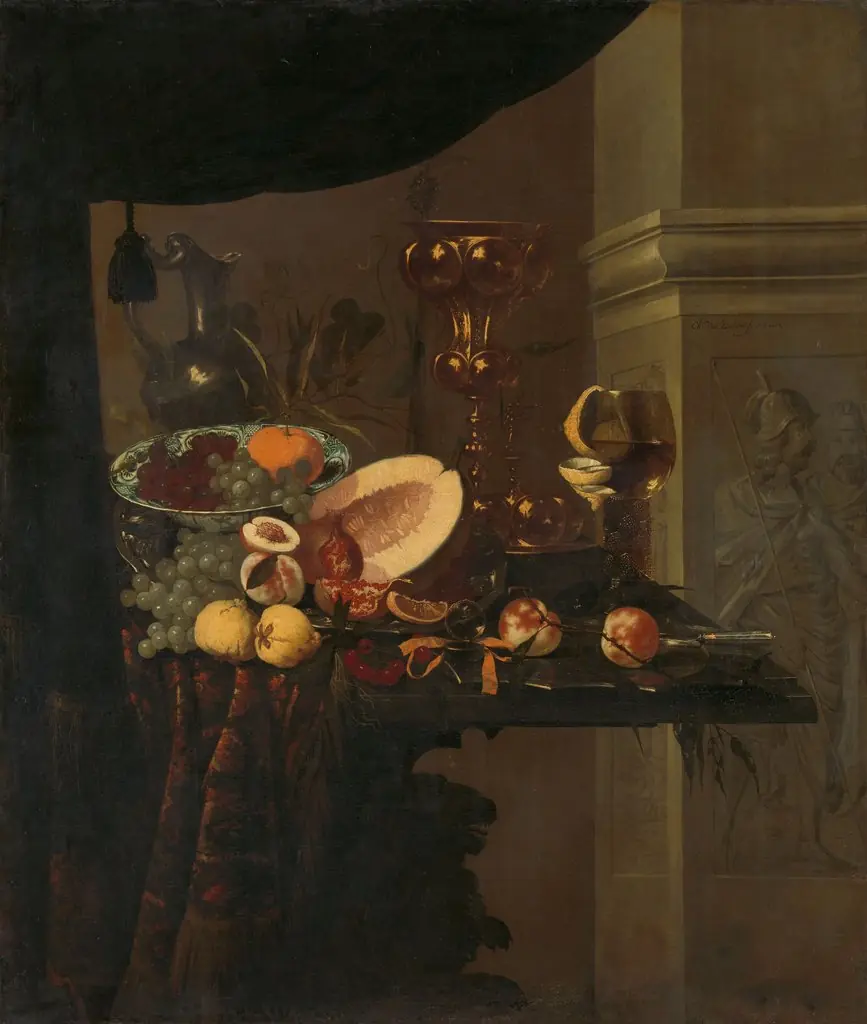 Still Life
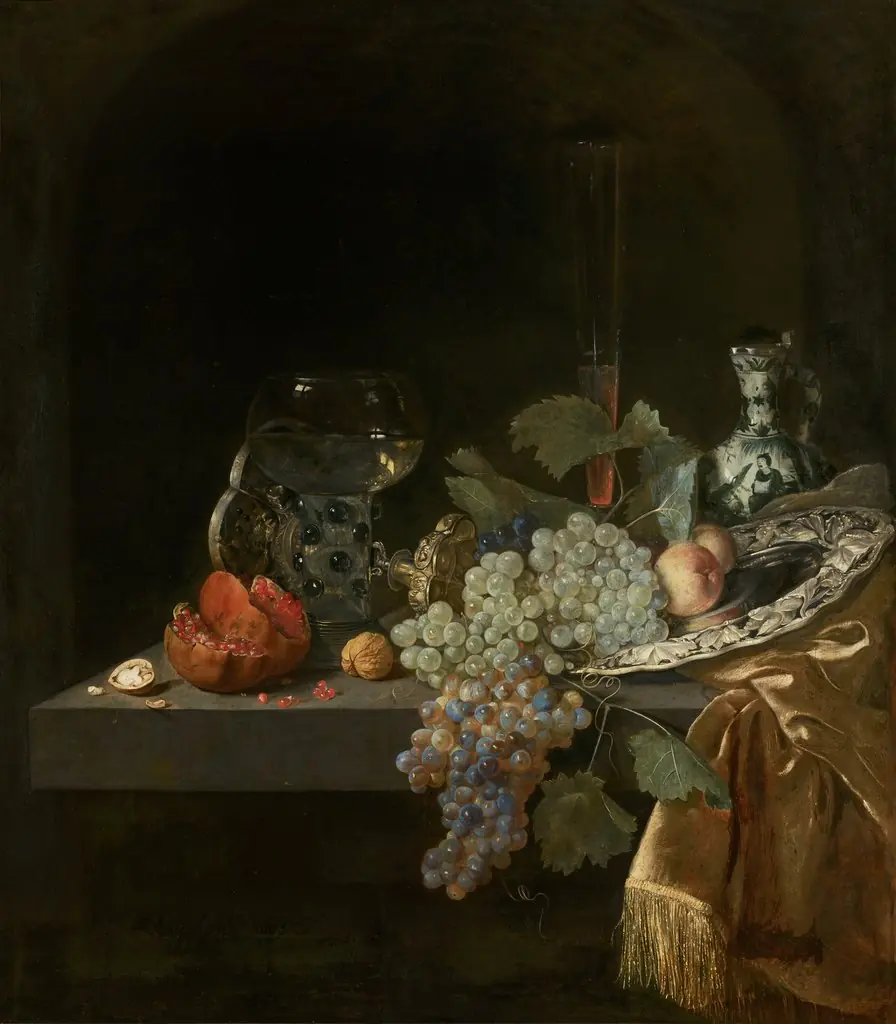 Still life
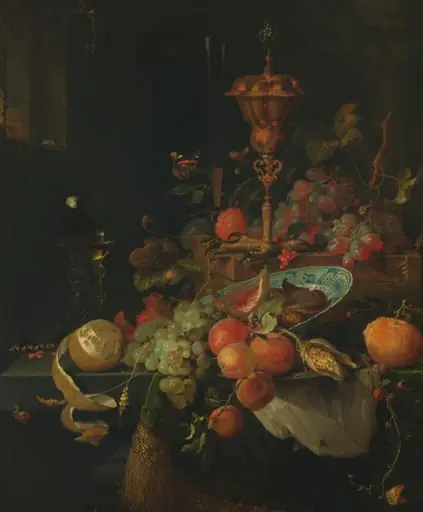 Still Life with Fruit and a Beaker on a Cock's Foot
 Still Life with Fruit
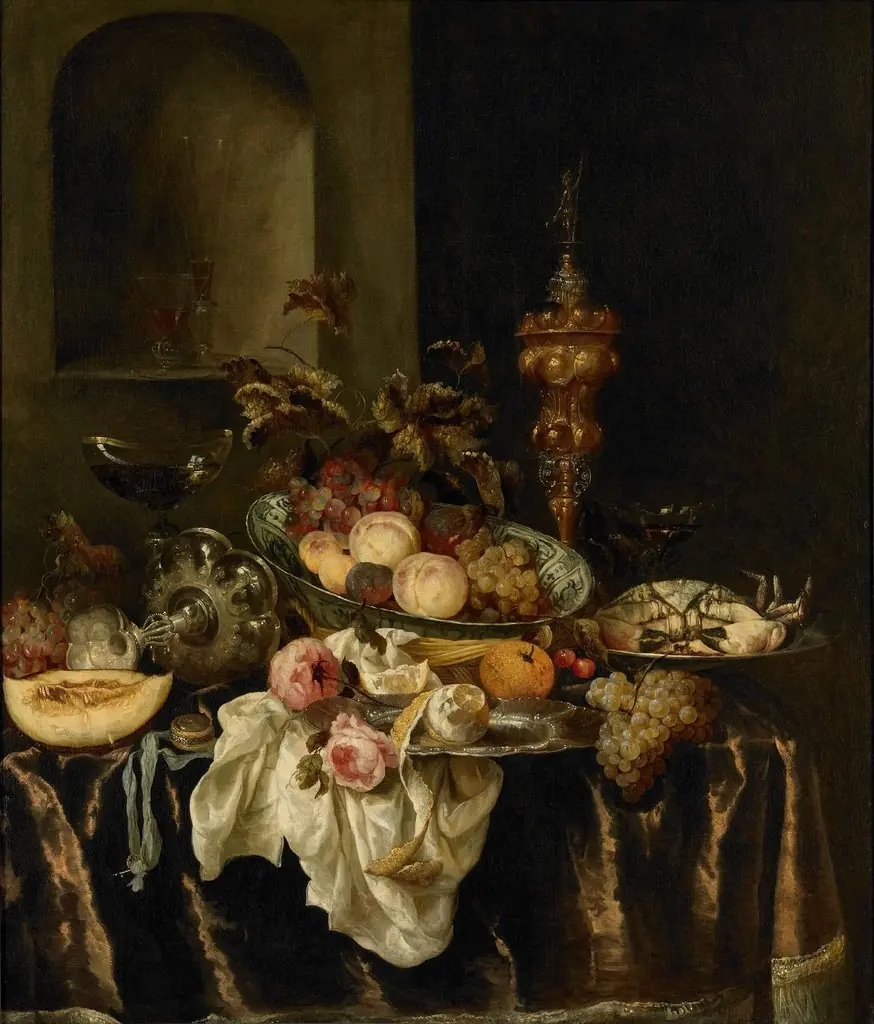 Stille life
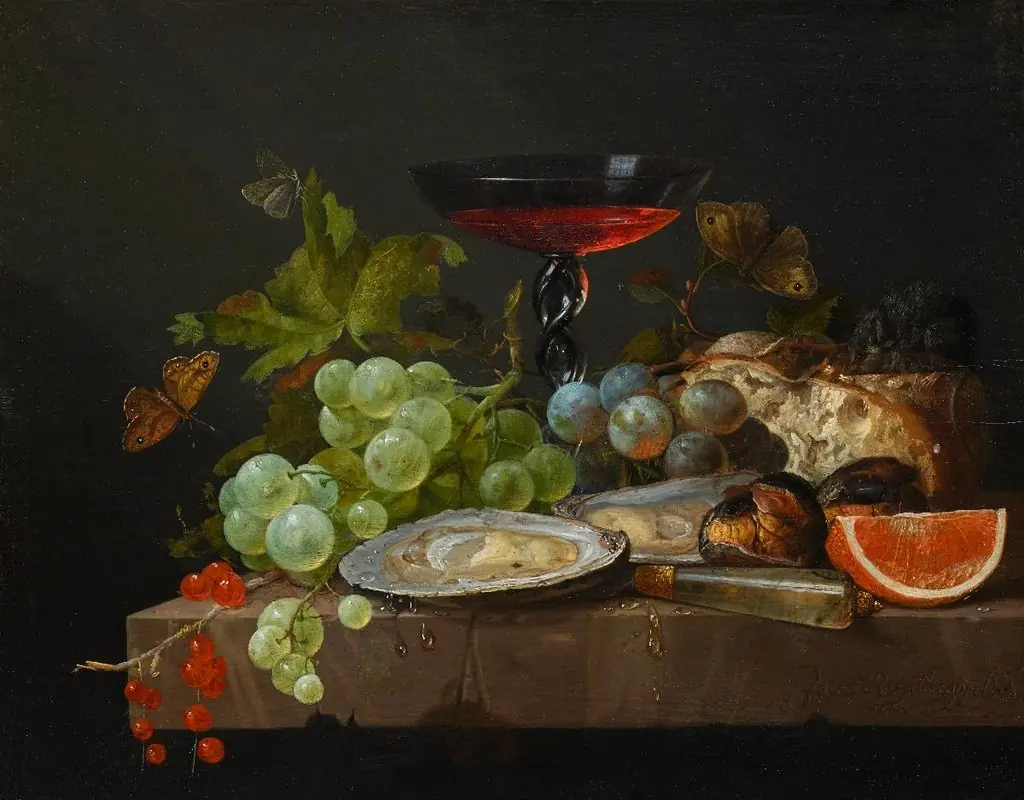 Stillleben mit Früchten, Brot, Austern
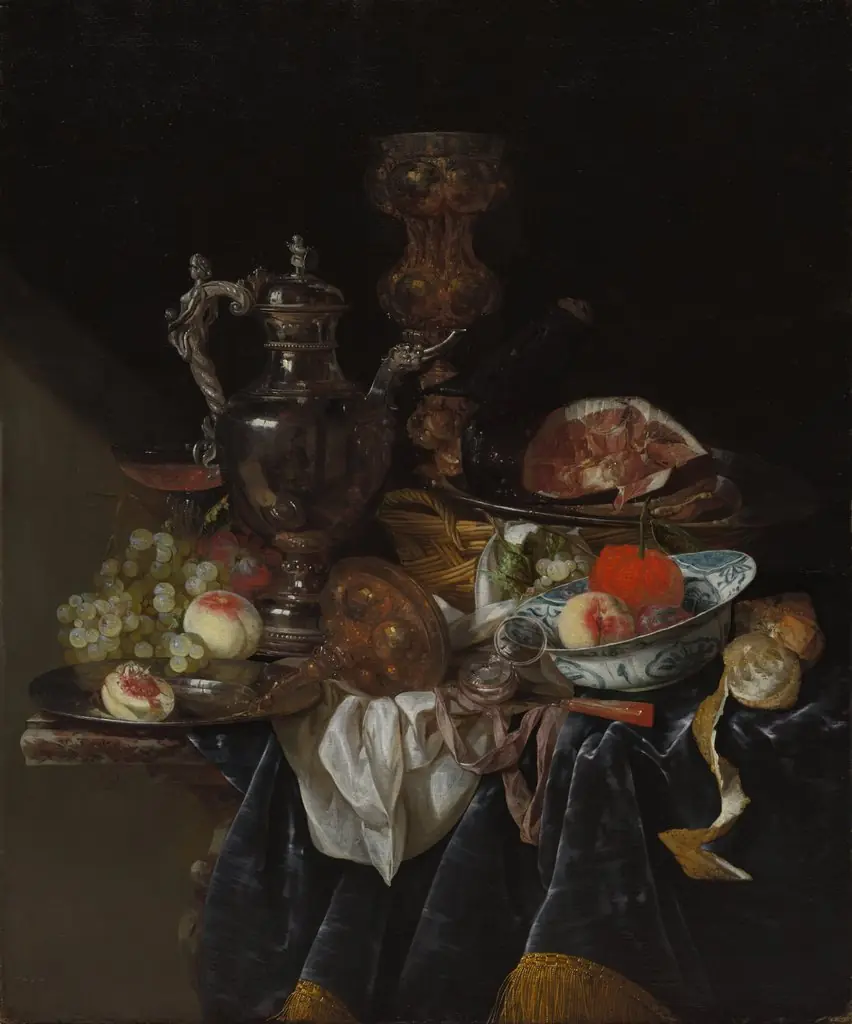 Silver Wine Jug, Ham, and Fruit
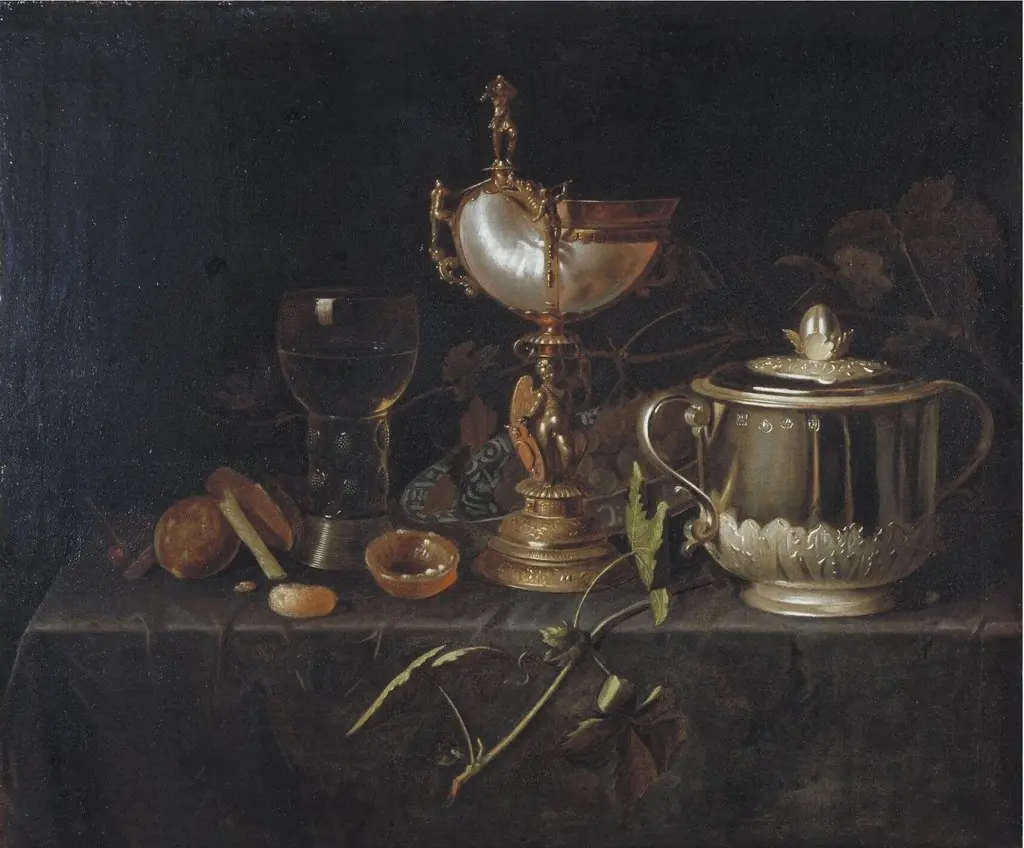 Porringer and Nautilus Cup
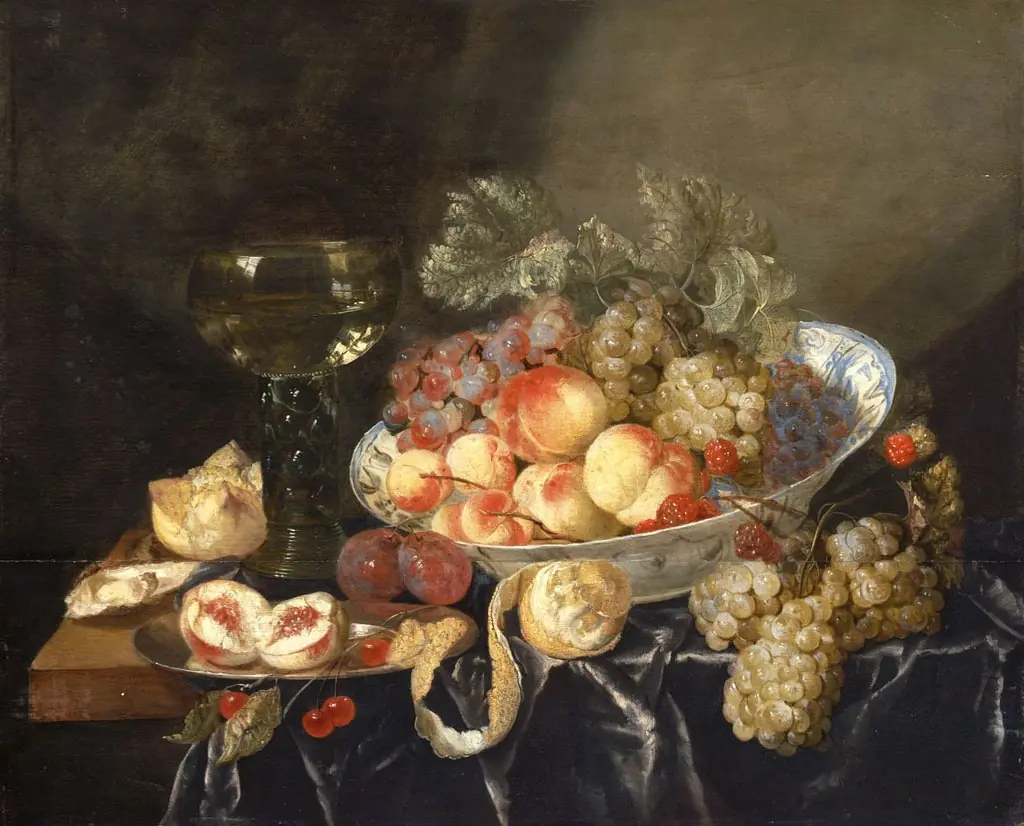 Fruit (Still Life)
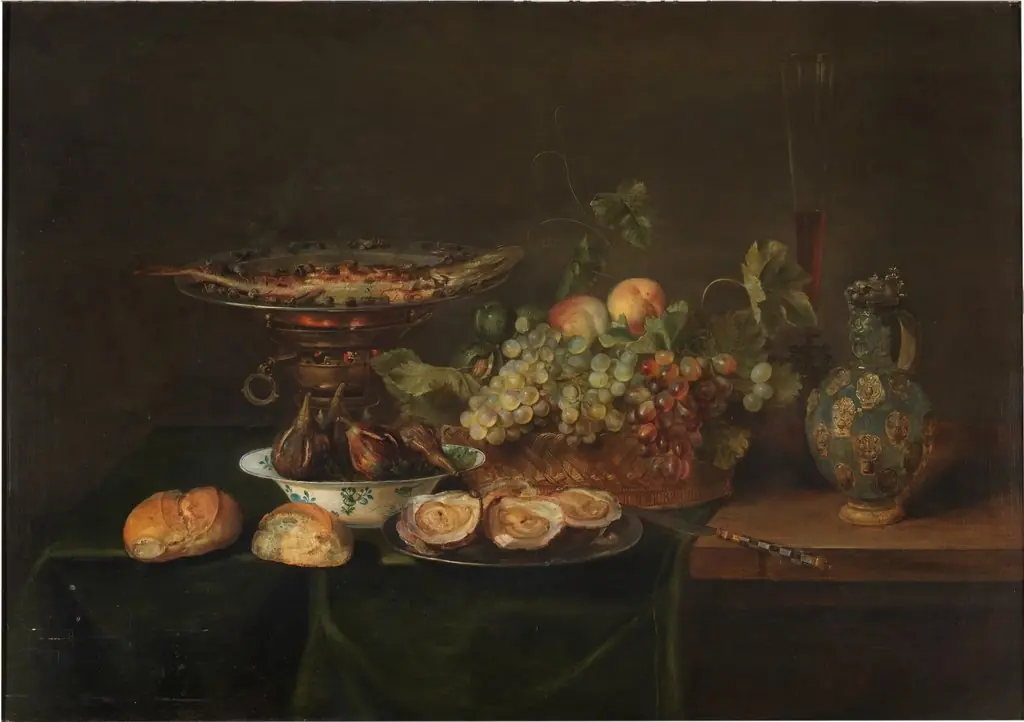 PBanquet still life
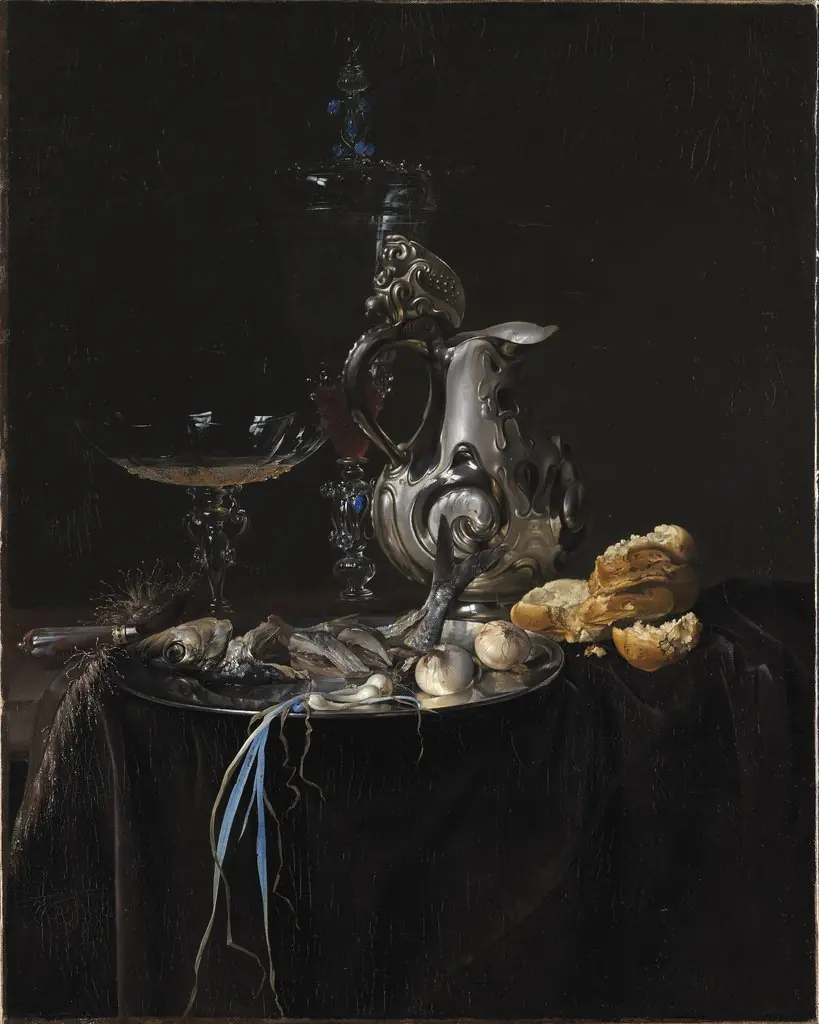 Still Life. Breakfast Piece with a Silver Jug
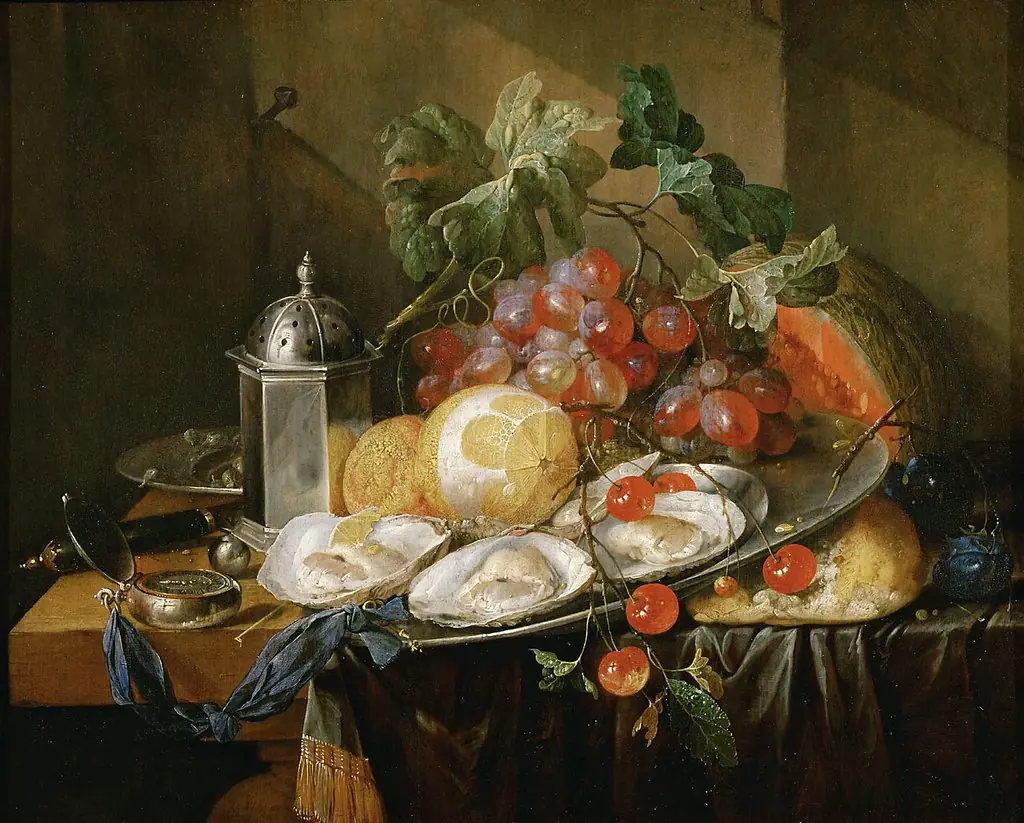 Fruit Still Life with Oysters