Artwork
Elderly Man Watching Putti Dissect an Eye
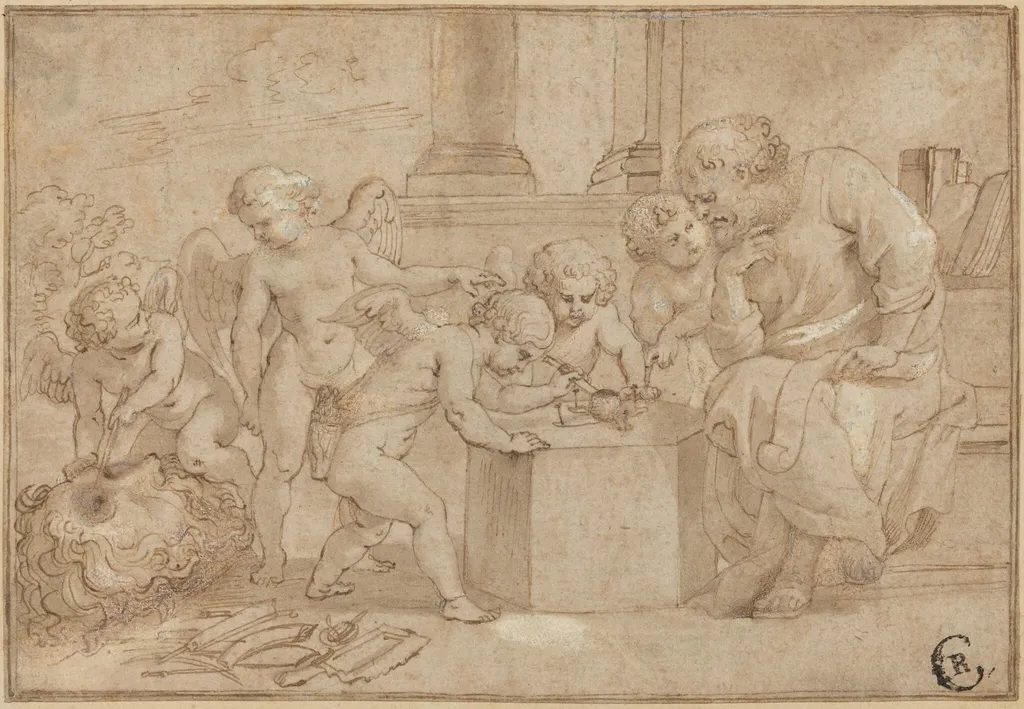
Elderly Man Watching Putti Dissect an Eye is a chalk drawing by the Baroque artist Peter Paul, Sir Rubens. It dates from 1613 and is held in the collection of the National Gallery of Art. Created around 1613, this drawing is attributed to Peter Paul Rubens.
About this work
Overview
Created around 1613, this drawing is attributed to Peter Paul Rubens. Executed on laid paper, the work combines pen, brown ink, brown wash over black chalk, and white highlights, with the image transferred by stylus indentation. The composition presents an elderly figure observing a group of putti engaged in the dissection of an eye.
Subject & Meaning
The scene juxtaposes a realistic, aged observer with fantastical, winged children—putti—who are delicately cutting into an eye. This contrast of the mundane and the mythological reflects a baroque fascination with the interplay of knowledge, curiosity, and the supernatural.
Technique & Style
Rubens employed a layered drawing method: initial sketches in black chalk, followed by brown ink and wash to model form, and selective white highlights to accentuate light. The stylus indentation suggests the image may have been copied from an earlier design, a common practice for preparatory studies.
History & Provenance
The drawing is dated to the early 1610s, a period when Rubens was active in Antwerp. Its provenance traces through several private collections before entering a public institution, though exact ownership details remain limited.
Context
During the early seventeenth century, artists often used putti to symbolize innocence or divine intervention, while anatomical studies signaled the era’s scientific curiosity. Rubens’ combination of these motifs aligns with contemporary intellectual currents that merged art, anatomy, and allegory.
Artist & collection