Artwork
Anbetung der Heiligen Drei Könige
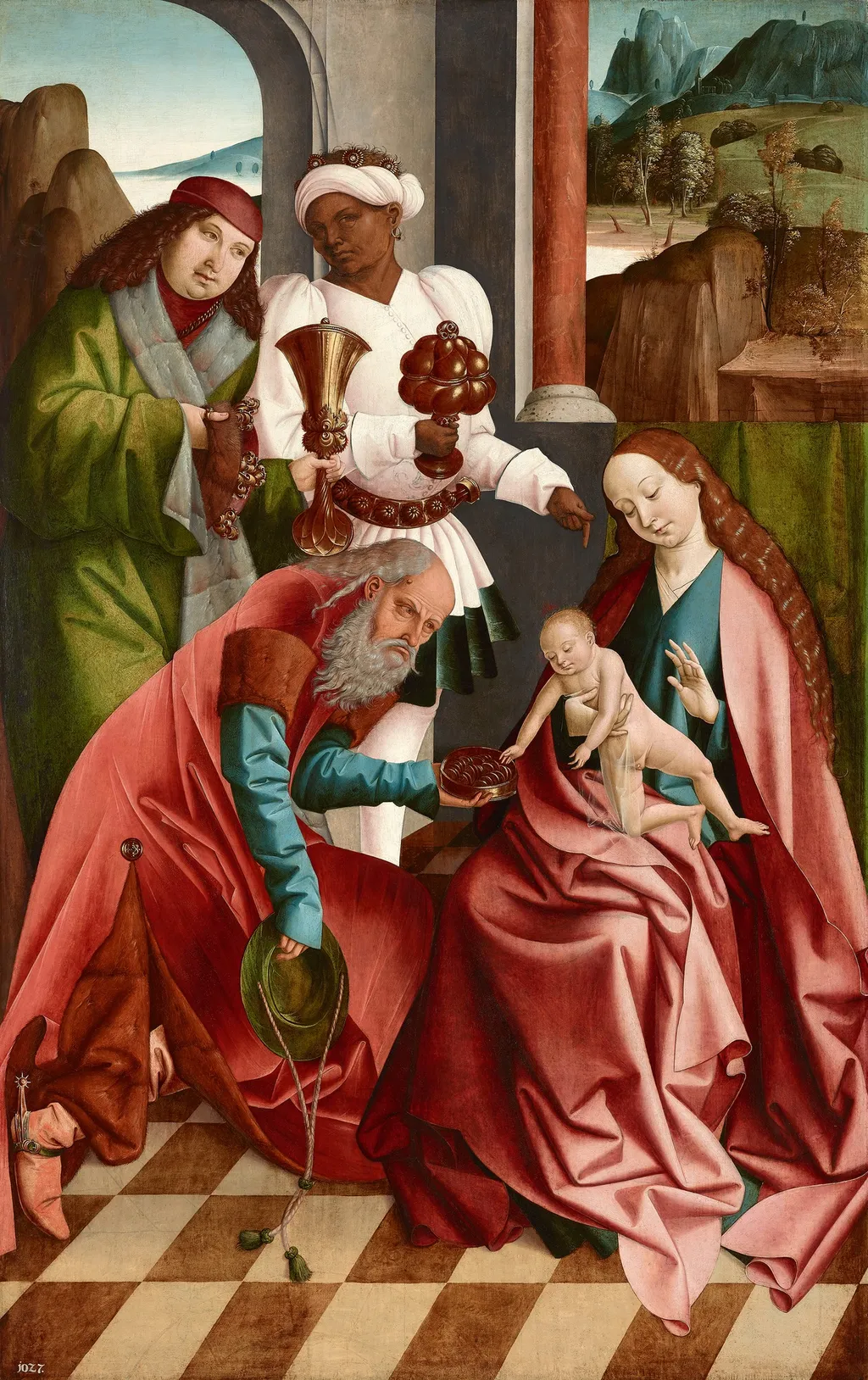
Anbetung der Heiligen Drei Könige is an unspecified painting by the Northern Renaissance artist Rueland Frueauf the Elder. It dates from 1496 and is held in the collection of the Kunsthistorisches Museum.
About this work
Overview
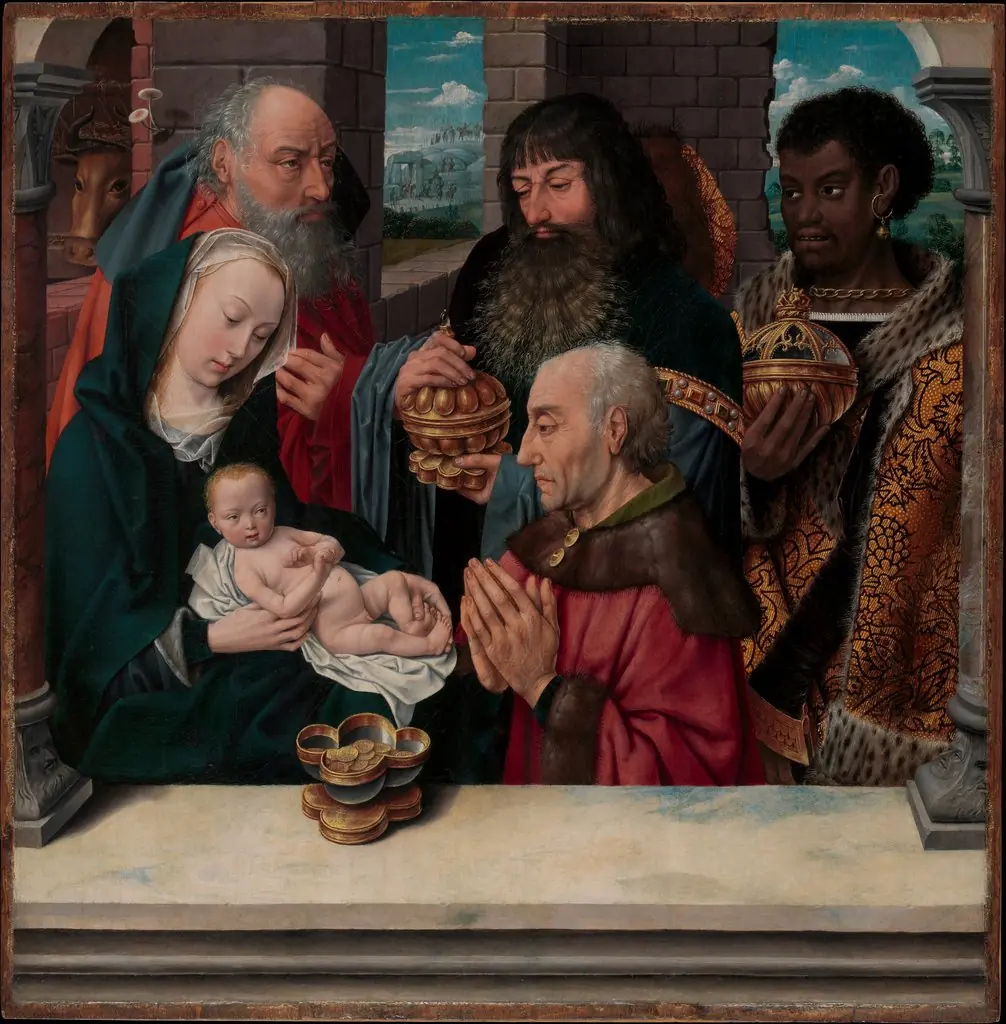
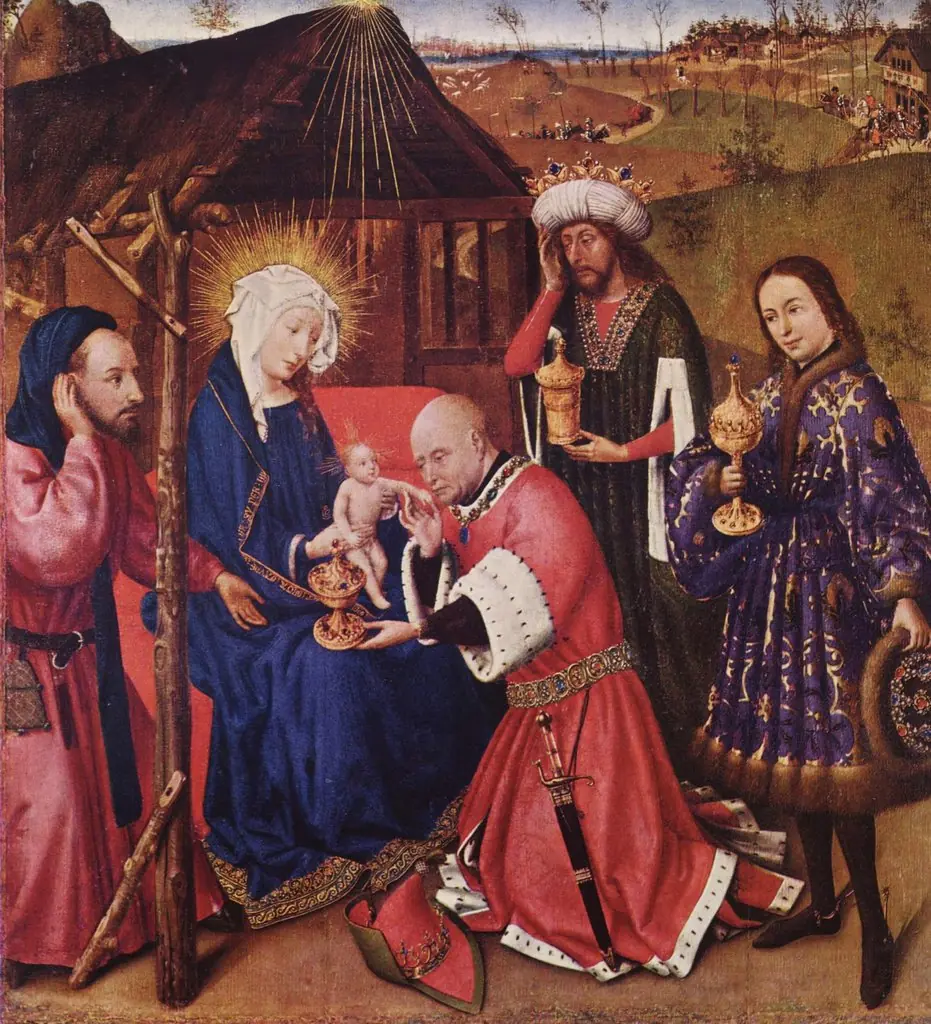
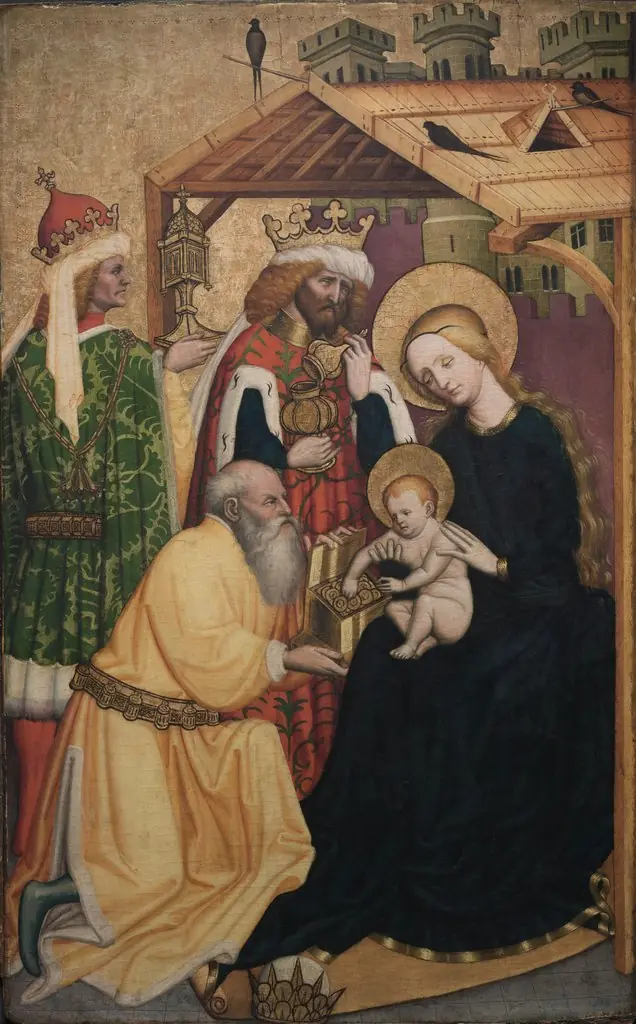
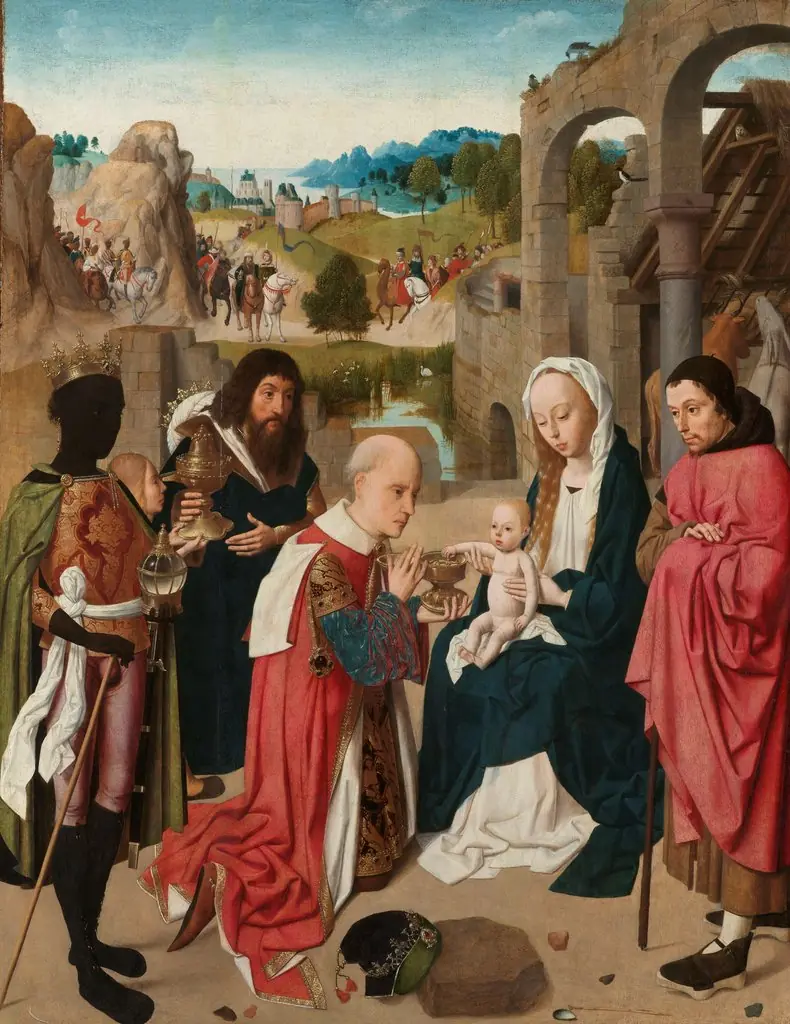
Anbetung der Heiligen Drei Könige, painted in 1496 by Rueland Frueauf the Elder, is a religious panel depicting the Adoration of the Magi. The artwork portrays the Virgin Mary and the Christ Child receiving homage from the three wise men, a pivotal scene from Christian scripture. This painting is currently housed in the collection of the Kunsthistorisches Museum.
Subject & Meaning
One, distinguished by a turban and white robe, holds a golden cup and a red fruit, symbolizing the offerings brought to the newborn king.
The painting illustrates the Adoration of the Magi, a moment from the Gospel of Matthew. The Virgin Mary, dressed in blue and red, cradles the infant Christ. Before them, a kneeling Magus presents a gift, while two other wise men stand nearby. One, distinguished by a turban and white robe, holds a golden cup and a red fruit, symbolizing the offerings brought to the newborn king. The scene emphasizes the recognition of Christ's divinity by foreign dignitaries.
Technique & Style
Frueauf the Elder employed a vibrant palette and precise draftsmanship to render this devotional scene. The figures are delineated with sharp lines, contributing to a sense of both grandeur and intricate detail. Rich colors, particularly in the garments of the Magi, draw the viewer's eye. The composition is set against a receding landscape of hills and trees, framed by an architectural arch, which adds depth and structure to the narrative.
Own this work as a print
Artist & collection
Artist
Rueland Frueauf the Elder (1440–1507) was an artist, born in Obernberg am Inn.