Artwork
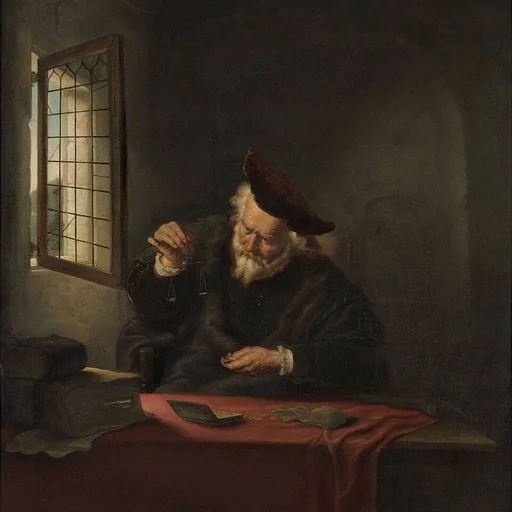
Esther reading Haman's Decree of the Extermination of the Jews
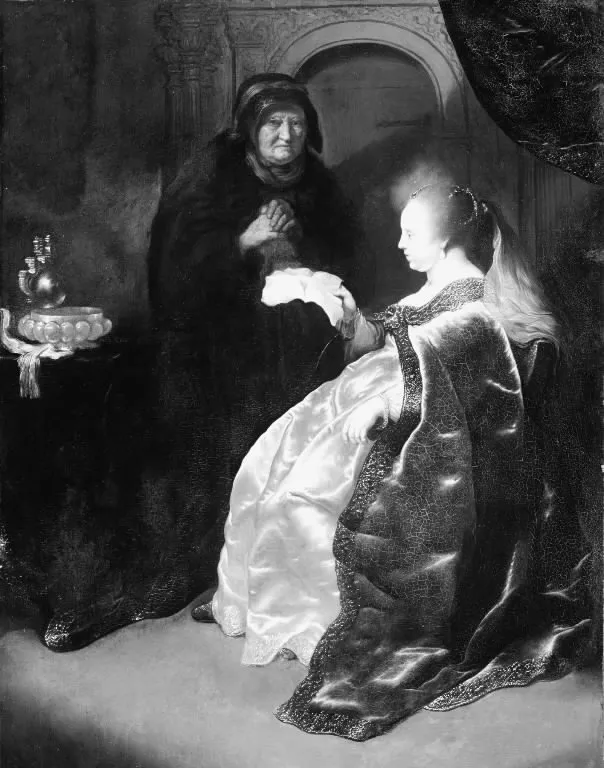
Esther reading Haman's Decree of the Extermination of the Jews is an unspecified painting by the Dutch Golden Age artist Salomon Koninck. It dates from 1650 and is held in the collection of the Statens Museum for Kunst.
About this work
Overview
Created circa 1650 by the Amsterdam‑born painter Salomon Koninck, this oil work portrays the biblical queen Esther in the act of reading a royal edict that threatens her people. Executed during the height of the Dutch Golden Age, the canvas now belongs to the Statens Museum for Kunst, where it forms part of the museum’s 17th‑century Dutch collection.
Subject & Meaning
The scene captures Esther kneeling on a modest floor, her gaze fixed on a scroll that bears Haman’s decree ordering the extermination of the Jews. A senior woman stands behind her, hands clasped, observing the moment of revelation. The composition emphasizes the gravity of the queen’s discovery and the impending crisis for her community.
Technique & Style
Koninck employs a stark chiaroscuro, allowing the white of Esther’s dress to emerge from a darkened interior, while the surrounding figures recede into shadow. The limited palette and careful modeling of light create a dramatic focus on the central figure, a hallmark of the Rembrandt‑influenced circle to which Koninck belonged.
History & Provenance
Born to a goldsmith’s family with roots in Antwerp, Koninck trained under artists such as Pieter Lastman before joining the circle around Rembrandt. The painting remained in private hands for several centuries before entering the Statens Museum for Kunst’s collection, where it has been displayed as an example of mid‑17th‑century Dutch biblical narrative.
Artist & collection
Artist
Salomon (de) Koninck (1609 – buried 8 August 1656) was a Dutch painter of genre scenes and portraits, and an engraver.