Artwork
Portrait of Sir Pieter Courten (1581-1630)
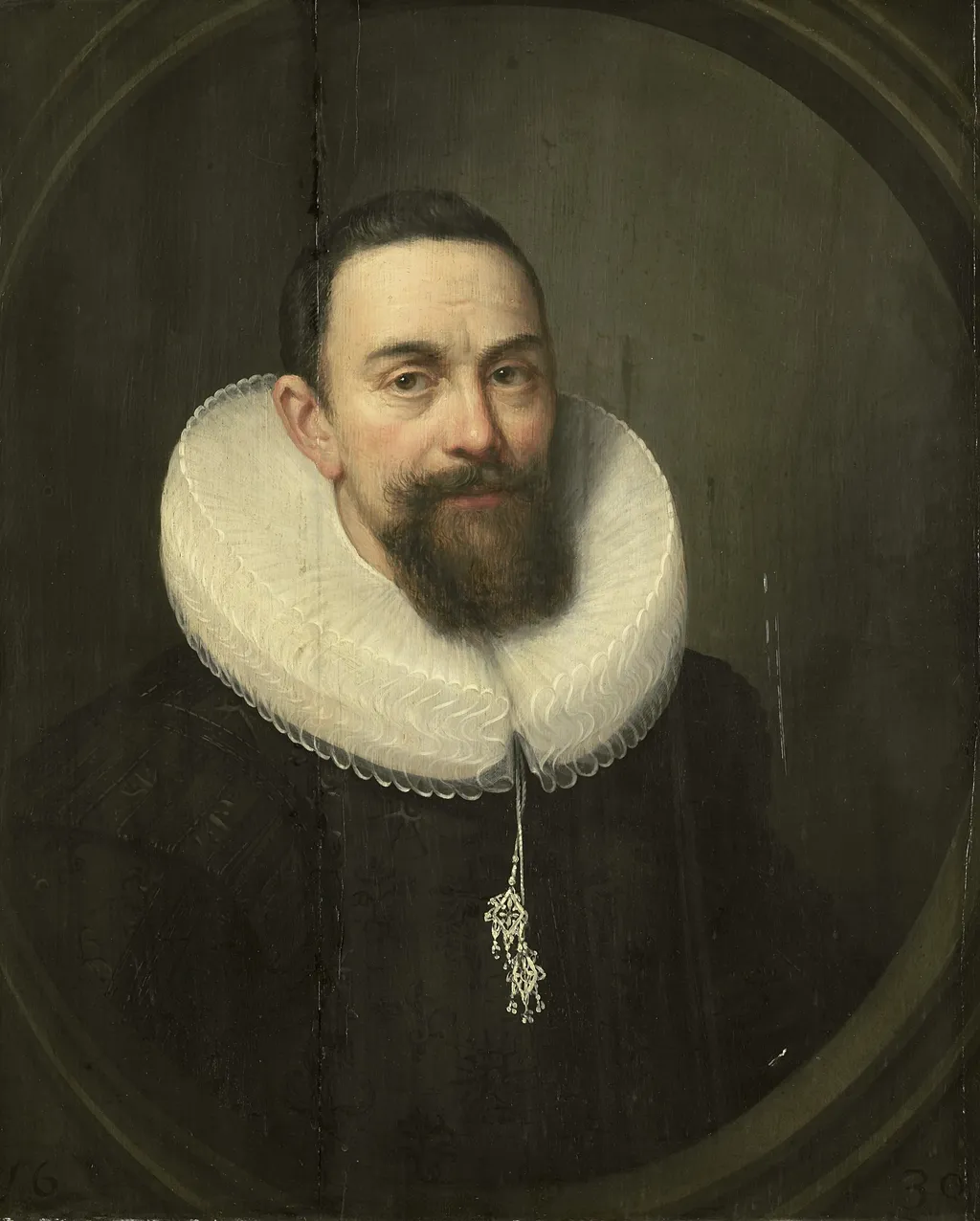
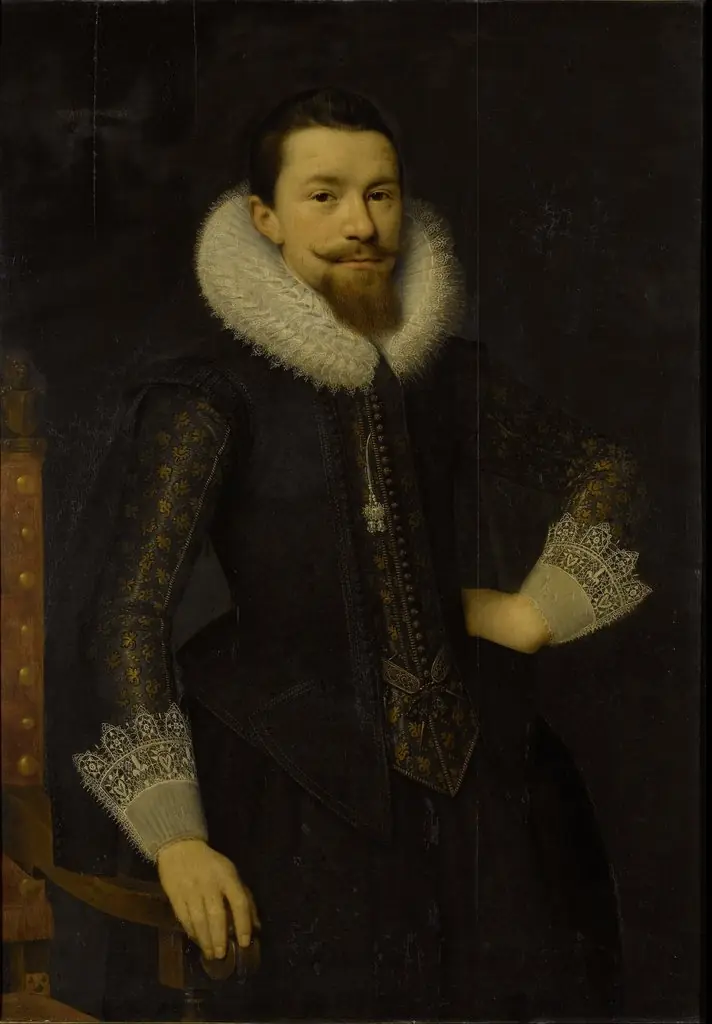
Portrait of Sir Pieter Courten (1581-1630) is an oil painting by the Dutch Golden Age artist Salomon Mesdach. It dates from 1630 and is held in the collection of the Rijksmuseum.
About this work
The painting is a detailed and realistic representation of the subject, showcasing the artist's skill and attention to detail.
The painting features a man with dark hair and a beard, wearing a black shirt and a white ruffled collar. He is set against a dark background, which appears to be a wall or a curtain.
The man's attire and the style of the painting suggest that it is a portrait from the 17th century. The artist has used chiaroscuro to create a sense of depth and dimensionality in the painting.
The painting is a detailed and realistic representation of the subject, showcasing the artist's skill and attention to detail. To learn more about the artist who created this work, look up Salomon Mesdach.
Overview
Salomon Mesdach’s oil portrait, dated 1630, presents Sir Pieter Courten (1581‑1630). The work is part of the Rijksmuseum’s collection and exemplifies early‑seventeenth‑century Dutch portraiture, focusing on a single sitter rendered with precise realism.
Subject & Meaning
The canvas shows Courten with dark hair and a neatly trimmed beard, dressed in a black shirt complemented by a white, ruffled collar. The composition emphasizes his status through the sober attire and composed expression, typical of the period’s approach to representing gentlemen.
Technique & Style
Mesdach employs chiaroscuro, using strong contrasts between the illuminated figure and the dark, indistinct background—a wall or curtain—to model form and create depth. The brushwork is fine and controlled, highlighting textures such as fabric folds and facial features with meticulous detail.
History & Provenance
Created the year of Courten’s death, the portrait entered the Rijksmuseum’s holdings, where it remains on display. Its provenance traces back to the Dutch Golden Age, reflecting the era’s demand for personal likenesses among the mercantile and noble classes.
Context
In the early 1600s, Dutch portraiture often combined realism with subtle symbolism. The black clothing and white collar signal both modesty and wealth, while the plain backdrop directs attention solely to the sitter, aligning with contemporary aesthetic conventions.
Artist & collection