Artwork
A Landscape with a Farmstead
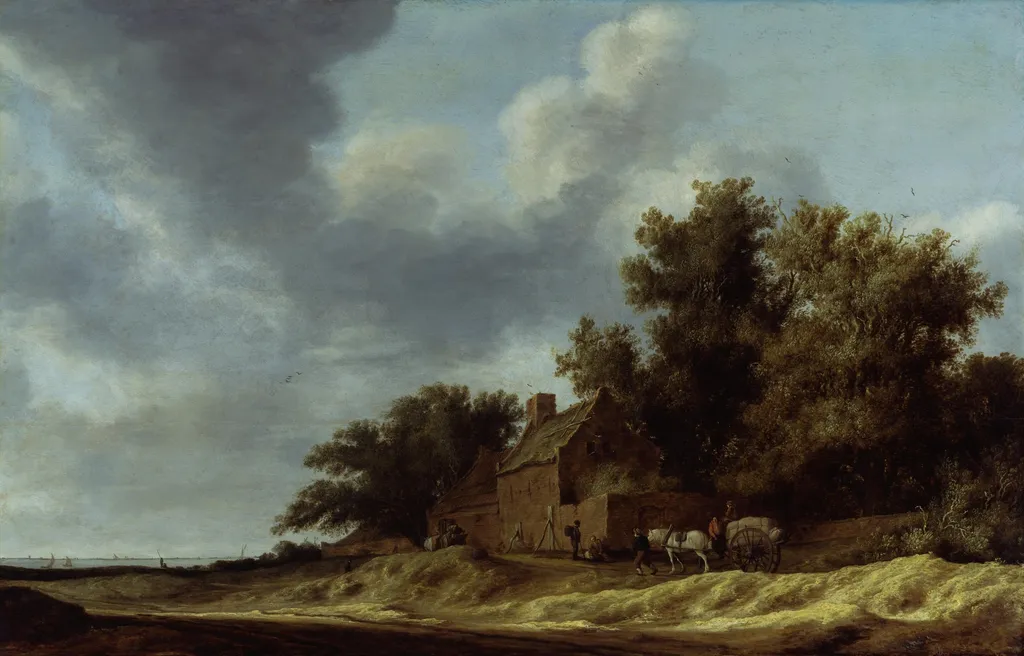
A Landscape with a Farmstead is a paint painting by the Dutch Golden Age artist Salomon van Ruysdael. It dates from 1631 and is held in the collection of the Gemäldegalerie Berlin.
About this work
Overview
The painting’s restrained palette and careful observation of everyday scenery align with the period’s preference for truthful, unidealized landscapes.
Painted in 1631 by Salomon van Ruysdael, this work is a quiet depiction of rural life in the Dutch Golden Age. Executed in oil on panel, it presents a modest farmstead nestled within a subdued natural setting. The painting’s restrained palette and careful observation of everyday scenery align with the period’s preference for truthful, unidealized landscapes. It resides today in the Gemäldegalerie, Berlin.
Subject & Meaning
The scene centers on a simple farmstead, flanked by trees and a horse-drawn cart, suggesting quiet agricultural activity. No figures are present, yet the presence of the cart implies human use of the land. The composition avoids drama, instead emphasizing harmony between built and natural environments. The mood is contemplative, reflecting a cultural appreciation for the dignity of rural labor and the rhythms of the countryside.
Technique & Style
Van Ruysdael employed fine brushwork to render textures of bark, thatch, and soil with subtle variation. The sky, rendered in soft grays and muted blues, dominates the upper third, creating a sense of atmospheric depth. Colors are deliberately subdued, avoiding bright hues in favor of earth tones. Light is diffused, enhancing the painting’s calm, overcast atmosphere without dramatic contrast.
History & Provenance
Created in 1631, the painting entered the Gemäldegalerie Berlin’s collection in the 19th century, likely through state acquisitions or private donations common during that era. Its attribution to Salomon van Ruysdael has remained consistent, supported by stylistic analysis and documentary records. The work has not been widely exhibited outside Germany, preserving its status as a quiet but significant example of early Dutch landscape painting.
Context
During the Dutch Golden Age, landscape painting flourished as a distinct genre, reflecting the Republic’s growing middle-class identity and reverence for its terrain. Unlike Italianate or mythological scenes, works like this one celebrated local, unadorned environments. Van Ruysdael’s focus on ordinary farms and weathered skies contributed to a broader cultural shift toward valuing the familiar over the grandiose.
Legacy
Salomon van Ruysdael’s approach influenced later artists, including his nephew Jacob, who expanded the emotional range of Dutch landscape painting. While less celebrated today, this work exemplifies the foundational role of quiet observation in 17th-century Dutch art. Its enduring presence in a major museum underscores its value as a representative artifact of a genre that redefined European painting.
Own this work as a print
Artist & collection
Artist
Salomon van Ruysdael (c. 1602, Naarden – buried 3 November 1670, Haarlem) was a Dutch Golden Age landscape painter. He was the uncle of Jacob van Ruisdael.

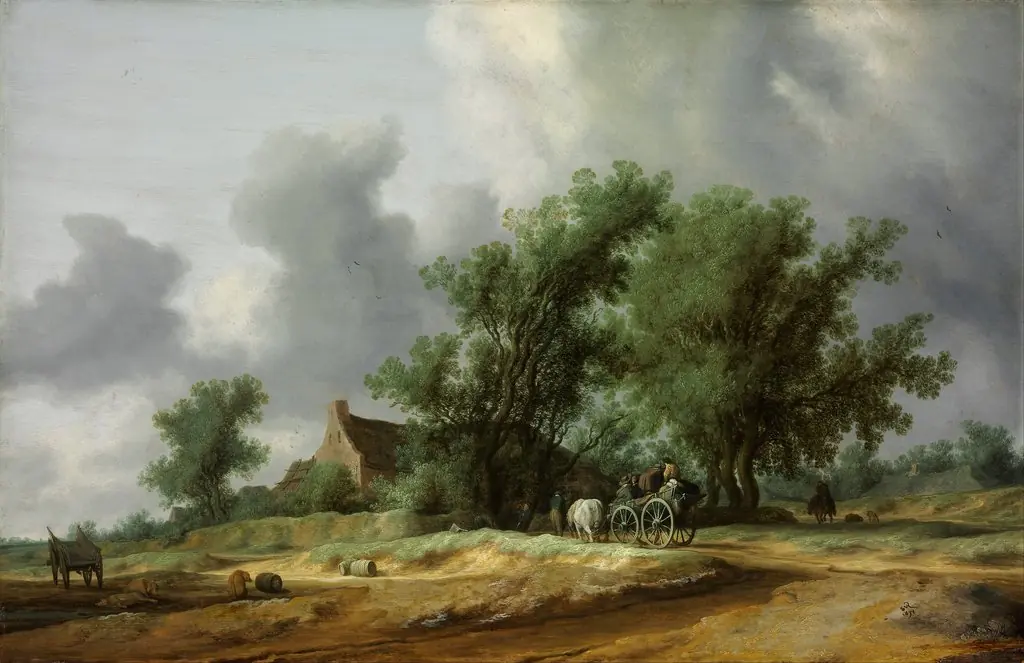 Road in the Dunes
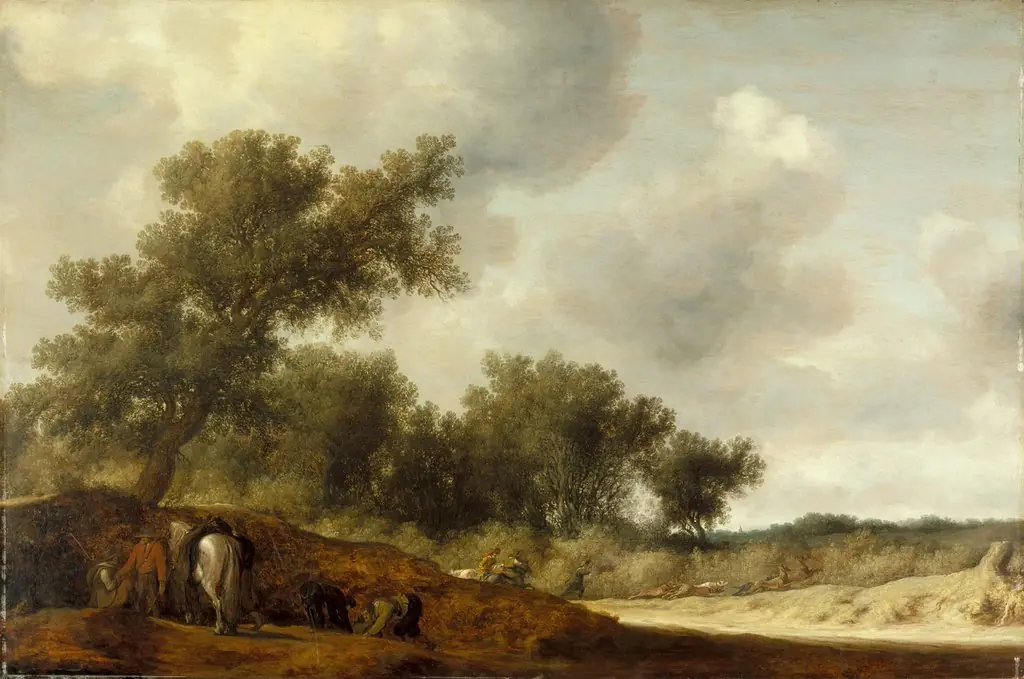 Landscape with Deer Hunters
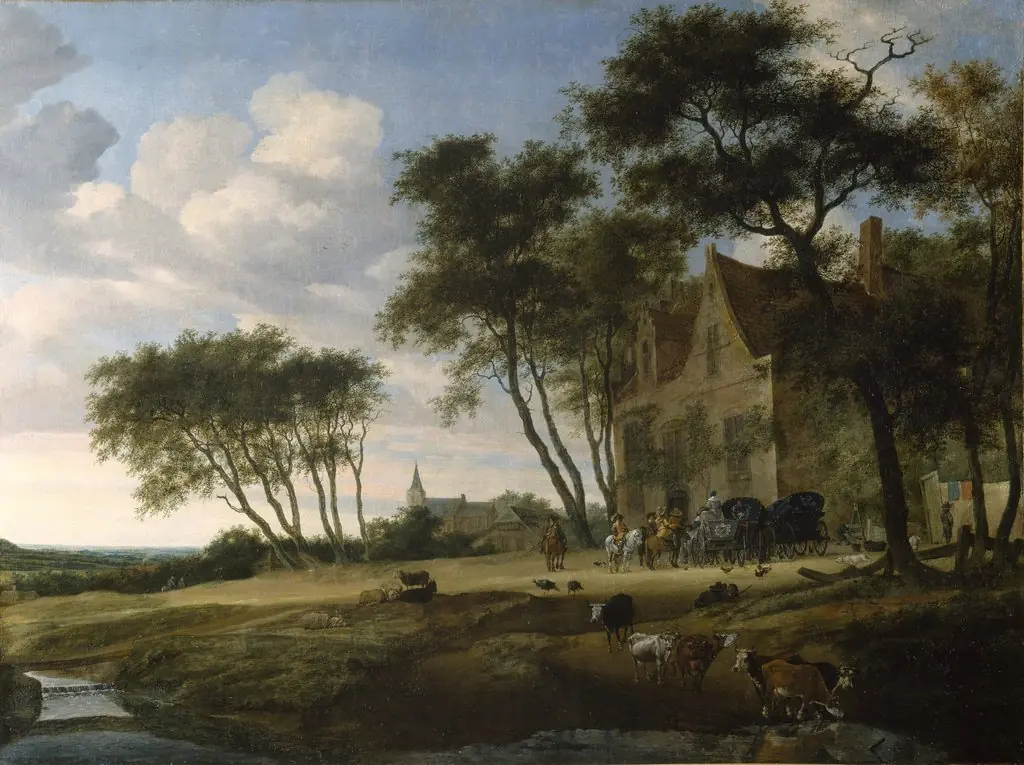 The Halt
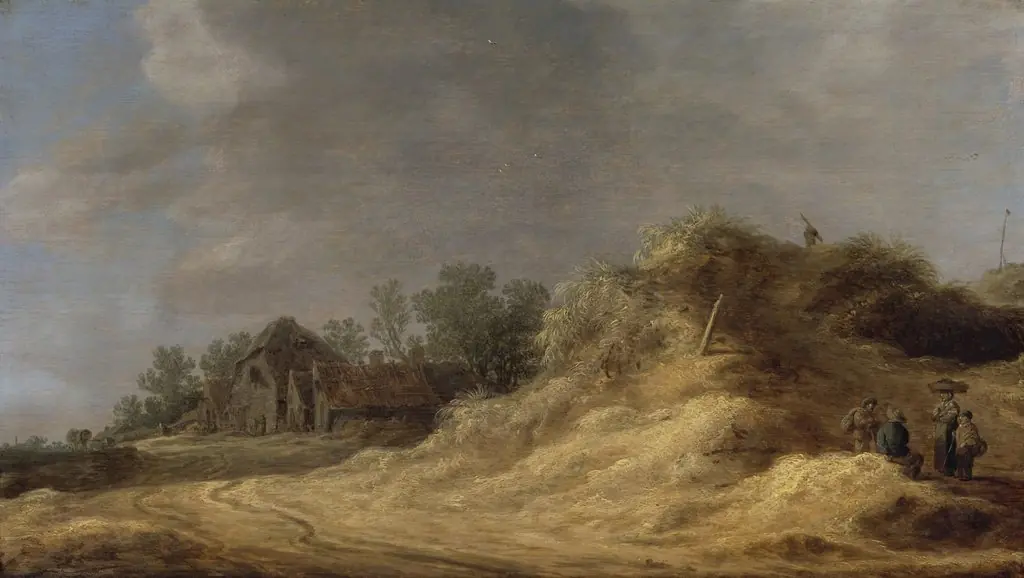 Dunelandscape
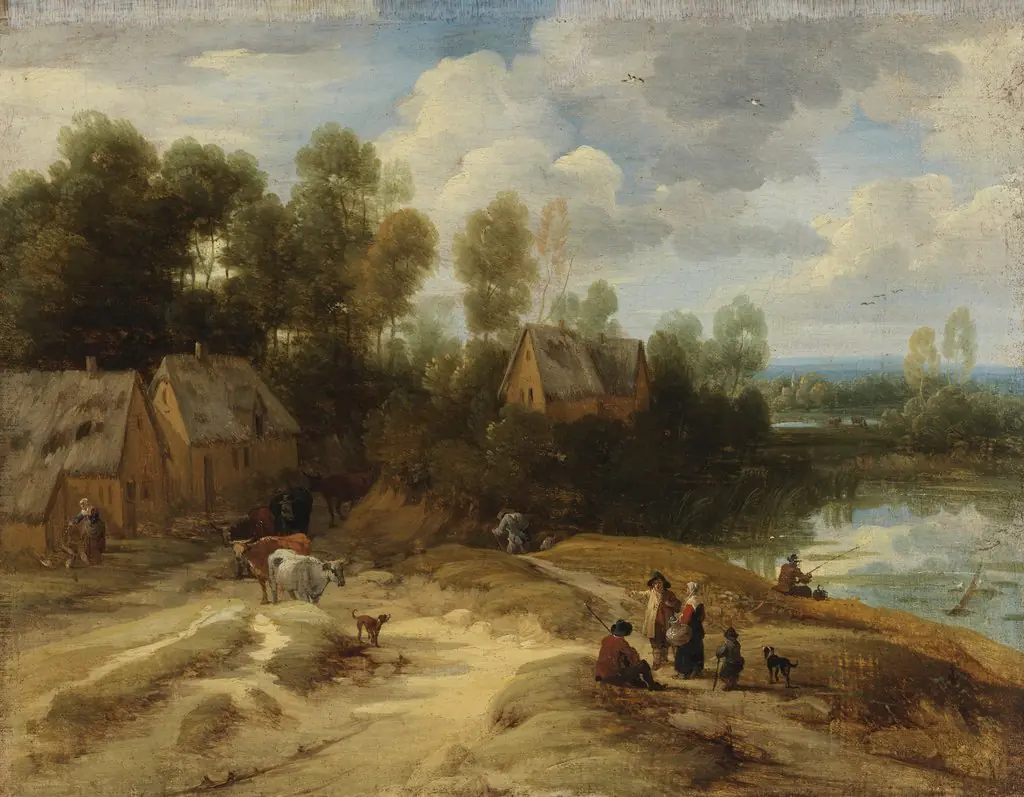 Landscape with Peasants and Cattle
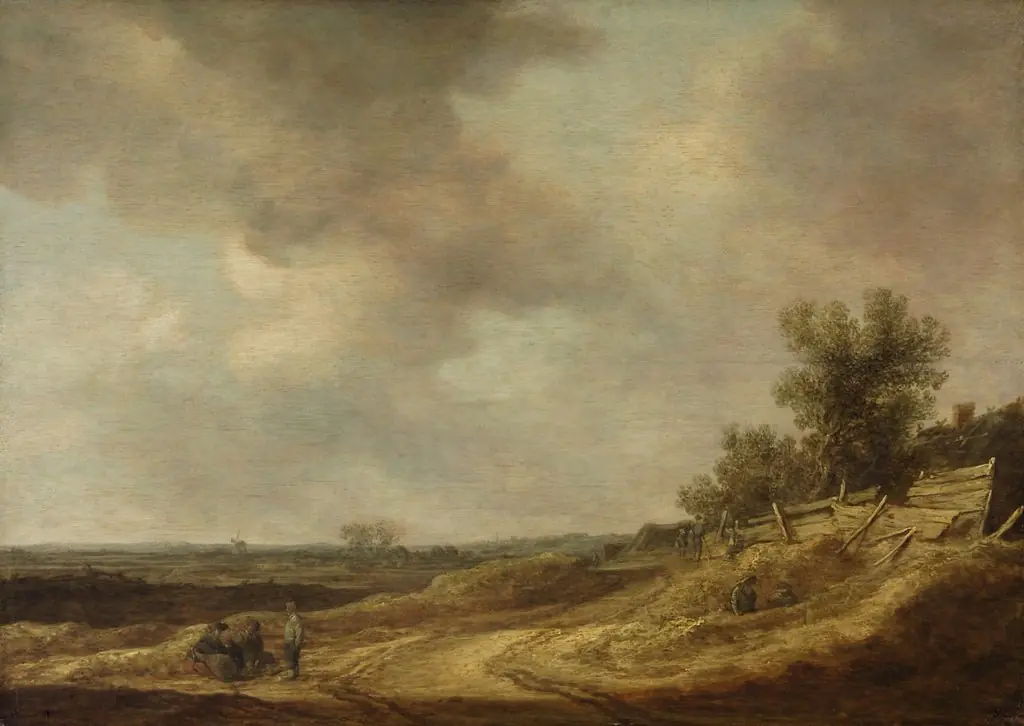 Flat Landscape
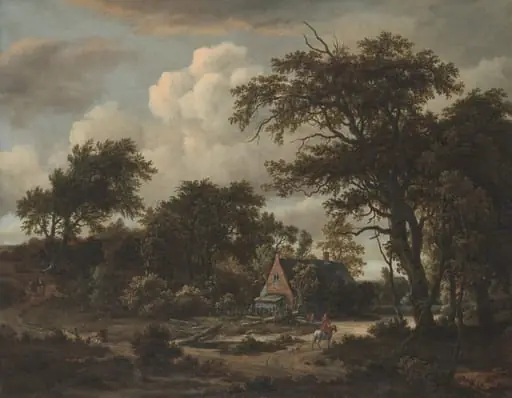 Wooded Landscape with Cottage and Horseman
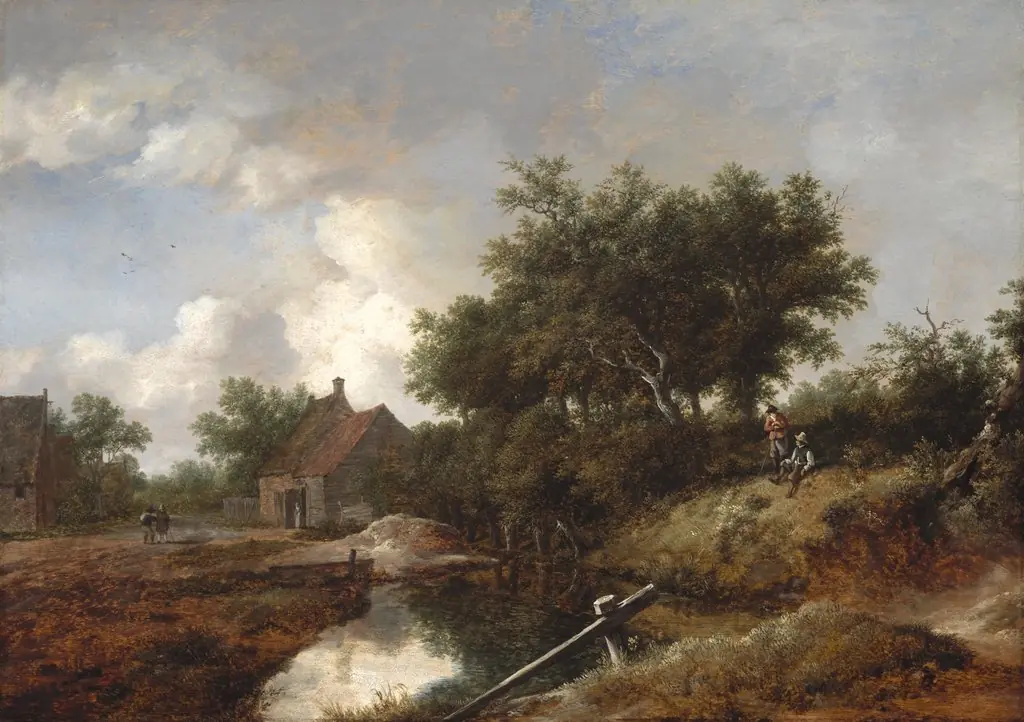 Path Leading to Farms by a Wooded Brook, ca. 1645
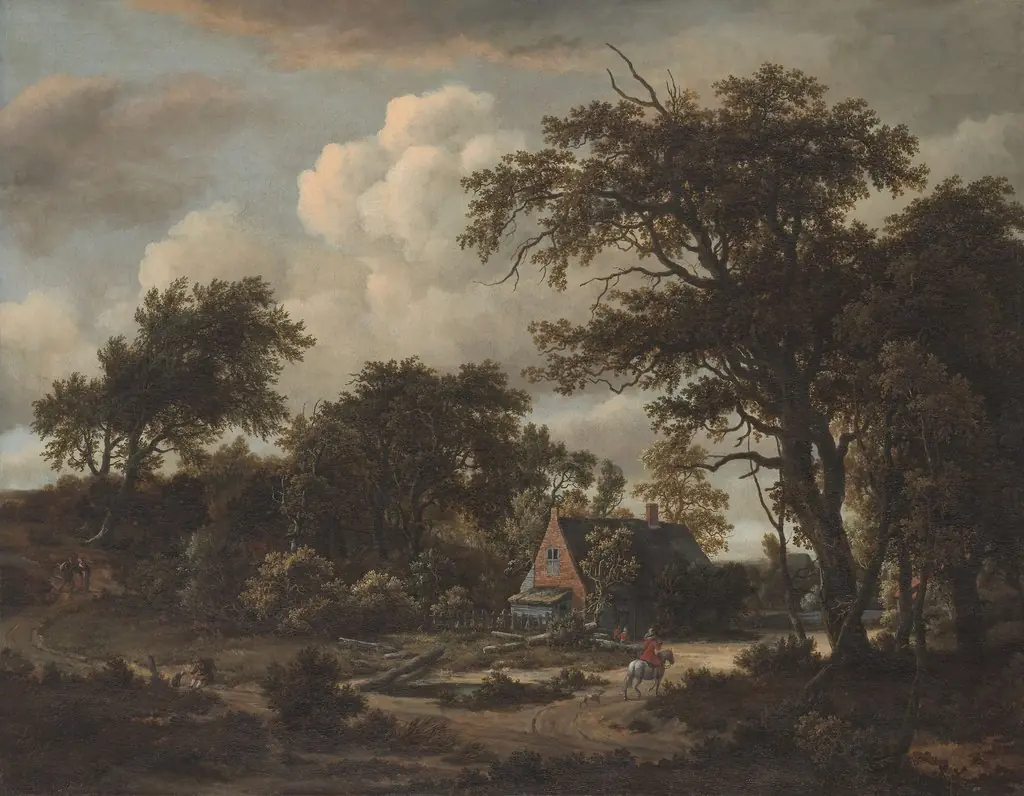 Wooded Landscape with Cottage and Horseman
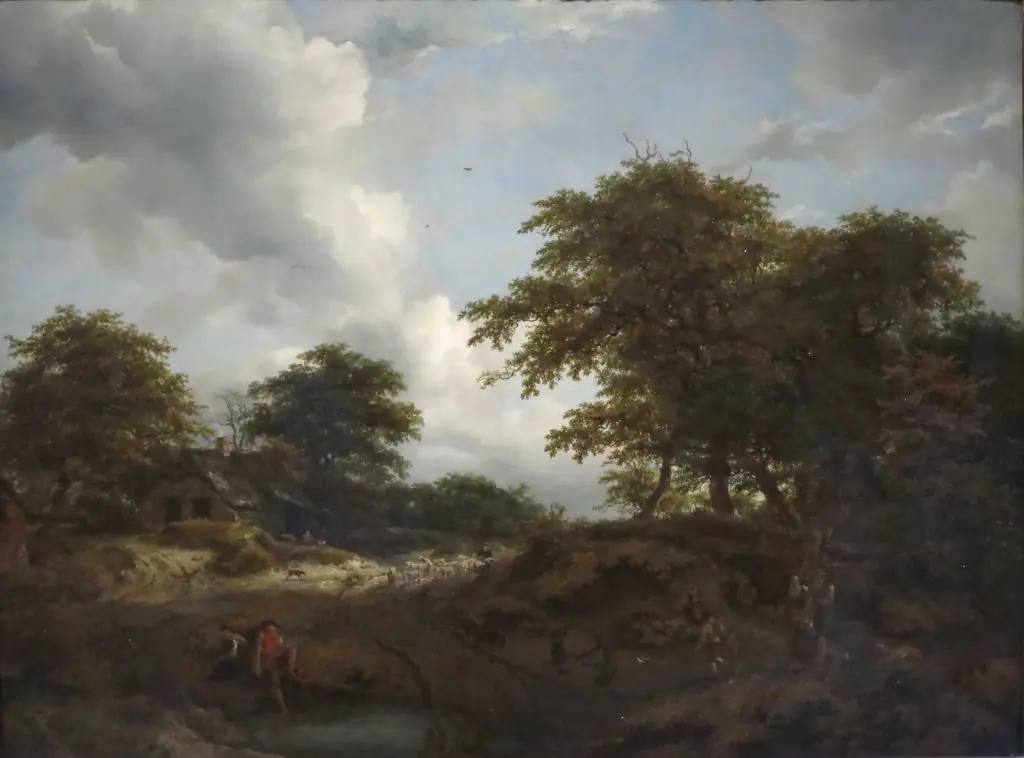 Wooded Landscape with a Pool and Figures
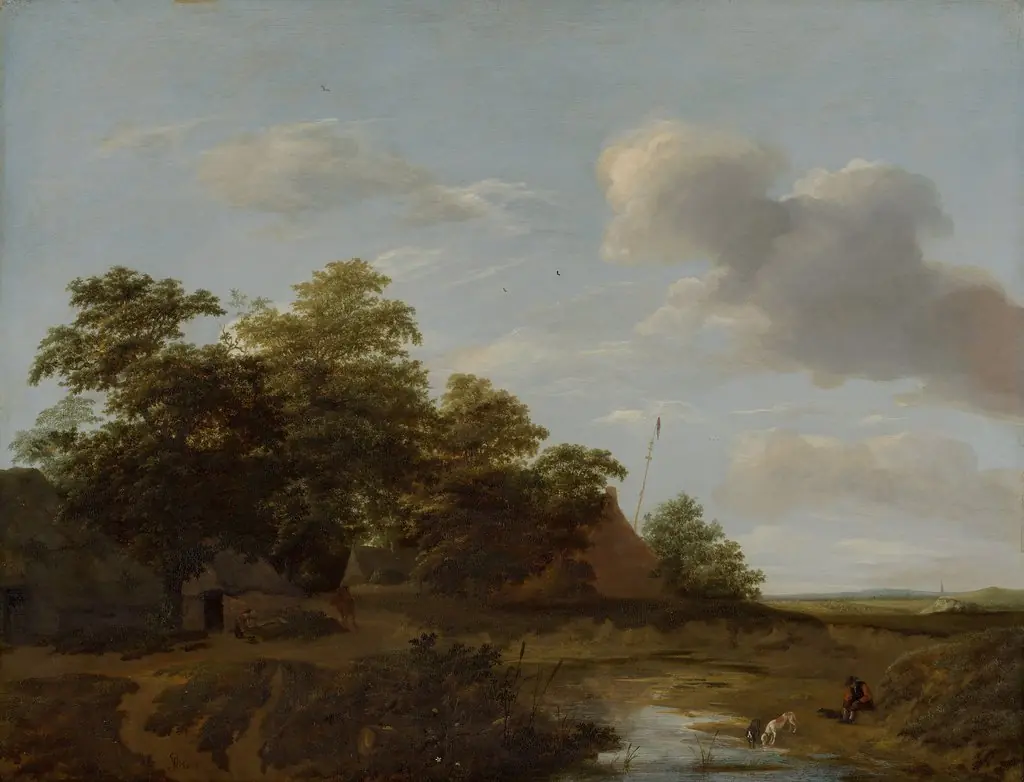 Landscape with a farm