Artwork
Halt in Front of an Inn
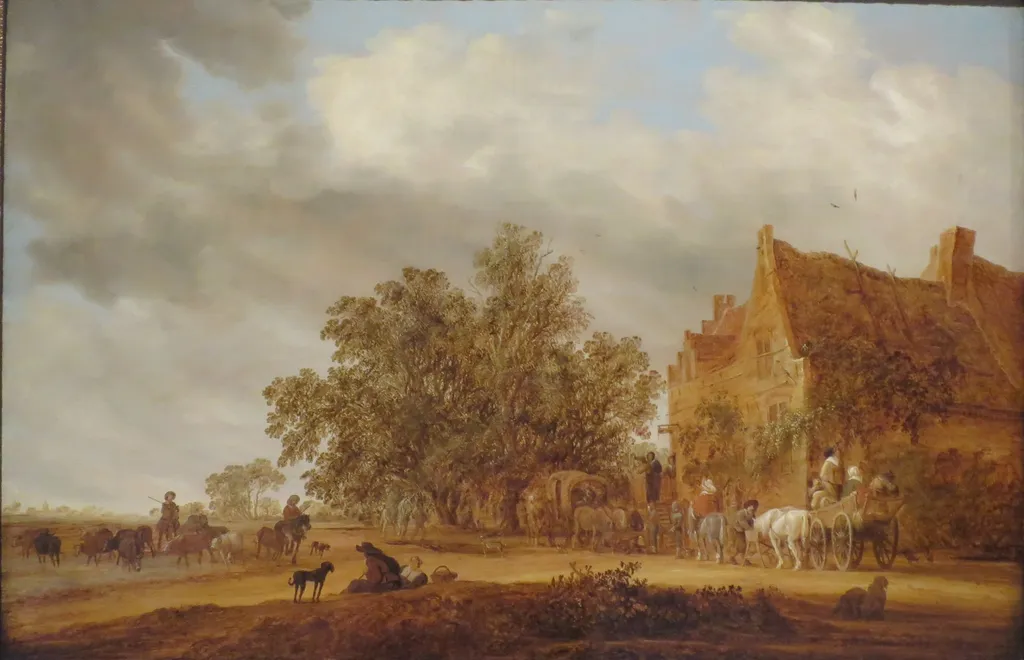
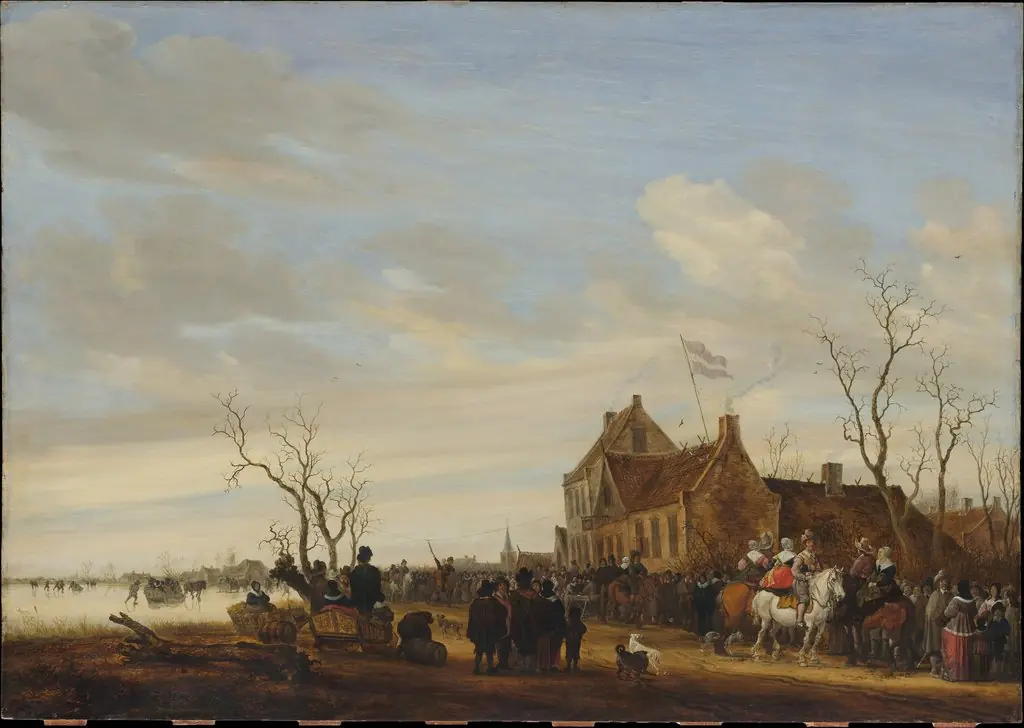
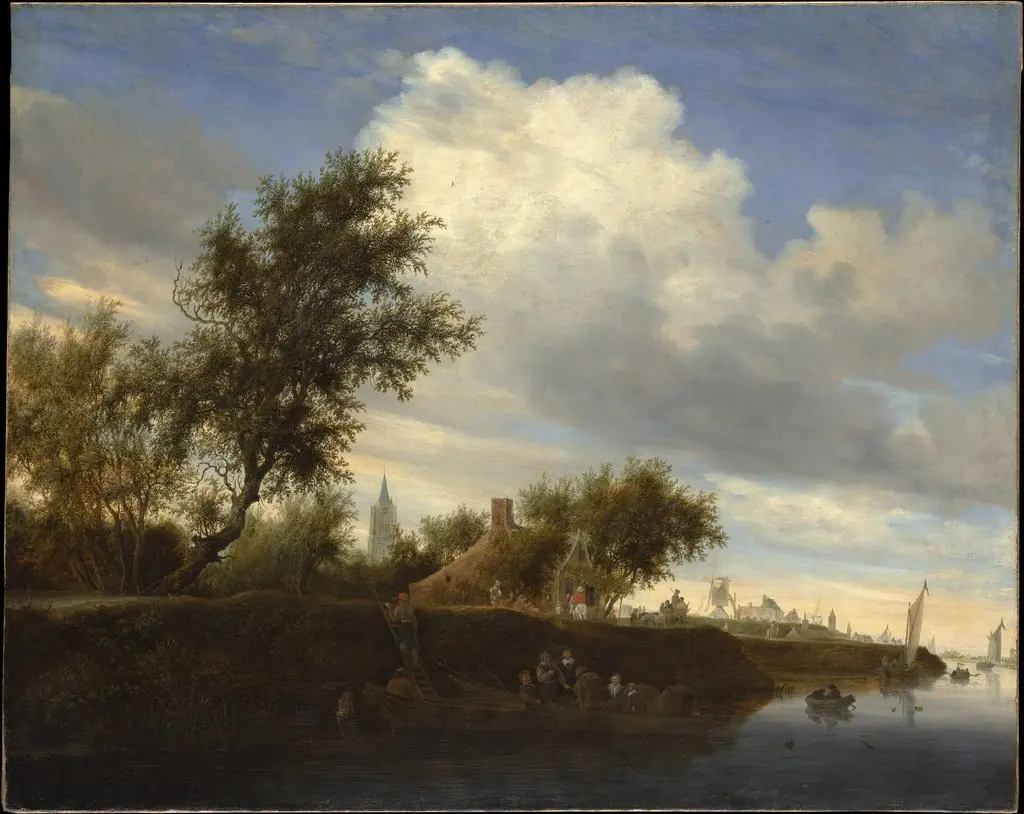
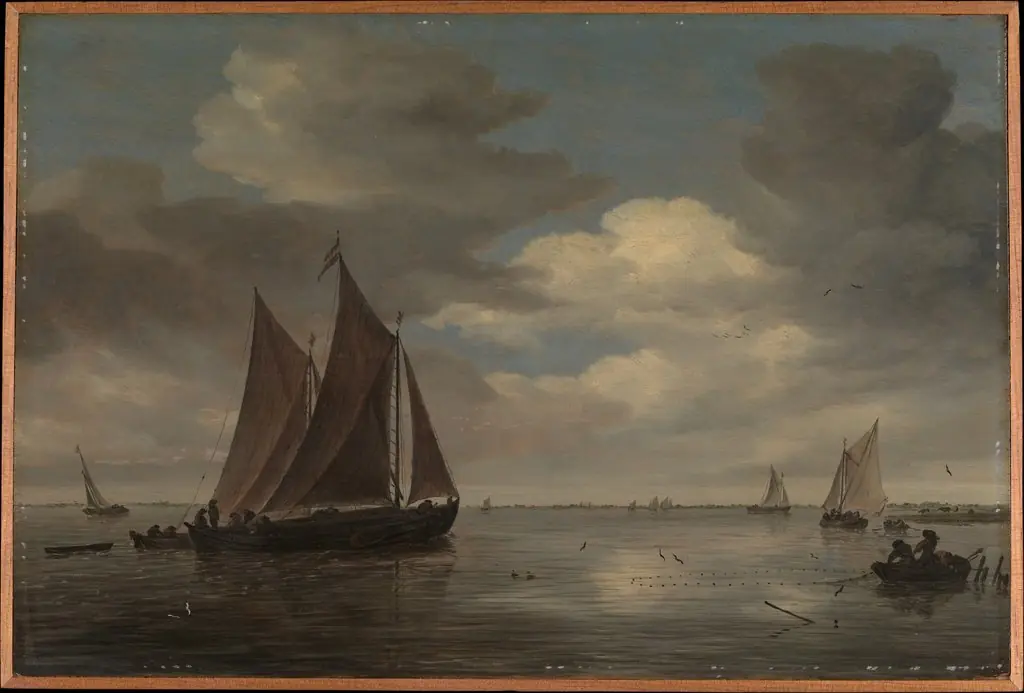
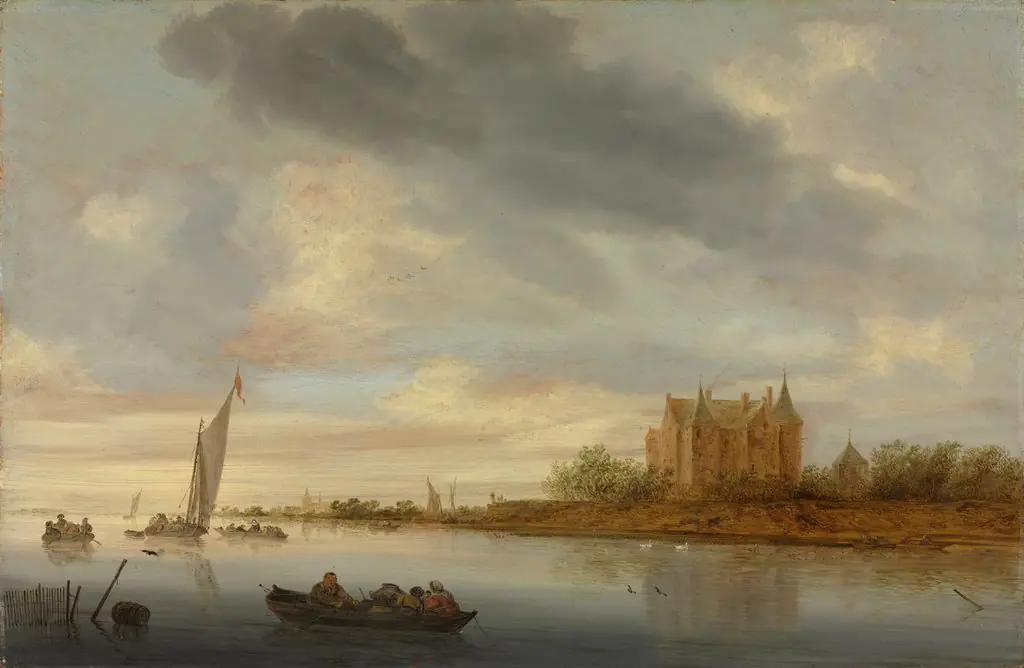
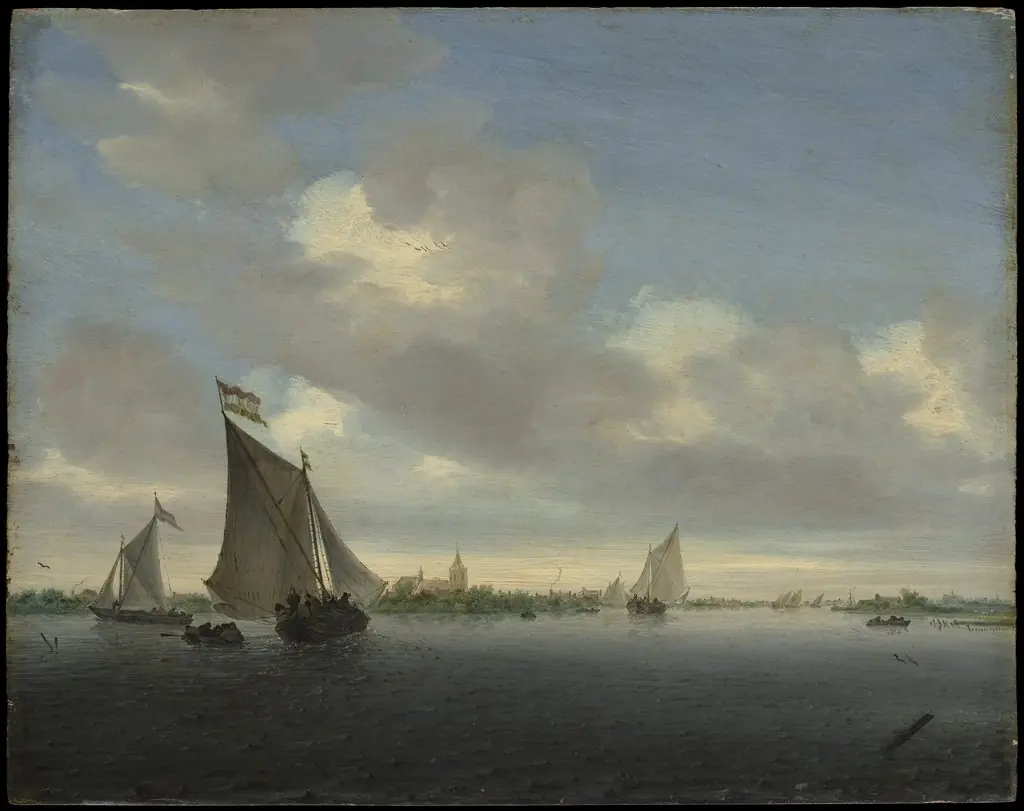
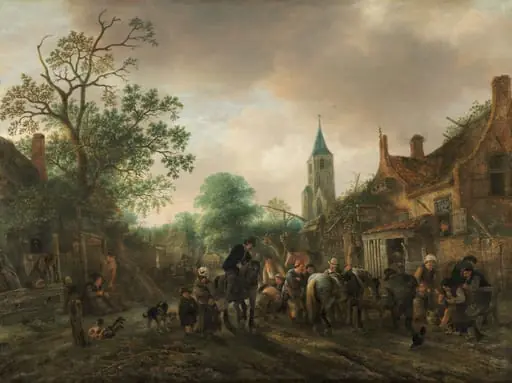
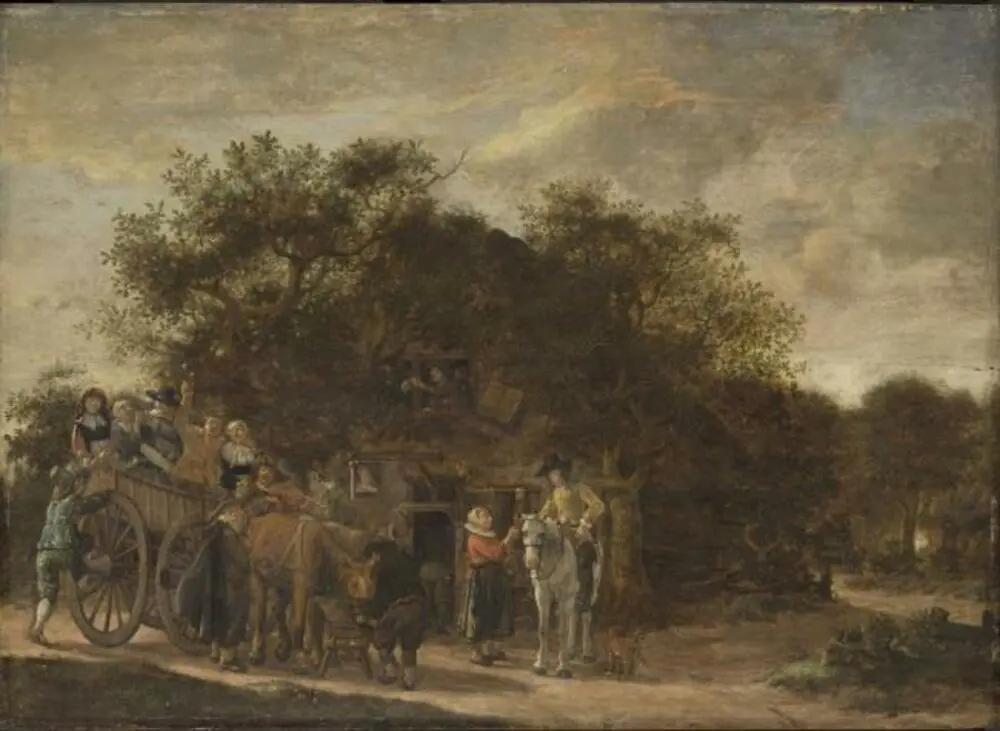
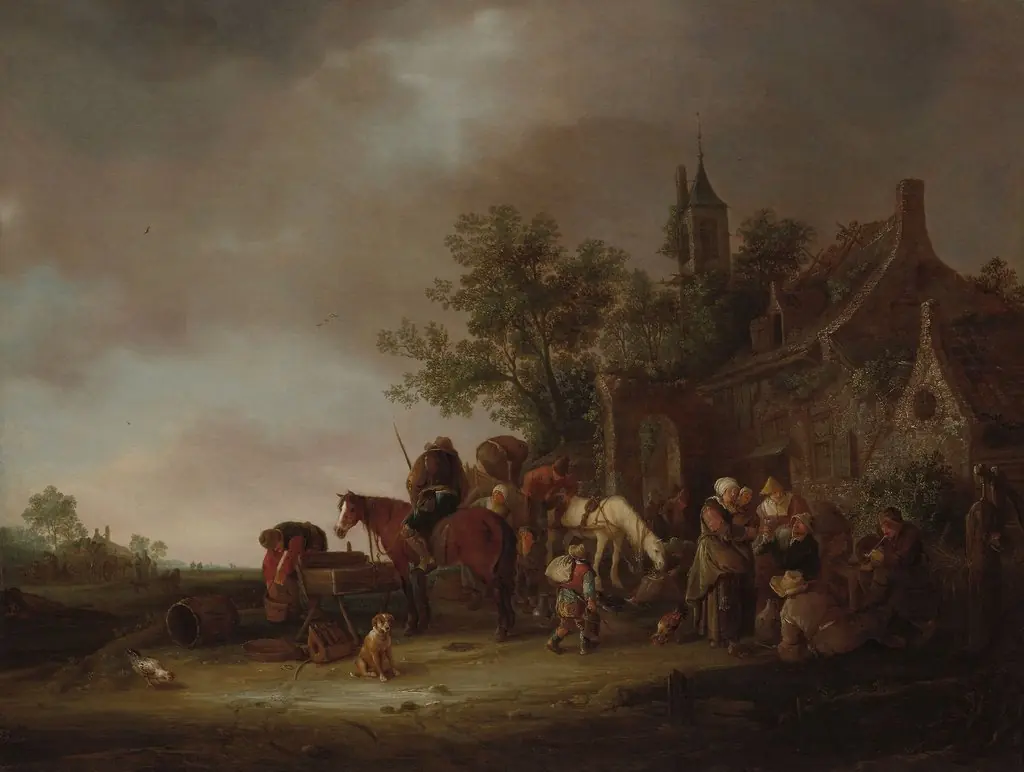
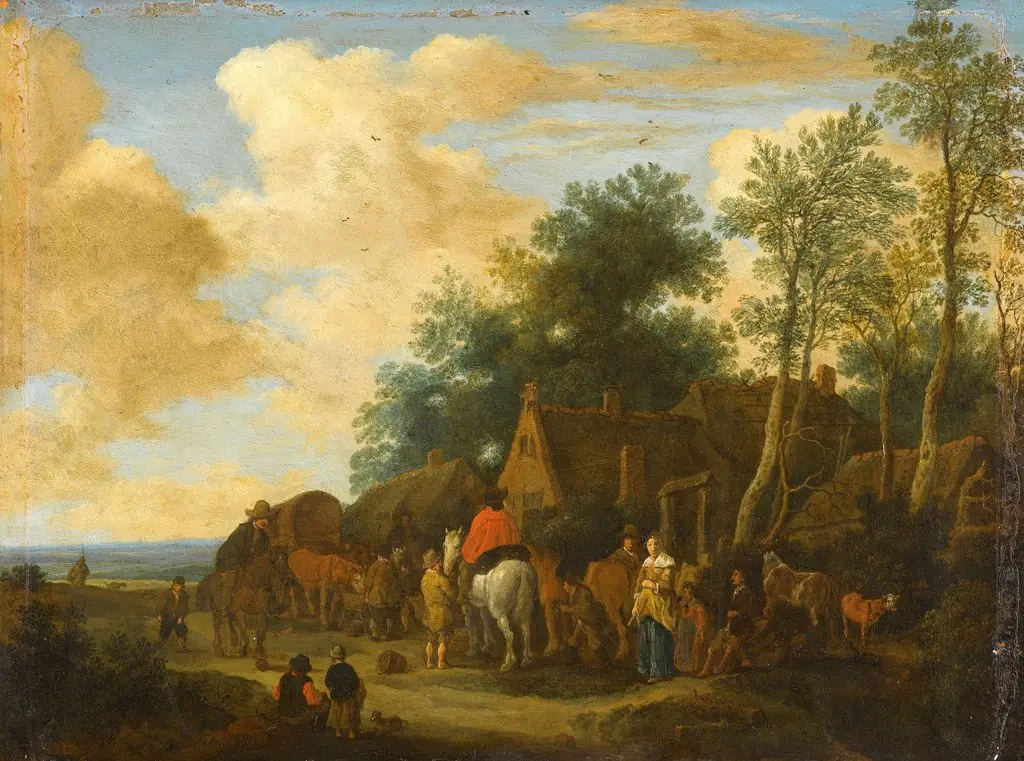
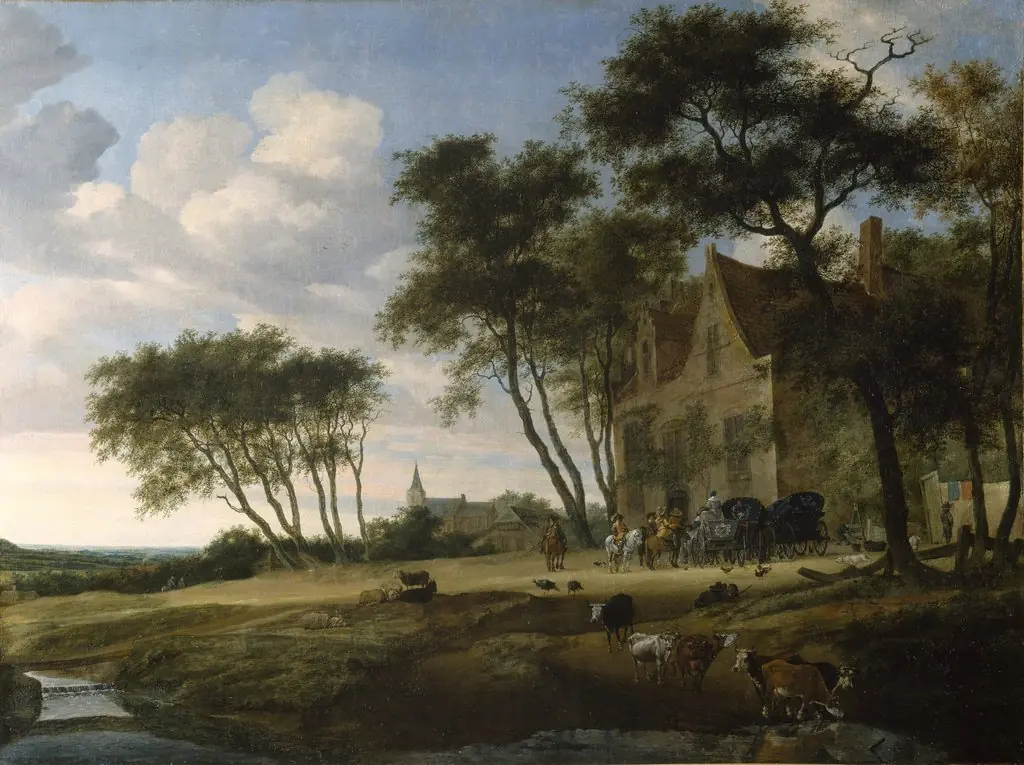
Halt in Front of an Inn is an oil painting by the Dutch Golden Age artist Salomon van Ruysdael. It dates from 1643 and is held in the collection of the Norton Simon Museum.
About this work
Overview
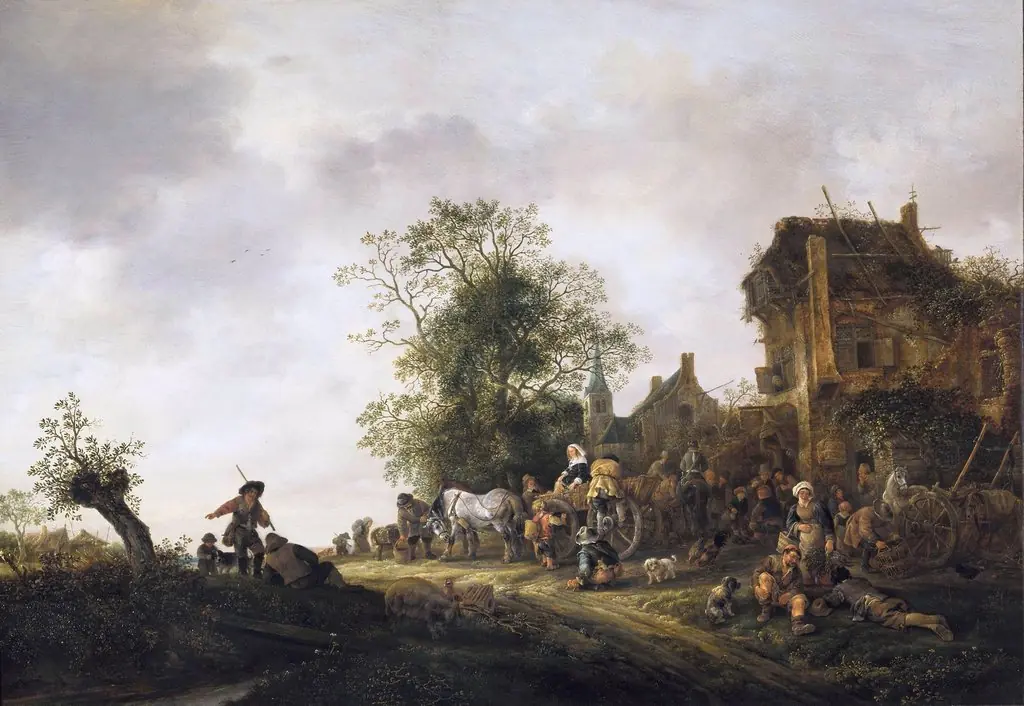
Halt in Front of an Inn is a 1643 oil painting by Salomon van Ruysdael, a prominent Dutch Golden Age landscape painter. The work captures a moment of activity in front of an inn, characterized by a sense of warmth and lively interaction among figures.
Subject & Meaning
The painting depicts a paused horse-drawn wagon in front of an inn, with a group of people and horses gathered around. A solitary figure sits on the ground near the wagon, contrasting with the otherwise bustling scene, suggesting a brief respite amidst activity.
Technique & Style
Van Ruysdael employed earthy tones to evoke a cozy atmosphere, set against a backdrop of cloudy, gray skies. The composition blends architectural detail with natural elements, typical of Dutch Golden Age landscape painting, emphasizing everyday life.
History & Provenance
Created in 1643, the painting is now part of the Norton Simon Museum's collection, attributed to Salomon van Ruysdael, uncle of the renowned Jacob van Ruisdael.
Context
This work aligns with the Dutch Golden Age's focus on landscapes and everyday scenes, reflecting the period's aesthetic values. Its style resonates with the broader output of Dutch landscape painters of the time.
Legacy
While specific influences of *Halt in Front of an Inn* on later art are not widely documented, it contributes to the broader legacy of Dutch Golden Age landscape painting, exemplifying the genre's appeal and themes.
Artist & collection
Artist
Salomon van Ruysdael (c. 1602, Naarden – buried 3 November 1670, Haarlem) was a Dutch Golden Age landscape painter. He was the uncle of Jacob van Ruisdael.