Artwork
Desolate Landscape with Two Figures
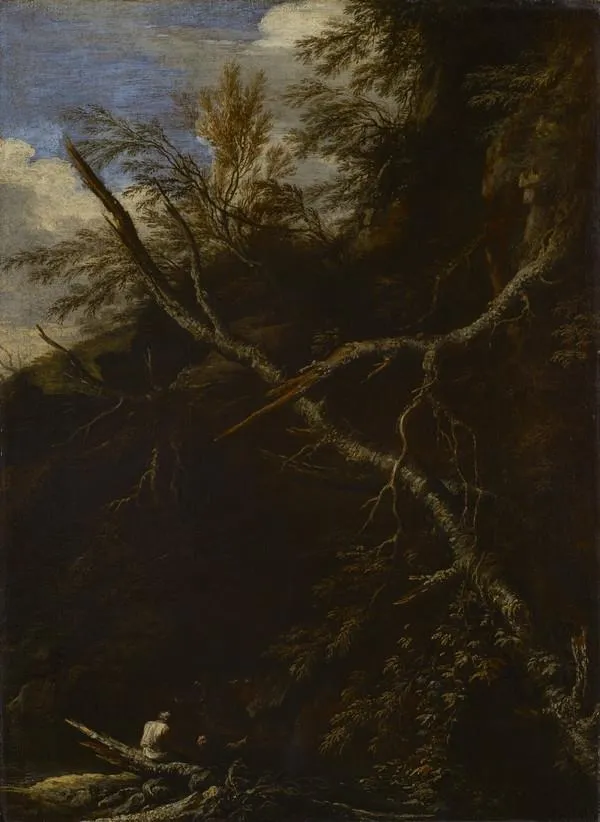
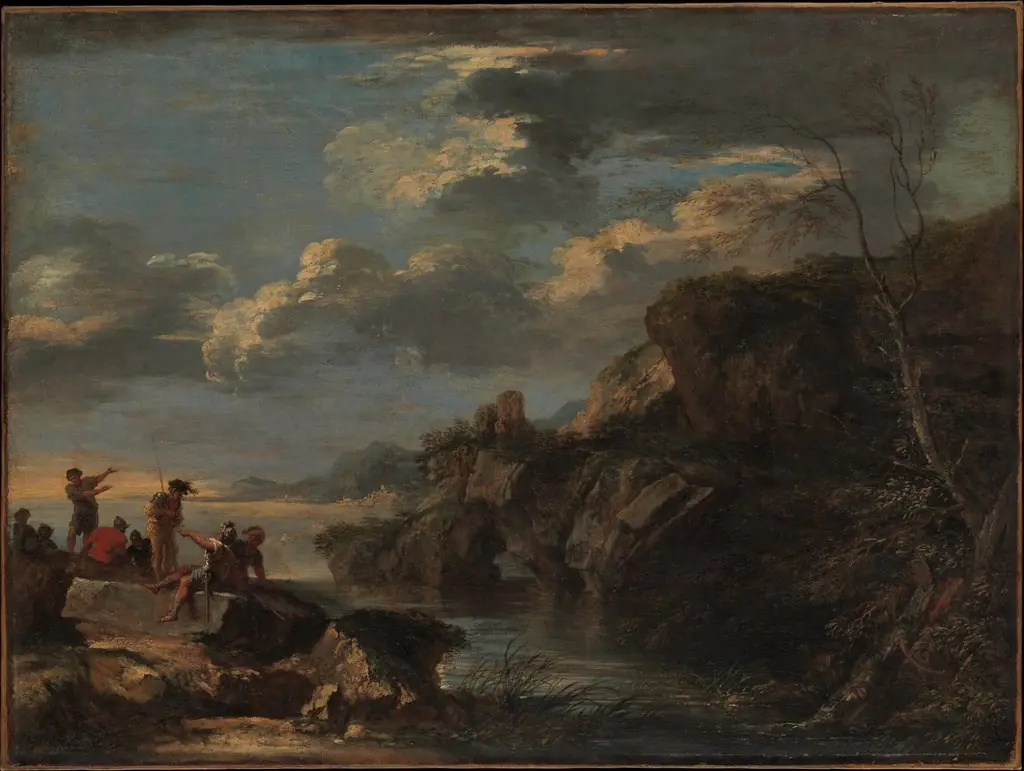
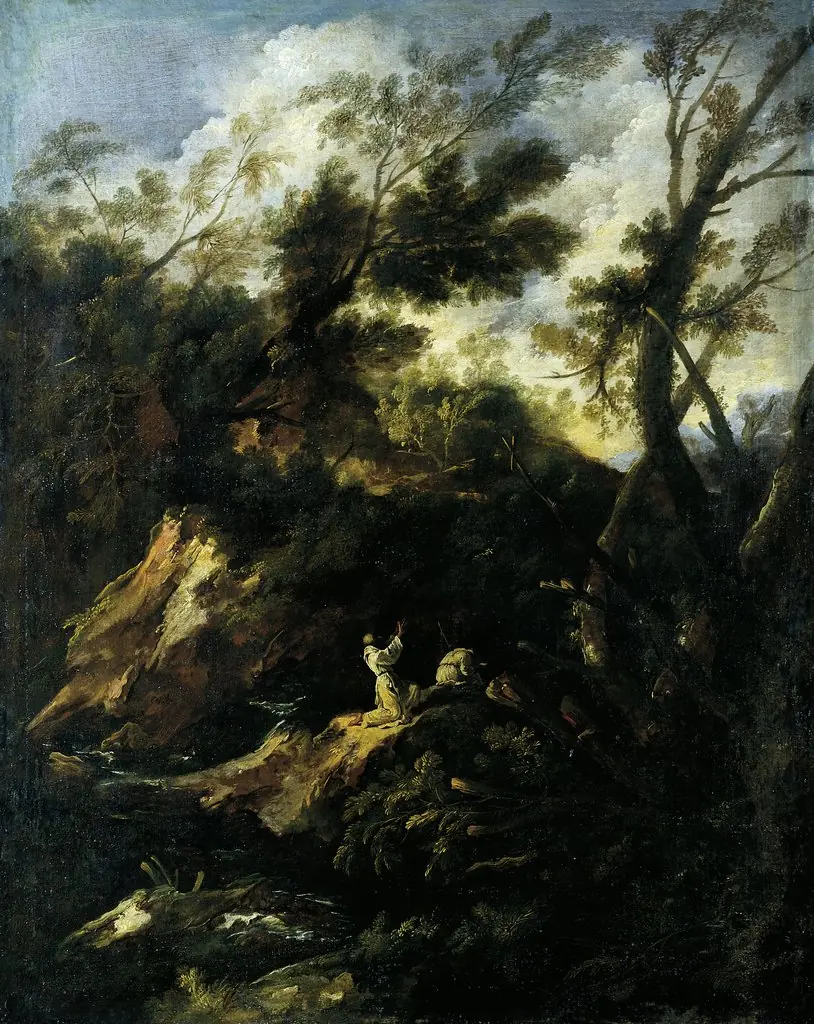
Desolate Landscape with Two Figures is an oil painting by the Early Baroque Italian artist Salvator Rosa. It dates from 1662 and is held in the collection of the National Galleries Scotland.
About this work
Overview
The piece is part of the early Baroque tradition in Italy and reflects Rosa’s fascination with solitude and the sublime in nature.
Painted in 1662, *Desolate Landscape with Two Figures* is an oil on canvas work by the Italian artist Salvator Rosa. It exemplifies his signature approach to landscape painting, emphasizing raw, untamed nature over idealized scenery. The piece is part of the early Baroque tradition in Italy and reflects Rosa’s fascination with solitude and the sublime in nature. It is currently held in the collection of the Scottish National Gallery.
Subject & Meaning
Two diminutive figures, one seated on a rock, appear isolated within a vast, barren terrain. Their small scale underscores human insignificance against the overwhelming landscape. The scene evokes themes of solitude, transience, and the indifferent power of nature. Rosa’s choice of a desolate setting, devoid of human settlement or pastoral harmony, suggests a contemplative, even melancholic worldview.
Technique & Style
Rosa employs chiaroscuro to model forms and deepen spatial recession, with strong contrasts between shadowed rock faces and diffused light on the figures. The foreground tree, rendered with textured brushwork, anchors the composition while its gnarled branches draw the eye upward. Details in bark and foliage are meticulously observed, contributing to the painting’s tactile realism and atmospheric tension.
History & Provenance
Created during Rosa’s mature period, the painting emerged from his time in Florence, where he cultivated a reputation for unconventional themes and a defiant artistic persona. It entered the Scottish National Gallery’s collection in the 19th century, likely through private acquisition. Its survival and preservation reflect its enduring appeal among collectors drawn to its emotional gravity and technical rigor.
Context
Rosa stood apart from contemporaries who favored serene or mythological landscapes. His work aligned with a growing interest in the uncivilized sublime, influenced by Stoic philosophy and the turmoil of post-war Italy. This painting reflects a broader cultural shift toward valuing nature’s wildness as a mirror to human vulnerability, contrasting with the ornate grandeur of courtly Baroque art.
Legacy
Rosa’s landscapes influenced later Romantic artists who sought emotional depth in nature. His rejection of idealization paved the way for more psychologically charged depictions of the natural world. While not widely celebrated in his lifetime, his emphasis on solitude and raw terrain found renewed resonance in the 18th and 19th centuries, securing his place in the evolution of European landscape painting.
Artist & collection
Artist
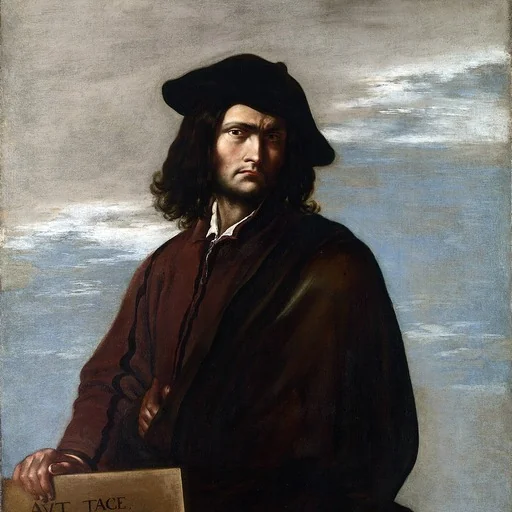
Salvator Rosa (1615 – 15 March 1673) is best known today as an Italian Baroque painter, whose romanticised landscapes and history paintings, often set in dark and untamed nature, exerted considerable influence from the 17th century into…

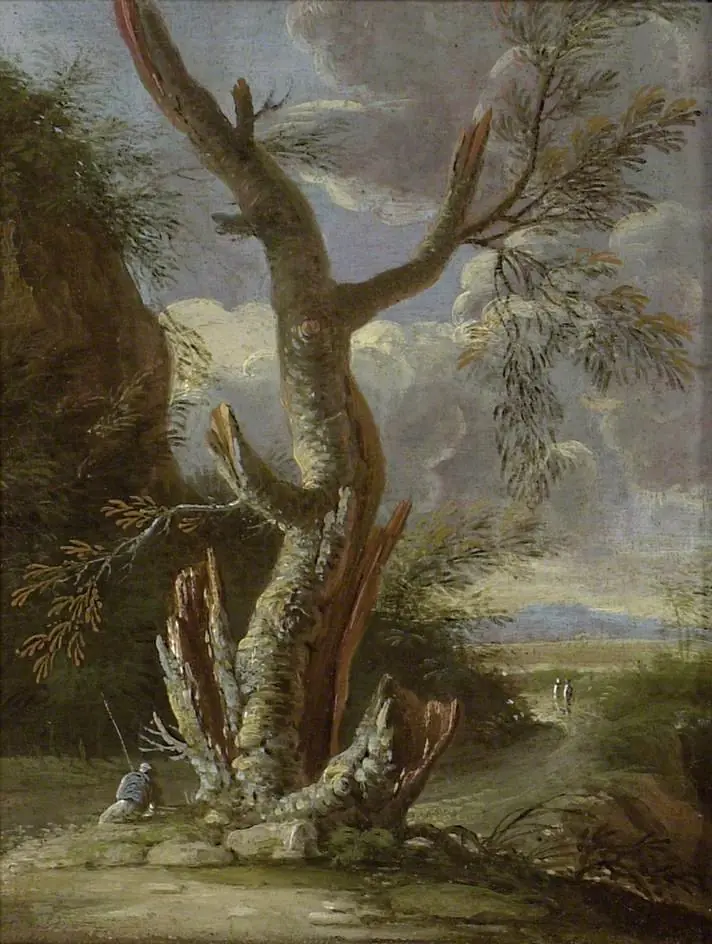 Landscape with a cleft Tree
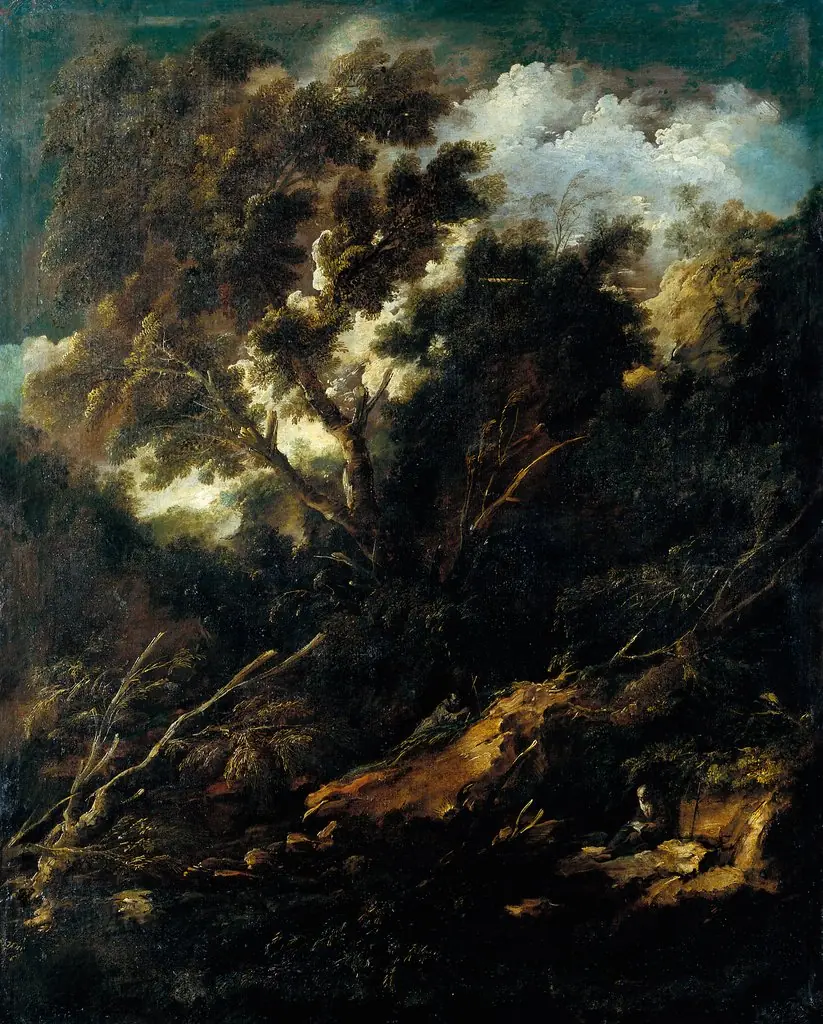 Landscape with a Reading and a Praying Franciscan
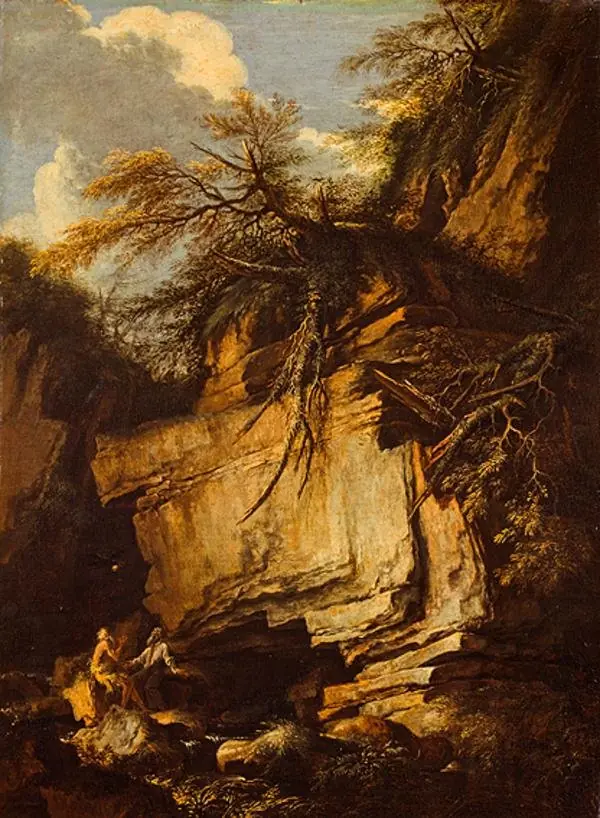 Landscape with Saint Anthony Abbot and Saint Paul the Hermit
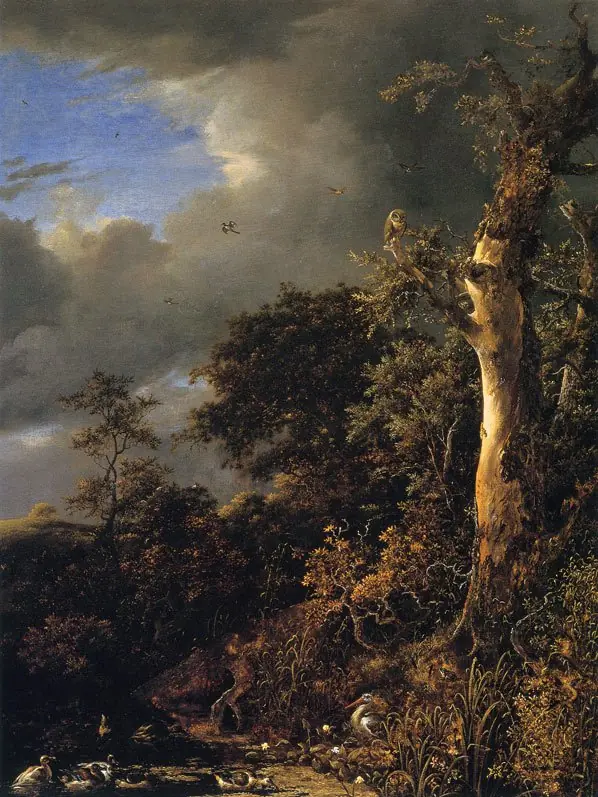 Blasted Oak near a Pond
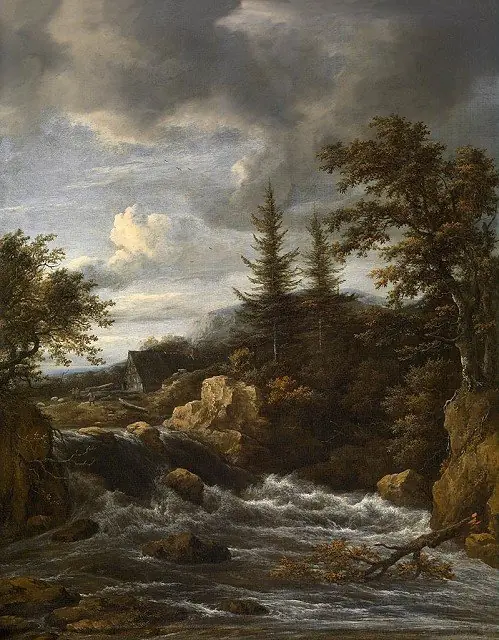 Waterfall in Norway
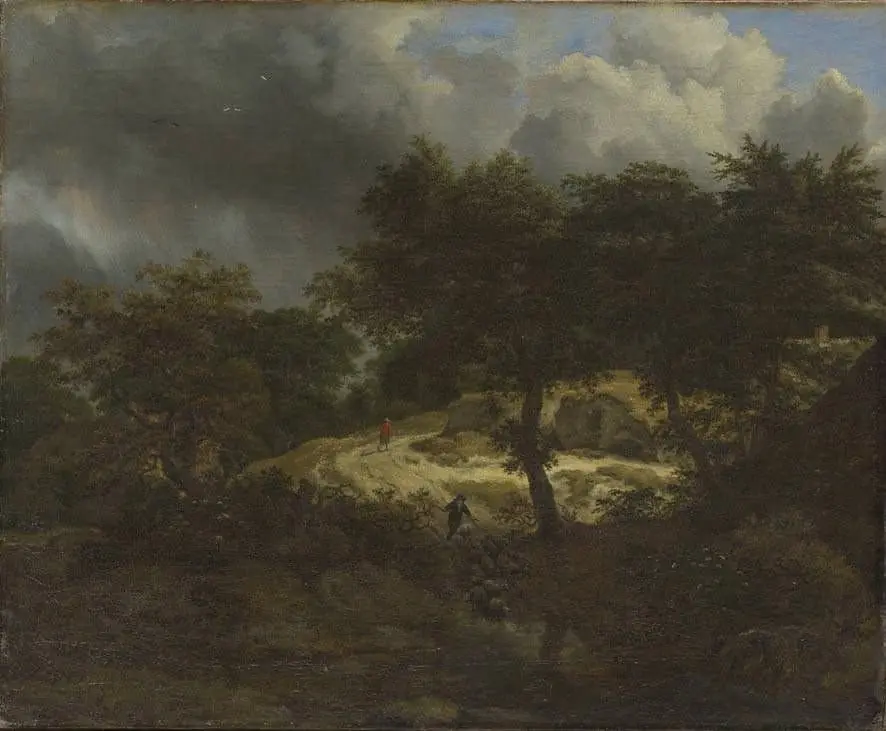 Wooded Landscape with Oncoming Storm
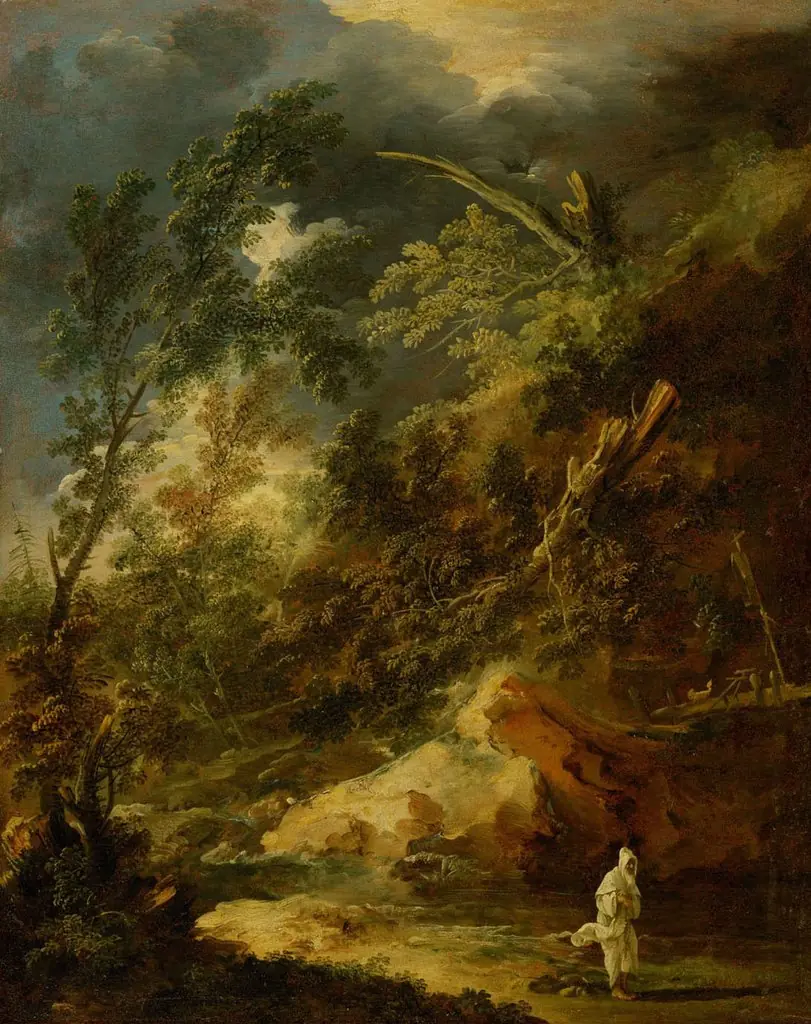 Landschaft mit einem Mönch im Wettersturm
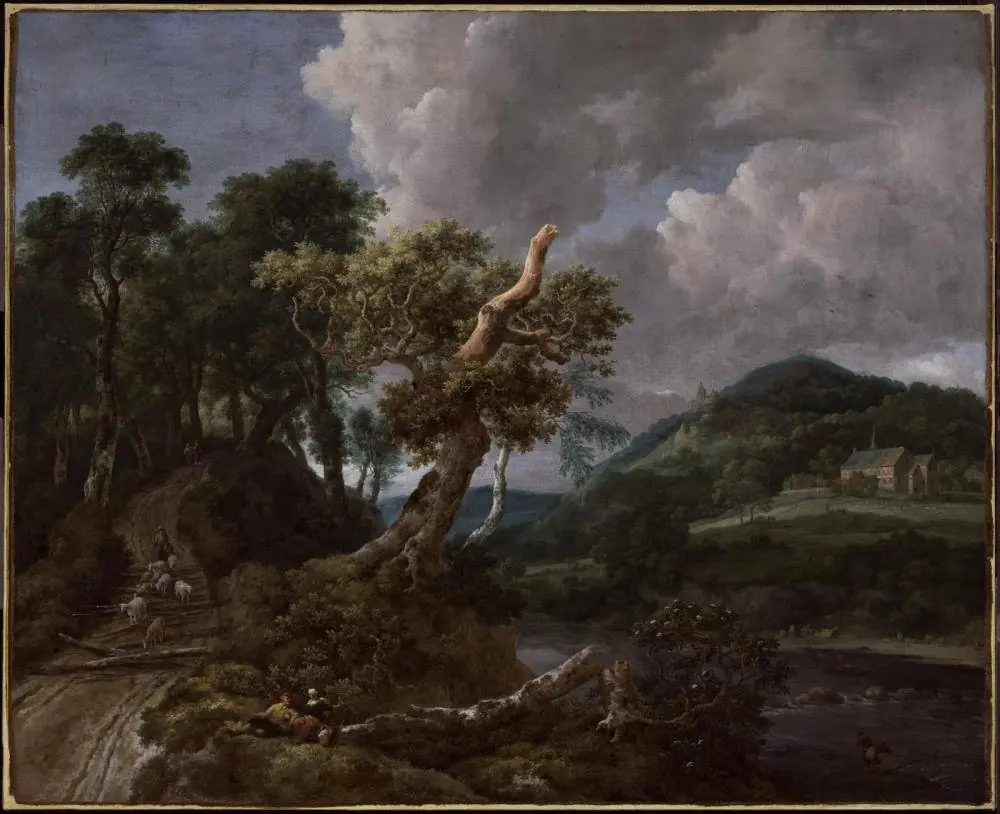 Wooded Landscape with Shepherd and Flock by a River
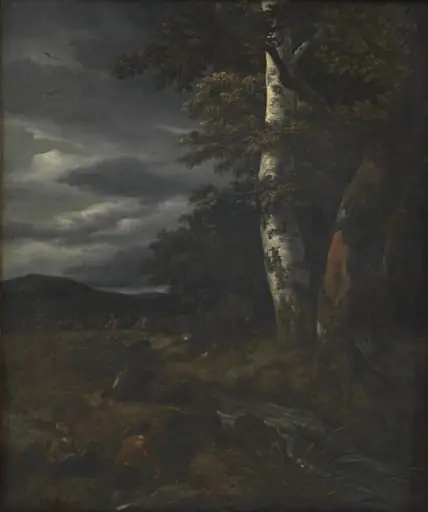 Landscape with a Hunting Scene
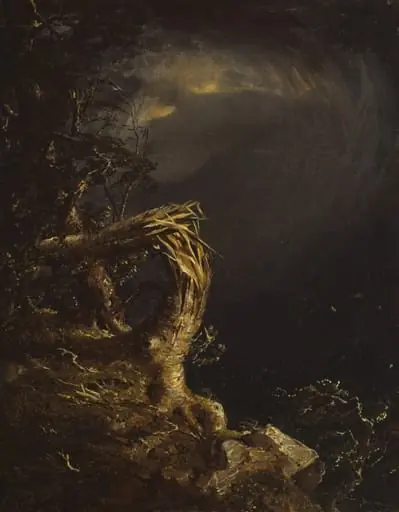 Blasted Tree
 Onkijoita metsälammella
 Landscape with Two Praying Monks