Artwork
Polycrates and the Fisherman
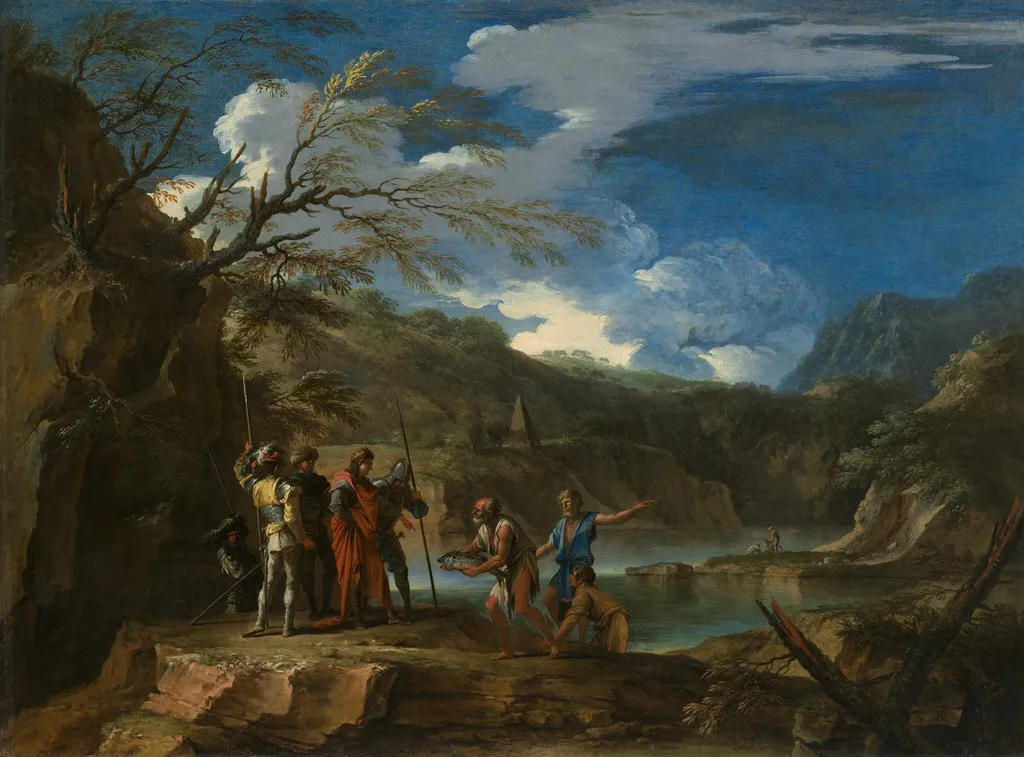
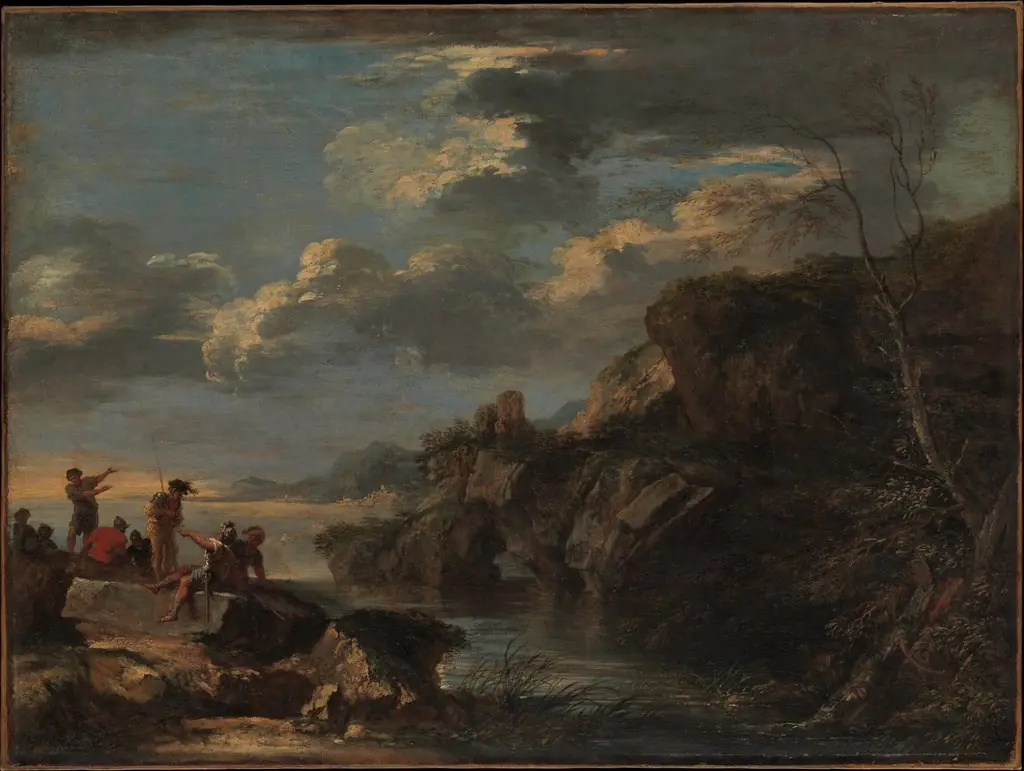
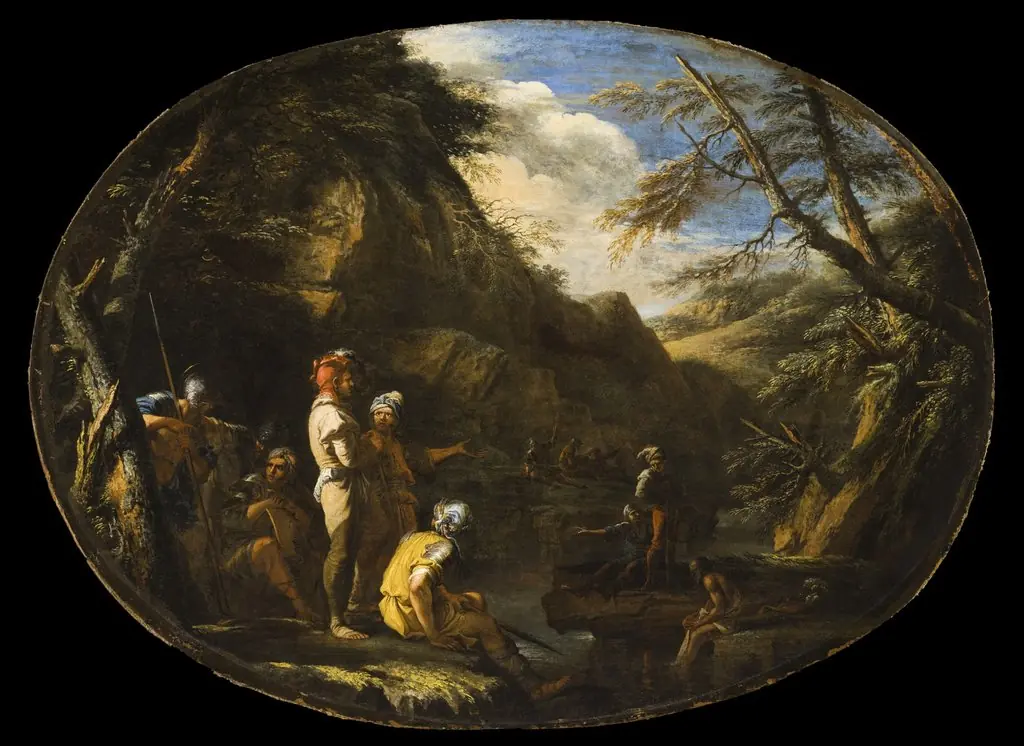
Polycrates and the Fisherman is an oil painting by the Baroque artist Salvator Rosa. It dates from 1664 and is held in the collection of the Art Institute of Chicago.
About this work
Overview
This oil painting by Salvator Rosa depicts a moment from Herodotus’s account of Polycrates, tyrant of Samos. It illustrates the king’s attempt to avert divine envy by discarding his prized signet ring into the sea, only to have it returned intact inside a fish caught by a local fisherman. The scene captures the irony of fate: an act meant to balance fortune instead seals its course.
Subject & Meaning
The return of the ring—unexpected and divine in origin—undermines his plan, signaling that his prosperity cannot be controlled or diminished by human effort.
The narrative centers on the futility of trying to manipulate destiny. Polycrates, overwhelmed by his wealth and power, seeks to invite misfortune to avoid the wrath of the gods. The return of the ring—unexpected and divine in origin—undermines his plan, signaling that his prosperity cannot be controlled or diminished by human effort. The moment is charged with tension between human agency and inevitable fate.
Technique & Style
Rosa employs dramatic chiaroscuro and dynamic composition to heighten emotional intensity. The king, clad in rich fabrics, stands in elevated stillness, while the fisherman kneels in humble awe, his outstretched hands holding the fish. The dark, turbulent sea and storm-lit sky contrast with the illuminated figures, reinforcing the moral gravity of the scene through theatrical lighting and expressive gesture.
History & Provenance
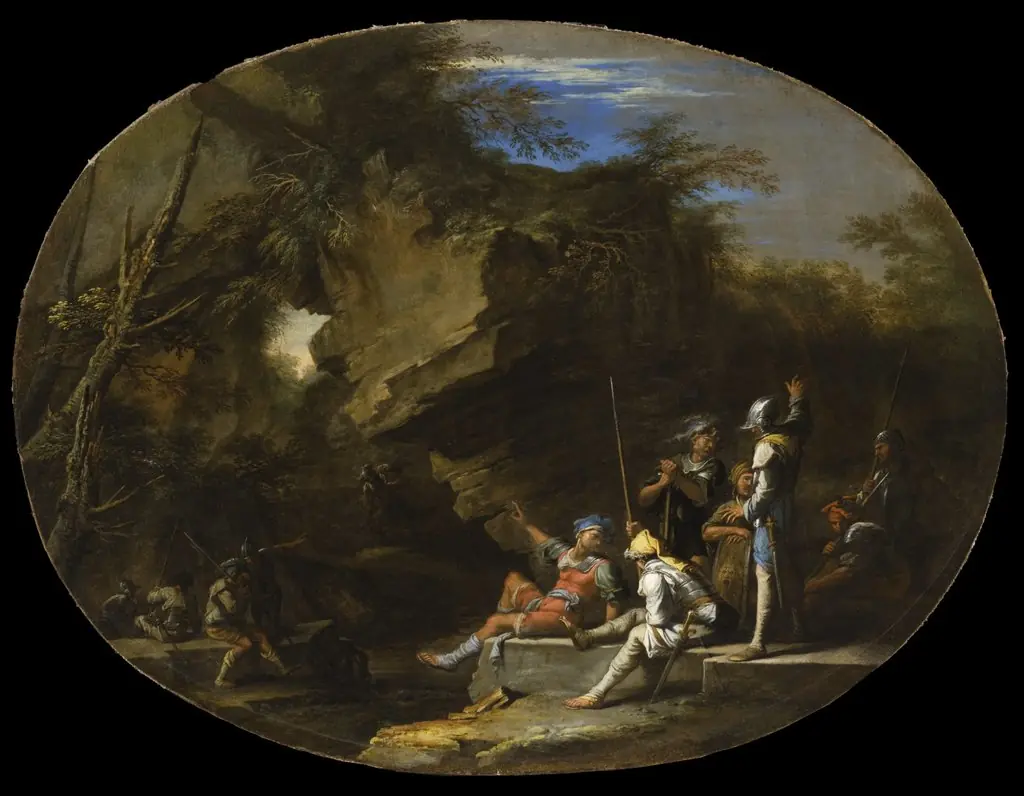
Painted in the mid-17th century, this work is one of two companion pieces by Rosa on Polycrates’ story. The other depicts the king’s execution by crucifixion at the hands of Oroetus of Sardis. The pair was likely commissioned by a collector interested in classical moral tales. The painting remained in private European collections before entering public museum holdings in the 19th century.
Context
Rosa’s interest in classical history and moral allegory aligned with Baroque tastes for emotionally charged narratives drawn from antiquity. His treatment of Polycrates reflects broader Renaissance and Baroque preoccupations with hubris and divine retribution. Unlike idealized historical scenes, Rosa’s version emphasizes psychological depth and naturalistic detail, distinguishing his approach from more academic contemporaries.
Legacy
The painting endures as a compelling example of Rosa’s ability to merge classical subject matter with visceral realism. While less widely known than his landscapes, this work influenced later artists drawn to moral tales from antiquity. Its pairing with the crucifixion scene remains a rare example of a two-part narrative in Baroque painting, offering a complete arc of fortune and downfall.
Own this work as a print
Artist & collection
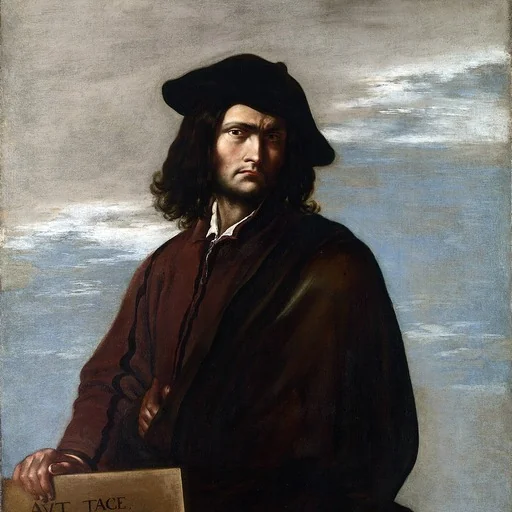
Artist
Salvator Rosa (1615 – 15 March 1673) is best known today as an Italian Baroque painter, whose romanticised landscapes and history paintings, often set in dark and untamed nature, exerted considerable influence from the 17th century into…