Artwork
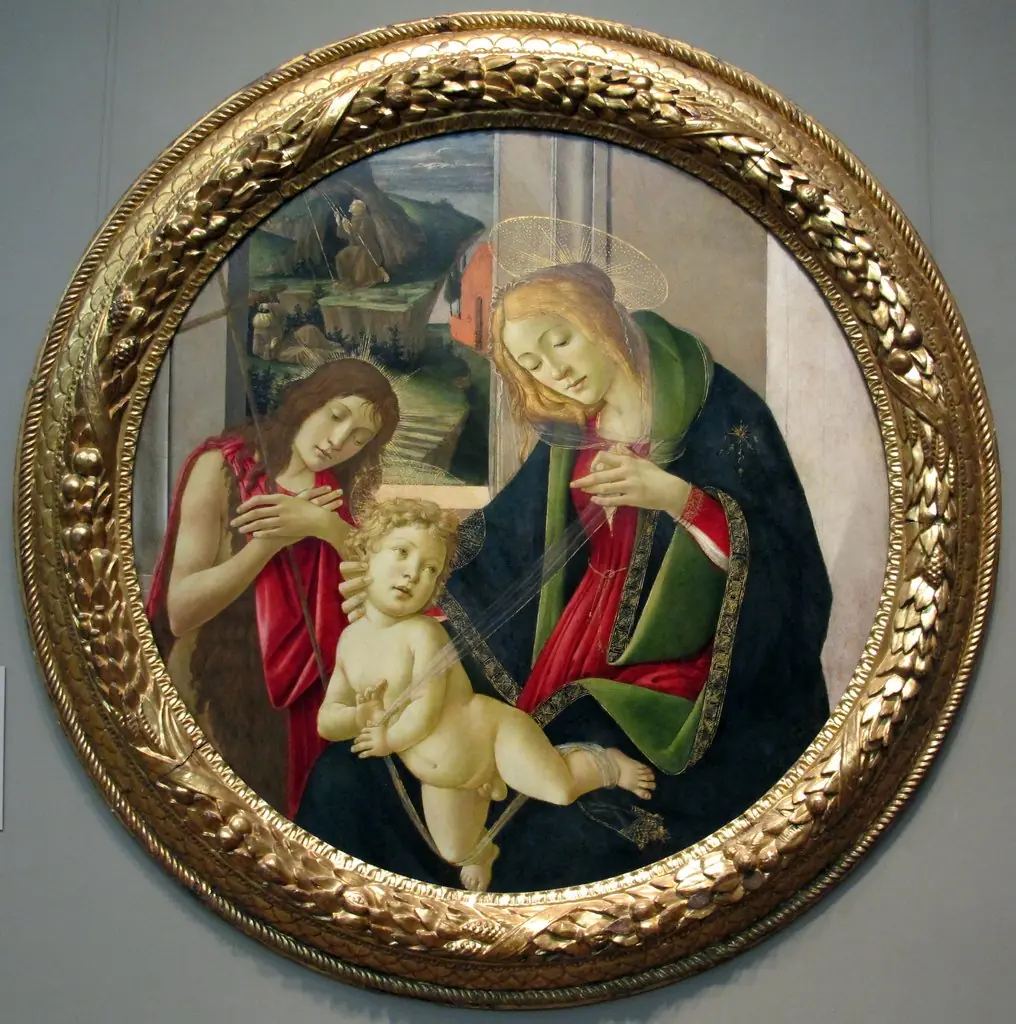
Virgin and Child with the Young Saint John the Baptist
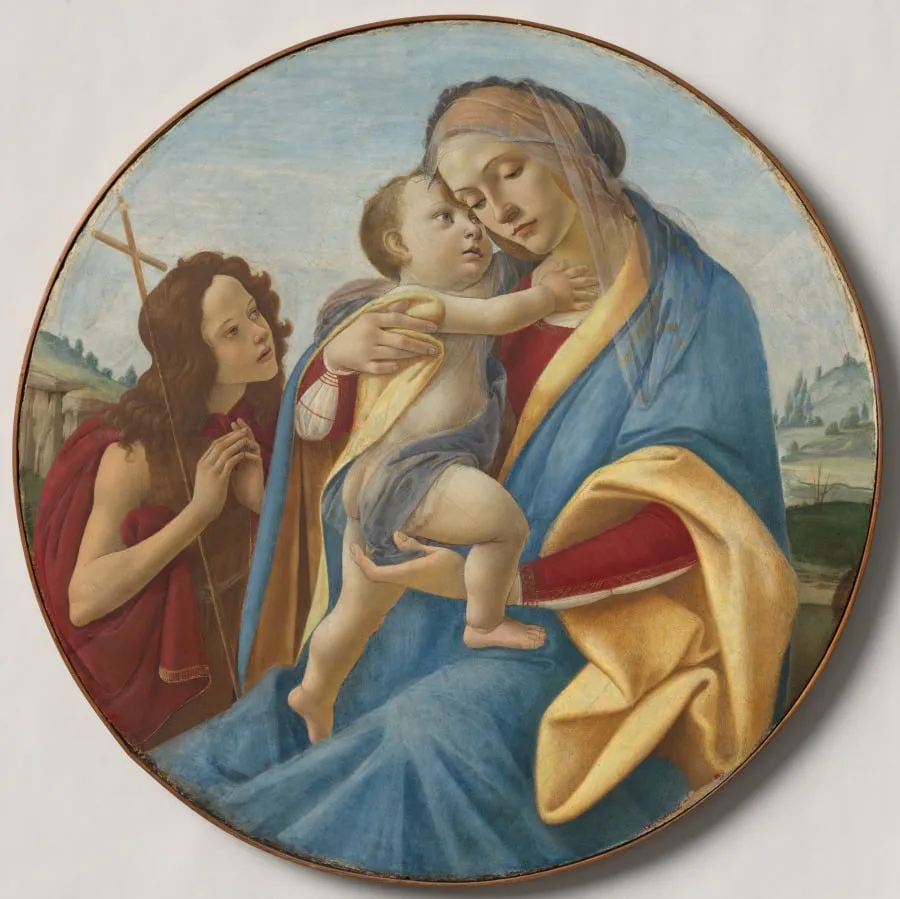
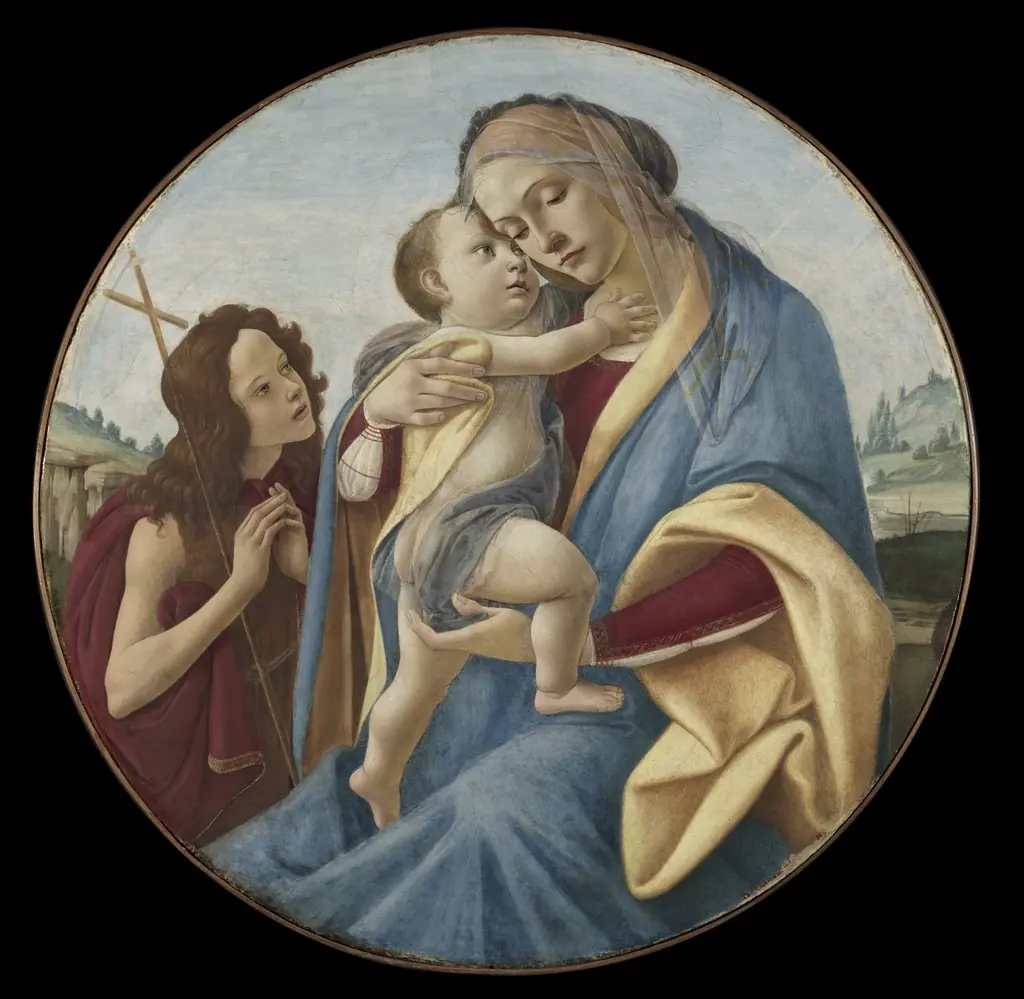
Virgin and Child with the Young Saint John the Baptist is an unspecified painting by the Early Renaissance artist Sandro Botticelli. It dates from 1490 and is held in the collection of the Cleveland Museum of Art. This circular panel painting, known as a tondo, was created for private domestic use rather than ecclesiastical display.
About this work
You see Mary holding baby Jesus while young John the Baptist kneels beside them, all inside a round frame.
You see Mary holding baby Jesus while young John the Baptist kneels beside them, all inside a round frame. The figures look soft, almost weightless, with gentle folds in their robes.
This painting is a *tondo*—a round artwork made for homes, not churches. The shape forced Botticelli to arrange the scene carefully so nothing feels squeezed. Experts think he painted the main figures himself, though students may have helped.
To see how Botticelli’s style changed, look up other works from Italy, 15th century.
Overview
This circular panel painting, known as a tondo, was created for private domestic use rather than ecclesiastical display. Its rounded format demanded a carefully composed arrangement of figures to avoid visual imbalance. While the work has long been associated with Sandro Botticelli, scholarly consensus holds that he painted the central figures, while auxiliary elements, such as the Virgin’s blue robe, were likely executed by assistants in his workshop.
Subject & Meaning
The composition depicts the Virgin Mary cradling the infant Christ, with the young John the Baptist kneeling in devotion beside them. The intimate grouping reflects a devotional focus on familial tenderness and spiritual kinship. John’s presence foreshadows his future role as the forerunner of Christ, subtly linking the sacred narrative to themes of prophecy and grace within a domestic context.
Technique & Style
Botticelli’s handling of the central figures reveals his signature delicacy: softly modeled faces, fluid contours, and a sense of weightless grace. The translucent veil over Mary’s head and the gentle drapery folds suggest a refined sensitivity to light and texture. The figures are arranged in a compact, circular rhythm that responds to the tondo’s constraints without appearing cramped.
History & Provenance
The painting’s attribution has been subject to scholarly discussion due to the collaborative nature of Renaissance workshops. While Botticelli is credited with the core design and execution of the faces and poses, the Virgin’s blue garment shows signs of later restoration and stylistic variation, suggesting workshop participation. Its early ownership remains undocumented, though its format aligns with Florentine domestic commissions of the mid-15th century.
Context
Tondi flourished in 15th-century Florence as symbols of domestic piety, often commissioned by wealthy families for private chapels or living spaces. Unlike altarpieces, these works emphasized emotional intimacy over grandeur. Botticelli’s approach to the tondo reflects a broader trend of adapting religious iconography to the rhythms of household life, blending spiritual devotion with humanist ideals of harmony and proportion.
Legacy
The painting exemplifies how Botticelli’s lyrical style influenced the evolution of Renaissance domestic art. Though later works by his pupils, such as Filippino Lippi, would expand on his compositional innovations, this tondo remains a key reference for understanding the transition from early to high Renaissance sensibilities in private devotional imagery.
Artist & collection

Artist
Sandro Botticelli was a Florentine painter who loved the drama of stories—myths, saints, and ancient tales.