Artwork
Venus
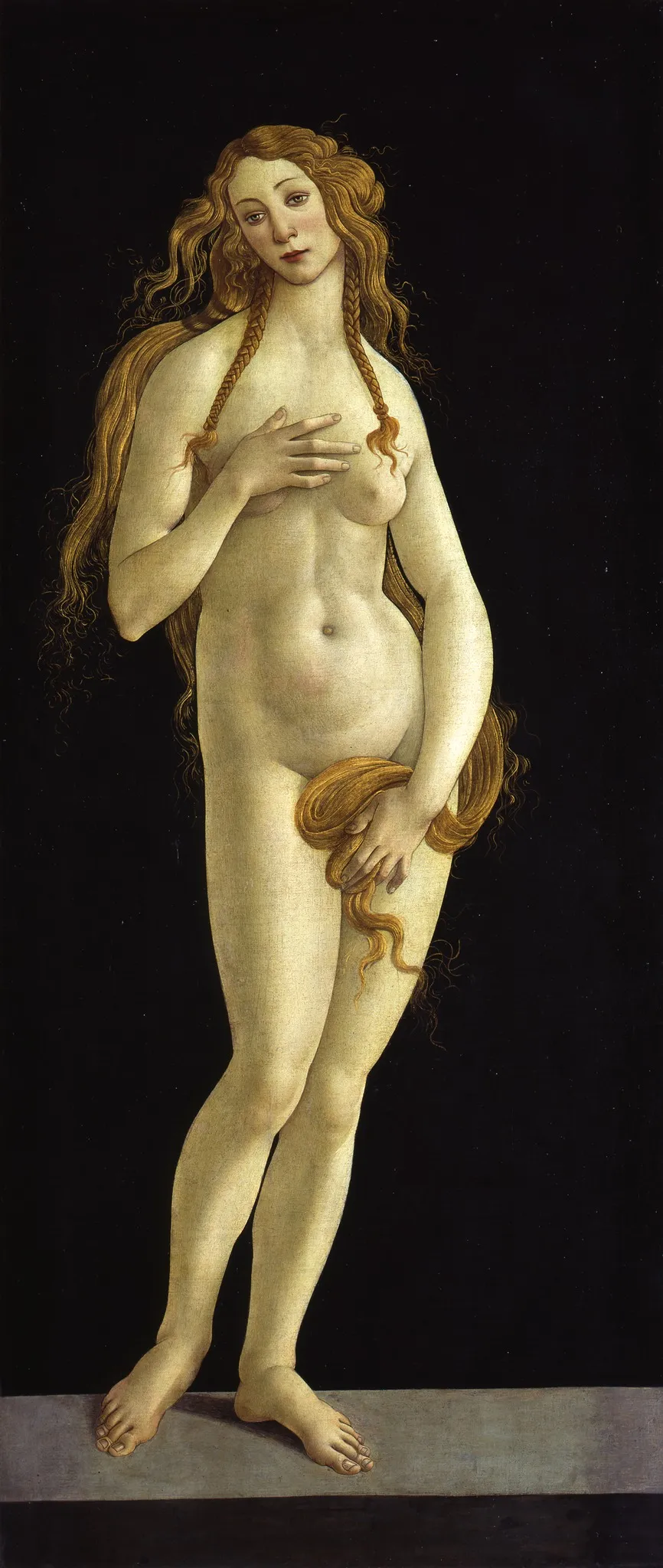
Venus is a paint painting by the Early Renaissance artist Sandro Botticelli. It dates from 1496 and is held in the collection of the Gemäldegalerie Berlin.
About this work
Overview
Created in 1496, Sandro Botticelli’s oil painting titled *Venus* presents a solitary, nude female figure rendered against a stark black backdrop. The work is part of the collection of the Gemäldegalerie in Berlin and measures the artist’s engagement with classical mythology through a single, focused composition.
Subject & Meaning
The figure embodies the classical archetype of Venus, combining elements of the Anadyomene—emerging from the sea—and the Pudica, a modest gesture where the hand shields the body. This dual reference underscores themes of beauty, birth, and the tension between exposure and concealment that were central to Renaissance interpretations of the goddess.
Technique & Style
Botticelli employs a side lighting that models the flesh, giving the figure a palpable three‑dimensionality despite the flat support. The black ground eliminates any contextual detail, allowing the pale skin and flowing hair to dominate the visual field. The pose is composed, with one foot slightly forward, creating a calm, balanced silhouette.
History & Provenance
The painting entered the Gemäldegalerie Berlin’s holdings in the early 20th century, though its earlier ownership remains undocumented. Its attribution to Botticelli has been supported by stylistic analysis linking it to his late‑career mythological works.
Context
During the late 15th century, the Venus Pudica pose was widely adopted by artists seeking to echo classical sculpture. Botticelli’s rendition reflects this trend, translating a sculptural gesture into a painted medium while maintaining the Renaissance fascination with antiquity and idealized form.
Artist & collection

Artist
Sandro Botticelli was a Florentine painter who loved the drama of stories—myths, saints, and ancient tales.