Artwork
Watercolour, copy after A young man introduced to the Liberal Arts, Sandro Botticelli in the Musée du Louvre (Paris)
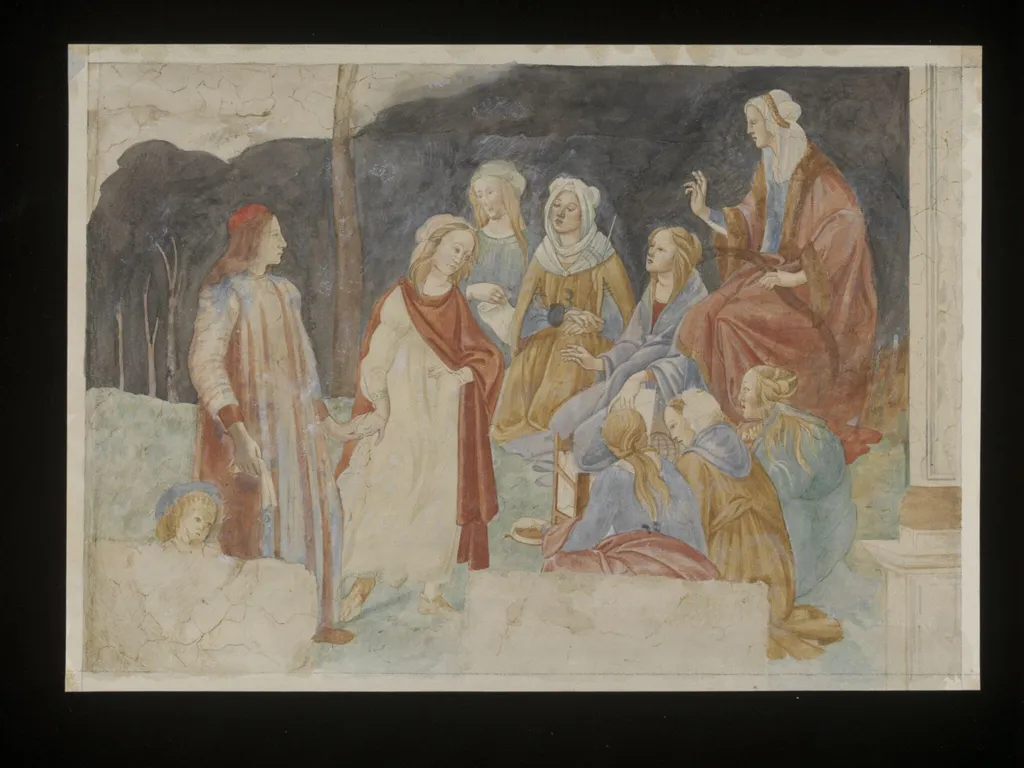
Watercolour, copy after A young man introduced to the Liberal Arts, Sandro Botticelli in the Musée du Louvre (Paris) is a watercolor work on paper by the Early Renaissance artist Sandro Botticelli. It dates from 1487 and is held in the collection of the Victoria and Albert Museum.
About this work
Overview
This watercolor, a faithful reproduction of Sandro Botticelli’s 1487 composition titled *A Young Man Introduced to the Liberal Arts*, presents a small outdoor gathering. Seven young women are seated while a fourth woman leads a young man forward, his hand extended in greeting. A child’s head peeks from the left margin, adding a domestic touch to the scene.
Subject & Meaning
The work illustrates an allegorical introduction of a male figure to the seven liberal arts, each traditionally personified by a woman. The guiding woman gestures toward the newcomer, suggesting instruction, while the seated figures embody disciplines such as grammar, rhetoric, and music. The presence of a child hints at the transmission of knowledge across generations.
Technique & Style
Executed in watercolor, the copy reproduces Botticelli’s delicate tonal palette of muted browns, soft reds, and cool blues. The medium allows for subtle washes that model the figures and the surrounding foliage, while preserving the linear clarity characteristic of the original tempera drawing. The composition balances a calm atmosphere with a sense of gentle activity.
History & Provenance
Created as a study after Botticelli’s original, the watercolor entered the collection of the Musée du Louvre in Paris, where it is displayed alongside other Renaissance copies. Its purpose was likely educational, serving as a reference for artists and scholars interested in Botticelli’s iconography and compositional approach.
Context
The original painting belongs to a period when humanist ideals were gaining prominence in Florence, and visual representations of the liberal arts were common in courtly and academic settings. Botticelli’s depiction reflects the era’s reverence for classical learning and the role of women as personifications of intellectual virtues.
Artist & collection

Artist
Sandro Botticelli was a Florentine painter who loved the drama of stories—myths, saints, and ancient tales.

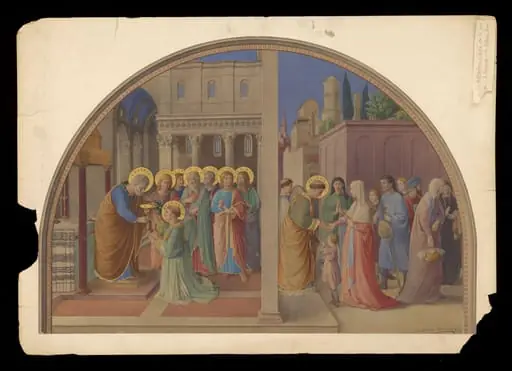 Watercolour, copy after The Ordination of St Stephen and St Stephen Distributing Alms, Fra Angelico in the Niccoline Chapel (Vatican, Rome)
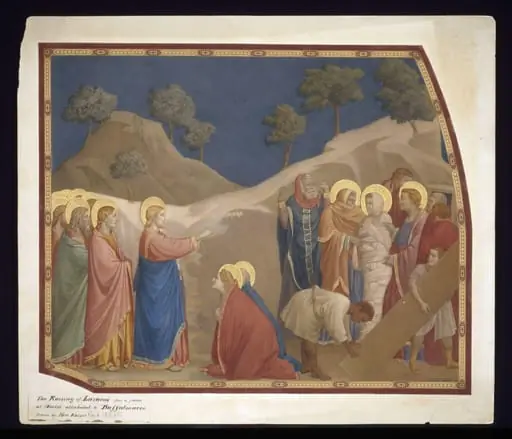 Copy after The Raising of Lazarus attributed to Buonamico di Martino called Buffamalco in the Lower Church of San Francesco (Assisi)
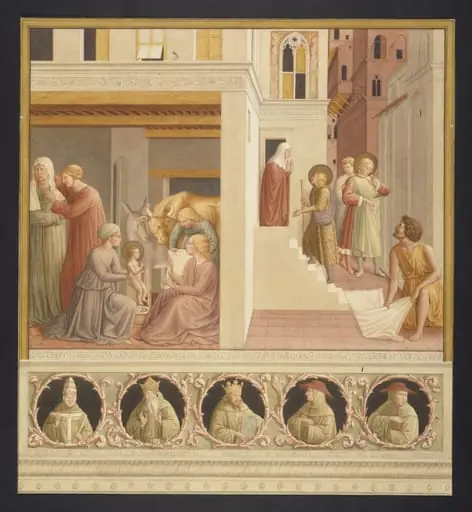 Copy after the cycle of the <i>Life of St Francis</i> (<i>Birth of St Francis</i>), Benozzo Gozzoli in San Francesco, Montefalco
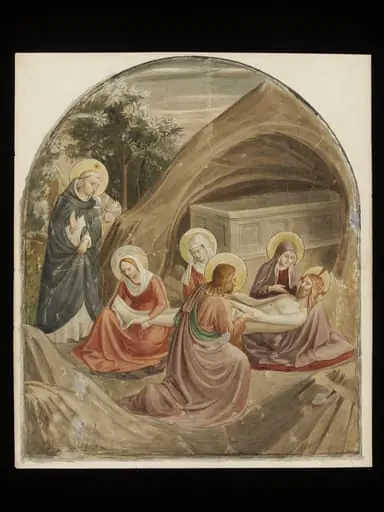 Copy after The Entombment (Lamentation over the Dead Christ), Fra Angelico in the Museo di San Marco (Florence)
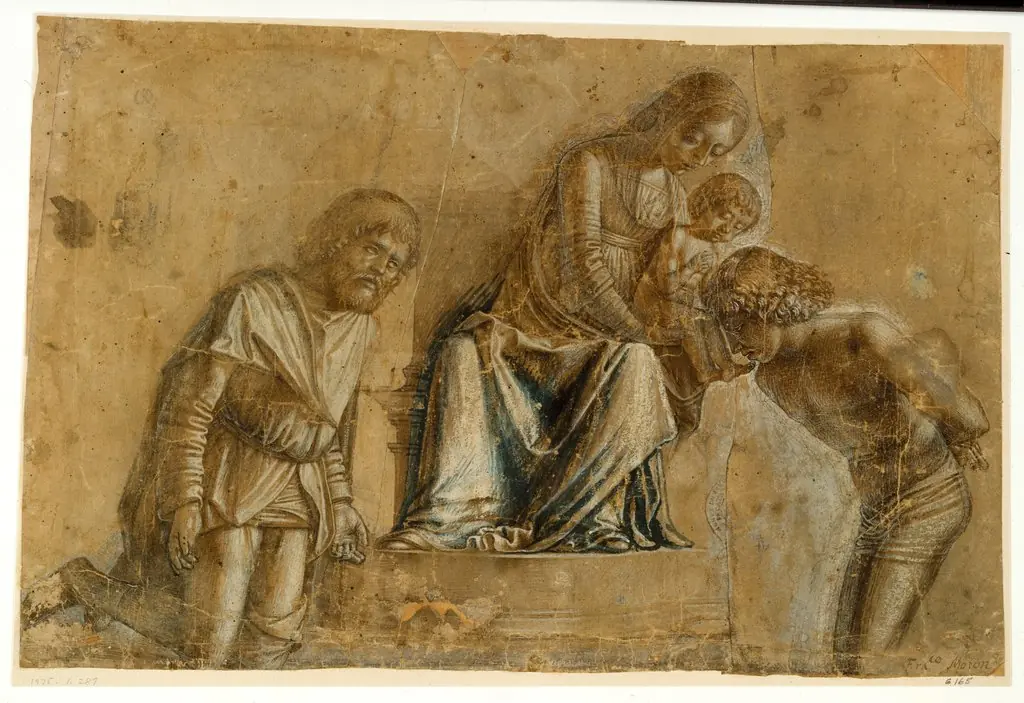 Madonna and Child with Saints Roch and Sebastian
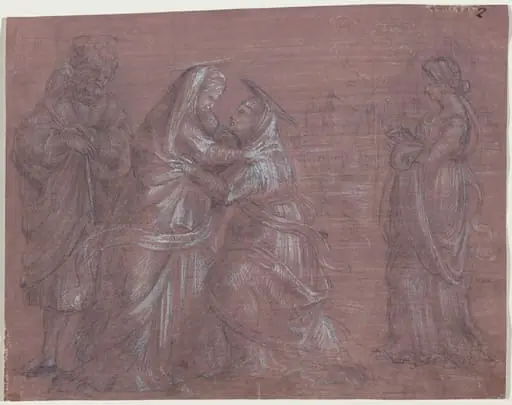 The Visitation
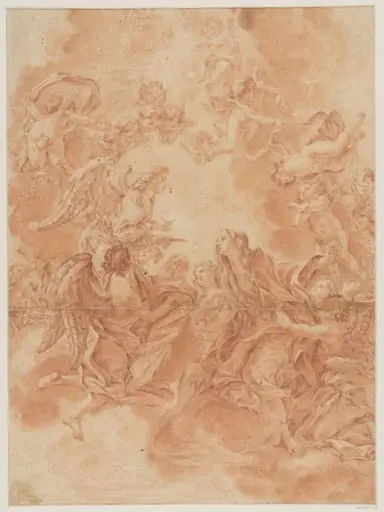 The Communion of St Mary Magdalene
 The Virgin and Four Other Women
 Noli Me Tangere