Artwork
Landscape in Moonlight
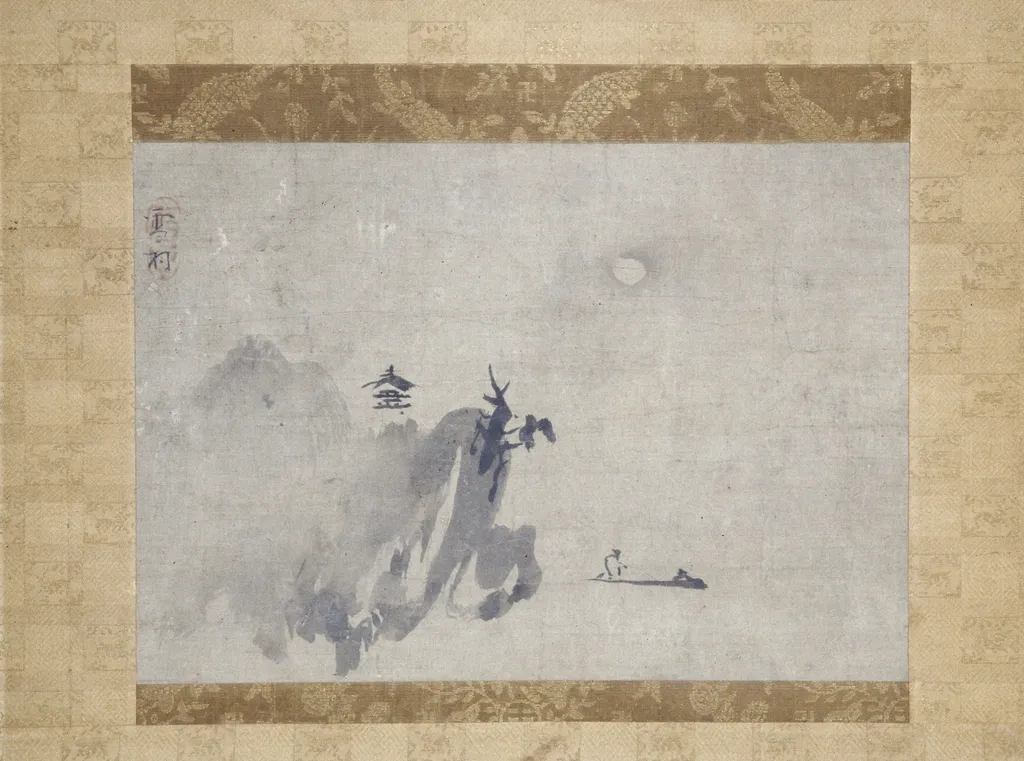
Landscape in Moonlight is an unspecified painting by Sesson Shūkei. It dates from 1550 and is held in the collection of the Los Angeles County Museum of Art.
About this work
Overview
Though born into the Satake clan, he left secular life to join Shōsō-ji temple, where he devoted himself to ink painting.
Sesson Shūkei, a Zen monk and painter active in the mid-16th century, produced *Landscape in Moonlight* around 1550. Though born into the Satake clan, he left secular life to join Shōsō-ji temple, where he devoted himself to ink painting. His work reflects the influence of Sesshū Tōyō, whose expressive brushwork and spiritual depth he extended. This piece is now held in the collection of the Los Angeles County Museum of Art.
Subject & Meaning
The painting depicts a solitary figure seated on the ground, facing away from the viewer, near a modest structure likely representing a temple or pagoda. Beneath a luminous full moon, the landscape unfolds in quiet stillness—mountains rise softly in the distance, and the scene feels suspended in time. The figure’s posture suggests contemplation, aligning with Zen ideals of solitude and inner reflection, inviting the viewer into a meditative state.
Technique & Style
Sesson employed delicate, fluid ink brushwork to suggest form without rigid definition. The moon’s glow is implied through subtle washes and reserved paper, while mountains and trees are rendered with restrained strokes that evoke texture rather than detail. Colors are minimal, limited to monochrome ink tones, enhancing the atmosphere of calm. The composition balances emptiness and presence, characteristic of Zen-inspired ink painting traditions.
History & Provenance
Created during the Muromachi period, the painting emerged from a cultural milieu where Zen Buddhism deeply influenced artistic expression. Sesson’s status as a monk-painter gave his work spiritual authority among contemporaries. The painting passed through private collections before entering the Los Angeles County Museum of Art, where it remains as one of the few surviving works attributed to him with certainty.
Context
In 16th-century Japan, ink painting flourished among Zen monasteries as a form of spiritual discipline. Artists like Sesson adapted Chinese models but infused them with native sensibilities, favoring understated emotion over ornate detail. *Landscape in Moonlight* reflects this synthesis—drawing from Song dynasty aesthetics while expressing a distinctly Japanese quietude, shaped by monastic life and the natural world.
Legacy
Sesson Shūkei is remembered as a pivotal figure in the lineage of Japanese ink painting, extending Sesshū’s innovations with greater emphasis on atmosphere and introspection. Though few of his works survive, *Landscape in Moonlight* exemplifies his ability to convey profound stillness through minimal means. His approach influenced later generations of painters who sought to express Zen principles through landscape rather than doctrine.
Artist & collection

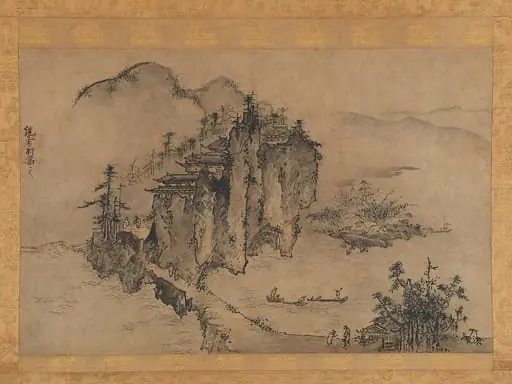
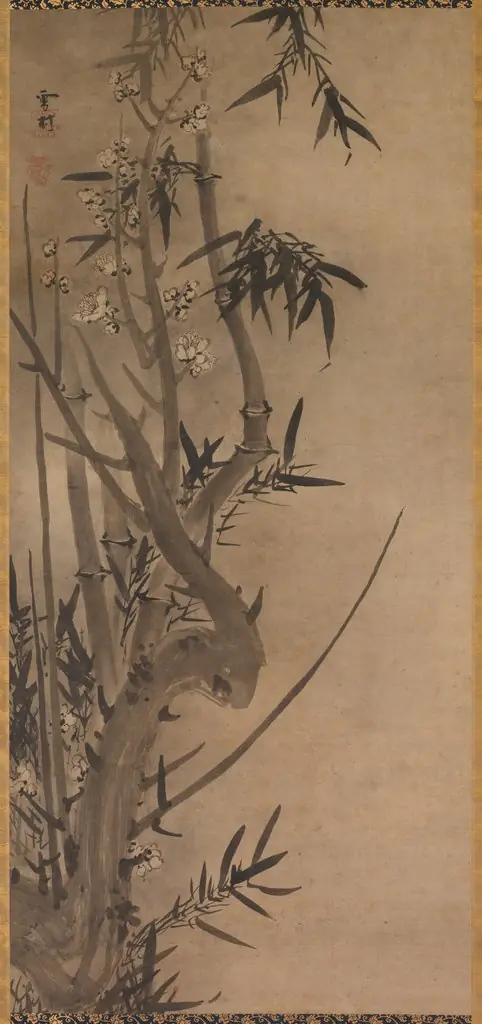
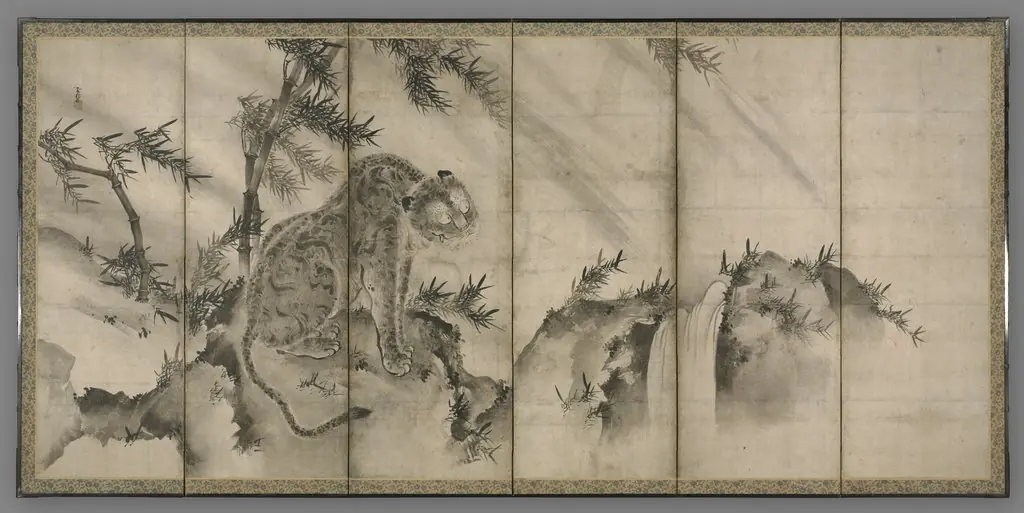
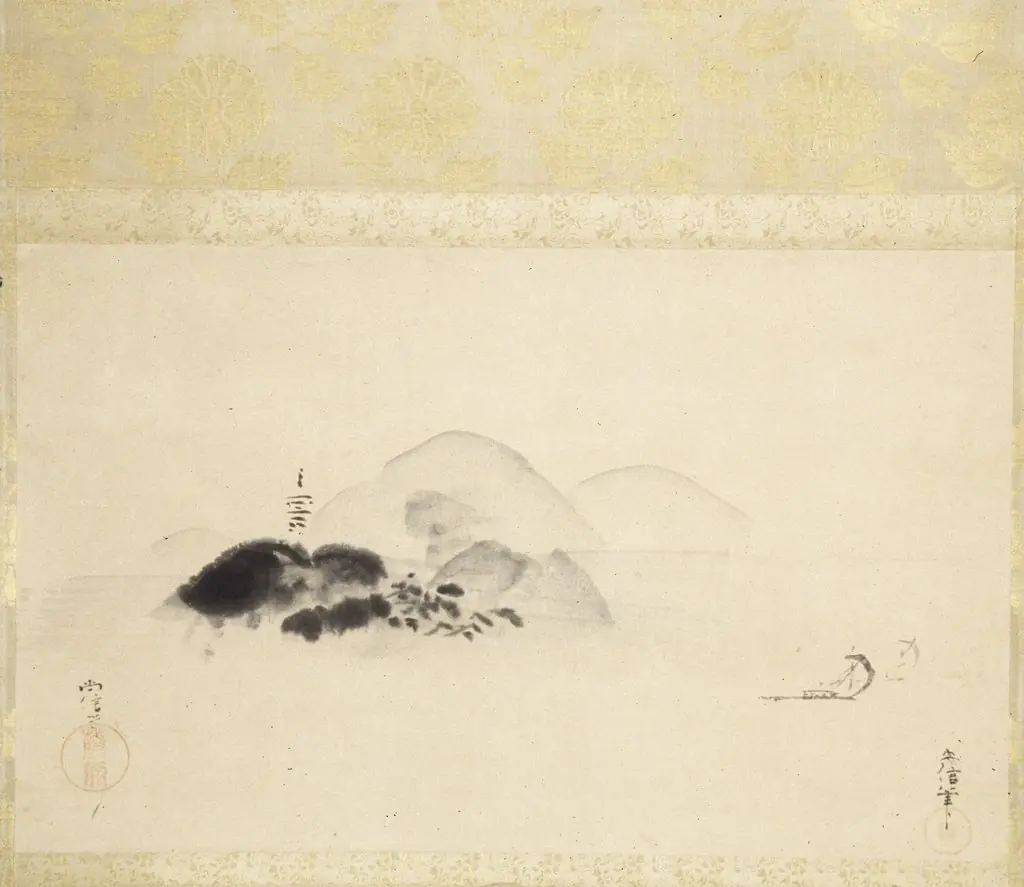 Mountains with Pagoda and Two Sailboats
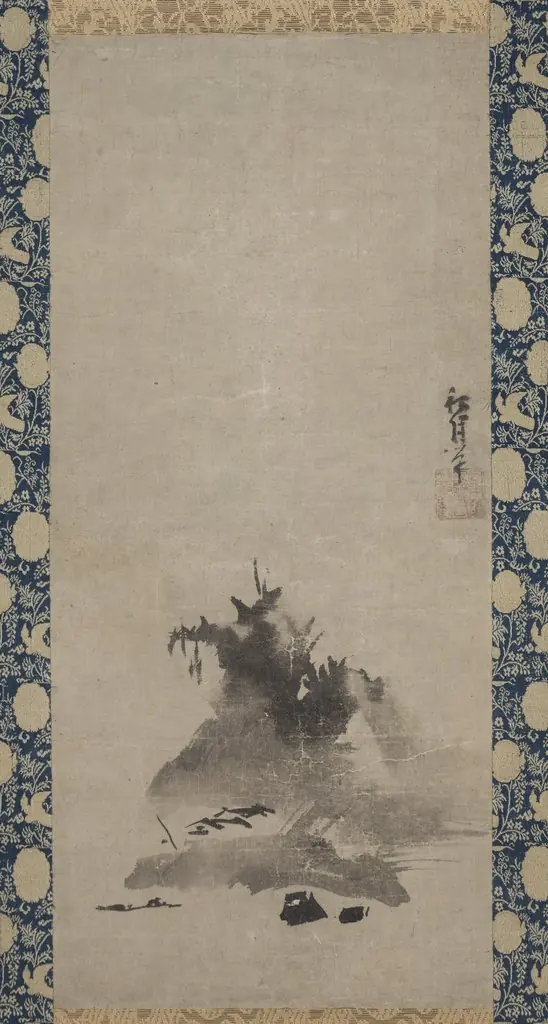 Haboku (Flung-ink) Landscape
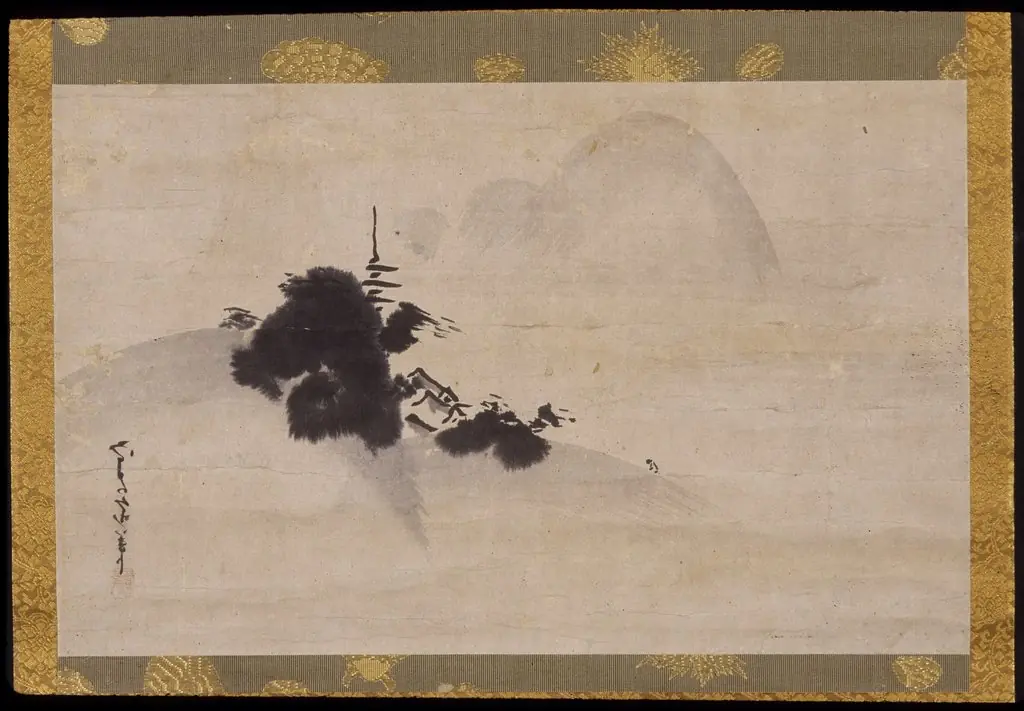 Landscape
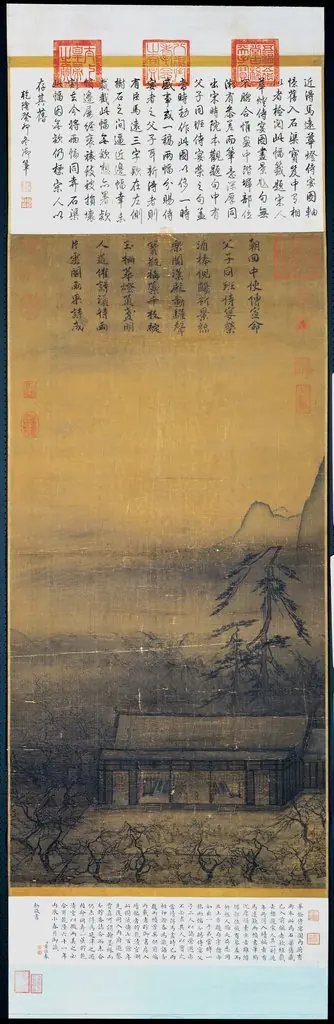 Attending an Imperial Banquet
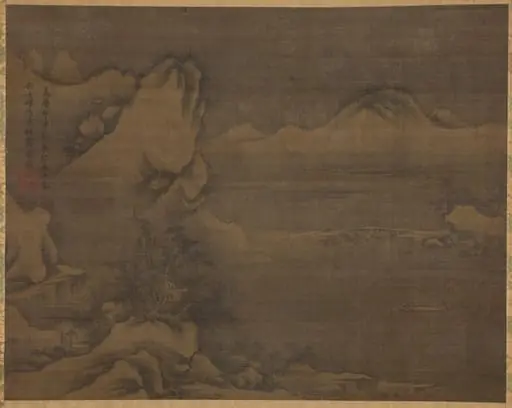 Snowscape with Figures
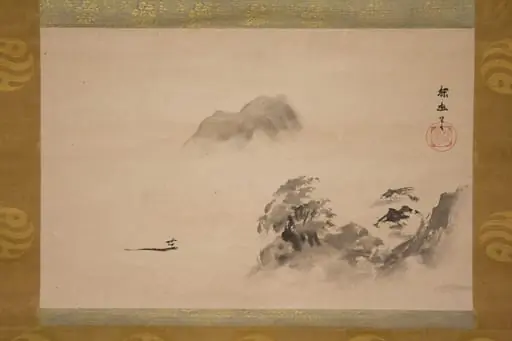 Untitled
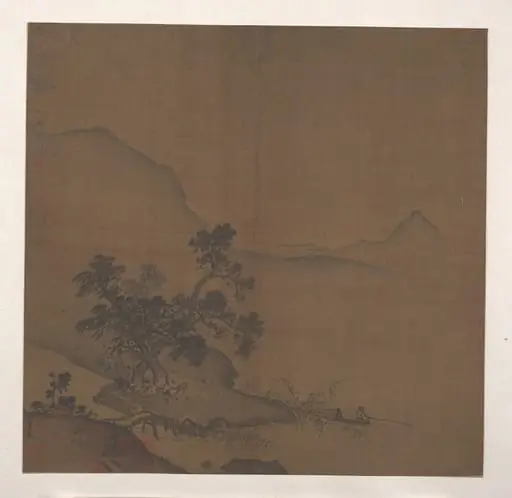 Untitled
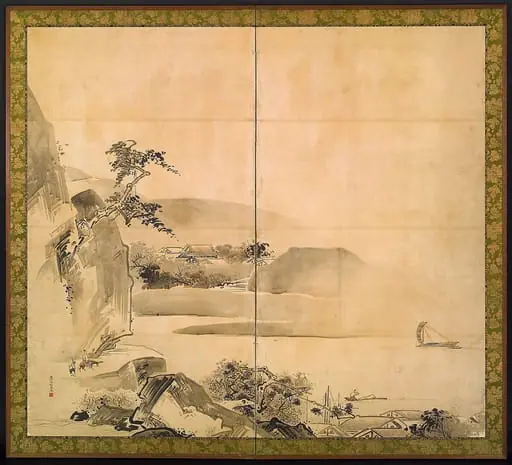 山水図屏風|Landscape
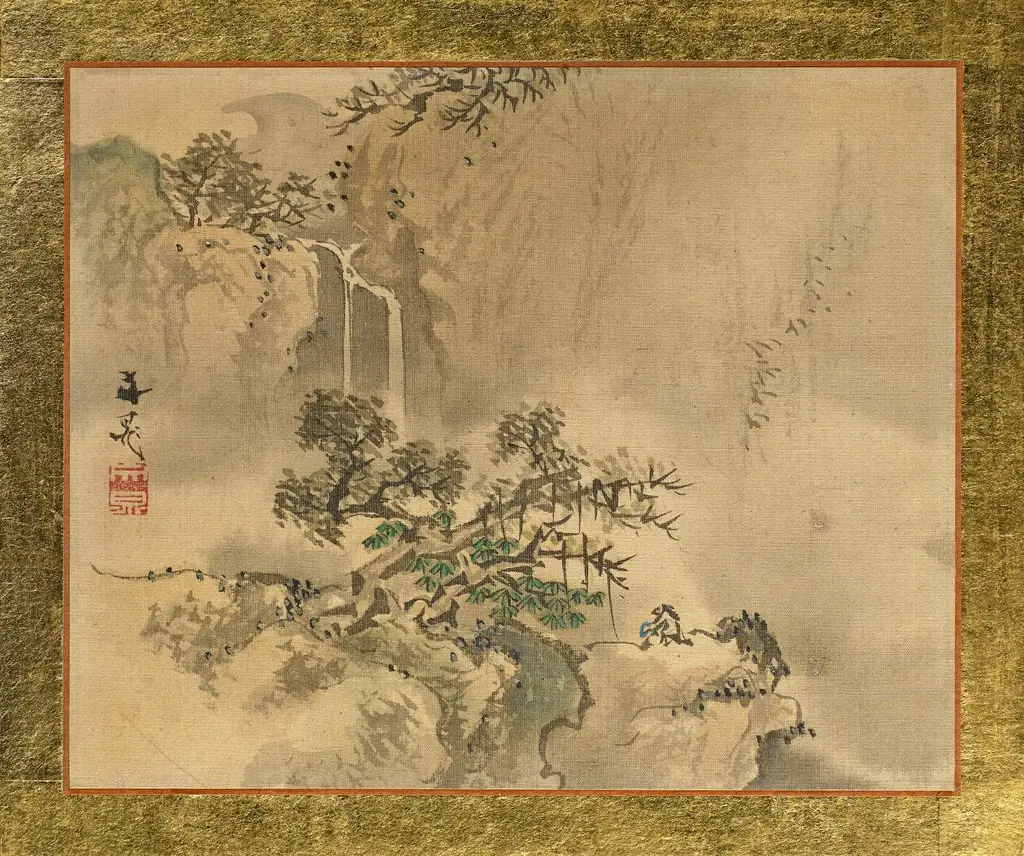 A Man taking a Rest under a Big Pine Tree
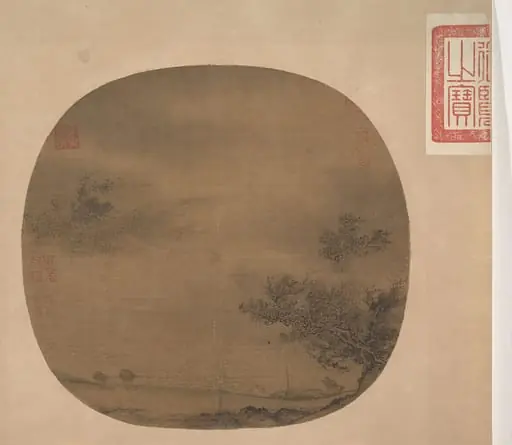 南宋 佚名 風雨拉縴圖 團扇|Towing a Boat in a Rainstorm
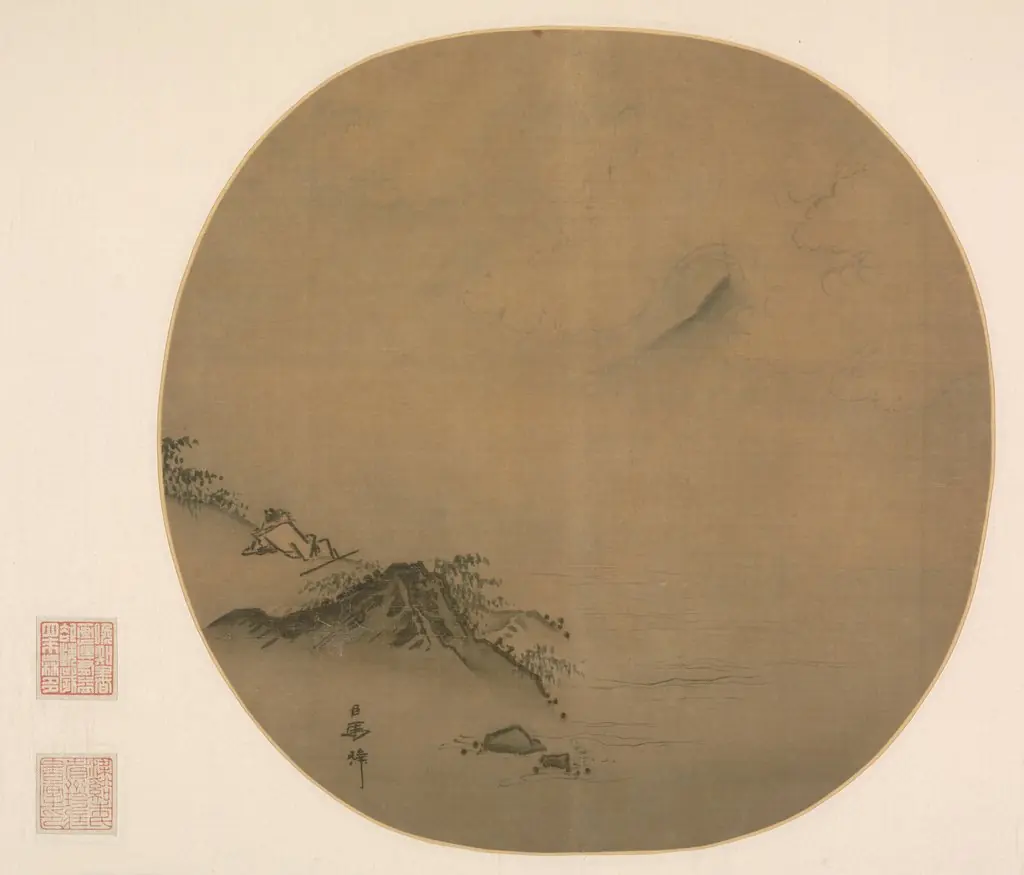 Scholar Reclining and Watching Rising Clouds; Poem by Wang Wei
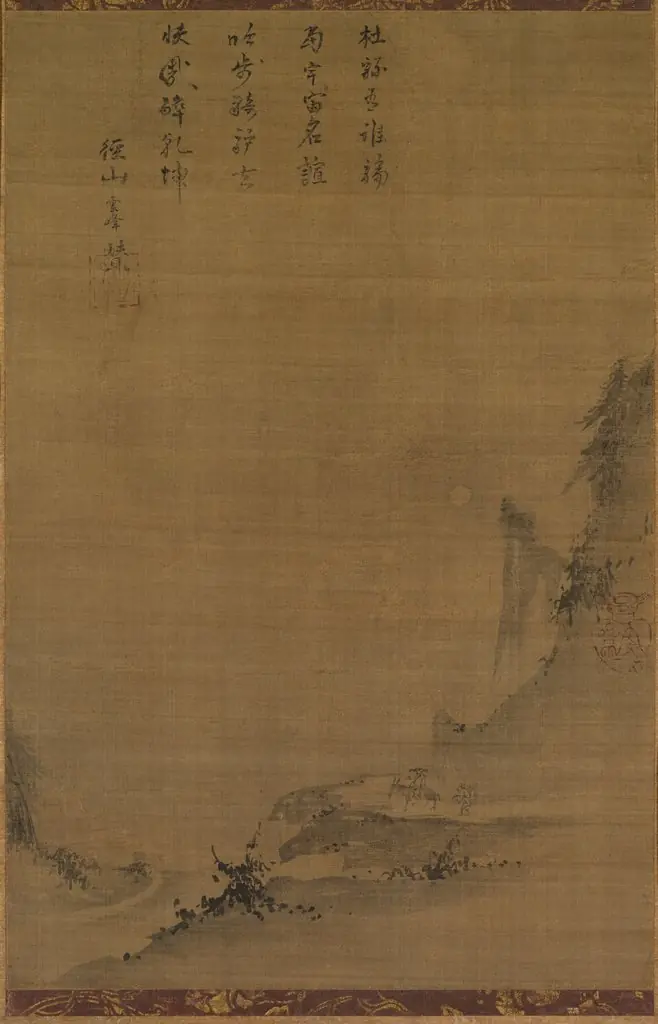 Mountain Landscape in Moonlight